A First Glance – Introduction & Atmosphere
When the pilgrim leaves behind the seemingly endless grain fields of the Tierra de Campos, where the horizon often seems to merge with the dusty yellow of the earth, Sahagún does not announce itself quietly. It is a massive, almost defiant eruption from the flat monotony of the Meseta. Even from afar, the reddish silhouettes of the mighty Mudéjar towers eat into the deep blue of the Castilian sky. The first contact with this place is a physical shock: the transition from the lonely Senda, where for hours you listened only to your own breath and the crunch of gravel, into the pulsating, brick-red heart of a city that once steered the destiny of Christendom on the peninsula as the “Spanish Cluny.”
The air in Sahagún tastes different. It carries the cool moisture of the Río Cea, mixed with the tart, almost sweetish aroma of fired clay and the distant scent of leeks stewed in garlic and olive oil, the famous regional specialty. The tactile experience is dominated by the texture of brick. Unlike the cool granite ashlars of Galicia or the limestone of Burgos, Sahagún’s bricks radiate a stored solar warmth that you can feel when you place your hand on the centuries-old walls of San Tirso. It is a place that picks up the pilgrim at a critical psychological point – you have almost or completely covered the first half of the path, and Sahagún offers the monumental confirmation that the hardship of the Meseta has a deeper, cultural, and spiritual meaning.
Acoustically, Sahagún is a symphony of history and present. The deep, sonorous beating of the bells echoing across the wide squares mingles with the lively murmuring of the locals in the bars under the arcades. It is a soundscape that conveys security. After the existential silence of the fields, the bustle here feels like a warm embrace. You feel the historical causality in every alley; here, not only paths crossed, but the ambitions of kings and abbots. At dusk, when the light bathes the red bricks in a glowing purple, a solemn stillness sets in, reminding the walker that he stands here at a place of power that has shaped souls and sealed destinies for 1200 years.
What This Place Tells
Sahagún is not a random product of history, but the result of a profound spiritual and political vision. It all began with the martyrs Facundus and Primitivus, whose names merged over the centuries into the current place name: San Facundo became Sahagún. Legend has it that their executed bodies were thrown into the Río Cea, only to resurface upstream – a miracle that laid the foundation for one of the most powerful abbeys of the Middle Ages. Those who stand today before the ruins of the San Benito monastery must close their eyes to grasp the former splendor. Under Alfonso VI, this place became the bridgehead of the Cluniac reform in Spain. It was a state within a state, a center of scholarship and power that provided for tens of thousands of pilgrims and made the Camino Francés the backbone of Christian resistance against the Moors.
The architectural language of Sahagún is Mudéjar – a fascinating synthesis of Christian structure and Islamic decorative art. The Moorish craftsmen who remained under Christian rule brought their mastery of brickwork. When you look at the horseshoe arches and intricate geometric friezes on churches like San Tirso or San Lorenzo, you recognize the historical causality of a time when cultures, despite all conflicts, merged in craftsmanship. It is a tactile history lesson: the bricks are not just building material; they are layered in rhythmic patterns that capture light and shadow, lending the heaviness of stone an almost textile lightness. Psychologically, this symmetry evokes a calm, an order amidst the chaos of one’s own pilgrim thoughts.
The city also tells of power and decay. The immense portal of the San Benito monastery now stands isolated in space, a triumphal arch leading into nothingness – a warning monument to secularization and the passage of time. Yet in this decay lies a melancholic beauty that teaches the pilgrim that even the greatest is transient, while the path itself remains. The emotional metamorphosis one undergoes in Sahagún is shaped by this realization. Here, you are at the symbolic midpoint of the path (even if the geographical center varies slightly). It is a place of taking stock. The 1200-year history does not weigh heavily on the shoulders; it supports the back, as if to say: you are part of something infinite. The dust on the modern walker’s boots here mingles with the dust of the legions, the monks, and the kings who all had to pass through this bottleneck of history.
Addresses & tips in Sahagún
Camino Distances
Sahagún is a central hub and offers the pilgrim two different paths for continuing their journey westward. Here is the strategic overview of the distances:
| Previous Place | Distance (km) | Next Place | Distance (km) |
|---|---|---|---|
| Terradillos de los Templarios | approx. 13.5 km | Calzada del Coto (via Senda) | approx. 4.5 km |
| San Nicolás del Real Camino | approx. 7.0 km | Bercianos del Real Camino | approx. 10.5 km |
Sleeping & Arriving
Arriving in Sahagún is for many pilgrims accompanied by a deep sigh of relief. When you cross the bridge over the Río Cea, you feel the coolness of the water, which feels like divine intervention after the scorching hot kilometers on the Senda. The city receives you with an infrastructure optimized for accommodating strangers over centuries. The tactile feeling of setting down your backpack in one of the traditional hostels is indescribable. Especially the hostel in the monastery of the Benedictine Mothers (Madres Benedictinas) offers an atmosphere that immediately places the mind in a state of contemplative calm. The smell of floor wax, old wood, and incense in the corridors is an olfactory journey through time that instantly lowers the pulse.
Psychologically, the choice of accommodation in Sahagún is crucial. Those seeking the tranquility of monastery walls will find it with the nuns, where the soft clatter of sandals on the tiles and the gentle light in the cloisters have a healing effect on overstimulated senses. For those seeking exchange with other pilgrims, the municipal and private hostels in the city center offer lively meeting points. Here, the clatter of hiking poles mingles with laughter in five different languages. The tactile experience of a hot shower in the massive stone buildings of Sahagún is a luxury that instantly relegates the hardships of the Meseta to the background. You feel the tension leaving the muscles, making way for a deep, contented exhaustion.
The architecture of the accommodations often reflects the spirit of the city. Thick walls of brick and clay ensure a natural sleeping climate that maintains a pleasant freshness even in the hottest Castilian summers. The acoustic panorama of the night in Sahagún is characterized by the distant chiming of church clocks and the occasional call of an owl nesting in the ruins of San Benito. It is a sense of security that goes beyond mere shelter. You sleep in the lap of a city that has done nothing else for over a millennium than protect walkers. This historical continuity conveys a deep primal trust that strengthens the pilgrim for the coming stages.
Upon waking in Sahagún, the light is the first thing that appeals to the senses. It falls obliquely through the tall windows of the old buildings and illuminates the dust dancing in the air – a visual echo of the many generations who woke here before you. The first step outside in the morning, when the city still lies in a half-sleep and the baker spreads the scent of fresh Pan Camino, is a moment of pure anticipation. You don’t simply leave your night’s lodging; you step out strengthened from a fortress of hospitality back onto the battlefield of kilometers, ready to face the challenges of the Leonese high plateau.
Eating & Drinking
The gastronomy of Sahagún is a powerful love letter to the land and its history. Here, you don’t just eat; you taste the Tierra de Campos. The heart of the local cuisine is the Puerro de Sahagún, a leek of exceptional tenderness and sweetness, which gains its special quality from the calcareous water of the Río Cea. You should definitely try it “al horno” or in a fine vinaigrette. The texture is silky, the taste a subtle mix of earthiness and freshness. The smell of fried leek wafting from the kitchens of the restaurants on Calle Mayor is the olfactory landmark of the city. It is a tactile pleasure to cut the tender vegetable with a knife, which glides through almost without resistance.
Alongside the leek, lamb dominates the menus. The “Lechazo,” roasted in a wood-fired oven, is a culinary experience that appeals to all senses. The skin is crispy and breaks with an audible crack, while the meat beneath is so tender that it practically melts on the tongue. The robust scent of rosemary and thyme, with which the meat is rubbed, combines with the aroma of the smoky wood fire. You drink a wine from the province of León with it, preferably a red from the Prieto Picudo grape. Its color is a deep, almost opaque cherry red, its taste carries the full force and dryness of the Meseta – mineral, fruity, and with a long finish that harmonizes perfectly with the hearty dishes.
A psychological highlight is the “Menú del Peregrino,” often prepared in Sahagún with a care that exceeds the standard of other places. In the cozy inns, often under old wooden beam ceilings, a community forms at mealtime that effortlessly dissolves language barriers. The sound of clinking glasses and sharing bread baskets is the soundtrack of fraternization. For dessert, you must not miss the “Amarguillos” – small almond pastries made by the nuns of the Santa Cruz monastery. Their taste is a fine balance between the sweetness of sugar and the tart note of bitter almond, a tactile pleasure through their crumbly consistency. When you leave Sahagún culinarily, you do so with a feeling of satiety that reaches deep into the soul.
Supplies & Logistics
Sahagún functions as a logistical backbone for a large radius of the province of León. For the pilgrim, this means all-round supply that leaves nothing to be desired. The city is compact enough to reach everything on foot, yet offers the amenities of a regional capital.
Shopping: There are several well-stocked supermarkets, small specialty shops for local specialties (leek, cheese), and bakeries that bake the traditional pilgrim bread. The market hall is a tactile experience in itself.
Gastronomy: The selection ranges from budget tapas bars to upscale restaurants. Many bars offer breakfast for pilgrims from the early morning hours.
Accommodation: Sahagún has a high density of beds in public and private hostels, as well as in hostals and hotels for those seeking more privacy after the days on the Meseta.
Public Facilities: A large health center (Centro de Salud), several pharmacies, post office, banks with ATMs, and a tourist office are available. Particularly important: the train station connects Sahagún directly with León, Burgos, and Madrid.
Sahagún’s logistical importance is also evident in its function as a starting point for many pilgrims who only want to walk the second part of the path. The psychological relief of being in a city where every replacement part for equipment – from hiking boots to special blister plasters – is available, provides security. Acoustically, the logistics are underscored by the distant whistling of trains, a constant reminder of the modern world that lives here in peaceful coexistence with the medieval heritage. Sahagún is a place where you can replenish your supplies not only materially but also mentally, before plunging back into the solitude of the fields.
Don’t Miss
1. Church of San Tirso: The prime example of the Mudéjar style. Admire the architectural masterpiece of how bricks were woven into filigree patterns. The tower is a visual icon of the Camino.
2. Church of San Lorenzo: Another brick jewel. The symmetry of the apses and the warmth of the material are a tactile and visual pleasure, especially in the evening light.
3. Monastery Ruins of San Benito: Walk through the Arco de San Benito. Even though only ruins remain, you feel the former power of the abbey. It is a place of deep historical reflection.
4. Santuario de la Peregrina: Located slightly outside on a hill. The fine stucco work inside is a testament to the highest craftsmanship and offers an almost sacred silence.
5. Río Cea and the Bridge: The ideal place for a break. The rushing of the water and the cool breeze are a tactile contrast to the heat of the Meseta.
6. Benedictine Museum: A small, fine treasure of sacred art. The silence in the museum is almost physically tangible and offers space for inner contemplation.
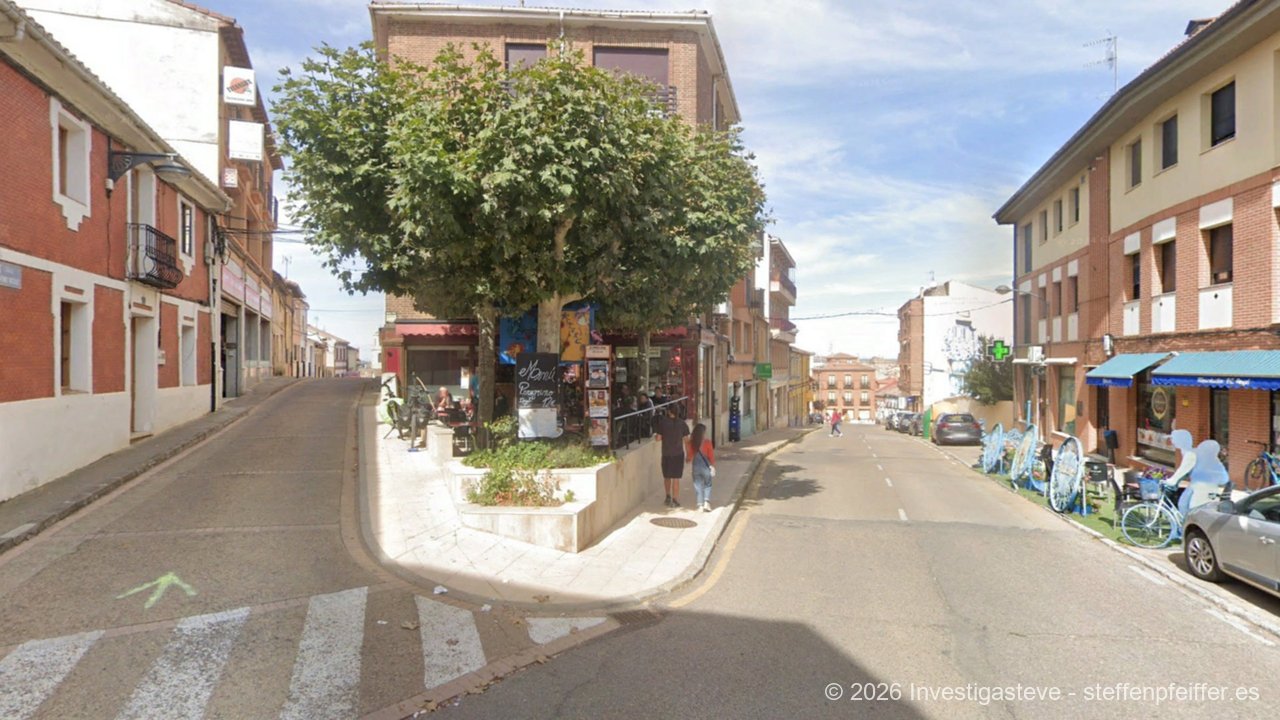
7. Calle Mayor: The pulsating heart of the city. Enjoy the bustle under the arcades and let yourself be carried away by local life.
8. Plaza Mayor: The central square with its typical half-timbered houses and arcades. A perfect place for a café con leche and watching other pilgrims.
Insider Tips & Hidden Places
Beyond the great monuments, Sahagún conceals corners that only reveal their magic to those who stop time. One such place is the small park on the bank of the Río Cea, just behind the medieval bridge. While most pilgrims hurry into the city, you will find shaded spots here under old willows. The ground here is soft and mossy, a tactile blessing for battered feet. You hear only the gurgling of the river and the rustling of leaves. It smells of damp wood and fresh greenery – a psychological refuge to process the impressions of the last days on the Meseta before diving into the bustling activity of the city.
Another hidden treasure is the chapel of the Virgin of the Bridge (Ermita de la Virgen del Puente). It lies about two kilometers before the city and is often overlooked. Those who pause here find an intimate atmosphere that stands in stark contrast to the monumentality of San Benito. The walls exude the cool smell of old stone and candle wax. When you place your hand on the rough outer wall, you feel the historical causality of simple popular piety that has preserved this place for centuries. It is a place of absolute acoustic isolation, where you hear your own heart beating – a rare moment of pure presence on the often so noisy Camino.
For lovers of silence, a visit to the small cemetery on the edge of the city is recommended. The cemeteries in Castile have a very special, dignified aesthetic. Between the cypresses and the simple tombstones of local stone, there is an atmosphere of timeless tranquility. Here you feel the psychological connection to all those who walked this path before us and found their final rest here. It is not a sad place, but one of deep emotional metamorphosis, reminding us that we are all only wanderers between worlds. The light falls particularly softly here through the trees, casting dancing shadows on the ground.
A true insider tip for the palate is the search for the small, inconspicuous bakeries in the side streets off Calle Mayor. Ask for “Nicanores de Boñar” or the local almond specialties, often still baked according to 19th-century recipes. The tactile experience of holding a still-warm pastry wrapped in paper in your hands while strolling through the brick-red alleys is pure happiness. The scent of sugar and roasted almonds combines with the cool morning air to create an unforgettable moment of sensory pleasure. These small escapes from pilgrim routine are what anchor Sahagún in memory.
Moment of Reflection
Sahagún is more than a geographical point on the map; it is a psychological touchstone. Those who arrive here have often covered the hardest kilometers of the Meseta. The city acts as a mirror of one’s own journey. In the monumentality of the Mudéjar churches, you recognize your own strength that you needed to get this far. At the same time, the ruins of San Benito admonish humility. Historical causality teaches us: nothing remains as it is, except change itself. This realization triggers an emotional metamorphosis. You are no longer the same person who started in the Pyrenees. The dust of Sahagún is different from the dust of Pamplona – it is more mature, more knowing.
When contemplating the brick-red façades at sunset, a deep clarity often sets in. The symmetry of the arches reflects the desire for order in one’s own life. Sahagún offers the space to find this order. It is the vestibule to the goal of Santiago, a place of the last great breath. The tactile experience of the brick, which stores the warmth of the day, becomes a symbol for the inner warmth and confidence gathered on the path. Those who leave Sahagún usually do so with a new firmness in their step. They have touched the heart of the Meseta and found that it consists of warm clay, flowing water, and unshakeable faith.
Camino of the Stars
This place lies on the Camino Francés, on the stage from Carrión de los Condes to Sahagún. The sequence of places is:
Carrión de los Condes → Calzadilla de la Cueza → Ledigos → Terradillos de los Templarios → Moratinos → San Nicolás del Real Camino → Sahagún → Calzada del Coto → Bercianos del Real Camino → El Burgo Ranero → Reliegos → Mansilla de las Mulas
Did you find your own symbolic midpoint in the brick-red alleys of Sahagún? Was it the moment under the arches of San Tirso or the cool silence on the banks of the Cea that touched you deeply? Share your experiences, your photos of the Mudéjar wonders, or your tips for the best leek in town with us. Every story helps keep the monumental heritage of this place alive for all pilgrims!
About the Author