A First Glance – Introduction & Atmosphere
When the pilgrim, after the long, often dusty stages through the Tierra de Campos, gradually approaches the horizon, something peculiar happens: the infinite horizontality of the Meseta is suddenly broken by a marvel of engineering and an architectural pearl of Romanesque. Frómista does not receive the walker merely as another settlement in the Castilian wasteland, but as an oasis of symmetry and coolness. The first contact with the place is often acoustically characterized by the steady, almost hypnotic rushing of the water at the Esclusa Cuádruple, the four-tiered lock of the Canal de Castilla. This sound forms a sharp, refreshing contrast to the dry whistling of the wind over the grain fields. It is the acoustic signal for a profound change of environment: away from the dust, towards civilization and aesthetic perfection.
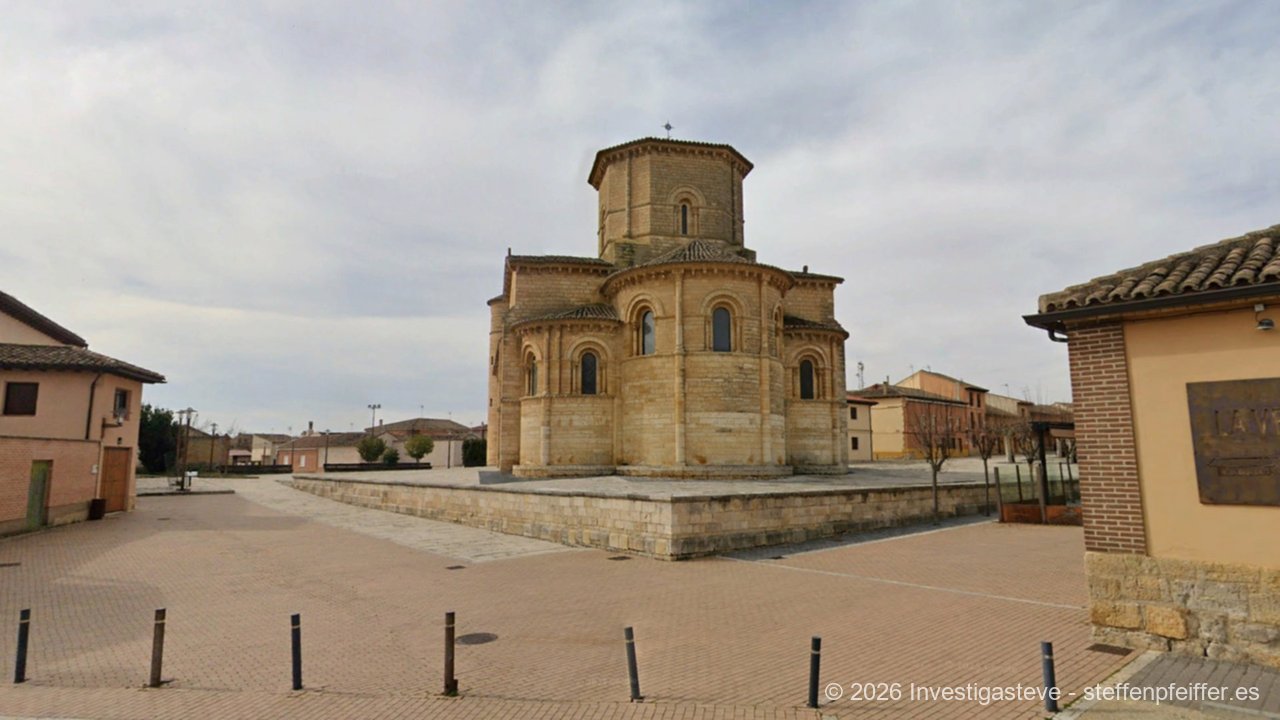
The visual immersion upon entering Frómista is overwhelming. Amidst the ochre-colored adobe houses and the reddish brick buildings stands the Iglesia de San Martín de Tours, like a prayer hewn from light limestone. The light of the province of Palencia has a special quality here; it seems not only to illuminate the smooth surfaces of the Romanesque ashlars but to make them glow from within. Olfactorily, the heavy, damp scent of the canal water mixes with the tart aroma of rosemary and thyme thriving in the town’s well-kept gardens. Tactilely, you feel the transition from the soft marl soil of the path to the firm, history-soaked pavement of the town. Psychologically, this sight triggers an immediate emotional metamorphosis. The exhaustion of the Meseta gives way to deep awe. You no longer feel just as a walker, but as a witness to a time when geometry and faith merged into an inseparable unity. Frómista is the reward for the hardships of the preceding kilometers, a place that orders the mind and heals the eye.
What This Place Tells
The history of Frómista is a palimpsest of royal ambition, monastic discipline, and enlightened progress. It all begins in the 11th century with Doña Mayor of Castile, the widow of Sancho Garcés III of Navarre. She founded the Benedictine monastery of San Martín, whose church today is considered the “Purest Jewel of Spanish Romanesque.” The historical causality is tangible here: in a time of Repoblación, the repopulation after the Reconquista, Frómista served as a cultural and spiritual anchor point. The architecture of San Martín tells of the close connection to the monastery of Jaca and the castle of Loarre; you feel the tactile influence of the wandering stonemasons who carried their mastery from the Pyrenees deep into the heart of Castile. Each of the over 300 capitals and corbels (canecillos) tells its own story – of mythical creatures, sinful humans, and divine order. It is a visual encyclopedia of the medieval mind, inviting the observer to psychological introspection: Where do I stand in this order?
A completely different chapter of history is opened by the Canal de Castilla, whose construction began in the 18th century under the reigns of Ferdinand VI and Charles III. It was the most ambitious infrastructure project of the Spanish Age of Enlightenment, conceived to transport the grain of Castile to the northern ports. In Frómista, these two worlds intersect: the medieval spirituality of the Camino and the technological optimism of the 18th century. The four-tiered lock is a tactile monument to the human will to tame nature. You hear the dull roaring of the water masses as they overcome the differences in height, a sound that tells of economic prosperity and technical skill. This historical stratification gives Frómista a unique depth. It is not a place frozen in one era, but a living archive of human progress.
Moreover, Frómista was a significant center of Jewish life in Castile. The Judería, the Jewish quarter, contributed substantially to the town’s economic wealth before the expulsion of 1492 left deep wounds. The historical causality of this loss is still felt today in the melancholic silence of some alleys off the main route. Psychologically, Frómista challenges the pilgrim to process these contrasts: the luminous perfection of the Romanesque, the cool logic of the canal, and the shadows of religious conflicts. When you place your hand on the rough walls of the Iglesia de Santa María del Castillo, you feel the weight of the centuries. The town whispers of a time when Frómista was the “Rome of Castile,” a hub of ideas, trade, and souls. This historical immersion is what makes the stay here so valuable; you understand the Camino no longer merely as a path, but as a network of causalities that continue to shape us today.
Addresses & tips in Frómista
Camino Distances
Frómista marks a significant logistical turning point in the Palencian Meseta. The path here is flat, often running along the water or on paved paths.
| Previous Place | Distance (km) | Next Place | Distance (km) |
|---|---|---|---|
| Boadilla del Camino | approx. 5.7 km | Población de Campos | approx. 3.4 km |
Sleeping & Arriving
Arriving in Frómista is an experience that engages all the senses and immediately alleviates the psychological burden of the Meseta stage. When you cross the bridge over the Canal de Castilla, the acoustics change dramatically. The distant roaring of the locks becomes the dominant soundtrack. It is a tactile feast when the pilgrim sets aside their dusty shoes and perhaps even dips a hand into the cool canal water – a moment of thermal redemption. Arrival at the central square, where San Martín stands majestically, is the visual highlight. The accommodations in Frómista, such as the well-known Hotel Doña Mayor or the numerous hostels, offer hospitality deeply rooted in the town’s history. You feel the tactile heritage of the Benedictines in the thick stone walls, which maintain a natural coolness in summer and retain warmth in winter.
In the dormitories of the hostels, the smell of fresh laundry mingles with the cool aroma of the centuries-old limestone. Psychologically, arriving here offers immense relief; Frómista has a complete infrastructure that gives the pilgrim the feeling of being back in a world of possibilities. The acoustic panorama of the evening is characterized by the clinking of glasses in the bars under the arcades and the soft murmuring of pilgrims discussing the geometric perfection of San Martín. An emotional metamorphosis occurs from the solitary introspection of the fields to the social interaction of the town. You feel the historical causality of pilgrim care; Frómista was always a place of protection and rest.
Claiming a bed in one of the hostels is a tactile ritual of grounding. Many accommodations are housed in restored buildings whose wooden beam ceilings smell of old oak and history. Those who look out the window at night see the illuminated towers of the churches, standing like stone lighthouses in the Castilian night. The psychological feeling of security is particularly strong here. You hear the distant call of an owl and the gentle lapping of the canal – a lullaby that calms the mind for the coming kilometers. Staying overnight in Frómista means being part of an uninterrupted stream of seekers who have drawn strength for 1000 years within these very walls.
The morning in Frómista often begins with the scent of fresh coffee and “Sequillos,” the typical pastry of the region. It is an olfactory signal for departure. Tactilely, you prepare by tightening the straps of your backpack, while the cool morning air fills your lungs. You leave your quarters with a mental clarity inspired by the town’s architectural order. The path leads out along the canal, and the rhythmic clicking of hiking poles on the asphalt forms the acoustic transition back into nature. Arriving and staying overnight in Frómista is thus not merely a logistical stop, but a spiritual recalibration.
Eating & Drinking
The gastronomy in Frómista is a powerful love letter to the Tierra de Campos. Here, you don’t just eat; you taste the history of Castile. The first olfactory impression upon entering one of the local restaurants is dominated by garlic, olive oil, and the smoky aroma of lamb roasted in a wood-fired oven. The “Lechazo Churro,” the suckling lamb of the Palencia region, is a culinary sanctuary. When you taste the tender meat, which almost falls off the bone without resistance, you experience a tactile sensation. The taste is intense, characterized by the aroma of the herbs the sheep graze on across the wide plains. It is a five-dimensional experience, where the crackling of the crispy skin acoustically underscores the enjoyment.
Another highlight is the “Menú del Peregrino,” often prepared in Frómista with a care that goes beyond the standard. The “Sopa de Ajo,” the garlic soup, smells of comfort and tastes of the hard work of the farmers. The tactile feeling of coarse, artisanally baked bread dipped into the soup is an act of grounding. You drink a robust red wine from the region with it, whose deep, ruby red color glows in the light of the evening sun. Its taste carries notes of ripe berries and mineral earth – a liquid concentrate of the Castilian landscape. Psychologically, the communal meal at the long tables of the hostels is a moment of total community, where language barriers melt away in the scent of the food.
For those with a sweet tooth, Frómista offers “Sequillos” and “Rosquillas,” crumbly pastries often still made according to monastic recipes. The smell of anise and powdered sugar in the small bakeries is enchanting. When you bite into such a pastry, you feel the crumbly texture that melts on the tongue – a sweet contrast to the hearty heaviness of the lamb. The historical causality of culinary traditions here is closely linked to the religious calendar; you taste the fasts and feast days of the centuries. Those who dine in Frómista absorb the essence of the region. It is an emotional metamorphosis through the stomach that strengthens the pilgrim physically and mentally for the wide fields waiting beyond the town limits.
Supplies & Logistics
Frómista functions as the logistical backbone for the central part of the province of Palencia on the Camino. For the pilgrim, this means all-round supply that leaves nothing to be desired. The town is compact enough to reach everything on foot, yet offers the amenities of a regional capital. The psychological security of encountering such functioning infrastructure in a region of dwindling villages is an enormous relief for many walkers.
Shopping: There are several well-stocked supermarkets and small specialty shops where you can buy regional cheese and wine. The bakeries offer the famous pilgrim bread, which remains tactilely appealing and tasty even after days in the backpack.
Gastronomy: From budget tapas bars to upscale restaurants like “Los Templarios,” everything is represented. The bars on the Canal de Castilla offer an acoustic and visual idyll for the lunch break.
Accommodation: The range extends from church hostels with historical flair to modern hostals. In total, over 200 beds are available, making Frómista a safe haven.
Public Facilities: The town has a health center (Centro de Salud), several pharmacies, post office, and banks with ATMs. The train station connects Frómista with Palencia and Santander, allowing for flexible travel planning.
Frómista’s logistical importance is also underscored by its function as a crossing point between the Camino and the Canal de Castilla. Acoustically, the town is occasionally underscored by the distant whistling of trains, a constant reminder of the modern world peacefully coexisting with the Romanesque silence. Tactilely, you prepare here for the lonelier stages towards Carrión by replenishing supplies and checking equipment. The emotional relief of being able to handle all organizational matters in one place gives the pilgrim back the mental freedom needed for the spiritual dimension of the path. Frómista is logistical perfection in stone and water.
Don’t Miss
1. Iglesia de San Martín de Tours: The architectural centerpiece. Admire the perfect symmetry and the over 300 canecillos – each a unique piece of medieval sculpture. The cool sacred stillness inside offers a psychological refuge of inestimable value.
2. Esclusa Cuádruple on the Canal de Castilla: Observe the engineering of the 18th century. The rushing of the water at the four lock stages is an acoustic experience of the highest order and illustrates the historical causality of progress.
3. Iglesia de San Pedro: A Gothic church with an impressive Renaissance altarpiece. The smell of old wood and history is particularly intense here.
4. Iglesia de Santa María del Castillo: Today, it houses a multimedia exhibition (“Vestigia”) that makes the history of the Camino visually and audibly experienceable – a modern bridge to the past.
5. Walk along the towpath (Sirga): Use the canal path for a tactile walking experience on soft ground under shady trees – a blessing for battered feet.
6. The Pilgrim Monument: A modern accent inviting reflection on your own journey and the millions before us.
7. The sunset over the Tierra de Campos: Find a spot on the edge of town. When the light of the setting sun bathes the infinite plain in gold and violet, you feel the true magic of Castile.
Insider Tips & Hidden Places
Beyond the great monuments, Frómista conceals corners that only reveal their magic to those who stop time. One such place is the old Jewish quarter, whose traces you find in the narrow alleys behind the Plaza Mayor. Here, the acoustics are more muted, the shadows deeper. When you place your hand on the rough, partially weathered adobe walls, you feel the historical weight of a displaced culture. It is a place of psychological melancholy, offering an important contrast to the luminous splendor of San Martín. You often smell the scent of dry wood and cellar dampness here, an olfactory archive of rural everyday life.
Another insider tip is the small bridge over one of the side arms of the canal, a bit off from the Esclusa Cuádruple. Here you find an almost unreal silence, only broken by the distant clattering of storks. The ground here is often covered with soft moss, a tactile pleasure when you settle down for a moment. You observe the slow drift of water plants, a visual symbol of the deceleration the Camino teaches. It is the perfect place for a silent meditation on the historical causality of water management, far from the tourist bustle of the main lock.
Those who keep their eyes open will find small, almost faded stonemason’s marks on the outer façade of San Martín, about two meters above the ground. When you trace these with your fingers, you establish a tactile connection to the craftsmen of the 11th century. It is an emotional bridge across the millennia. Each mark is an individual signature, a voice from the past telling of pride and hard work. This discovery is an insider tip for the mindful pilgrim who wants not only to consume history but to touch it.
Finally, a short visit to the old train station of Frómista at dusk is worthwhile. The 19th-century architecture radiates a nostalgic calm. The cool breeze that often blows there smells of iron and distance. It is a place of psychological reflection on travel itself – from the pilgrim staff to the steam locomotive. In this moment of silence, you understand Frómista as an eternal transit space, a place of transition that changes every walker a little. The light of the first street lamps breaks on the rails, drawing golden lines into the darkness, a visual echo of the Camino that leads us ever onward.
Moment of Reflection
Frómista challenges the pilgrim to comprehend the beauty of order and the logic of flow. In the discrepancy between the perfect symmetry of San Martín and the unceasing flow of the canal, human life is reflected: the striving for a stable, divine center and the necessity to adapt to the current of time and progress. The psychological effect of Romanesque architecture is profound; its clear lines order the chaos of pilgrim thoughts. You learn here that perfection lies not in size, but in the proportion of parts to one another. The tactile experience of the cool limestone acts like an anchor in the fleeting world of the Meseta.
When looking at the locks, the question often arises: What obstacles in my own life must I overcome to continue flowing? The historical causality of the Esclusa Cuádruple as a technical marvel reminds us that obstacles can be overcome through intelligence and perseverance. This realization triggers an emotional metamorphosis; you no longer see the coming kilometers as hardship, but as part of a flowing process. Frómista teaches us the poetry of engineering and the statics of prayer. Those who leave this place usually do so with a new inner firmness. They have touched the heart of Romanesque and learned that true beauty arises where man connects equally with the earth and the sky. It is the preparation for the coming plains, a school of aesthetic and spiritual clarity.
Camino of the Stars
This place lies on the Camino Francés, on the stage from Castrojeriz to Frómista. The sequence of places is:
Castrojeriz → Itero de la Vega → Boadilla del Camino → Frómista → Población de Campos → Revenga de Campos → Villarmentero de Campos → Villalcázar de Sirga → Carrión de los Condes
Did you find your own inner center in the geometric perfection of San Martín, or did the roaring of the locks on the Canal de Castilla inspire entirely new thoughts in you? Share your experiences in Frómista with us! Perhaps you took a photo of the over 300 capitals or discovered a very personal insider tip on the canal bank? We look forward to your story, which makes this place of perfection even more alive for all of us!
About the Author