First Glance – Introduction & Atmosphere
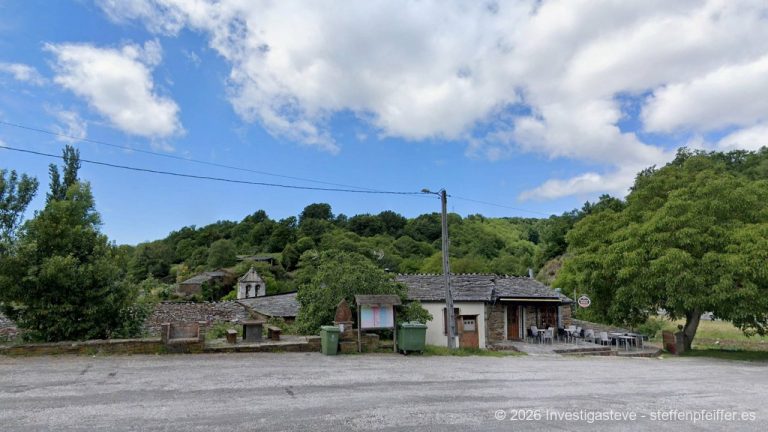
When you have left the mystical summit of O Cebreiro behind and the path leads you deeper into the rugged, almost archaic mountain landscape of the province of Lugo, you reach Hospital da Condesa – a place that towers like a stone exclamation mark of humanity in the barren landscape. It is not a village in the classical sense, but a grown shelter, a soothing pause at almost 1,300 meters above sea level. As soon as you enter the hamlet, you feel a radical change in the atmosphere: the often sharp mountain winds break against the massive granite walls of the stocky houses, and a deep sense of security settles over your senses. The air here smells of damp slate, the pungent scent of wild broom, and the unmistakable, smoky aroma of burning oak wood rising from the chimneys of the ancient homesteads – an olfactory signal that has hung unchanged over this high plateau since the 9th century.
The acoustic panorama of Hospital da Condesa is dominated by a silence so dense that you perceive the rhythmic, almost meditative tapping of your own pilgrim staffs on the rough asphalt of the village street as an echo of history. Only occasionally is this stillness interrupted by the distant, melancholic ringing of cowbells or the shy chirping of mountain birds nesting in the shelter of the low walls. Psychologically, this place marks a decisive threshold: here, in the midst of Galicia’s unyielding nature, you suddenly become aware that you are no longer fighting against the mountains, but being embraced by them. The visual experience is shaped by the gray heaviness of the granite, which in the often prevailing fog takes on an almost silvery aura, and the deep green of the surrounding meadows, which glows almost unreal in contrast to the leaden sky. In Hospital da Condesa, you are no longer a simple hiker; you become the guest of a centuries-old tradition of protection and refuge.
What This Place Tells
The story of Hospital da Condesa begins with the name of a woman whose kindness was stronger than the harshest Galician winter: Countess Egilo. In the historical causality of the 9th century, it was this noble visionary who recognized that without a fixed anchor point at this exposed spot, the road to Santiago would mean the end of many pilgrims’ journey – or their lives. She founded a pilgrim Hospital here, which gave the place its name and purpose. As you walk past the walls today, you feel the historical immersion in every crevice; you can easily imagine the monks and hospitallers of the countess opening the heavy wooden gates to rescue exhausted souls from the lashing snowstorm. This is a place that does not tell of wars or conquests, but of the existential logistics of charity.
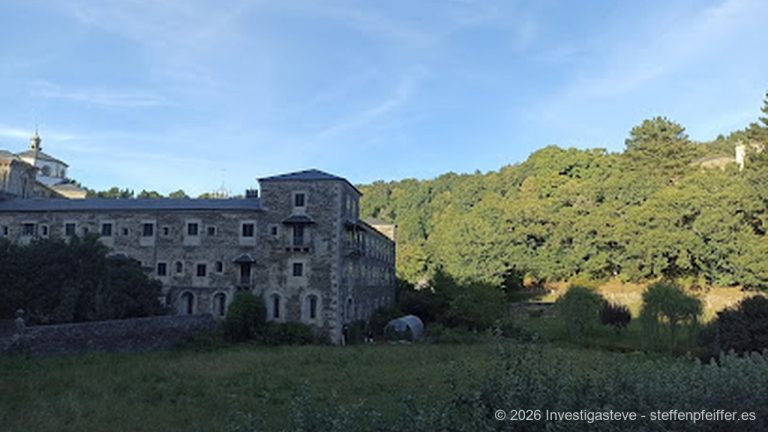
The heart of the local history is undoubtedly the Iglesia de San Xoán, a fortified church of almost stark beauty. Its architecture is a direct response to the highland conditions: massive stone, tiny window openings, and a defiant bell tower that acts like a lighthouse in the sea of fog. The historical permanence of this building is impressive; despite numerous restorations, the church has retained its archaic character. Inside, it smells of old incense and cool granite, a smell that works like a time capsule, connecting you directly with those generations of seekers who have prayed here for over a thousand years for blessings for the onward path. In Hospital da Condesa, history is not read but experienced through the soles of your feet and the tips of your fingers as you touch the rough texture of stone that has already weathered so many storms.
But this hamlet also tells a quieter, almost forgotten story of self-sufficiency. For centuries, the village was a closed system, where humans and animals often lived under one roof to keep each other warm – a tradition reflected in the stocky construction of the farmsteads. The psychological depth of the place lies in its indomitability. While time raced forward in the valley, Hospital da Condesa remained a guardian of slowness. Here you learn that true wealth consists of safe shelter and a warm meal. The permanence of the place is a testament to the unshakable will of the Galician mountain people, who refused to leave their post on the Camino despite the harsh living conditions. As you walk through these alleys, you hear the echo of oxcarts and the whisper of medieval pilgrims in every gust of wind that whistles through the cracks in the slate roofs.
Addresses & tips in Hospital da Condesa
Camino Distances
Hospital da Condesa lies on the ridge of the Galician mountains, about halfway between the starting point O Cebreiro and reaching the highest pass at Alto do Poio.
| Previous Location | Distance (km) | Next Location | Distance (km) |
|---|---|---|---|
| Liñares | approx. 2.5 km | Padornelo | approx. 2.4 km |
Sleeping & Arriving
Arriving in Hospital da Condesa feels like reaching a saving plateau after a stormy sea. When you have left the last meters of the gently rising path behind you and the first stone houses of the hamlet emerge from the fog, the physical tension of the past kilometers suddenly falls away from you. There is no hustle and bustle here, no anonymity; arrival is shaped by the simple, honest warmth of the public Albergue de Peregrinos de Hospital da Condesa. This accommodation is far more than just a place to sleep; it is the modern continuation of the countess’s hospitalitas. The acoustic signal of checking in is the dull thud of backpacks on the wooden benches and the relieved sighs of pilgrims who lay down their aching limbs to rest.
The rooms in the hostel offer that form of recovery found only in the barren silence of the mountains. The cool air, filtered through the thick granite walls, creates a microclimate that immediately slows down your body. It is a sensory experience to lie down on the fresh sheets after a shower and feel how the coolness of the room draws the heat of exertion from your muscles. The psychological effect of this environment is immense: up here, on the “roof” of Galicia, you feel closer to the sky and at the same time deeply rooted in the ground of history. Spending the night in Hospital da Condesa means reducing yourself to the essentials and understanding silence as the most valuable asset of regeneration.
The sanitary facilities in the hostel are functional and clean, and the feeling of hot water on tense shoulders after a wind-whipped day becomes the ultimate luxury up here. Arriving here becomes a ritual act of cleansing; you wash your clothes in the provided tubs, smell the scent of fresh soap, and let your things dry in the steady mountain wind. It is a process of psychological metamorphosis, in which you shed the dust of the stage and prepare yourself inwardly for the kilometers ahead. Whoever spends the night here consciously chooses against the hustle of the larger stage destinations and for the intimate community of a small group of hikers who spend the night under the protection of Countess Egilo.
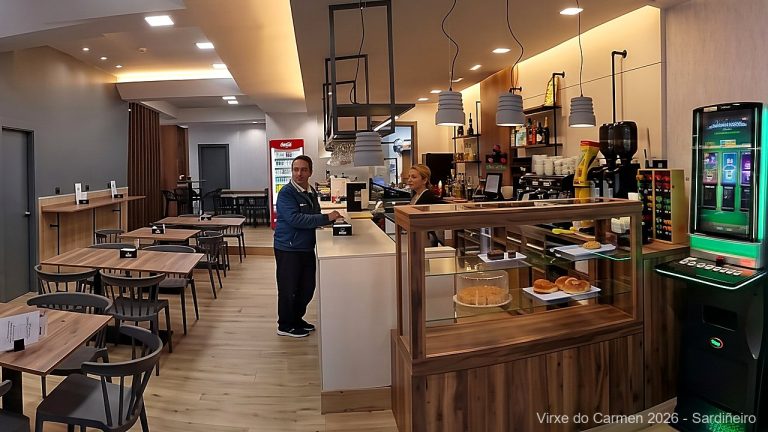
Particularly noteworthy is the bar-pension, which often serves as the second anchor of the village. Here, arriving is associated with the smell of strong Galician coffee and the hearty aroma of freshly baked bread. In the cozy guest room, the languages of the world mix with the local dialect, creating an auditory panorama of community. You sit at massive wooden tables, share stories, and feel the warmth of the room embracing you like a hug. This feeling of being unconditionally welcome in a harsh environment makes the stay in Hospital da Condesa a healing experience for the soul. Those who come to rest here will wake up the next morning with a clarity that will carry them lightly toward the summit of Alto do Poio.
Eating & Drinking
The culinary world of Hospital da Condesa focuses entirely on the honest, powerful mountain cuisine of Galicia, essential for survival at these altitudes. The culinary heart of the hamlet beats in the small bars, where food is celebrated as an act of existential satiety. The smell that wafts through the dining rooms in the late afternoon is an olfactory promise: the intense aroma of freshly prepared Caldo Gallego, that nutritious soup of cabbage, potatoes, and white beans, which up here is often enriched with especially generous amounts of bacon. The warmth of the soup bowl in your often-cool hands is the first step toward physical revival after the march through the damp mountain air.
Alongside Caldo Gallego, the meat-rich cuisine of the Lugo region is ever-present. You taste juicy Galician beef or spicy chorizos, which develop their full flavor with the addition of coarse sea salt and sweet paprika. Served alongside is the heavy, crusty Galician country bread, whose crust gives a loud, audible sign of freshness and traditional baking craftsmanship when broken. For drinking, they often serve the region’s characterful wine in white ceramic bowls, the cuncas. The cool weight of the bowl in your hand and the earthy taste of the wine form the perfect soundtrack for a moment of deep gratitude. Eating in Hospital da Condesa means literally absorbing the power of the mountains.
The psychological component of eating in this village lies in the community of reduction. You do not enjoy sterile menus here, but honest portions prepared by people who have known the rhythm of the Camino for generations. The taste of homemade desserts, like a piece of Tarta de Santiago with its fine almond aroma, rounds off the culinary experience and provides the necessary energy for the steep ascent to Alto do Poio. Those who dine in Hospital da Condesa take in a piece of Galician joy of life that will carry them through the next kilometers. It is food for the soul, teaching you that true pleasure lies in simplicity and closeness to the source.
Supplies & Logistics
Logistically, Hospital da Condesa is a place of concentration on the essentials. As a pilgrim, you must be aware that this hamlet is not a shopping mall in the modern sense; rather, it functions as a highly efficient rest stop at a strategically important point on the stage. The administrative simplicity of the place is more than compensated for by the high quality of reliable basic services.
Shopping: There are no supermarkets or independent stores on site. Pilgrims should have already stocked up on major supplies, especially medications or hiking gear, in Pedrafita do Cebreiro. Small snacks, water, and refreshments can usually be obtained from the vending machines in the hostel or the bar’s offerings. For comprehensive shopping, Triacastela, about 8-9 km away, is the next destination.
Gastronomy: Food supply is well covered by the bar-pension and the hostel. Here you will find hot meals, breakfast, and provisions specifically tailored to the high calorie needs of mountain hikers. Opening hours strictly follow the flow of pilgrims.
Accommodation: With the public Xunta hostel and private guest rooms, there is considerable capacity for the size of the place. Nevertheless, early arrival is recommended in high season, as Hospital da Condesa is a popular “backup stop” for those who want to avoid the often overcrowded quarters in O Cebreiro.
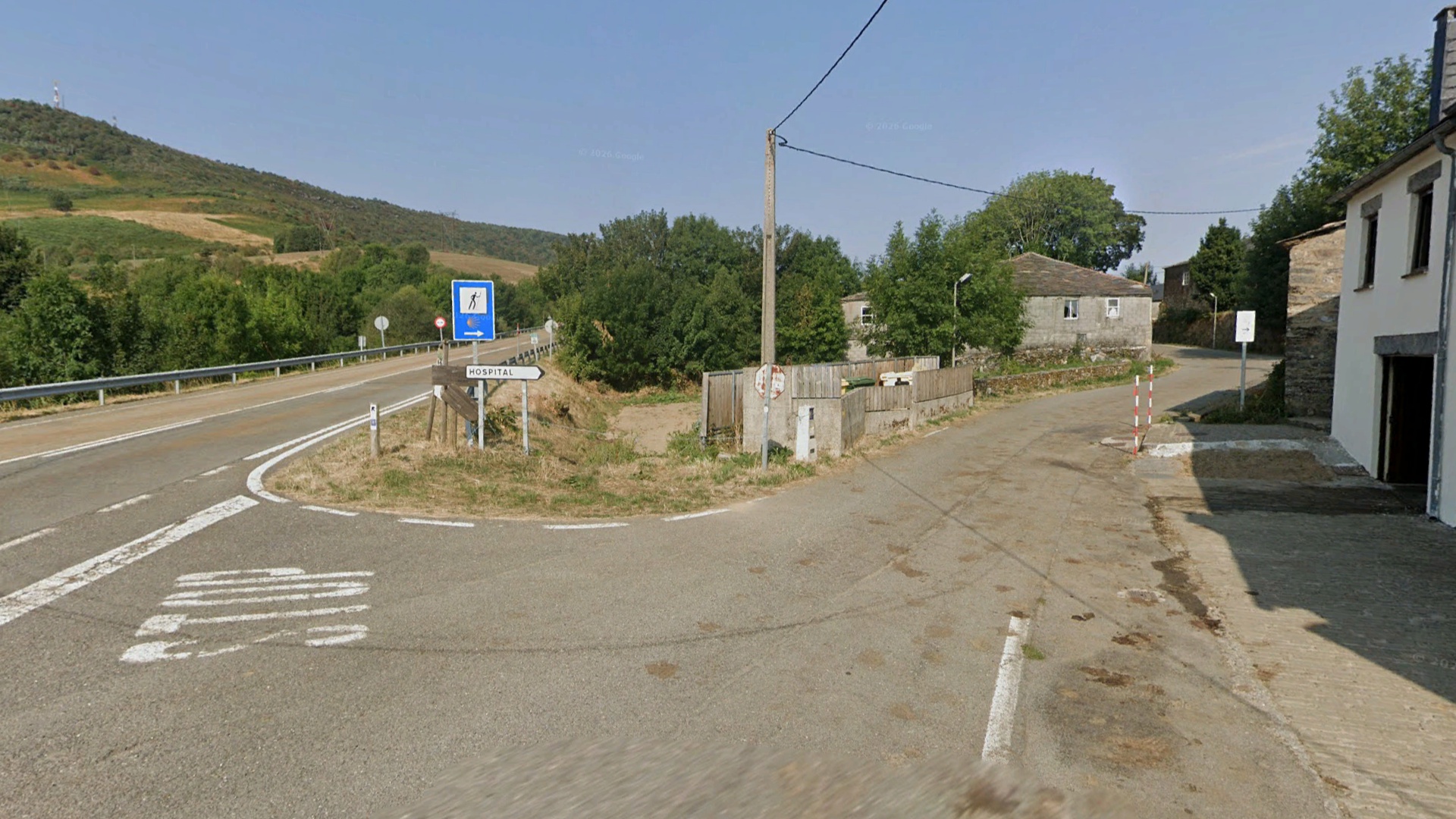
Public Facilities: There are no medical facilities, banks, or post offices in Hospital da Condesa. All formal administrative infrastructure must be used in nearby Pedrafita or Triacastela. In an emergency, however, access via the nearby country road LU-633 is excellent, and emergency services are quickly reachable via 112.
Safety in Hospital da Condesa is extraordinarily high due to the clarity and social control of the small community. You immediately feel part of a protected world. Acoustically, the place remains an oasis as long as you stay away from the immediate vicinity of the thoroughfare. Logistically, the hamlet functions as a “check-in of attention” – here you do not check your luggage weight, but your mental state for the upcoming ascent to the highest pass of the region. Hospital da Condesa proves that good pilgrim logistics consist not in the number of shops, but in the reliability of basic services at a historically significant point.
Don’t Miss
- The Church of San Xoán: Visit this 12th-century Romanesque gem and feel the silence between the ancient granite walls – a place of deep spiritual immersion.
- The stone village scene: Stroll through the single alley and notice the massive granite ashlars of the farmsteads, which have endured for an eternity without modern mortar.
- The 100-km marker: Keep an eye out near the place for the symbolic marker showing that the destination Santiago is now within reach – a psychological milestone.
- The Caldo Gallego at the bar: Try this traditional soup right on site; it is considered the best fortification for the further ascent to Alto do Poio.
- The panorama of fog: When drizzle passes over the place, enjoy the mystical atmosphere that transforms Hospital da Condesa into a timeless painting.
- The stonemason marks on the church: Look for the secret signatures of the medieval builders on the outer wall – a tactile contact with history.
Insider Tips & Hidden Places
Off the main route, just a few steps behind the Iglesia de San Xoán, a narrow path leads to a small, almost hidden cemetery bounded by a low stone wall. Here, time seems to have come to a complete standstill. In this corner, it smells intensely of wild thyme and wet earth. It is the perfect spot for private reflection or a small meditation, far from the cameras and conversations of other hikers. Here you feel the primal power of the Galician mountain landscape, just as the hospitallers saw it eight hundred years ago. The ground here is soft and covered with moss, making every step silent and fostering a deep psychological calm that is often missing in the hectic pilgrim stream.
Another hidden treasure is the small stone fountain on the western edge of the village, often overlooked by hurried passersby. The water there is ice-cold and of a clarity rarely found today. It is said that this fountain has been the source for the pilgrim soups at the Hospital for generations. When you dip your hands into the water, you feel a freshness that immediately clears your senses and drives away the fatigue from your limbs. In the evening hours, when the light falls flat across the granite walls, light reflections on the water’s surface sparkle like little diamonds. It is a place of ritual cleansing, as might have been used by medieval pilgrims to wash the dust of the stage from their skin.
Did you know that in Hospital da Condesa there is a spot where the echo of your own voice is thrown back from the opposite mountains in a very specific way? When you stand at the right point and speak softly, the wind seems to catch the words and bring them back as a gentle whisper. This auditory phenomenon intensifies the sense of mystical presence that surrounds this place. It is as if the landscape itself is communicating with you. Those who take the time to explore these acoustic nuances discover a Hospital da Condesa that is far more than just a hamlet along the road – it is a place of subtle vibrations that reveals itself only when you adjust your pace to the speed of the soul. Such discoveries are the real gold of the Camino.
Finally, at dusk, it is worth looking at the silhouettes of the old chimneys, which act like archaic guardians of the domestic community. When the last daylight disappears behind the mountains, these soot-blackened structures appear almost alive. The smell of damp stone and the cool breeze whistling through the alleys create an atmosphere of timeless permanence. Those who lose themselves in these moments in Hospital da Condesa often find a part of themselves that they had forgotten in the hustle of daily life. The village offers the rare opportunity to reflect once more in absolute silence on your own journey just before reaching the 100-kilometer mark, before the bustle of the larger stage towns catches up with you again.
Moment of Reflection
In Hospital da Condesa, you stand at a point of maximum spiritual density. The thousand-year-old tradition of offering help at this exposed place challenges you to think about your own willingness to provide support to others. In the cool silence of the Church of San Xoán, ask yourself: “What hospital do I build in my own life for people seeking protection and warmth?” The psychological metamorphosis that takes place in this hamlet is the shift from the identity of the solitary wanderer to that of a participant in an endless chain of giving and taking. Hospital da Condesa reminds you that no one masters the Camino – and life – entirely alone.
The historical causality of your being here connects you with Countess Egilo and the millions of pilgrims for whom this place was a spiritual lifeline. Do you feel the responsibility to carry forward this legacy of compassion? In Hospital da Condesa, you become aware that the Way is not a race against time, but a sequence of moments of presence. The coolness of the rough granite under your hands reminds you of your own resilience. Use this moment of reflection to readjust your inner compass. When you leave Hospital da Condesa tomorrow and tackle the steep ascent to Alto do Poio, take a piece of the chivalric dignity of this place with you. It will be your anchor when the hustle of Santiago finally reaches you.
Camino of the Stars
This place lies on the Camino Francés (French Way), on the stage from O Cebreiro to Triacastela. The sequence of locations is:
O Cebreiro → Liñares → Hospital da Condesa → Padornelo → Alto do Poio → Fonfría → O Biduedo → Fillobal → Pasantes → Triacastela
Did you also feel that particular shiver of history in the archaic silence of Hospital da Condesa, or did you draw new strength at the old stone fountain? Perhaps you were impressed by the fortress-like character of the Church of San Xoán, or did you have a special encounter in the small hostel? Share your personal impressions, your photos of the granite coats of arms, or your thoughts on the spiritual power of Countess Egilo with us. Every story brings this special threshold point on the Camino to life for the community – we look forward to your contribution!
About the Author