Greetings to you – from wherever you may have found your way here, you are here because the Way has called you. Like countless people before you today and in times past, you may come with a well‑packed rucksack full of hopes and expectations, seeking spirituality, a break from everyday life, the enlightening climax in the Cathedral of Santiago de Compostela, or the mythical end of the world. Welcome, from the bottom of my heart, to this platform and the Camino, as well as the provinces it traverses!
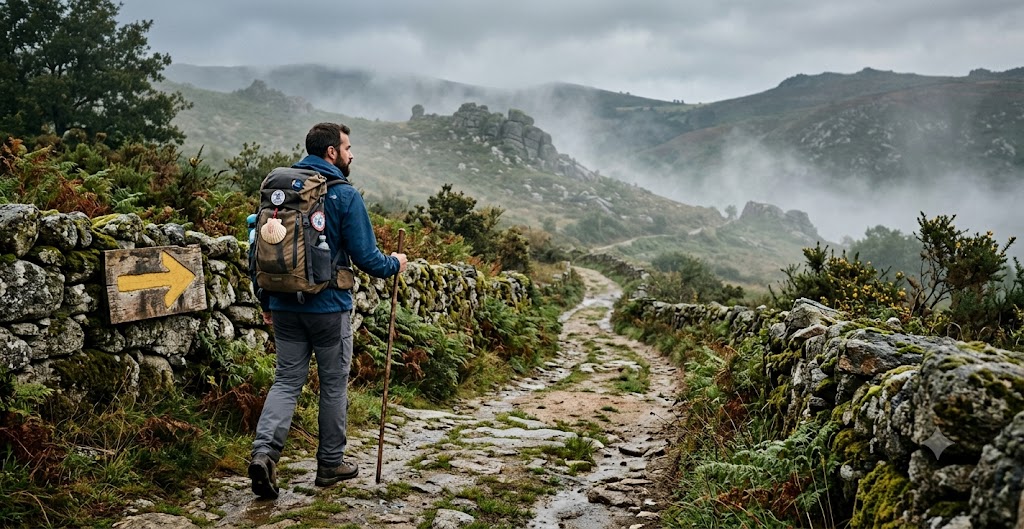
However, before you take your first step and follow the famous yellow arrows, feel invited to pause for a brief moment and look ahead. Today, it is temptingly easy to view the Camino de Santiago as a ready‑made, prepared backdrop. Often, a romantic journey through gentle landscapes is sold to us – an image that enthusiastic intellectuals of the 19th century poetically, but also heavily embellished, created for us. The old “Land of Jacob”, as the Vikings called it, was full of hardships. The modern world, on the other hand, makes it easy for us to drift along as mere cultural tourists and merely consume the history, as well as the legends and the yellow arrows.
But the Iberian Peninsula, from where you normally start at one of the points, as well as its provinces and, in detail at the end, Galicia and the Camino, are so much richer, rougher, and more genuine than any tourist brochure could ever capture. The ancient stones you will step on are silent witnesses to a turbulent, often uncomfortable, but deeply fascinating past. They whisper of Nordic warriors who once reverently called these coasts “Jacob’s Land,” of power‑conscious bishops who defended their flock not only with the cross but also with the crossbow, and of simple, courageous farmers who suffered under the tyranny of despotic feudal lords.
When the people here today meet you with their fine, sometimes impenetrable irony – which in Galicia is called Retranca – it is not merely a character trait. In that moment, you are looking at a masterful, centuries‑old survival strategy of silent resistance of strong peoples, among whom, for me personally, who lives here, one strong people stands out – the Galicians.
Feel invited, on your journey, to look beyond the fine mist of history, stories, myths, and legends. Because pilgrimage means more than just covering kilometres. It means appreciating and honouring the honest tradition of hospitality: as part of a brotherhood of giving and receiving, based on a simple, unwritten law: “The tourist demands, the pilgrim gives thanks.”
Even if many meaningful rituals of the past – such as the reverent touching of the central pillar in the Pórtico de la Gloria – today must rest behind barriers to protect the artworks: the actual rite, the inner and spiritual connection with all the millions of people who walked this path before you, remains alive. One only needs to know the true history to be able to feel it. This requires no physical touch – it requires an open mind willing to breathe it like a life‑giving breath.
„Pilgrim – go your way and let the people talk!“
Buen Camino!
Steffen aka Investigasteve
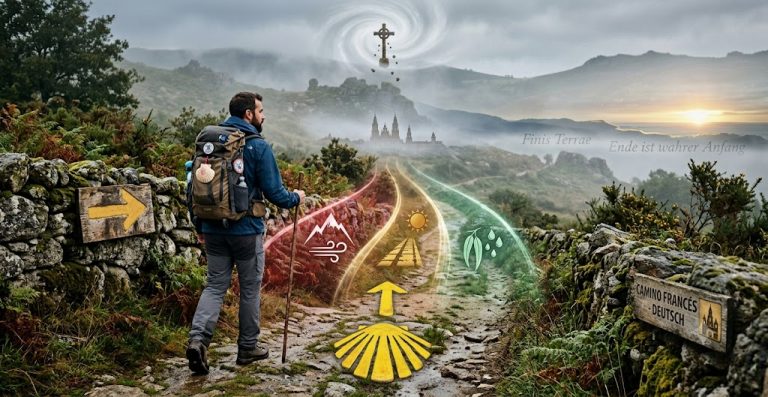
The Camino Francés: The Stone Echo of a Thousand-Year-Old Longing
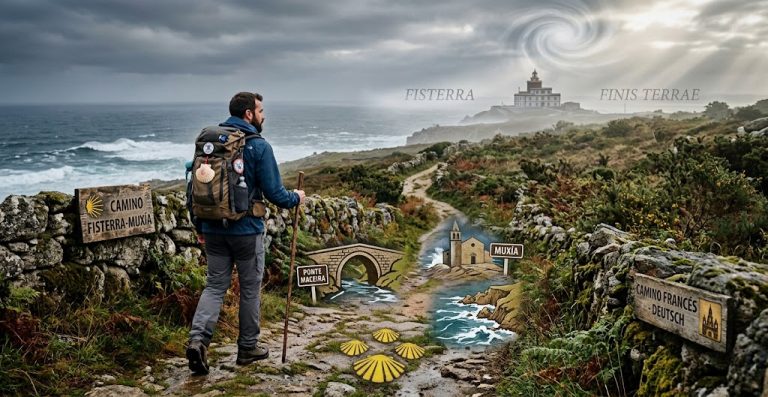
The Camino Fisterra-Muxía: The Sea as Answer
About the Author