It does not begin with a solemn departure, but with a damn courageous reversal. You stand on the Praza do Obradoiro, the Cathedral of Santiago behind you – that stone monument you have longed for over weeks or months. Actually, now, after the brilliant climax, it would be over. You book your flight, train or bus ticket, and return to everyday life. Of course, also to pay your bills and look your boss in the eye again. But you do something different and turn around. You choose the path to the west. That is where the old maps end and the untamed ocean, with its sea monsters dwelling within, begins.
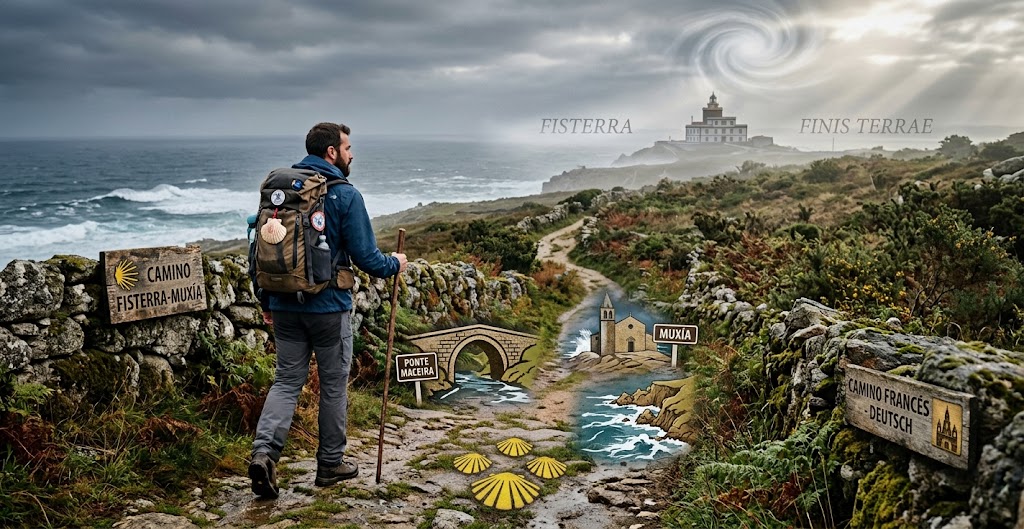
The Camino Fisterra-Muxía is not a gentle fade-out. It is a farewell to the illusion that there is such a thing as a clean, finished end in life. The first kilometres lead you through dense eucalyptus forests that smell of cough drops and wild nature, while the sharp scent mingles with the damp breath of the Río Tambre. And “damp breath”, by the way, is the poetic way of saying that everything is simply soaking wet here in the morning. Then you stand before the bridge of Ponte Maceira, a medieval masterpiece of granite, whose stones have been polished smooth by millions of feet over centuries – beautiful to look at, but woe betide you if it rains, then the historic ground becomes a slippery slope. The river here is so loud that it simply blows away your constant brooding about yesterday and tomorrow, and as you cross Negreira, Olveiroa and the lonely plateaus of the Terra de Soneira, you feel that there is no fixed goal ahead of you, only this one direction: towards the horizon, which seems to flee inexorably in the Galician grey-blue.
And then Muxía appears. The Virxe da Barca, the stone ship of the Mother of God, which seems to rise from the waves. Legend has it that the Apostle James found comfort here in the stone boat – a beautiful story that feels like a whisper from another time. Today you stand on the Pedras da Barca, these huge rocks on which the surf crashes so violently that the bass vibrates in your stomach. It is magical, yes. But it is also the place where the wind tears the hood from your head and shouts in your face: “Wrap up warm, Carallo, this is no petting zoo!” Anyone who stands here realises that the path is not over yet. Muxía is a spiritual waystation that pulls you on – past Lires, through pine forests, slowly but inexorably further south, always along the coast, while the Atlantic roars and foams to your left and the rhythm of the surf sets the pace for your aching steps. In Lires you can catch your breath for a moment, sit by the river and put your steaming feet in the cold water – but don’t get too comfortable, the path does not wait for your sentimentality, and the next shower usually announces itself on the horizon.
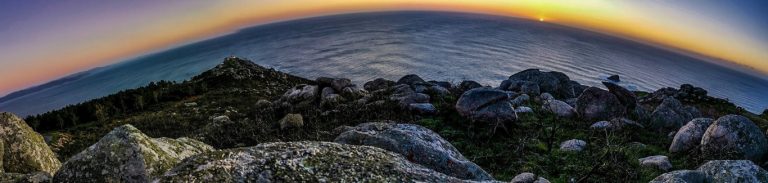
The path from Muxía to Fisterra is no walk in the park for social media. It is an honest, rough confrontation with your own exhaustion and the untamed wildness of the Costa da Morte. The landscape becomes wilder, the villages more lonely, the wind more merciless. The Atlantic roars to your left, and the rhythm of the surf sets the pace for your steps – not a steady metronome, but an irregular, powerful rumble that reminds you that you are only a guest here on the edge of a primordial force that does not care about your plans. The sounds of the waves, the screeching of the gulls, the rustling of the pine forests – all of this merges into a soundtrack that accompanies you as you approach the cape step by step. And then, finally, Fisterra. The last hill, the descent to the harbour, and finally the lighthouse, which juts into the ocean like a bony finger. The kilometre stone 0.0 at the cape is not a trophy, not a triumphal arch, not a reward. It is the zero point of your own story. Your shoes are worn out, your blisters healed – or at least numb. The big, existential questions you carried in your rucksack from Saint-Jean-Pied-de-Port have either been answered or they have simply become irrelevant to you. And that is the best answer of all.
Since 1853, the Faro has cast its light on the ocean to warn ships of the cliffs. For you, it is a beacon of realisation: you have reached the edge of the world, and the world is still standing. It has simply become a whole lot wider. Muxía was the voice that accompanied you, the apparition that gave you strength. Fisterra is the physical, merciless end – but we all know that every end is just an excuse for a new beginning. The Camino Fisterra-Muxía does not give you ready-made answers from the guidebook. It only asks you the one decisive question: Are you ready to be your own answer? And now off to the next tavern, an honest plate of Pulpo and a glass of Mencía are waiting.
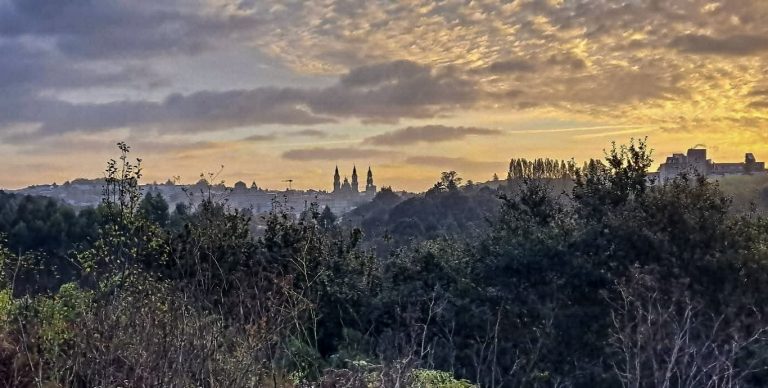
Stage 01 – Santiago de Compostela – Negreira
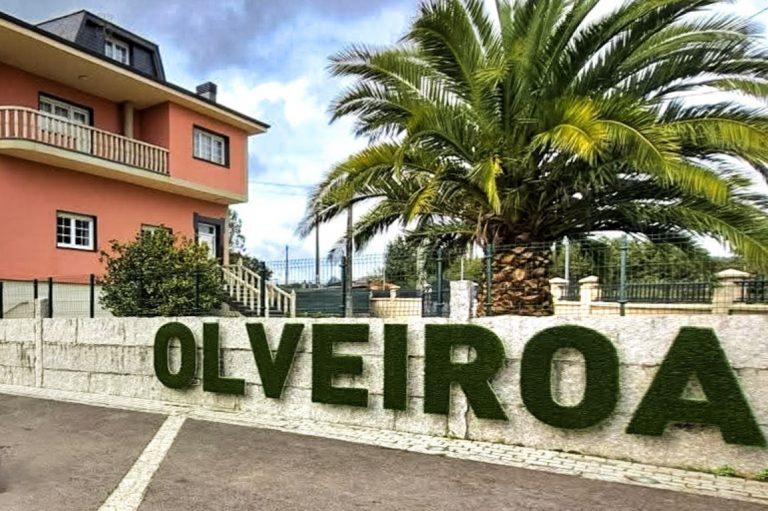
Stage 02 - Negreira – Olveiroa
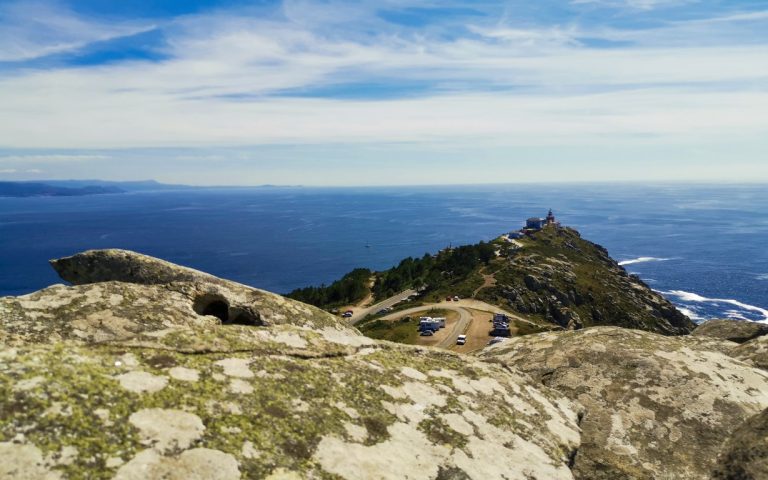
Stage 03a - Olveiroa – Fisterra
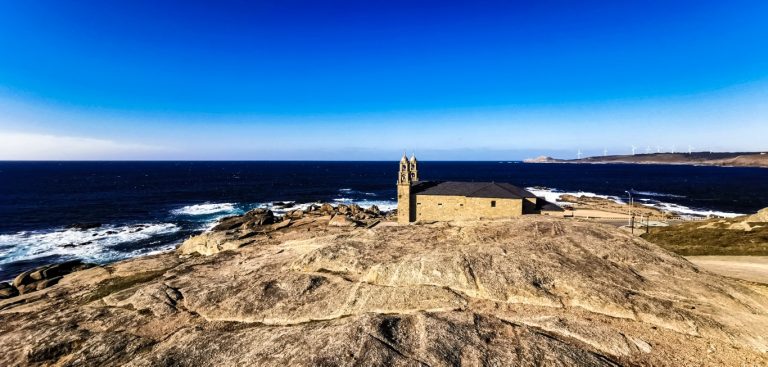
Stage 03b – Olveiroa – Muxía
Stage 04 - Fisterra – Muxía
About the Author