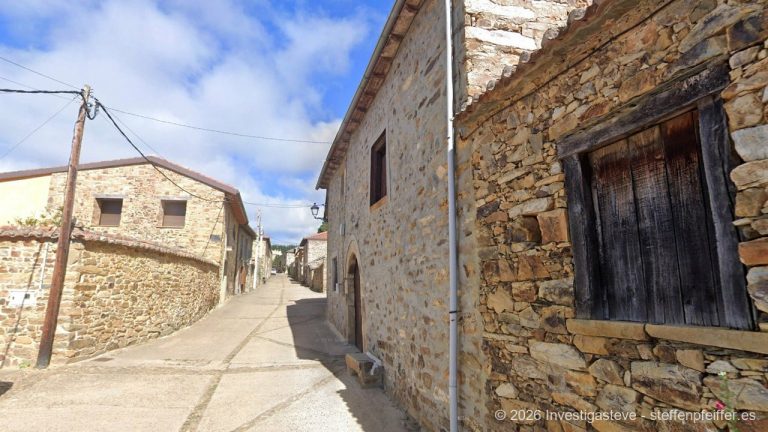
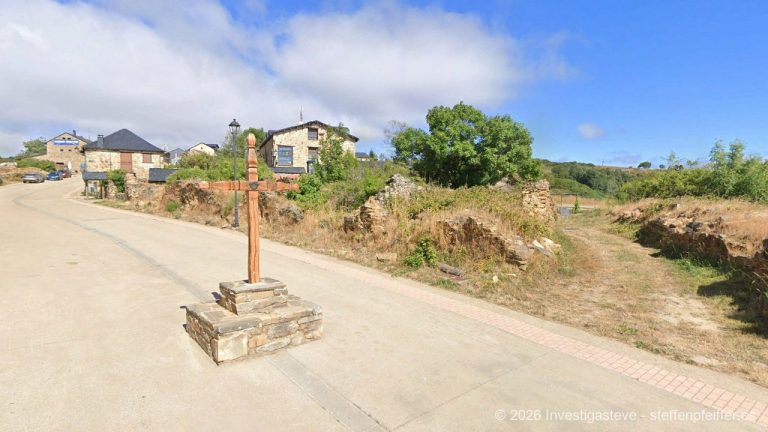
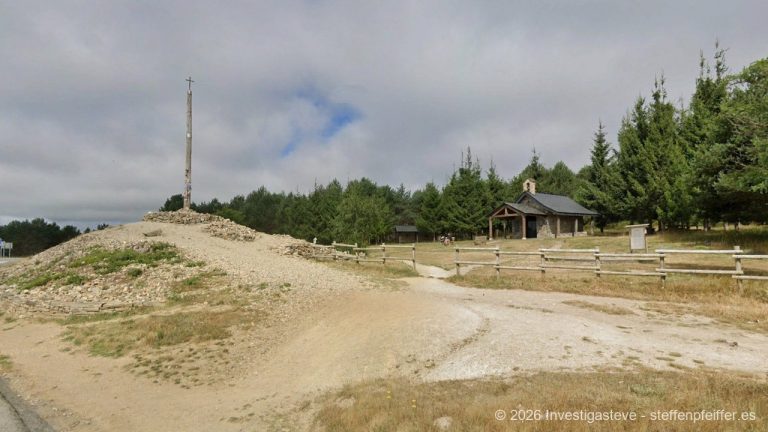
A First Glance – Entry & Atmosphere
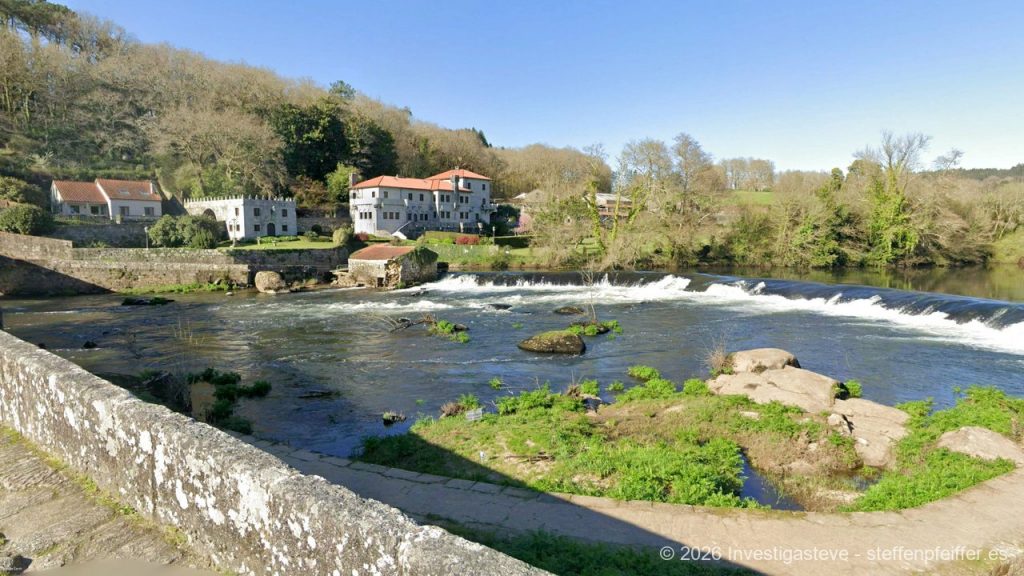
When you have left Santiago de Compostela behind and the path has led you through the dense eucalyptus forests and over the gentle hills of Ames, your body reaches that state where the euphoria of departure gives way to the first real exhaustion. But precisely at this moment, when your limbs grow heavy, a panorama opens up before you that makes you pause instantly: Ponte Maceira. You set foot on the massive granite blocks of the “Ponte Vella” – and immediately understand that you are not just crossing a river here, but stepping through a gate into another time. Here, where the Río Tambre pushes through its rocky bed with untamed force, the world seems to possess a completely new consistency. It is a place born from the symbiosis of stone and water, a stone still life that has defied the rhythm of nature since the Middle Ages.
The auditory backdrop of Ponte Maceira is of orchestral power. It is not the gentle babbling of a mountain stream, but the constant, deep rumble of the Tambre, echoing under the five mighty arches of the bridge. The water breaks against the pointed pillars – the so-called “Taja-mares” – which are directed against the current like the bows of stone ships. This rushing vibrates through the soles of your pilgrim boots into your core and forms a meditative bass line for your arrival. Mingled with it is the high, bright singing of the dippers and the rhythmic clattering of hiking poles on the uneven cobblestones, a metallic beat that echoes strangely lonely in the vastness of the river valley. It is a sound that washes away all thoughts of the modern world and catapults you entirely into the here and now.
The air in Ponte Maceira is saturated with a fine, almost invisible spray that blows over the river like a cool breath. It smells of wet moss here, of the tart aroma of ferns, and of the freshness of the churned-up water, which carries a metallic, almost electric note. When the fine Galician drizzle – the mystical “Orballo” – sets in, the haptics of the place transform. The granite of the houses and the bridge becomes dark and glossy, the lichens in the cracks glow in an almost unnatural emerald green, and the stones feel cool and unyielding under your fingers. You feel the thermal inertia of the massive walls of the Pazo de Baladrón, which store the humidity of the morning and radiate an aura of unshakable permanence.
Psychologically, Ponte Maceira marks the point of final transformation on your way to the end of the world. You are now far enough from the cathedral that the hustle and bustle of the Plaza del Obradoiro is only a distant memory. Here, in this place of archaic beauty, the backpack is not only put down physically; you leave the hectic pace of the first 17 kilometers behind and immerse yourself in a silence that clears the mind. When the sun falls at a flat angle on the mica particles in the granite, the entire bridge begins to sparkle gently, as if countless tiny diamonds were woven into the stone. Ponte Maceira is not a place for a quick passage; it is a promise of authenticity, a place that teaches you to absorb the power of the moment before the path leads you further into the green heart of Galicia.
What This Place Tells
The history of Ponte Maceira is a chronicle deeply rooted in the myths and strategic significance of the Middle Ages. The centerpiece, the “Ponte Vella,” was built in the 14th century on the foundations of an even older, possibly Roman bridge. For centuries, it was the only reliable connection across the wild Río Tambre, linking the capital of Galicia with the ports of the Costa da Morte. When you walk over the steep curvature of the main arch, you tread on an architectural monument that bears in its coat of arms the most dramatic legend of the entire St. James Way: the miracle of the collapsed bridge.
The narrative takes us back to the time of the first pilgrims who accompanied the body of the Apostle James on his way to his final resting place. Pursued by the soldiers of the pagan Queen Lupa, the Christians desperately sought a crossing over the Tambre. In their distress, they asked for divine assistance, and when they had crossed the bridge, it collapsed behind them as if by ghostly hand and devoured the pursuing troops. In Ponte Maceira, this myth is not a distant legend; it is carved in stone. The bridge itself becomes a symbol of divine protection and the victory of the new faith over the old powers. You can practically feel the historical causality here: The place did not arise from a whim of nature, but as a passage consecrated by legends, venerated as holy ground by generations of pilgrims.
But Ponte Maceira also tells a story of economic prosperity and lordly pride. The ensemble of old mills, clinging to the riverbank rocks like sleeping giants, testifies to the early industrial era when the water of the Tambre ground the grain for the entire region. The “Muiños” are architectural masterpieces of simplicity – built from the same granite as the riverbed, they now seem like organic extensions of the landscape. Opposite, the Pazo de Baladrón presides, a magnificent noble residence from the early 20th century, yet so perfectly integrated into the medieval structure that it looks out over the village like a timeless guardian. Here, for centuries, the poor wanderer and the wealthy landowner met, connected by the sheer necessity of crossing this river.
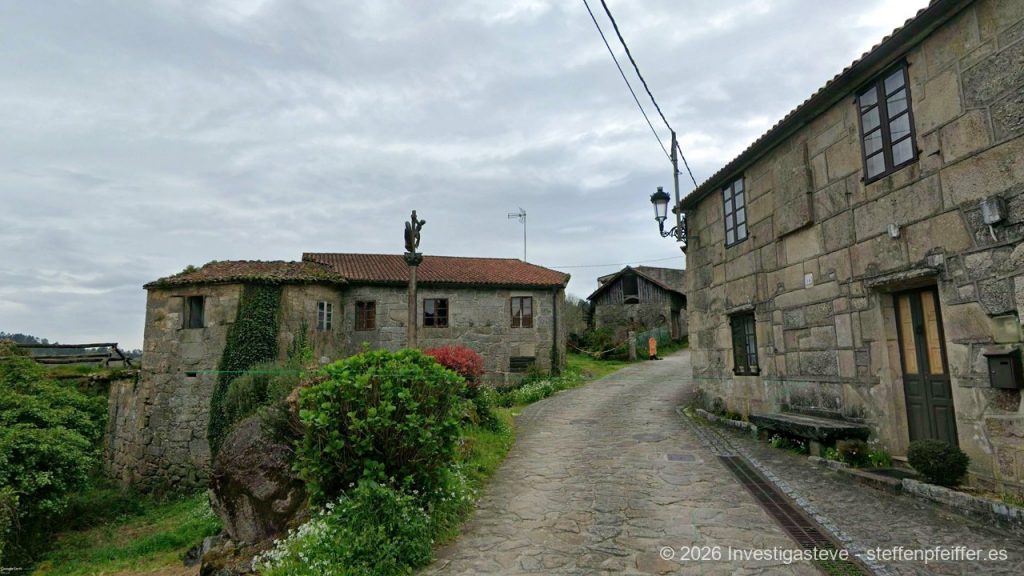
In the alleys of Ponte Maceira, you encounter “Morriña,” that untranslatable Galician melancholy that hangs in the air like the mist over the river. Every stone wall, every cruceiro (stone cross), and every chapel like the Chapel of San Brais (Blaise) tells of a deep popular piety that has held its own against the adversities of history. During the Napoleonic Wars, this place was the scene of fierce battles, as the bridge held a key strategic position. It is said that the ghosts of the soldiers can still be heard in the rushing of the Tambre on stormy nights. Ponte Maceira teaches us that history does not only consist of dates, but of the energy of deeds stored in these stones. Those who listen closely here understand that the bridge does not only connect two banks, but inseparably links the past with the present.

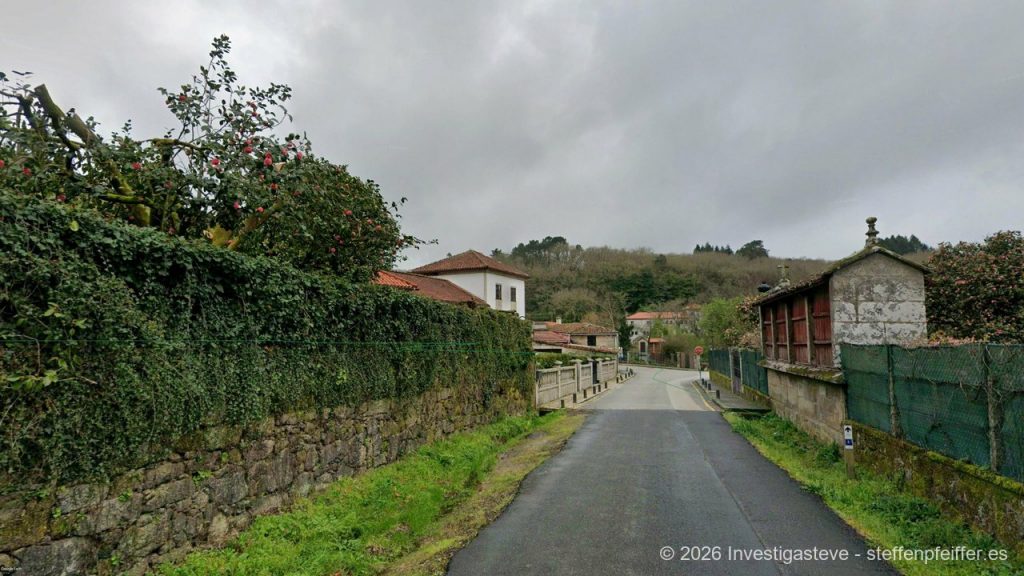

Camino Distances
After about 17 kilometers through shady oak forests and over the slate paths of Augapesada, the stone gate to the Barcala region opens up here.
| Previous Place | Distance (km) | Next Place | Distance (km) |
|---|---|---|---|
| Augapesada | approx. 7.5 km | Negreira | approx. 3.5 km |
Addresses & tips in Ponte Maceira
Opening hours
Overnight Stay & Arrival
Arriving in Ponte Maceira means exchanging the hectic pace of the first big stage for a deep, almost physically palpable regeneration. Since the village is so small and exclusive, there are no large mass hostels here. Arrival here is a ritual act of deceleration. When you let the backpack slide from your shoulders and the weight of the past kilometers sinks into the ground, you feel the healing power of this place. The few accommodations, often housed in historic stone buildings, offer an atmosphere of security that has long been lost in the big cities. You step over the threshold, feel the cool stone floor under your socks, and know: Here you are safe.
The psychological experience of staying overnight in Ponte Maceira is shaped by the constant presence of the river. When you lie in bed and the window is open a crack, the rushing of the Tambre envelops you in a cocoon of white noise. It is a natural lullaby that washes away the worries of everyday life and the doubts of the first day. The haptic perception of the cool granite walls, which release the day’s warmth only slowly, conveys a feeling of timeless stability. In these rooms, the beams whisper stories of millions of pilgrims who sought exactly the same refuge before you. You don’t feel like a guest here, but like part of an infinite chain of seekers.
The hospitality of the small establishments deserves special mention. In places like Ponte Maceira, you are seen as a person, not a number. A brief nod from the innkeeper, a glass of water at the right moment, or the care with which the beds are made – all of this contributes to an emotional metamorphosis. You are no longer the stressed city dweller; you become a wanderer who learns to appreciate the value of a simple roof over their head anew. The social interaction in the common rooms is usually quieter and more intense here. You speak more softly, out of respect for the sublimity of the surroundings, and share experiences that go deeper than the usual pilgrim talk.
Those who are lucky enough to find a bed in Ponte Maceira experience the early morning as a sacred revelation. When the mist still hangs heavily over the bridge arches and the first pilgrims silently pack their backpacks, an almost solemn atmosphere prevails. The rhythmic tightening of straps and the quiet whispering in the dawn are the first sounds of departure. You don’t simply leave Ponte Maceira; you take a piece of its unshakable calm with you on the path to Negreira. The accommodation here acts as a kind of psychological lock, releasing you into the new day strengthened and purified. It is the essence of “Hospitalitas” that has survived here in its purest form.
Food & Drink
The culinary world of Ponte Maceira is as robust, honest, and deeply rooted as the granite of the bridge. Here you will find no anonymous chain gastronomy, but a cuisine that draws its strength from the river and the fertile gardens of the surrounding countryside. The gastronomic heart is undoubtedly the restaurant right at the bridgehead, where the scent of homemade Empanada and freshly grilled fish fills the air. A pintxo here is not merely a snack; it is a substantial source of energy, prepared with products often grown just a few kilometers away. The haptics of the crusty Galician bread, dipped in the golden olive oil, is a sensation in itself – you feel the craftsmanship and tradition in every bite.
An absolute must for every pilgrim is the local trout or salmon from the Tambre, if the season allows. The taste is intense, clear, and reflects the purity of the water you have heard all day. It is often served with the famous “Pimientos de Padrón,” those small green peppers where each bite is a culinary game of roulette – some are mild, some fiery hot. The scent of sea salt and hot oil mixes with the cool breath of the river to create an irresistible invitation. You sit on the terrace, feel the spray on your skin, and enjoy a zesty Albariño, whose acidity contrasts perfectly with the richness of the regional cuisine.
Especially in the evening, when the day-trippers have disappeared, the gastronomy in Ponte Maceira unfolds its full charm. You gather at the heavy wooden tables, share a platter of Galician cheese (Queso de Tetilla) and quince paste (Membrillo), and review the day’s experiences. The wine here does not simply flow into glasses; it is served in small ceramic bowls (Cuncas), a haptic reminiscence of the simplicity of the ancestors. Eating in Ponte Maceira means connecting with the power of the land. It is an ascetic form of enjoyment that needs no decoration because the quality of the product speaks for itself. You can taste the freedom and the rugged beauty of Galicia here.
Supplies & Logistics
Logistically speaking, Ponte Maceira is a place of clever reduction. Don’t expect glitzy supermarkets or shopping centers here; this place is a refuge for those who make do with what nature and small, specialized shops offer. The supply situation is absolutely sufficient for the pilgrim, but requires a certain degree of mindfulness. In the small roadside stalls, you can often find the bare necessities: fresh water, fruit, energy bars, and perhaps a few blister plasters. It is an supply chain of short distances, where you often speak directly with the people who provide the goods. This personal level of logistics lends the stay a human warmth that is often lacking in large supply centers.
Medical care is limited to a well-stocked first-aid kit in the accommodations for typical pilgrim ailments. Anyone needing specialized medication should ensure they got it in Santiago. But solidarity in the village is strong: When in need, a solution or transport to nearby Negreira is always found. Information supply and digital connectivity are also available in Ponte Maceira – the Wi-Fi in the cafés is stable, so you can check the weather reports for the onward path. But you should take the opportunity to put your phone aside and enjoy the analog supply of silence and nature.
Shopping: Small basic assortments in the cafés offer water and snacks. For a major shopping trip, Negreira, 3.5 km away, is the destination.
Gastronomy: Excellent restaurants right on the bridge with a focus on traditional Galician cuisine. The fish dishes and empanadas in particular are of the highest quality.
Overnight Stay: A small mix of exclusive private hostels and guest rooms. A reservation is vital here, as capacities are minimal.
Public Facilities: A public fountain with drinking water quality at the bridgehead and the small San Brais chapel as a place of silence. No banks or ATMs on site – get cash in Santiago or Negreira!
In summary, the supply in Ponte Maceira is like the place itself: modest, but of the highest quality. Anyone willing to engage with the rhythm of the village will find everything they need for their physical and spiritual well-being. It is a place that teaches you to appreciate the value of things again, because they are not available in abundance, but have been chosen with care. Here in the valley of the Tambre, you experience a form of logistical deceleration that clears your head for the essentials of the journey.
Don’t Miss
The “Ponte Vella” (Old Bridge): This 14th-century monument is the landmark of the place. Take the time to study each of the five arches and admire the artisanal precision of the medieval stonemasons. The pointed pillars (Taja-mares) are a technical masterpiece of their time.
The Mills (Muiños) of the Tambre: These buildings are built directly into the rock and use the power of the water. They are a symbol of Galicia’s rural intelligence and offer spectacular photo motifs when the water foams over the weirs.
The Pazo de Baladrón: Although it is privately owned, its architecture is an imposing sight from the bridge. It blends seamlessly into the historic ensemble and gives the village a lordly aura.
The Chapel of San Brais (Blaise): A small, simple building that serves as a place of contemplation. Here you can light a candle and absorb the spiritual energy of this ancient pilgrim place for a moment.
The Weir and the Rapids: The roar of the water at this point is particularly intense. Observe the power of the Tambre and feel the fine spray on your face – an experience for all the senses.
The Village Ensemble as a Whole: Ponte Maceira has been chosen as one of the “Pueblos más bonitos de España.” Wander through the narrow alleys, pay attention to the details on the house facades, and let the unity of this granite jewel work its magic on you.
Insider Tips and Hidden Places
Beyond the marked paths, Ponte Maceira reveals small treasures that only open up to the attentive observer. One such place is the small path that leads downstream directly behind the last mill. If you leave the official path for a few hundred meters and work your way through the thicket of ferns and willows, you discover hidden bathing spots where the Tambre comes to rest for a moment. Here the water is so clear that you can count every pebble on the bottom. It is an ideal place for a short meditation, far from the clatter of other hikers’ poles. When you sit down in the grass there, you feel the cool earth under you and hear only the distant roar of the weir – a moment of absolute privacy.
Another hidden point is the small stone bench at the foot of an old cruceiro, which stands somewhat off the beaten track on a hill west of the village. From here, you have a perspective on the bridge that few pilgrims perceive. At dusk, when the light bathes the granite arches in a deep orange, the place seems like a backdrop from another world. Up here, where the wind blows more freely and the scent of wild thyme hangs in the air, you feel the “Morriña” – that Galician longing – especially intensely. It is the perfect place to write in a journal or simply stare into infinity.
If you have the opportunity, take a closer look at the foundations of the houses near the river. You often find ancient markings and protective symbols carved into the stone to ward off evil spirits or floods. These small details are the silent chroniclers of a popular belief that is still alive here. In Ponte Maceira, it is often the invisible things, the small discoveries off the yellow arrows, that make the difference. Those willing to leave the beaten path are rewarded with moments that are not found in any travel guide – moments of pure, unvarnished authenticity.
An insider tip for the senses is observing the mist in the early morning. When the Tambre “smokes” and the bridge arches disappear in the haze, Ponte Maceira transforms into a mystical place. You hear the water, but only see the outlines of the stone. It is an almost supernatural spectacle that reminds you that you are on a “Way of the Stars.” Only those who stay overnight here or depart very early will witness this metamorphosis. It is the moment when the boundary between reality and legend becomes fluid – just like the water of the Tambre.
Moment of Reflection
Ponte Maceira asks you a question that touches your innermost being: Are you ready to burn the bridge behind you? Here, in this place of the legendary miracle, you become aware of the symbolism of the transition with full force. You have left the familiar, the destination of Santiago, and are now venturing into the unknown of the West. The bridge of Ponte Maceira is not just a structure of granite; it is a mirror of your own determination. In a world that always tries to keep all paths open for us, this place teaches you the necessity of decision. What in your life may symbolically collapse so that you can continue your path in freedom?
The psychological effect of the raging river under your feet is immense. The Tambre takes everything with it – the dust of the day, the fatigue, perhaps also the old limiting beliefs that have held you back until now. When you stand in the middle of the bridge, you are literally between two worlds. The rumbling of the water drowns out the doubts in your head and forces you into presence. Ponte Maceira is a lesson in humility towards time and nature. Use the power of this place to examine your own foundation. When you leave the bridge and the village behind, you take the firmness of the stone and the flowing power of the water with you in your heart. You are now ready for the end of the world, for you have learned that every transition can be a miracle.
Camino of the Stars
This place lies on the Camino a Fisterra y Muxía, on the stage from Santiago de Compostela to Negreira (CFM 1). The sequence of places is:
Santiago de Compostela → Sarela de Abaixo → Roxos → Augapesada → Trasmonte → Ponte Maceira → Negreira
Did you feel the moment of absolute awe when you entered the “Ponte Vella,” or did the roaring water of the Tambre almost hypnotize you? Share your personal impressions and experiences from Ponte Maceira with us – no matter in which language. Perhaps you took a photo of the glittering granite arches in the evening light or discovered a hidden path on the riverbank? Your story helps keep the magic of this place alive for other walkers and to continue writing the “Way of the Stars.”
About the Author