A First Glance – Entry & Atmosphere
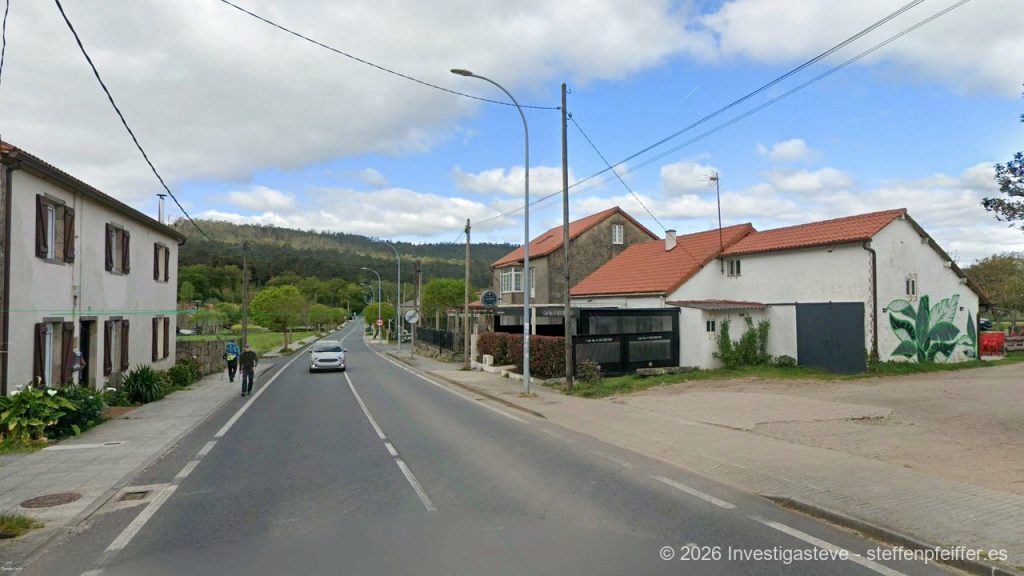
You set foot in Augapesada – and immediately feel how the lightness of departing Santiago de Compostela gives way to a deeper, almost reverent concentration. After about eleven kilometers, which have led you through gentle Galician oak forests and over shady paths, the valley of the Rego dos Pasos opens up and reveals a place that stands like a stone sentinel before the first major obstacle of your journey. It is not the sheer size of the village that makes you pause – it is perhaps the fifty souls who live here in stoic calm – but the palpable energy of a threshold. Here, in the shadow of the old granite houses, the distant rustling of the leaves mingles with the constant, gurgling song of the stream beneath the medieval bridge.
The air in Augapesada has a texture all its own; it is often saturated with the typical Galician humidity, which settles on the skin like an invisible, cool veil. You smell the heavy, resinous scent of the nearby eucalyptus trees, combined with the earthy aroma of damp ferns and the distant smoke of a wood fire. It is a moment of transition: behind you lie the cathedral and the bustle of the pilgrim metropolis; before you rises the Mar de Ovellas, that legendary ascent that will challenge your lungs and test your will. In Augapesada, the world seems to hold its breath for a heartbeat, while the rhythmic click of your trekking poles on the historic cobblestones, the “camino de piedra,” creates an echo that speaks of the centuries-long continuity of this path.
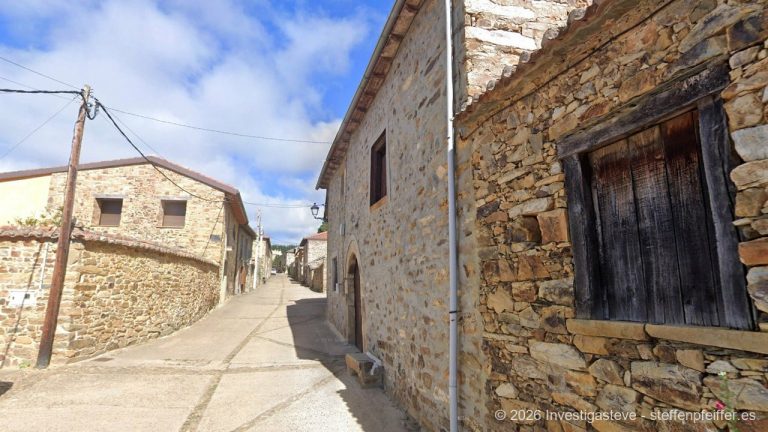
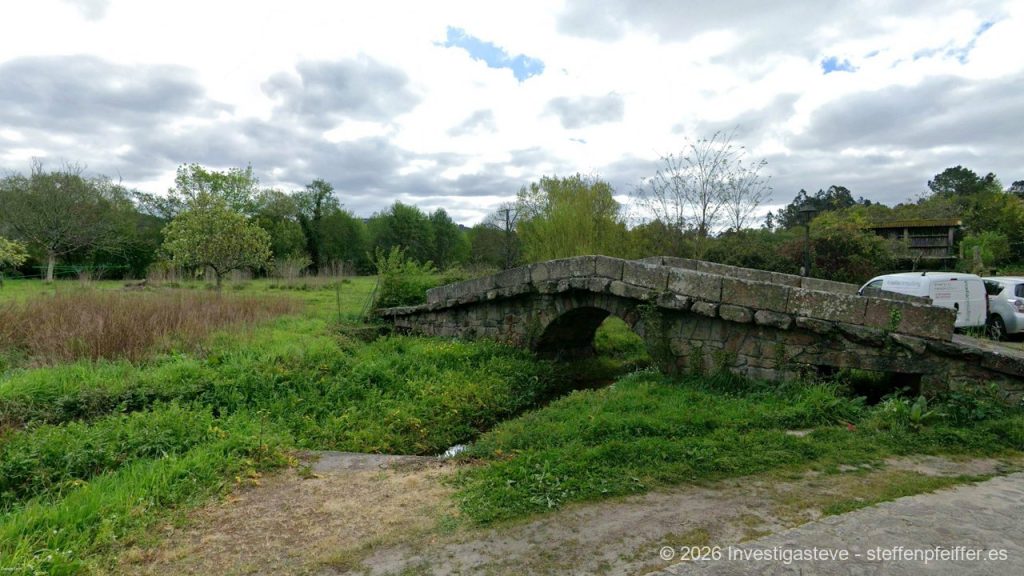
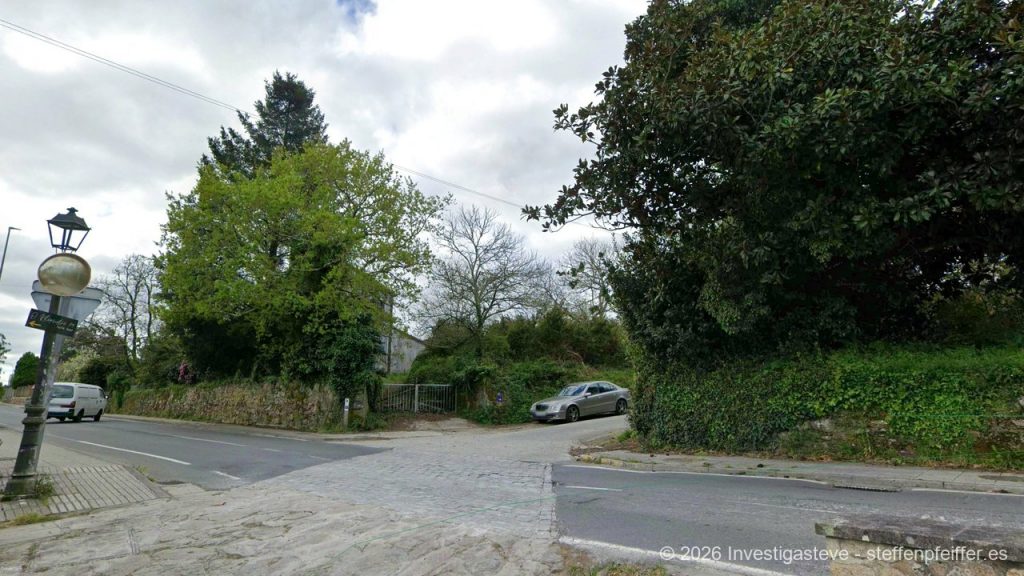
Those who arrive here often instinctively seek eye contact with the bridge. It is the visual anchor of this hamlet, an elegant promise of gray stone that leads you safely over the water before the path bends steeply upwards. You feel the rough granite under your boots, see the moss-covered walls lining the narrow lanes, and understand: Augapesada is not a place you simply pass through. It is a place where you gather strength, where you tighten your backpack straps one last time and complete the psychological transformation from hiker to pilgrim, ready to face the physical challenge.
What This Place Tells
The history of Augapesada is inextricably woven with the “Camiño Real,” the Royal Road to Fisterra. As early as the late 12th and early 13th centuries, the bridge builders of the Romanesque period recognized the strategic importance of this crossing. The bridge over the Rego dos Pasos, today considered one of the best-preserved examples of Romanesque bridge architecture in the Ames region, was once a critical bottleneck for merchants, farmers, and those early pilgrims who, after visiting the Apostle’s tomb, sought the way to the “End of the World.” When you walk across the single, elegantly curved round arch today, you step into the footsteps of generations who have touched the same granite. It is a historical causality that almost makes you dizzy: for eight centuries, this stone arch was the only way to advance westwards with dry feet.
The name of the stream, “Rego dos Pasos,” already carries the essence of the pilgrim’s journey within it – the Stream of Steps. Legends say that Augapesada was once a place where pilgrims symbolically washed their sins in the water before beginning the arduous ascent to the Mar de Ovellas. This spiritual dimension is still tangible in the architecture today. The structure of the village is linear, almost as if the houses were built only to flank and protect the way. The traditional Galician stone buildings with their red tiled roofs seem to have grown out of the earth, massive and weather-beaten by the Atlantic storms that can sweep through the valley with relentless harshness in winter.
In the past, Augapesada was a purely agricultural hamlet, where livestock farming ensured survival. The faces of the older residents, occasionally seen along the wayside, reflect this deep connection to the land. They speak Galician, a language that sounds as rough and simultaneously poetic as the landscape itself. With the renaissance of the Way of St. James in the late 20th century, the place awoke from a slumber. The restoration of the medieval bridge and the paved road in the early 21st century was not an act of musealization, but a bow to its own identity. Augapesada tells of the constancy of stone against the transience of time – a place that remains, while we pilgrims are merely passing shadows.
Camino Distances
🗺️ After about 11.6 kilometers, which have led you out of the heart of Santiago de Compostela into the quiet forest landscape of Galicia, the valley opens up and Augapesada welcomes you as an important milestone before the great ascent.
Lodging & Arriving
Staying overnight in Augapesada is an experience denied to most pilgrims, as there are no albergues or hotels in the village itself. But it is precisely this absence of tourist infrastructure that gives the arrival an almost monastic quality. Those who stretch out their feet for a rest here do not do so in the hustle and bustle of a bed factory, but on the low walls along the historic road or directly on the stream bank. The atmosphere is marked by a deep, almost archaic silence, broken only by the distant barking of a dog or the metallic clatter of a tractor. It is a place of pausing, a place where you do not lose yourself in the comfort of a shower, but in the haptic reality of your exhaustion and the anticipation of what is to come.
Arriving in Augapesada is a haptic experience: you feel the warmth of the granite when the sun breaks through the clouds, or the clammy cold rising from the stream valley as the mist clings to the oaks. The psychology of the place is that of a base camp. Pilgrims often sit together silently here, their eyes fixed on the bridge, as they refill their last water bottle. There are no grand reception rituals; the hospitality is simple and honest. You sense that you are a guest here in a world that would have its own, slow rhythm even without the Camino. The lack of sleeping places forces you to concentrate on the here and now before the path pulls you on towards Negreira.
Food & Drink
The culinary world of Augapesada concentrates on the essentials and finds its center in the small café-bar “O Km 79,” which often also functions as an ultramarino. It is no gourmet temple, but a lifeline for those whose bodies demand energy. The scent of freshly brewed, strong coffee mixes here with the aroma of simple, rustic bread. A bocadillo, generously filled with Galician ham or cheese, tastes better in this place, right before the ascent, than any three-course meal. It is the honest cuisine of the “aldeas,” designed to provide strength, not to impress.
In the few inns of the immediate vicinity, such as the Casa da Aboa, you encounter Galician home cooking in its purest form. When a Caldo Galego is served there, it is the essence of the land: cabbage, potatoes, and beans, slowly simmered, nourishing and warming. The taste is earthy, almost like the landscape itself. A glass of local Mencía or a cool beer with it, and you feel your spirits returning. In Augapesada, you learn that pleasure on the Camino often means eating a simple apple or a piece of bread while your feet rest in the cool water of the Rego dos Pasos. It is the connection of environment and nourishment that shapes the culinary memory here.
Supplies & Provisions
Augapesada is the last bastion of supply before the path departs into the solitude of the mountains. The small shop in the village is a “filling station for the soul.” Here you refill your water supply – an absolutely crucial step, because the next ascent will bring beads of sweat to your forehead. A pharmacist or an ATM are foreign concepts here; anyone needing blister plasters or cash must wait until Negreira. This reduction to the bare essentials is a valuable lesson of the way: what you don’t have in your backpack here, you will have to replace with willpower over the next kilometers.
The scenery in the shop is often a reflection of everyday pilgrim life: sweaty figures in functional clothing stand next to locals running their daily errands. Brief information about the condition of the ascent is exchanged while buying nuts, bananas, or chocolate for a quick energy boost. The supply situation in Augapesada is poetic in its sparseness. It is the last opportunity to connect with the material world before nature and your own physical exertion take command. Here you buy bread that still smells of real craftsmanship and feel the solidarity of those who have the same goal in sight.
Don’t Miss
The Medieval Bridge (Ponte do Rego dos Pasos): An architectural jewel from the 12th century with a single, perfectly proportioned arch.
The Paved Road (Calle Empedrada): Walk consciously over the restored stones that mark the historic course of the Royal Road.
The Rego dos Pasos Stream: Climb down to the bank and wash your face with the ice-cold spring water – a small, personal purification before the test.
The View to the Mar de Ovellas: From the bridge, you can see the beginning of the ascent; a moment of mental preparation.
The Granite Houses: Pay attention to the details of traditional stone construction, which endure an eternity without mortar.
Insider Tips and Hidden Places
A true insider tip is the stream valley below the bridge. While most pilgrims hurry hastily over the granite arch, it is worth venturing the few steps down to the stream bed. Down there, where the light falls only filtered through the dense canopy of oaks and ash trees, you find a world of absolute silence. The sound of the water is louder here, clearer, and the smell of damp moss and wet stone is almost intoxicating. It is a magical place where you can forget time for five minutes, a natural sanctuary that gives you the necessary serenity for the coming ascent.
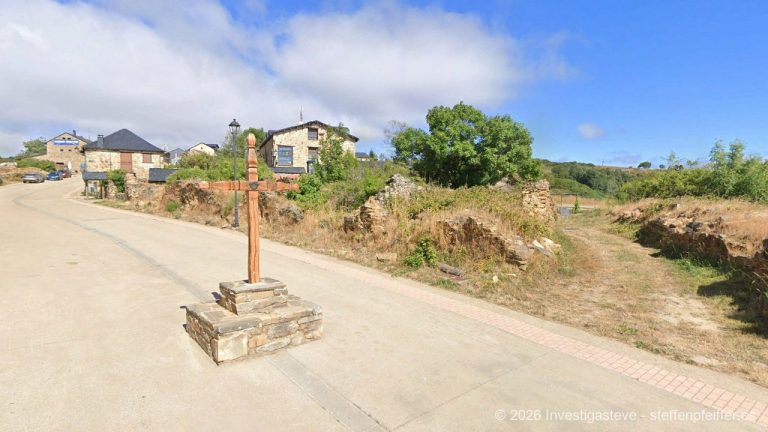
Another hidden spot is the small stone cross, a cruceiro, which stands somewhat off the main path. These crosses in Galicia are much more than just religious symbols; they often mark places of energy or protection. In Augapesada, such a cross stands almost humbly at the edge of a field. If you linger there briefly, while the wind rustles the leaves of the nearby cornfield, you feel the deep, melancholic beauty of this region. It is a place for a short prayer or a deep breath before the physical work begins.
Moment of Reflection
Augapesada is the place where the question arises: Are you ready to leave the comfort zone of the plain and face the vertical challenge? The bridge is a symbol of this transition – it carries you over the flowing water of the past towards the firm, steep reality of the future. This place stays in your memory because it forces you to pause before you grow beyond yourself. Do you feel the anticipation of the exertion, or does the silence of the valley weigh heavily on your shoulders?
Camino of the Stars
This place lies on the Camino Fisterra y Muxía, on the stage from Santiago de Compostela to Negreira. The sequence of locations is:
Santiago de Compostela → Sarela de Abaixo → Roxos → Augapesada → Trasmonte → Ponte Maceira → Negreira
Did the silence in Augapesada touch you just as deeply, or did you get a tip for the ascent in the small bar that we should definitely add here? Write to me via the contact form – in German, English, Spanish, Galician, or French. Your experiences make this description even more valuable for future pilgrims.
About the Author