A First Glance – Entry & Mood
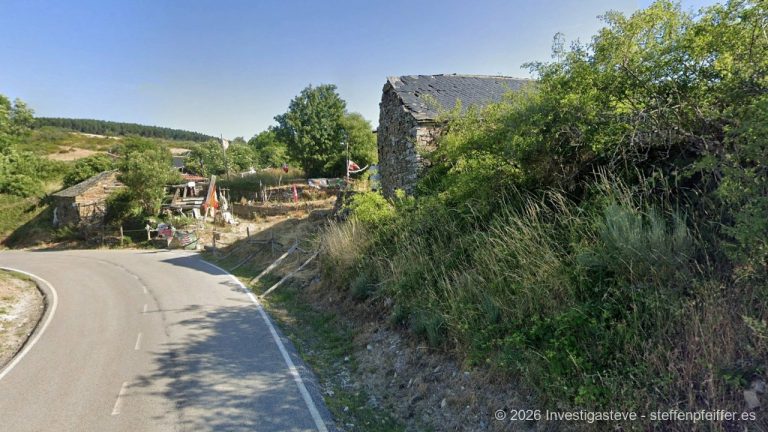
You set foot in Santa Mariña – and immediately feel the world around you begin to breathe more slowly. This small hamlet, which seems to have grown out of the rugged granite of Galician soil, welcomes you with an archaic tranquility that resonates deep in your bones. After crossing the gentle hills of Mazaricos, those wave-shaped elevations where the wind often wildly plays with the eucalyptus leaves, a landscape opens up here, characterized by vast pastures, ancient stone walls, and the constant interplay of light and shadow on the gray facades. The air here smells of damp ferns, fresh hay, and a harsh purity that only the highlands of Galicia can offer. It’s that moment on the Camino to Fisterra when civilization seems far away and only your own step and the wide horizon matter.
The auditory backdrop of Santa Mariña is a masterpiece of reduction. You hear the rhythmic clack of your pilgrim sticks on the stony paths, which here acts like a metronome of steadiness. From a distance, the wind carries the dull, metallic ringing of cowbells, a soothing bassline forming the foundation of this agrarian idyll. Sometimes, the distant rustling of the leaves of an old oak mixes in, which has been watching at the edge of the village for centuries. It’s a silence that isn’t empty, but filled with the vitality of the land. The haptics of the place are rough and honest: The granite of the houses feels cool and unyielding under your fingers, covered with a fine layer of silvery moss that stores the moisture of the morning “Orballo.”
Psychologically, Santa Mariña marks an important transition. You’ve left behind the first major stage from Santiago; the fatigue is real but the anticipation of the end of the world drives you on. Here, in the simplicity of this village, the backpack is not only physically set aside; you leave behind the hustle of the kilometers and immerse yourself in a silence that clears your mind. When the evening sun bathes the distinctive Hórreos – the traditional Galician corn storage units on their stone stilts – in warm, amber light, you realize that you are in a place that has preserved the essence of rural Galicia in its purest form. Santa Mariña is not a backdrop; it is a promise of authenticity.
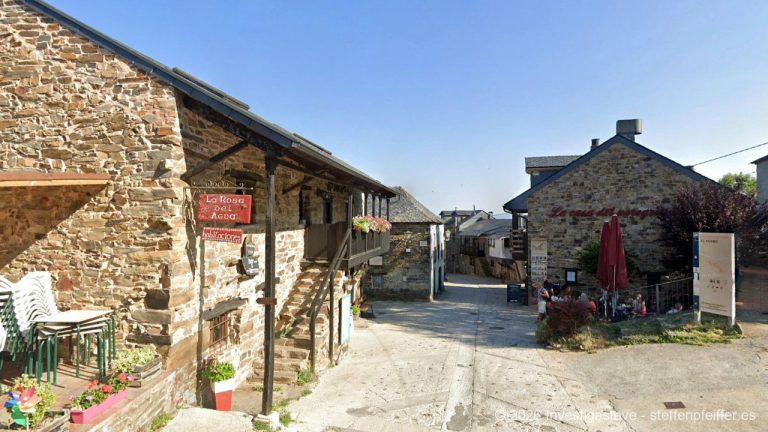
In the alleys of the hamlet, you feel the thermal inertia of the stone. Even on hot days, the massive walls radiate a cool sovereignty, while in winter, they absorb the last warmth of the low sun. When you place your hand on the rough surface of an old well, you connect with the centuries-old history of the water that has kept people and animals alive here for generations. The olfactory becomes a time machine: The smell of wet slate after a sudden shower, mixed with the aroma of wild thyme, catapults you back to a time when humans still lived in harmony with the elements. Santa Mariña is a tactile prayer of stone and light.
What This Place Tells
The story of Santa Mariña is closely intertwined with the legend of its patron saint, a holy woman whose cult is deeply rooted in the Galician folk soul. Santa Mariña de Aguas Santas, a martyr of the 2nd century, symbolically stands for steadfastness against adverse circumstances – a trait that also characterizes the inhabitants of this harsh highland of Mazaricos. As you walk through the hamlet, the massive stone blocks of the houses tell of a life that for generations has followed the rhythm of nature and hard work in the fields. Every stone wall that parcels out the pastures was stacked by hand, stone upon stone, without mortar, held only by the law of gravity and the patience of the builders. These “Muros de Pedra Seca” are the silent chroniclers of a social order in which every square meter of land had to be wrested from the granite.
In the archives of the Comarca, Santa Mariña is often described as a place of rest for those who ventured on the dangerous path to Cape Fisterra. While the Camino Francés is often characterized by large cities and mighty monasteries, Santa Mariña shows you the “little history” – the story of farmers, wandering shepherds, and pilgrims who sought shelter here from sudden Atlantic storms. The architecture of the Hórreos here is particularly revealing. They are not just storage units but status symbols and survival guarantees. The way they perch on their “Muelas” – the mushroom-shaped stone supports – testifies to centuries of experience in the fight against moisture and rodents. They are stone cathedrals of daily bread, which in Santa Mariña occur in a density that fills the observer with awe.
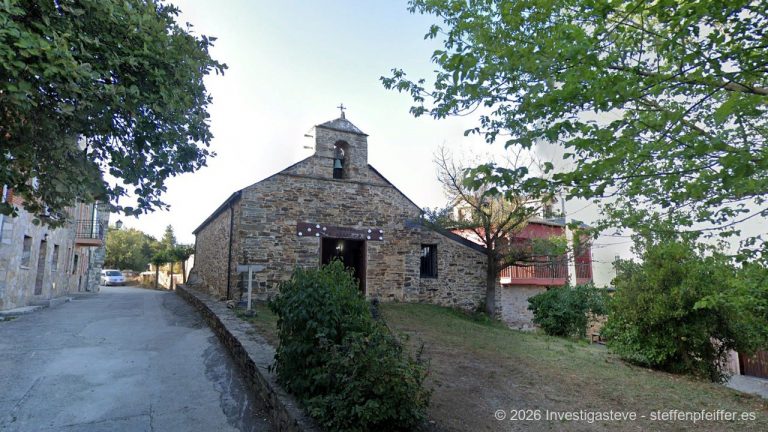
Historically, Mazaricos and thus Santa Mariña was a long-isolated region, which allowed traditions, dialects, and a very specific form of hospitality to be preserved. The construction of the current parish church, even though it has been redesigned several times, still preserves that simple spirituality at its core, which has characterized the Way of St. James since the Middle Ages. The historical causality is tangible here: The place did not arise from strategic planning but as an organic center of a widely scattered rural community, which found its anchor in the faith in Santa Mariña and in the cultivation of the land. When you walk through Santa Mariña today, you step in the footsteps of millions who felt the same granite under their soles and admired the same rugged beauty.
The walls of the place act as an archive of time. You see the different stages of granite processing – from the roughly hewn blocks of the early settlement phases to the more precisely assembled stones of the wealthier farmhouses from the 18th and 19th centuries. Every generation has left its mark, often in the form of small engraved signs or protective symbols against the “Meigallo,” the evil eye of Galician witches. This mystical level is omnipresent in Santa Mariña. People don’t talk loudly about the supernatural here, but they build it into their houses. The stone is more than just a building material; it is a shield against the adversities of the physical and spiritual world. If you look closely, you’ll recognize the secret geometry of faith in the lichen patterns on the old crosses.


Camino Distances
After about 20 kilometers, which lead you through dense eucalyptus forests and over slate paths, you reach this quiet granite outpost.
| Previous Place | Distance (km) | Next Place | Distance (km) |
|---|---|---|---|
| Vilaserío | approx. 4.5 km | Bon Xesús | approx. 1.5 km |
Addresses & tips in Santa Mariña
Opening hours
Overnight Stay & Arrival
Arriving in Santa Mariña means trading the world of large albergues for familial warmth. The local accommodations, often housed in lovingly restored stone houses, offer an atmosphere of security that is often lost in the big cities. When you push open the heavy oak door of an albergue in Santa Mariña, you are often greeted by the smell of fresh wood and the cool breath of old walls. Arrival here is a ritual act of slowing down. You place your boots in the designated shelves, feel the cold stone floor under your socks, and notice how the tension of the past hours slowly fades away. The hosts in Santa Mariña are often closely connected to the land themselves and meet the pilgrim with a mixture of respect and motherly care.
The psychological experience of arrival is heightened by the architectural unity of the place. There are no anonymous concrete blocks disturbing the view. Everything seems to be made of one piece, formed from the same gray stone that also paves the paths. In the bedrooms, where the massive wooden beams of the roof structure are often visible, a feeling of security quickly arises. You lie in your bed, hear the wind whistling around the corners outside, and know that for one night you are part of this fortress-like idyll. Social interaction in the hostels of Santa Mariña is usually more intense and quieter than at the big hubs of the Camino Francés. You share the small kitchen, exchange tips for the ascent to Monte Aro, and enjoy the absence of digital noise.
A special moment of arrival is the late afternoon, when the day tourists – if they ever make it here – are long gone and the village belongs again to the pilgrims and locals. You sit on one of the old stone benches, watch the swallows racing around the church tower at breakneck speed, and let your thoughts wander. The feeling of exhaustion mixes with a deep satisfaction. In Santa Mariña, you realize that you don’t need much to be happy: a clean bed, a warm roof, and the silence of a Galician evening. It’s an arrival within yourself, in an environment that leaves no room for superficiality.
The feel of linen sheets on your skin, which smell of fresh air and pure soap, forms a soothing contrast to the synthetic clothing of the hiking day. When the light of the setting sun falls through the narrow window slits and lets dust particles dance in golden beams, a deep peace sets in. You hear the distant clatter of dishes from the kitchen, a sign that the next form of nourishment is being prepared. The silence in Santa Mariña is not emptiness but a presence that invites you to close your eyes and feel the pulsation of your own calf muscles, which gradually gives way to a gentle afterglow. It’s the regeneration of the soul in the lap of granite.
Often, conversations during shared dinners go deeper than usual. In the isolation of Santa Mariña, social masks fall faster. You talk about the reasons for your journey, about losses and hopes, while outside the moon rises over the Hórreos. These moments of human warmth are the true luxury of this place. Whoever stays here takes not only a night’s rest but also the feeling of being part of a global community of seekers who, for a brief moment, found a shared home in a tiny Galician village. It’s the essence of hospitalitas, which is as alive here as it was eight hundred years ago.
Food & Drink
If you stop in Santa Mariña, you should prepare your palate for the honest, powerful cuisine of the Galician hinterland. Here, you taste the quality of the earth in every bite. In the small mesóns and hostel kitchens, the principle of seasonality and regional origin prevails. An absolute must is the local variant of Caldo Galego, that legendary stew made from cabbage, potatoes, beans, and a piece of bacon or chorizo. In Santa Mariña, this stew often has a special earthiness because the vegetables come directly from the surrounding fields. When the hot bowl is placed before you, steam rises that smells of home, warmth, and centuries-old tradition – a true soul-soother after a windy hiking day.
The meat in this region, known as Ternera Gallega, enjoys a worldwide reputation, and in Santa Mariña you often get it in its purest form. A piece of beef grilled over oak wood, seasoned only with coarse sea salt, unfolds an aroma that makes any complicated sauce unnecessary. Alongside it, you’re served the famous bread from the Comarca de Xallas, which has such a thick, crispy crust that you almost need a tool to break it, while the inside is so soft and aromatic you want to enjoy it plain. You sit at heavy wooden tables, the light of candles or a simple lamp reflects in the dark red wine from nearby vineyards, and suddenly you understand that eating here is an act of community and gratitude.
Santa Mariña also offers culinary treasures for a small snack in between. A slice of typical Galician cheese, Queso de Tetilla, together with a piece of quince paste (Membrillo), forms the perfect completion of a meal or an energy-rich snack. The sweetness of the quince harmonizes wonderfully with the mild tartness of the creamy cheese. In Santa Mariña, you often drink water from local springs, so clear and cool it puts any lemonade to shame. The culinary experience in this hamlet is a lesson in humility: You learn that the simplest ingredients, prepared with love and respect for the product, can provide the greatest pleasure. It’s honest, unvarnished gastronomy that strengthens the body and delights the heart.
The taste of homemade olive oil, often drizzled over fresh bread, is a sensation in itself – fruity, slightly spicy, and full of sunshine. In Santa Mariña, there’s no rush; you chew slower, you enjoy more consciously. The acoustic backdrop from the distant mooing of cows reminds you where the milk for your coffee the next morning comes from. It’s a circular economy of the senses. Whoever eats here connects with the land in a way no supermarket product could ever provide. It’s the alchemy of simplicity that makes Santa Mariña a culinary feast for the soul.
The dessert menu, small as it may be, often holds surprises. An Arroz con Leche, slowly stirred and covered with a fine cinnamon crust, tastes up here on the plateau like a little greeting from heaven. It’s this combination of rustic main course and sweet finish that supplies the pilgrim with the necessary dose of serotonin for the coming challenges. In Santa Mariña, gastronomy is understood as service to others, a tradition deeply rooted in Galician hospitality culture. You don’t just leave the table satisfied, but with the feeling of having been part of the family for a moment.
Supply & Logistics
In terms of infrastructure, Santa Mariña is a place focused on the essentials. Don’t expect sparkling supermarkets or shopping centers here; this place is a refuge for those who make do with what nature and a small local trade provide. The supply situation is absolutely sufficient for experienced pilgrims, but it does require a certain amount of planning. In the hostels, you often find small sales points for the most important everyday necessities: water, fruit, maybe a pack of pasta or local cheese. It’s a supply of short distances, where you often buy directly from the producer or in the tiniest sales units what you need for the next day.
Medical care is limited to a well-stocked medicine cabinet in the accommodations for typical pilgrim ailments like blisters or muscle tension. If you need specialized medications, make sure you’ve already gotten them in Negreira or Santiago. But the solidarity in the village is strong: When there’s an emergency, there’s always a solution or a means of transport to the next larger town, like Mazaricos or Cee. Information and digital connectivity are also available in Santa Mariña – the Wi-Fi in the hostels is often surprisingly stable, so you can check the weather for the upcoming climb to Monte Aro. But you should take the opportunity to put your phone aside and enjoy the analog supply through silence and nature.
Shopping: Small basic assortments in the albergues or tiny sales corners offer the essentials such as energy bars or water. For larger purchases, you should have used the previous stage destination, Negreira.
Gastronomy: The local hostels often offer excellent breakfast and dinner for their guests. There are occasional bars that impress with traditional Galician home cooking and hearty bocadillos.
Accommodations: A good mix of municipal and private hostels as well as small guesthouses in restored stone houses. Reservation is recommended in the high season, as capacities in this small hamlet are limited.
Public Facilities: The parish church is the center of the place, often accessible during service times or by arrangement. Public fountains with drinking water quality are available along the roadside.
In summary, the supply in Santa Mariña is like the place itself: modest, but of high quality. If you are willing to embrace the rhythm of the village, you’ll find everything you need for your physical and spiritual well-being. It’s a place that teaches you to appreciate the value of things, because they are not available in abundance, but have been selected with care. Up here on the plateau of Mazaricos, you experience a form of logistical deceleration that frees your mind for the essentials of the journey. It’s the logic of minimalism that strengthens you here.
The simplicity of logistics forces the pilgrim to be mindful. When you know that you have to refill your water at the next fountain, the source becomes a sacred place. In Santa Mariña, you learn that true supply does not consist in the quantity of offerings but in the reliability of the basic elements: water, bread, bed, and human warmth. This reduction acts as a psychological filter that washes away the stress of everyday life for good. You leave Santa Mariña not only supplied, but purified, ready for the final stage to the Cape of Promise.
Don’t Miss
The Iglesia de Santa Mariña: An archaic granite building that embodies the spirituality of the region. Pay attention to the simple yet powerful stone carvings at the portal and the deep tranquility inside the nave, which invites you to linger.
The Hórreo Ensembles: Santa Mariña has some of the best-preserved groups of these traditional corn granaries. Take a look at the details of the millstones and the artfully designed crosses on the gables, which are meant to keep evil spirits away from the harvest.
The View over the Plateau of Mazaricos: Just past the village entrance, the view opens up over the wide pastures. In the distance, you can often see the silhouettes of wind turbines, creating a fascinating contrast to the ancient stone architecture.
The Play of Orballo at Dawn: When the fine Galician mist rain moves through the alleys, Santa Mariña is transformed into a mystical place. The gray granite turns deep dark and the colors of nature shine more intensely than at any other time of day.
The Old Stone Walls (Muros de Pedra Seca): Take a moment to study the construction of the dry stone walls around the hamlet. They are put together without mortar and testify to the incredible patience and craftsmanship of the ancestors.
The Starry Sky over Mazaricos: Due to minimal light pollution, the view of the night sky from Santa Mariña is a spiritual experience. The Milky Way seems within reach here and reminds you of your own place in the universe.
Insider Tips and Hidden Places
Beyond the marked paths, Santa Mariña reveals little treasures that only attentive observers discover. One such place is the small, almost forgotten fountain at the edge of a pasture, just a few hundred meters off the main path. The water there is so clear that you can count every pebble at the bottom, and the locals attribute it regenerative powers. It’s an ideal spot for a short break, far from the clatter of other hikers’ poles. If you sit down in the grass there, you feel the cool earth beneath you and hear only the distant humming of insects in the wildflowers. It’s a moment of absolute privacy in a landscape that already invites contemplation.
Another hidden spot is a small cluster of ruins of old stables at the western exit of the village. They are completely overgrown by ivy and ferns and appear like a forgotten relic from another time. Here, you can study both the transience and the permanence of stone architecture. When the light falls at a shallow angle through the collapsed roofs, shadow patterns form on the ground that look like cryptic messages from the past. For photographers, this place offers motifs of melancholic beauty that perfectly capture the spirit of morriña – that typically Galician longing. It’s the aesthetics of decay that tells a new story here.
If you get the chance, talk to one of the older residents, who often sit on the stone benches in front of their houses. Even if the language barrier is great, their gestures and smiles tell more than a thousand words. Sometimes they lead you to a small niche in a wall, where a tiny Madonna figure stands, or show you a special stone that has a curious shape. These human encounters are the true insider tips of Santa Mariña. They give the cold granite a warmth and soul that you won’t find in any guidebook. These are the invisible threads that connect you to the place and turn a simple stop into a profound experience.
Not far from the hamlet, there is a small hill from which you can see the nearby reservoir glittering. Many pilgrims rush past, but those who take ten minutes for the detour are rewarded with a panorama that makes the vastness of Galicia truly comprehensible. Up there, where only the wind is your companion, you feel like the last person on earth – in the most positive sense. It’s a place for shouts of joy or tears of relief. In Santa Mariña, it’s often the inconspicuous paths that lead to the greatest inner insights. Look for the path lined with broom; it leads you exactly where you need to be.
Moment of Reflection
Santa Mariña poses a question to you that often goes unheard in our loud, modern world: What remains when you leave out everything unnecessary? Here, between the solid granite walls and the endless sky of Galicia, you become aware of the meaning of permanence and simplicity. You’ve been on the road for days now, your body has gotten used to the weight of the backpack, and your mind has begun to filter out the noise of home. In the silence of Santa Mariña, you realize that true freedom doesn’t lie in always possessing more, but in needing less and less. The place is a mirror of your own inner landscape – austere but full of hidden springs and unexpected beauty.
Maybe for the first time here, you feel a deep humility toward time. The stones you sit on were already here when your great-grandparents hadn’t been born yet, and they’ll still be here when your name has long been forgotten. That’s not a sad realization, but a liberating one. It puts your worries, fears, and ambitions into perspective. Santa Mariña invites you to see yourself as part of a long chain of seekers. If you stay in the silence of this hamlet to hear the voice of your heart again – or does the restlessness of the distant goal, Cape Fisterra, already drive you onward? In Santa Mariña, you learn that the way is not there to arrive, but to meet yourself.
Use the power of this place to test your own foundation. What in your life is as stable as the granite of Mazaricos? What should collapse like the old stable ruins by the roadside to make room for new green? The silence of Santa Mariña is not silence, it’s an answer. When you set out tomorrow, you take a piece of this granite in your heart – not as a burden, but as an anchor. You realize: The end of the world is not the goal, it’s the place where you understand that you’ve always been where you belong. Right in the middle of the path, step by step, in the breath of eternity.
Camino of the Stars
This place lies on the Camino a Fisterra, on the stage from Negreira to Olveiroa (CFM 2). The sequence of places is:
Negreira → A Pena → Vilaserío → Santa Mariña → Maroñas → Ponte Olveira → Olveiroa
Did you also feel that moment of deep inner peace in the archaic silence of Santa Mariña that makes this place so unique? Maybe you took a photo between the hórreos that captures the soul of Galicia, or you had a special story with one of the residents? Share your personal impressions and insider tips with us – in any language. Your experiences make this granite hamlet even more lively for the next pilgrims and help preserve the magic of the path to the end of the world! We look forward to your story.
About the Author