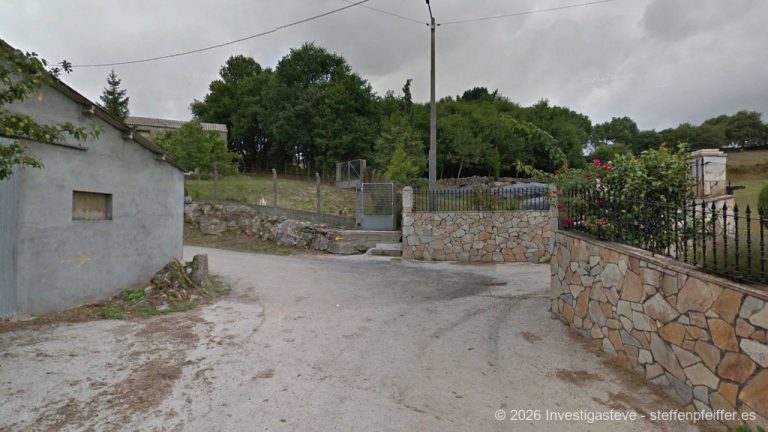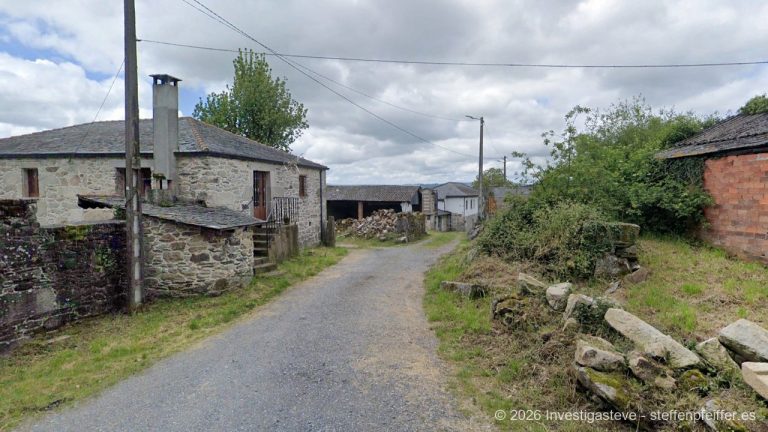
A First Glance – Entry & Atmosphere
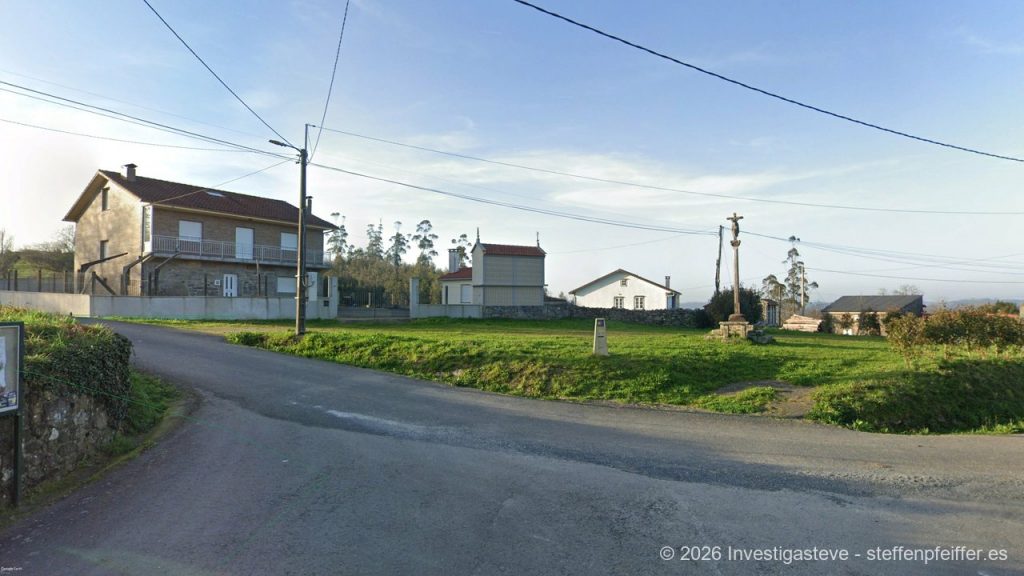
When you leave Negreira behind and the path relentlessly leads you up from the gentle river valley of the Tambre, you reach a point where your breathing gets heavier and your calves pay the first real toll for the stage to Olveiroa. You step onto the heights of A Pena – and suddenly not only your view expands, but also your soul. Up here, on the foothills of the Galician mountain ridges, the sky seems to have a completely different quality. It appears deeper, more tangible, and often characterized by the dramatic play of clouds that only the nearby Atlantic can create. A Pena welcomes you with an archaic, almost defiant tranquility. It is a place that seems to have grown out of the massive granite of the earth, a stone fortress against time, enveloping you with a mix of barren grandeur and deep security.
The auditory experience in A Pena is dominated by the rule of the wind. You hear the rhythmic clicking of your trekking poles on the rough granite floor, a metallic beat that seems strangely lost in the vast silence of the plateau. But it is not empty silence; it is a silence filled with the whisper of the wind in the distant eucalyptus groves and the occasional, almost melancholic call of a bird of prey circling high above the fields of San Mamede. Sometimes the air carries the distant, muffled echo of a church bell from the valley – a sound that feels as old as the stones themselves. The tactile perception becomes physical reality here: You feel the resistance of the ascent in your joints, the cool metal of railings, and the rough, lichen-covered surface of the old walls that line the paths like gray veins through the landscape.
The air in A Pena is clearer, sharper, and carries the harsh aroma of the Galician hinterland. It smells of damp earth, of the intense scent of wild thyme and broom, which turns the slopes into a bright yellow in the summer months. When the fine Galician drizzle – the mystical “Orballo” – sets in, the place becomes a tactile painting. The stones turn dark and shiny, moisture settles like a silky veil on your skin, and the smell of wet slate blends with the spicy smoke from the few farmhouses’ chimneys. In A Pena, you are no longer just a hiker; you become part of an ecosystem that has defied the rhythm of nature for generations.
Psychologically, A Pena marks a decisive turning point on your journey. You have overcome the first major hurdle after Negreira and are literally above it all. Looking back into the valley makes everyday worries seem small, while looking forward hints at the vastness of the path ahead. Up here, in this place of reduction, you become aware of the sheer physicality of your existence. The feeling of having arrived at the top combines with humility in the face of the mighty landscape. A Pena is a psychological gateway that frees you from the confines of the woods and prepares you for the meditative openness of the Terra de Xallas. It is a place that tolerates no masks – only your step, your breath, and your will to reach the horizon count here.
What This Place Tells
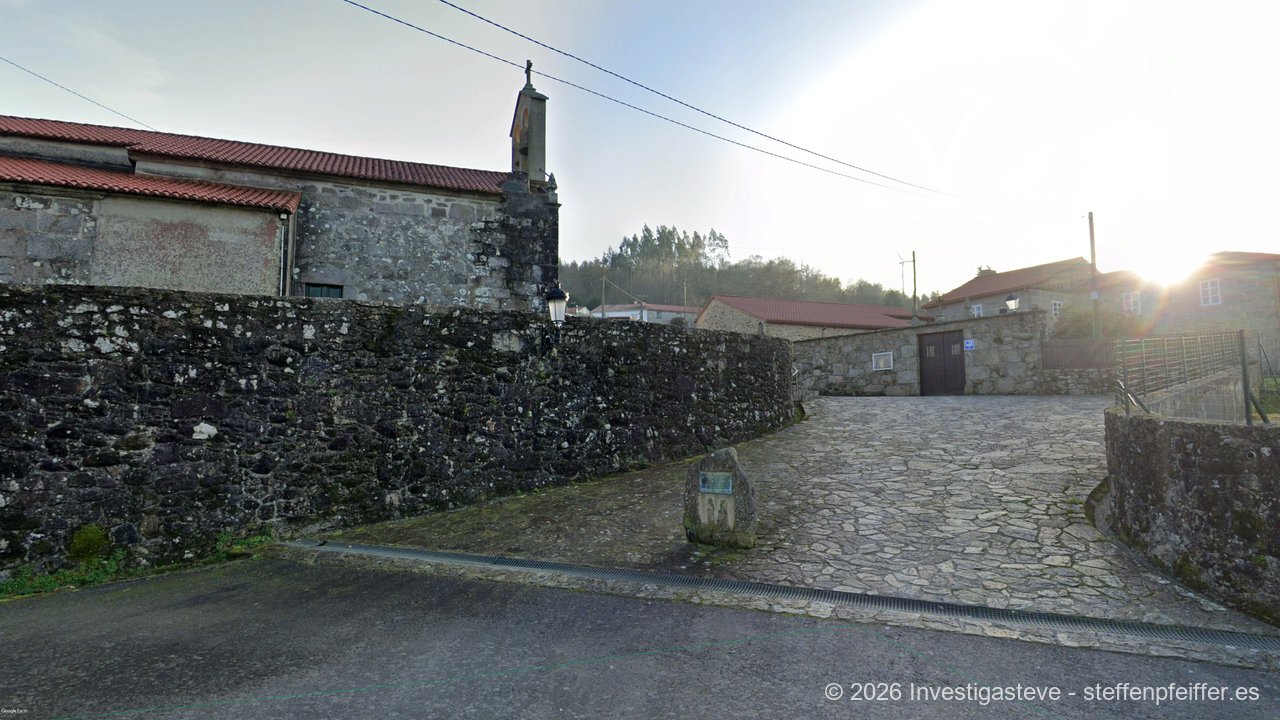
The story of A Pena is a chronicle of endurance and quiet faith, deeply rooted in the Parroquia San Mamede de Pena. When you stand before the simple but dignified parish church, you touch stones that breathe centuries of devotion and hard rural life. The name “A Pena” itself – Galician for “the rock” or “the cliff” – says it all. It tells of a time when people sought protection in the heights, in places that were barren and difficult to farm, but offered a strategic overview and closeness to the divine. The church of San Mamede, dedicated to Saint Mammas of Caesarea, is a stone witness to those early Christian influences that, over the centuries, fused into an unwavering Galician identity.
Particularly fascinating is the role of the “Rectoral,” the old parish house, which today often serves as a hostel. It tells of a time when the church was not only a spiritual center but also the social and economic anchor of the community. Here, the threads of village life came together; here, tithes were collected, festivals planned, and the worries of farmers listened to. The massive walls of the Rectoral testify to architectural solidity that underscored the church’s status in the Barcala region. When you step through the portal, you feel historical causality: A Pena was never a place of great trade or battles, but a place of moral and physical anchoring for the people of surrounding hamlets like Piaxe or Alto da Pena.
The surroundings of A Pena also tell of the ancient tradition of “Minifundios,” the extremely small-scale agriculture of Galicia. Every stone wall that limits the barren fields is a silent monument to the endless toil of the ancestors. You can feel the historical continuity of labor here – the soil literally had to be wrested from the granite. The legends of the region whisper of “Mouros” and “Meigas,” those mythical creatures of Galician folklore said to dwell in the crevices and mists of A Pena. It is a story not only found in books but in the collective memory of the stones and the old people who still carry out their daily work here with stoic calm.
In A Pena, modern pilgrims and medieval travelers meet on a timeless level. The historical significance of this place lies in its function as a “bifurcation point” – a point where decisions had to be made. Even though the main path is clearly marked today, A Pena preserves the feeling of a threshold place. Here, at the transition between fertile valleys and rugged plateaus, decisions were made for centuries about how to face the hardships of nature. The place tells us that true strength is not found in the noise of metropolises, but in the ability to take root on a wind-battered rock and grow towards the sky. It is a tale of resilience, echoed in every granite block of San Mamede.
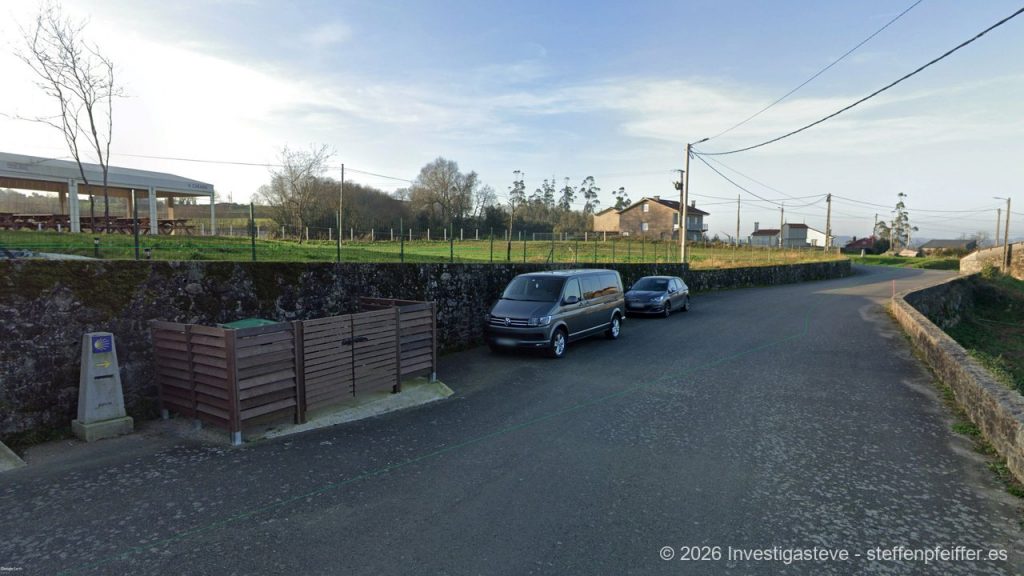
Camino Distances
After a steady climb of about eight kilometers, which leads you through fragrant woods and over the first small hills, A Pena offers the first wide panoramic view back to Negreira.
Addresses & tips in A Pena
Overnight Stay & Arrival
Arriving in A Pena means leaving the world of the valley behind and entering an atmosphere of heightened hospitality. When you reach the “Alto da Pena,” the highest point of the small settlement, the feeling of relief is almost physically tangible. Arrival here is not a technical act, but a process of slowing down. When you let your backpack slide off your shoulders and the weight of the past miles sinks into the ground, you feel the protective function of this place. The albergues here, such as the famous Alto da Pena or the historic Rectoral San Mamede, are more than just sleeping places – they are refuges for the soul that longs for rest and grounding after the climb.
Sleeping in A Pena has its own quality. Because the place is so exposed, at night there is a darkness and silence that you hardly find near Santiago anymore. When the lights in the hostel are turned off, the place belongs again to the elements. You hear the distant rustling of the wind in the eucalyptus trees, which sounds like the distant pounding of the sea. The feeling of isolation here is not seen as a lack, but as a privilege. In the massive walls of the Rectoral, the beams do not whisper any concrete sentences, but they convey a sense of security that pilgrims sought here centuries ago. It is the certainty that no matter how hard the path was, you have found a home for a night here that elevates you above the world.
Social interaction upon arrival in A Pena is characterized by special warmth. Because the place is small, pilgrims gather closer together in the evening. You share narrow benches in front of the house, watch together as the sun sets behind the distant Galician hills and turns the sky into dramatic violet and gold tones. In this moment, language barriers fall; a compassionate look at a blister or a shared smile over the completed climb weighs more than a thousand words. The hospitaleros here often instinctively know what a hiker needs: a cool drink, an honest word, and the peace to let the day’s experiences sink deep into your own thoughts.
If you stay overnight here, you should see the absence of urban luxury as an opportunity. In A Pena there are no shopping streets, no flashing neon signs. You might sit in the evening on the terrace of the Alto da Pena albergue, legs up, and feel the cool evening breeze on your face. The feeling of exhaustion here turns into productive tiredness, a form of inner cleansing. Arriving in A Pena is arriving at your own essence. You realize that a solid bed and a roof that keeps out the wind are the most precious goods in the world at this altitude. It is a lesson in gratitude that strengthens you for the further journey to Olveiroa and beyond.
Early in the morning, when the fog still hangs in the valleys and only the church tower of San Mamede emerges from the white, a second arrival begins – the awakening to the vastness. The scent of fresh coffee mixes with the cool morning air as the first pilgrims quietly pack their backpacks. It is an almost sacred atmosphere of departure. You don’t just leave A Pena; you take the feeling of grandeur with you. The place acts as a psychological anchor, showing you that every climb ends with a reward – a reward that doesn’t consist of medals, but of silence, of sight, and the certainty that you are stronger than you thought.
Food & Drink
The culinary world of A Pena is as rugged, unadorned, and robust as the landscape itself. If you stop here, you should prepare your palate for honest Galician home cooking, which goes without frills and instead relies on the quality of local products. In the kitchens of the albergues, a cuisine is celebrated that understands the pilgrim for what he is: a hungry traveler whose body craves energy and whose soul needs comfort. An absolute must is the local version of “Caldo Galego.” In steaming bowls, cabbage, potatoes, beans, and often a piece of Galician bacon combine into an elixir that instantly revives weary spirits.
A special highlight is the meat in this region. “Ternera Gallega,” the beef from the surrounding pastures, is often served in its purest form in A Pena – grilled over oak wood and seasoned only with coarse sea salt. The flavor is intense, honest, and deeply rooted in the soil of Barcala. When you sit at the heavy wooden tables in the hostel, the light of candles reflected in the dark red wine, and you break the crusty farm bread, you realize that eating here is an act of community. The wine, often a full-bodied Mencía or a sparkling Ribeiro, loosens tongues and makes the hardships of the climb fade into the distance.
An insider tip for those with a sweet tooth is the local cheese, often a “Queso de Tetilla,” served with “Membrillo” (quince paste). The creamy mildness of the cheese harmonizes perfectly with the fruity sweetness of the quince – a classic Galician dessert that gives you the necessary serotonin boost for the next day. In A Pena, you also drink water from the local springs, which is so clear and cool it puts any lemonade to shame. It’s a cuisine of reduction, focusing on the pure taste of things. If you eat here, you do so with a gratitude often lost in tourist restaurants on the coast. It is food for the body and medicine for the wandering soul.
Supply & Logistics
Logistically speaking, A Pena is a place focused on the essentials. If you are looking for large supermarkets or specialized outdoor shops here, you will be disappointed – and that’s exactly where the appeal lies. Supplies in A Pena are proof of the power of small units. In the hostels, you often find a selection of basic products for pilgrims: water, energy bars, bananas, and maybe some blister plasters. It’s a supply based on trust and mutual help. The hospitaleros know exactly what hikers need and often offer solutions that go beyond mere sales.
Medical care is limited to a well-stocked first aid kit in the accommodations. For anything beyond that, you rely on taxis or backpack transport, which works smoothly in A Pena. It is advisable to have replenished your supplies in Negreira, as A Pena is more a place of regeneration than consumption. But precisely this absence of commercial abundance acts as a psychological filter. Here you learn to get by with what you carry in your backpack and discover the joy of simplicity. Logistics in A Pena teach you self-sufficiency – a valuable lesson on the way to the end of the world.
Shopping: No traditional stores. Small sales points in the albergues for immediate pilgrim needs (water, snacks).
Gastronomy: Excellent pilgrim menus in the Alto da Pena and Rectoral hostels. Focus on traditional Galician cuisine.
Overnight stay: Two major albergues (Alto da Pena and Rectoral San Mamede) as well as a few guest rooms. Reservation recommended in high season.
Public facilities: The parish church of San Mamede is the center. No banks or ATMs on site – get cash in Negreira!
In summary, supplies in A Pena are like the place itself: modest but of high quality. If you are willing to adapt to the rhythm of the village, you will find everything you need for your physical and spiritual well-being. It’s a place that teaches you to value things again because they are not abundant. Up here on the plateau, you experience a form of logistical deceleration that clears your mind for the essentials of the journey.
Don’t Miss
The Iglesia de San Mamede: A place of absolute silence. Pay attention to the simple Romanesque details and the stone cross in the cemetery, which develops an almost mystical aura in the evening light.
The Alto da Pena viewpoint: The highest point of the village offers a 360-degree panorama over the Comarca Barcalesa all the way to the distant peaks of Terra de Xallas. Ideal for meditative moments at sunset.
The Rectoral de San Mamede: Admire the massive granite architecture of this former parish house. The thick walls and small windows tell of centuries of protection and endurance.
The Cruceiro by the wayside: A classic Galician stone cross that has shown pilgrims the way for generations and is often decorated with fresh wildflowers or small stones by hikers.
The ruins of old stone walls: Take a moment to study the construction of the “Muros de Pedra Seca.” They are built without mortar and testify to the incredible patience of the ancestors.
The flora of the plateau: Pay attention to the wild broom and the ferns, which are particularly fragrant at this altitude and bathe the landscape in a constantly changing green-yellow pattern.
Insider Tips and Hidden Places
Away from the marked path, A Pena reveals small treasures that only the attentive observer discovers. One such place is the small, almost forgotten fountain near the district of Piaxe. The water there is ice-cold, clear, and tastes of the purity of the granite soil. It’s an ideal spot for a short rest, far from the clicking of other hikers’ poles. When you sit there in the grass, you feel the cool earth beneath you and hear only the distant buzzing of bees in the broom bushes. It’s a moment of absolute privacy in a landscape that already invites contemplation.
Another hidden spot is the small depression behind the church, where an ancient olive tree often stands, which doesn’t seem to fit into the rugged mountain landscape at all. It looks like a survivor from a warmer world and symbolizes nature’s adaptability. Here, in the wind shadow of the church walls, the air is almost still. You can almost touch the “Morriña” – that Galician longing. For photographers, this place offers motifs of melancholic beauty that perfectly capture the spirit of the Camino Fisterra. It is the contrast between the gray stone and the silvery green of the leaves that tells its own story here.
If you have the opportunity, talk to one of the few residents who often sit on the stone benches in front of their houses. Even if the language barrier is great, their gestures tell more than a thousand words. Sometimes they lead you to a small niche in a wall, where a tiny, time-weathered holy figure stands. These human encounters are the true insider tips of A Pena. They give the cold granite a soul that you won’t find in any guidebook. These are the invisible threads that connect you to the place and turn a simple stop into a profound experience.
Last but not least, you should look east when the moon rises. Since A Pena is so high, the moon seems larger and brighter here than in the valley. The light reflects on the slate roofs of the houses and makes the whole place shine silvery. It’s an almost surreal spectacle that reminds you that you are on a “Way of the Stars.” In A Pena, it’s the invisible things, the small details off the path, that make the difference and refine your journey into a real experience.
Moment of Reflection
A Pena asks you a question that touches your innermost being: What does it mean to you to stand above it all? Up here, at the first real high point after Negreira, you become aware of the radical simplicity of your life. You have worked your way up the mountain, stone by stone, step by step. This place, with its solid granite walls and wind-battered grandeur, invites you to find your own “rock.” In a world that spins ever faster, A Pena offers you the stability of stone. Are you ready to leave the burdens of your worries in the valley and move on only with what really matters?
Perhaps you realize here that the effort of the climb was necessary to enjoy this view. The silence of A Pena is not an absence of sound; it is an answer. When you set out again tomorrow, you take the stoic serenity of San Mamede with you. You realize that you don’t have to be fast to be great, but enduring. A Pena teaches you that every rock in your life can be a viewpoint if you are willing to climb it. When you look up at the wide starry sky over the plateau at night, you feel small and infinitely powerful at the same time. That is A Pena’s gift: the realization that you are exactly where you belong – on the summit of your own determination.
Camino of the Stars
This place is on the Camino a Fisterra y Muxía, on the stage from Negreira to Olveiroa (CFM 2). The sequence of places is:
Negreira → A Pena → Vilaserío → Santa Mariña → Maroñas → Ponte Olveira → Olveiroa
Did you also feel that moment of grandeur in the archaic tranquility of A Pena, which made you forget the climb from Negreira? Maybe you heard a story in the Rectoral San Mamede that changed your view of the path, or you took a photo of the sunset at Alto da Pena that captures the soul of Galicia? Share your personal impressions and insider tips with us – in any language your heart speaks. Your experiences make this stone guardian even more alive for the next pilgrims!
About the Author