How England’s Most Feared Pirate Reconciled the End of the World
I. The Atlantic Tragedy: When War Strikes the Cape
There are places in this world where geography becomes destiny. Cape Fisterra on the Galician Costa da Morte – ancient Finis Terrae, the end of the world – is one such place. Standing here, looking out at the whipping foam of the Atlantic, one quickly understands why late medieval mariners viewed this stretch of coast with awe and terror. Around the year 1400, however, the ocean was not merely a force of nature, but also a bloody theatre of war. In the shadow of the Hundred Years’ War, state-sanctioned privateering flourished.
One of the most effective and relentless figures of this era was Harry Paye. Revered in his English hometown of Poole in Dorset as a patriotic naval hero and loyal follower of the House of Lancaster, his name echoed along the Iberian coasts like a death sentence. The Spanish chronicles of those days carved him into their memory under the ghastly name “Arripaye”. Armed with royal letters of marque from Henry IV, Paye turned the Atlantic into his personal hunting ground.
In 1398 and 1404/1405, Paye’s fleets repeatedly headed for Fisterra. Their target was by no means purely military. The church of Santa María das Areas, located just outside the village center – the highly venerated end point on the Way of Saint James before the necessary turn and return – was ransacked. Paye burned parts of the town, extorted ransoms, and stole a processional cross of immeasurable material and religious value from the sanctuary. A sacrilege that burned itself deep into the collective soul of Fisterra’s people.
Yet the Middle Ages did not forget. The Castilian Crown responded with unyielding severity: in the late summer of 1405, a joint Castilian-French punitive expedition commanded by Don Pero Niño sailed directly to the southern coast of England. In the Battle of Poole, the invaders burned the town’s warehouses; Paye’s own brother fell in hand-to-hand house combat. The chronicle El Victorial (1436) recorded what was law back then: an eye for an eye, arson for arson.
II. The Transformation: When Enemies Become Beer Drinkers
Fast-forward world history by a little over six centuries, and the Atlantic conflict loses its martial edge, yielding to that subtle humor known in Galicia as Retranca – a blend of a knowing wink, healthy skepticism, and dry wit.
In May 2008, the unexpected happened: a five-member delegation from the Poole Pirates, led by the Reverend Bob Mason, traveled to Galicia. In their luggage, the English carried no weapons, but a lovingly crafted wooden replica cross as a symbolic act of atonement (Desagravio).
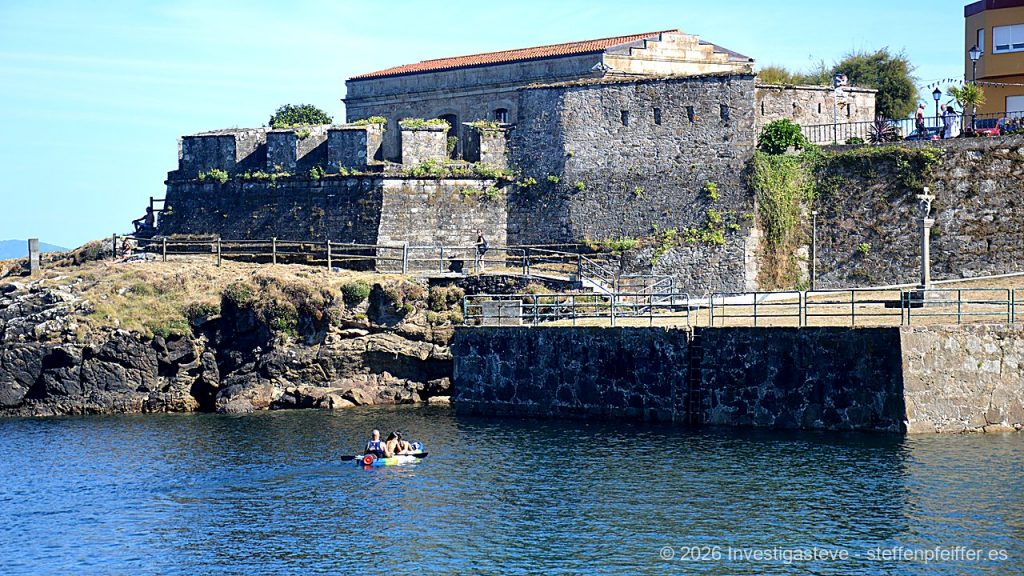
The Symbol of Reconciliation: Embedded in the timber of the replacement cross is a metallic fragment of the ship’s bell from the San Bartolomé – a Spanish Armada vessel that sank off the English coast in 1597. An English oak beam united with a piece of Spanish war history, today peacefully displayed in the Castelo de San Carlos.
During the return visit in 2009, the Mayor of Poole summed it up neatly:
«Never again shall we be enemies, now we are good friends.»
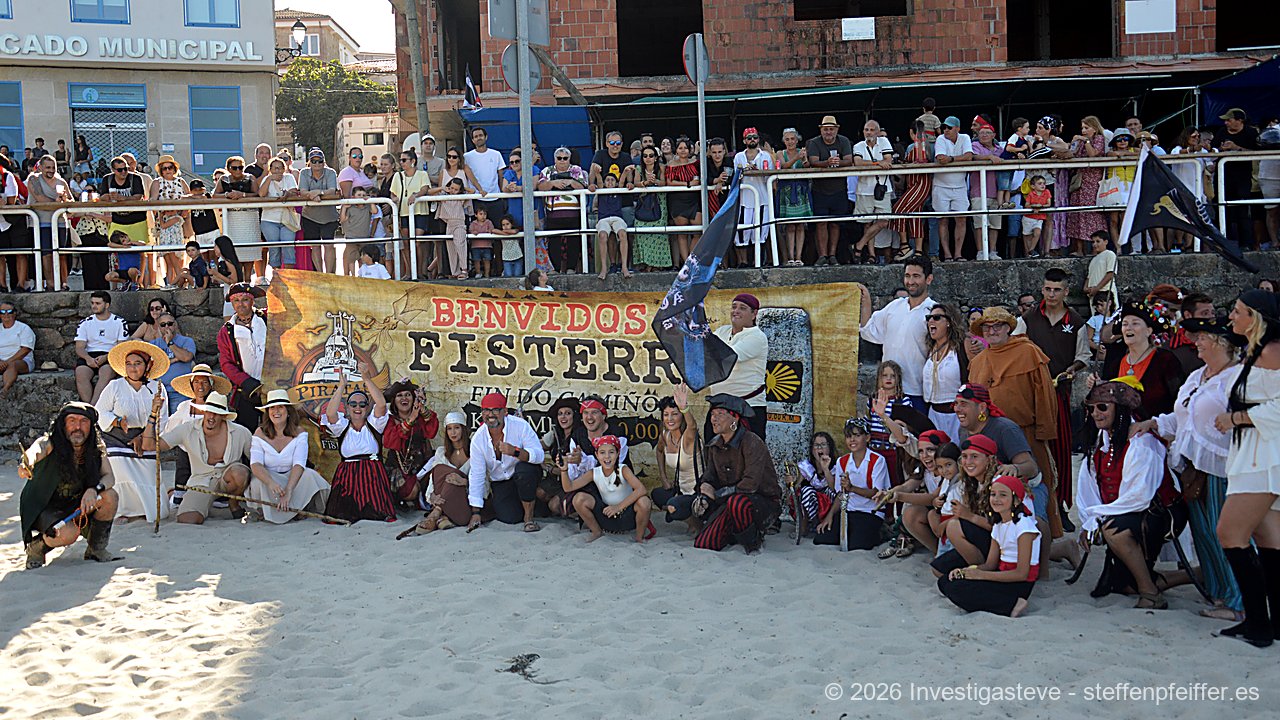
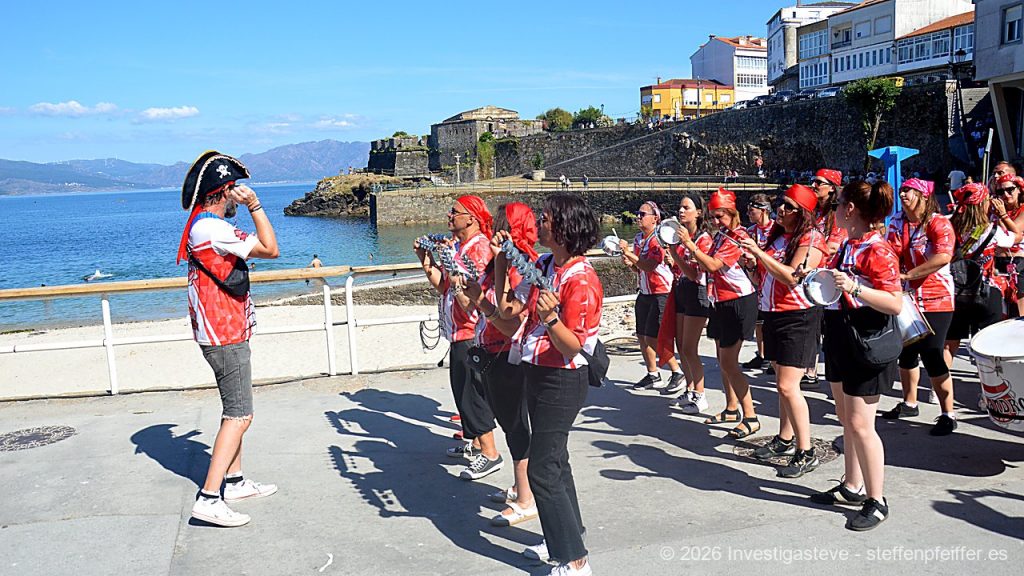
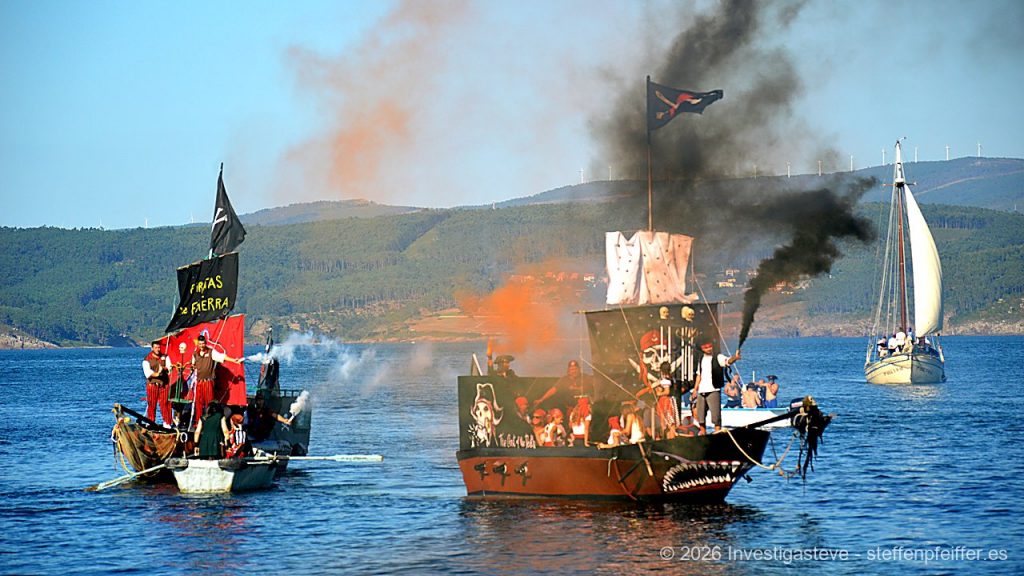
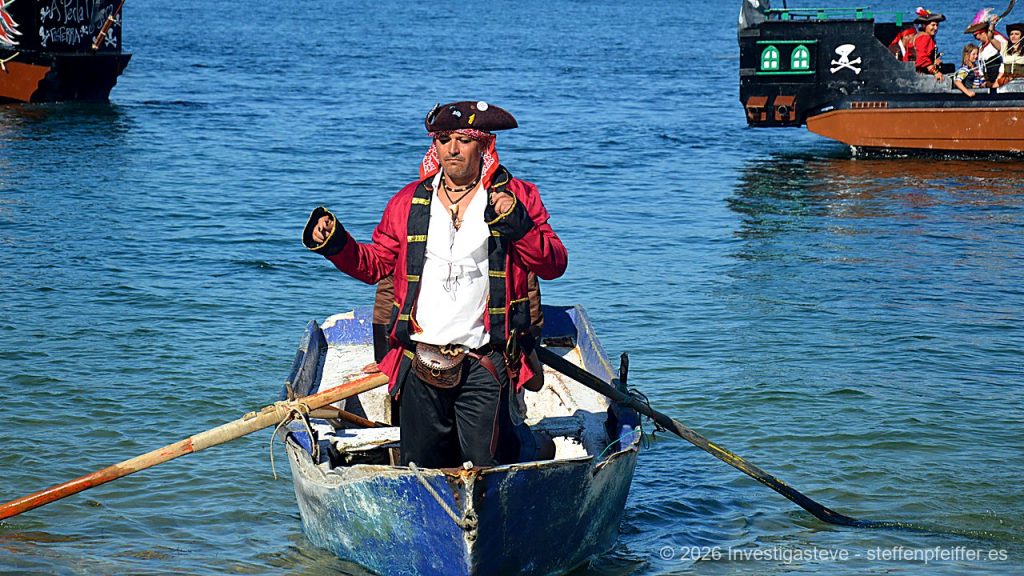
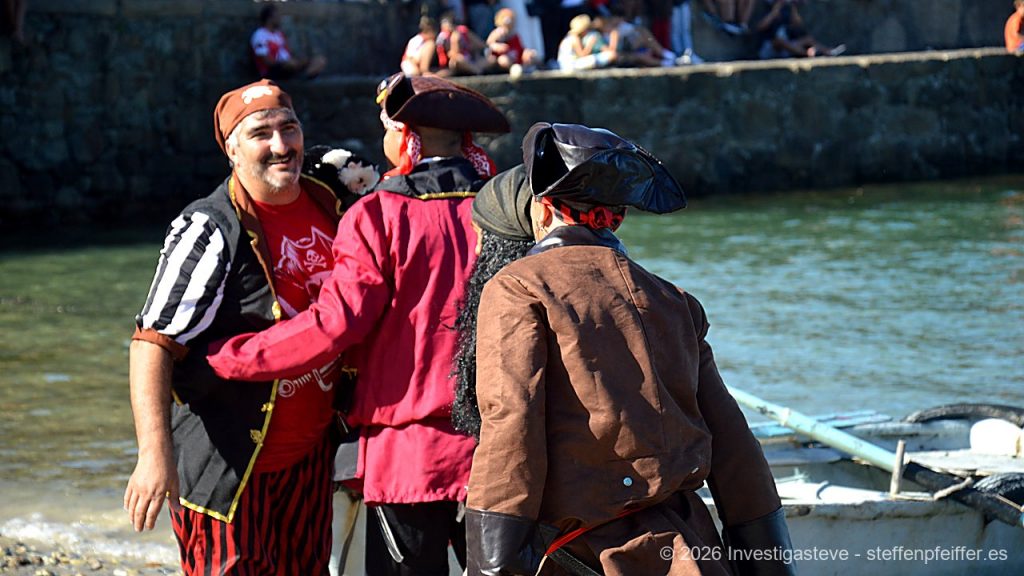
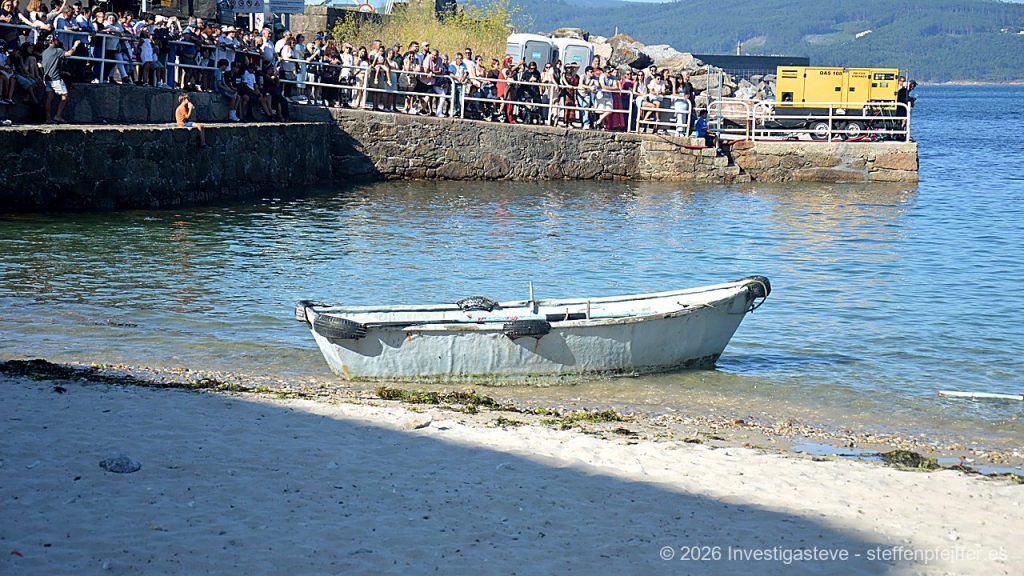
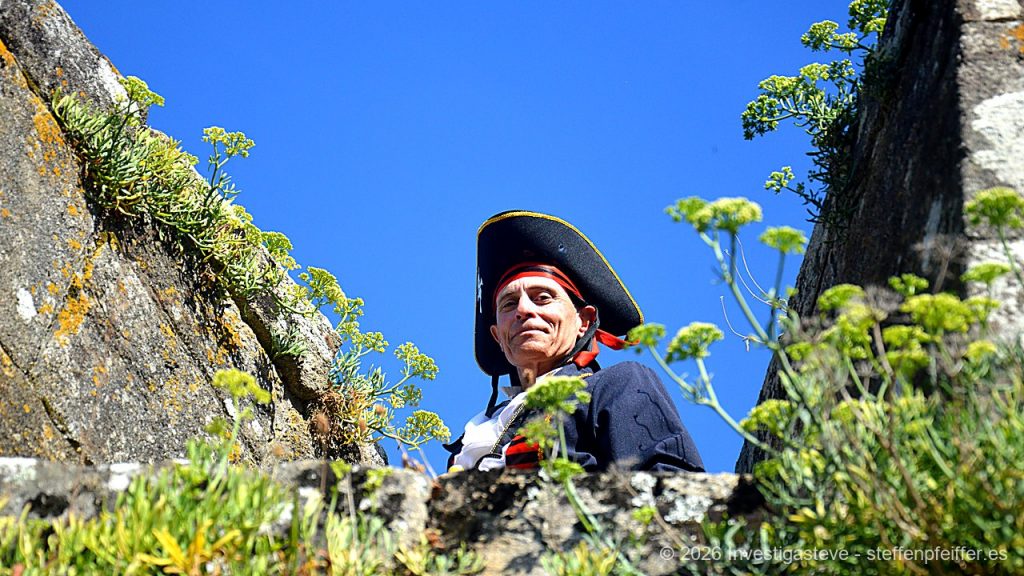
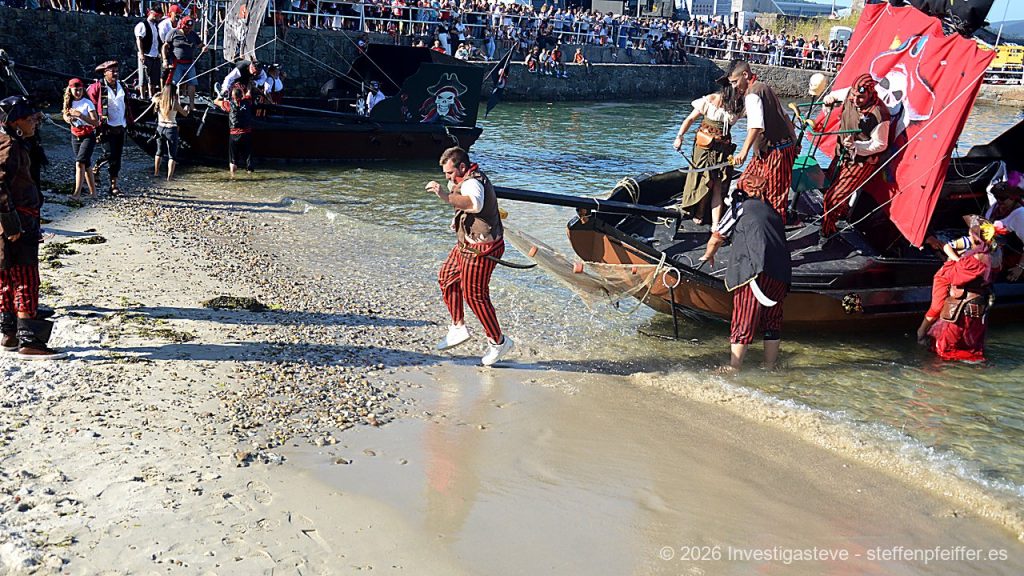
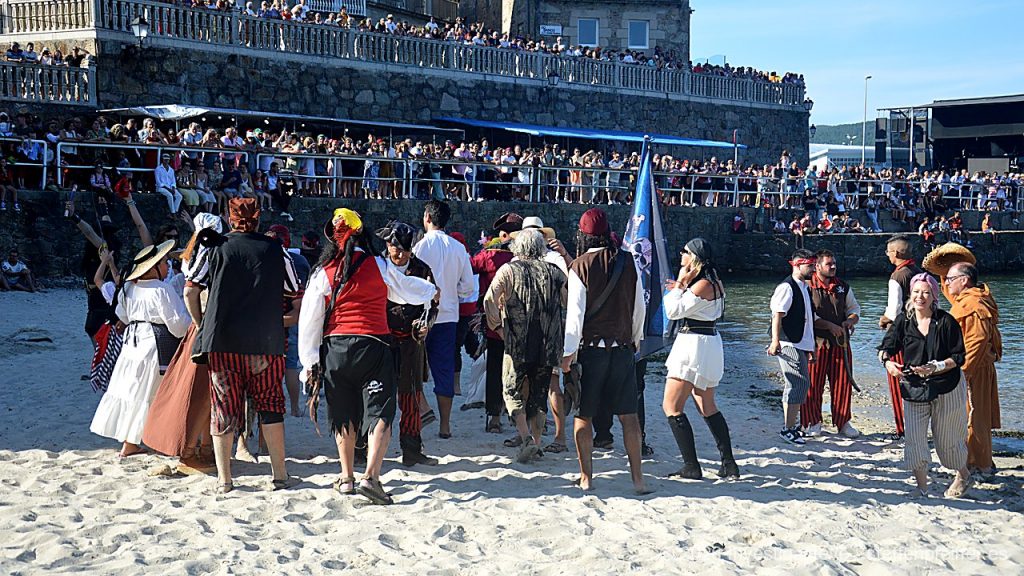
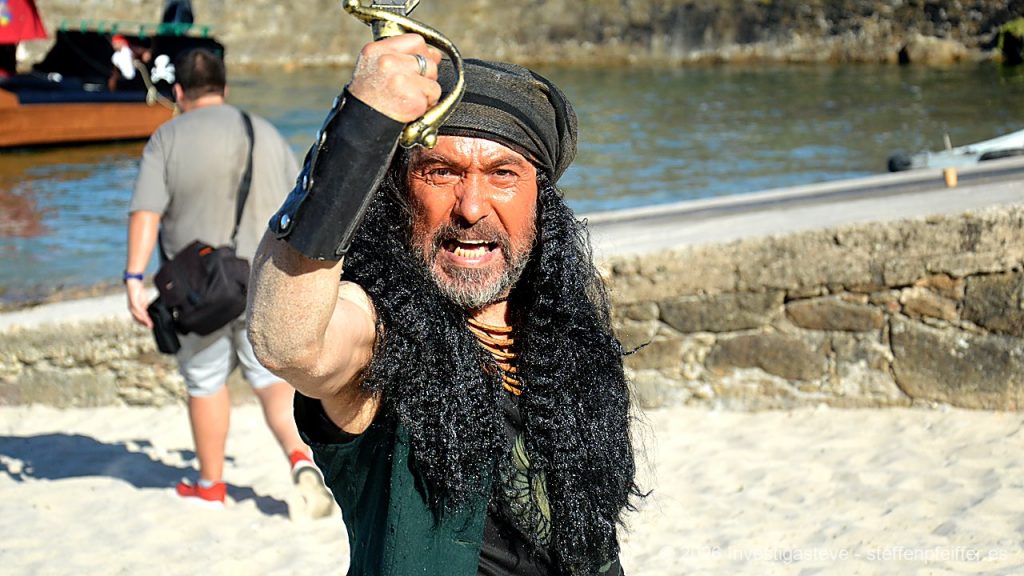
Since 2014, Fisterra has celebrated the Encontro Pirata on the first Saturday of August. Cleverly combined with the Festa do Longueirón – a festival honoring the local razor clam – the beach of A Ribeira turns into a setting that would have delighted satirists. For here, history is not solemnly entombed in a museum, but parodied with relish.
III. Vox Populi: Voices from the Town
How does modern Fisterra view this colorful spectacle, where costumed Englishmen sit peacefully alongside local razor-clam aficionados? A stroll through the alleys reveals a marvelous panorama of Galician eloquence.
1. The Birth at the Bar: Roberto Traba Velay Roberto Traba Velay, the mastermind behind the festival and local “Arripaye”, recalls the initial spark some 15 years ago with a smile. The official reception at town hall was fine – but the real diplomacy took place at his bar:
“After the official ceremony, the folks from Poole came over to my pub. We sat there all afternoon until late into the night over beers and conversation. The following year, we simply invented a pirate festival on the spot to go with the razor-clam fair.”
Regarding the staging of today’s reenactment, Roberto speaks with affectionate irony:
“We stage a battle over a treasure where, in the end, absolutely everyone dies. But we are in Fisterra! Our most important festival of the year is Easter Sunday (Domingo de Resurrección). So during our pirate spectacle, after the battle, all the dead simply rise from the dead, embrace each other, and unroll a giant banner. We aren’t celebrating a raid. We are celebrating that 600 years later, we aren’t bashing each other’s heads in anymore.”
2. The Sailor and the Myths: Gervasio (85) Sitting on the harbour benches is Gervasio. At 85 years old, with a lifetime spent as a mariner on international oil tankers, he is not easily fooled. He looks at the festivities with a mix of pride and amusement.
“Nobody here knew anything about pirate reenactments at first. But once people understood what it was about, we tackled it. And today, a genuine friendship connects us with the English.”
In the same breath, Gervasio clears up an age-old malicious rumour that outsiders pinned on Fisterra for centuries:
“In the past, people from outside claimed we in Fisterra tied lights to cows’ horns so ships in the fog would run aground on the rocks for us to plunder. It was pure slander! For every misfortune in the Cantabrian Sea, Fisterra was blamed. Today we just celebrate pirates – how fitting is that!”
3. The Pragmatist vs. the Historical Skeptic: Lalo O. & Luis B. As in any true Galician village, there is no consensus without a healthy dose of controversy. At the roadside, one encounters Lalo and Luis.
Lalo views the event entirely pragmatically:
“People just want to celebrate! It’s summer, the sun is shining, and the pirate festival is a wonderful opportunity to bring people together. I think it’s brilliant.”
His companion Luis, on the other hand, shakes his head with a smirk, but firmly. For him, the festival is far too wild a trivialisation of history – served with a generous portion of historical critique:
“I see it completely differently! The real pirates didn’t casually stroll out of the bay; they came from out on the open sea. And they didn’t come here for a theatrical gag or a friendly chat! Real pirates came to rob, kill, and plunder. And anyone shot dead on the beach doesn’t just stand back up afterwards! If you’re going to reenact history, do it seriously, not with a theatrical show full of nonsense.”
4. Togetherness: José Ramón Between Lalo’s pragmatic enthusiasm and Luis’s historical rigor, José Ramón captures the general mood on the street:
“The festival is simply lovely. It attracts so many people from outside who naturally mingle with us locals. I really enjoy this atmosphere.”
5. The Heart and the Palate: Inmaculada (“Mako”) The joyful final note among local opinions comes from Inmaculada, known to everyone as “Mako”. Born in Fisterra and now living in A Coruña, she never misses a year returning to the coast for the event:
“I never miss the razor-clam festival (Longueiron); I have an absolute blast here! It’s a wonderful performance, but best of all: I get to meet everyone I’ve known since birth, alongside friends and guests from outside. And one more thing: the razor clams are simply delicious! Kisses to everyone!”
IV. Conclusion: When History Goes Through the Stomach
What remains of the feud between Poole and Fisterra?
Harry Paye, alias Arripaye, once stole an altar cross and left behind burning cottages. Pero Niño responded with fire at the docks of Dorset. Six hundred and twenty years later, the English corsairs steal at most the best table at the beach bar, and the people of Fisterra throw razor clams and chilled Ribeiro wine at them instead of cannonballs.
That historical purists like Luis shake their heads is as much part of the local color as the fog over the cape. For the true art of Retranca lies not in denying the horrors of history, but in turning them into a feast where, in the end, even the dead rise again to toast together, celebrate, dance, and make plans to meet again next year.
V. Postscript: The View of the Forasteiro
When, as a newcomer – a forasteiro – you choose your home at this magical end of the world, you observe the colorful hustle and bustle with a quiet fascination all your own. Fisterra is not a place that flatters strangers prematurely; the coast is rugged, the ocean unforgiving, and the locals possess that fine, probing skepticism shaped by centuries of Atlantic solitude. Yet living here, one quickly grasps the true secret of retranca: it is the Galician elixir of life that heals historical scars by overwriting them with a wink.
When the supposed English invaders land on A Ribeira beach and Roberto orchestrates the miracle of maritime resurrection, I sit with a cool glass of Ribeiro right among my neighbors – between Gervasio’s old sea yarns, Luis’s delightful intransigence, and Mako’s infectious laughter. At that precise moment, one feels it clearly: here, where the world ends and all paths merge into the sea, even a forasteiro does not remain a stranger for long. And at the latest by the second plate of razor clams, one belongs, at least for that moment which stands out so much from everyday life, somehow to it.
About the Author