A First Glance – Introduction & Atmosphere
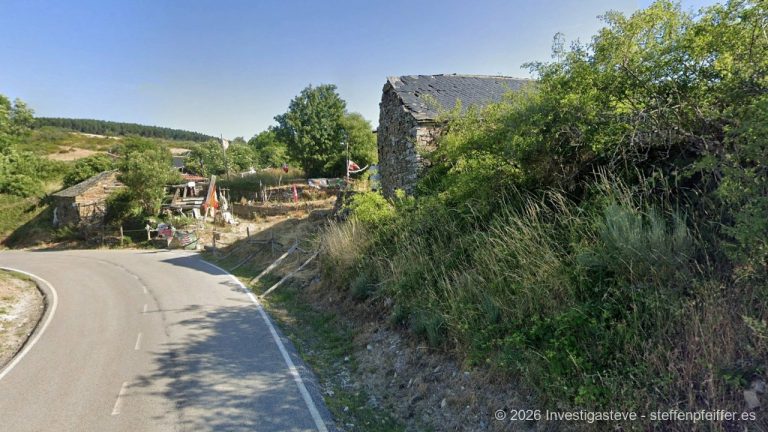
You set foot on the western exit of Arzúa and instantly feel the texture of your journey change. Behind you fades the bustling activity of the “Cheese Town,” the clatter of coffee cups in the bars of the main street, and the relentless rhythm of traffic on the N-547. Ahead of you opens a corridor that feels like a deep breath of the landscape. In As Barrosas begins that magical moment of deceleration, where the Camino Francés sheds its urban cloak and releases you into the gentle, humid embrace of rural Galicia.
The acoustic backdrop changes dramatically. The hard echo of your steps on asphalt becomes softer as the path dips into the first shady hollow ways, the so-called Corredoiras. Where the roar of trucks dominated just moments ago, the steady, almost meditative murmur of the Río Vello now takes over. It is a gentle gurgling that acts like a natural white-noise filter, washing the last remnants of urban haste from your thoughts. You feel the resistance of the ground beneath your boots – here, in the basin of the valley, the earth is often soft and yielding, a haptic greeting from the “Muddy Ones,” as the name of the place translates.
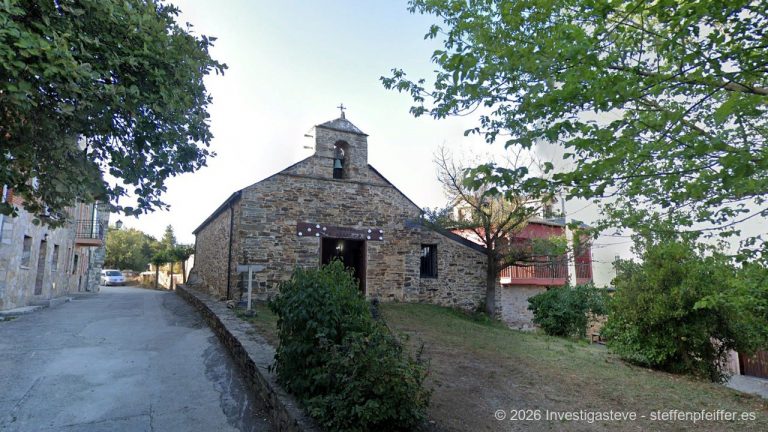
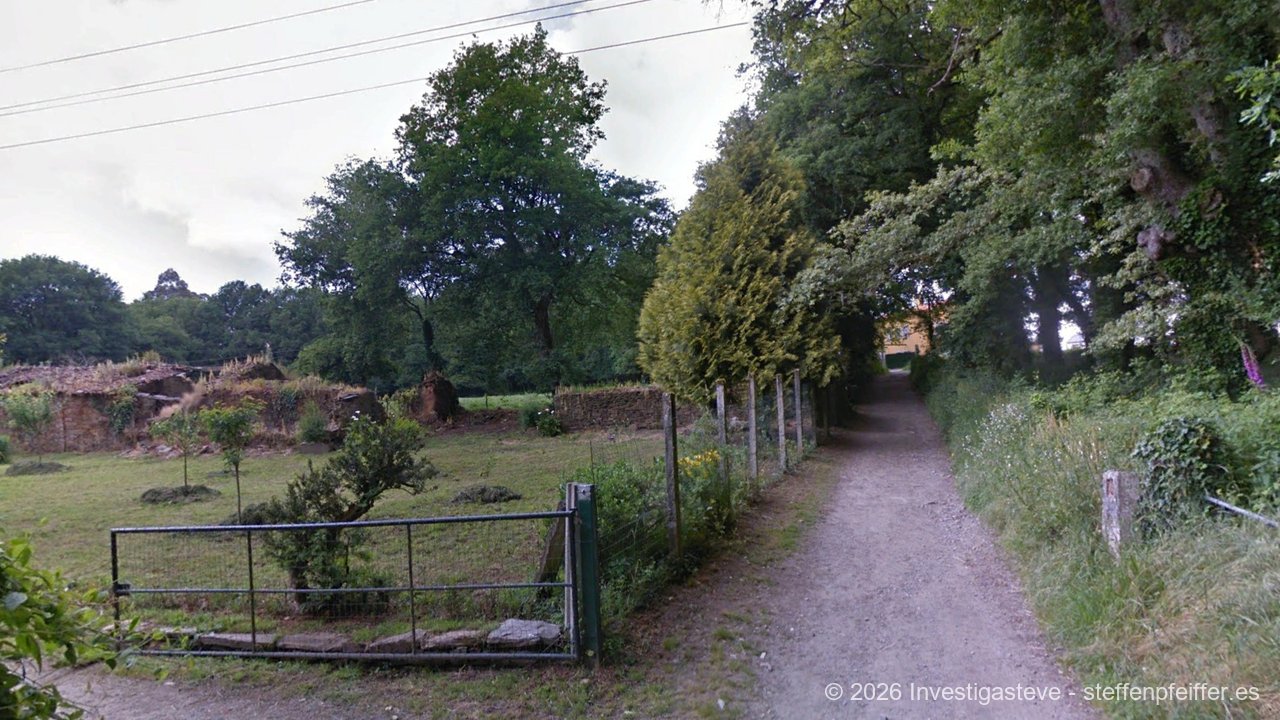
Visually, you are greeted by a colour palette that could not be more typical of Galicia. The deep, mossy green of the ancient oak forests, the Carballeiras, forms a dense canopy through which the sun’s rays break in narrow bundles – a phenomenon the Japanese call “Komorebi” and which creates an almost sacred atmosphere here in the damp late morning hours. Amidst this greenery stands the simple, grey granite façade of the Capilla de San Lázaro. It looks like a silent guardian at the edge of the path, an architectural anchor point signalling to you: you have left the shelter of the city and are now entering a territory that for centuries has been shaped by healing, isolation, and spiritual preparation.
In As Barrosas, it smells of the promise of the final stages. It is a mixture of the cool dampness of the river valley, the resinous scent of the nearby forests, and – especially in autumn – the earthy aroma of rotting leaves and mushrooms. This place is not a destination where you stay, but a portal to pass through. It is the transition from civilisation to rural idyll, a psychological gate that teaches you to allow the solitude of the forest again before the anticipation of Santiago de Compostela draws you under its spell.
What This Place Tells
As Barrosas is a place whose history lies hidden in the layers of the soil and the stones of its chapel. The name itself is a testimony to the past: “As Barrosas” derives from the Galician word for clay or mud. Before modern asphalt surfaces sealed the path, this descent down to the river was a notorious passage. Generations of pilgrims fought their way through the thick Galician mud, which made boots heavy and slowed progress. Yet precisely this hardship gave the place its significance in the collective memory of the Camino de Santiago.
The spiritual and social heart is undoubtedly the historic Hospital de San Lázaro. In the Middle Ages, this was a place of strict segregation. Lazarettos, dedicated to Saint Lazarus, often served as leper houses. They were deliberately built outside the city walls of Arzúa to protect healthy citizens from infection. Here, sick pilgrims had to wait, often within sight of the saving city but separated from it by the deep valley. It was a place between hope and exclusion, where the sick were cared for while simultaneously serving as a reminder of the fragility of life. Today, little remains physically of the former Hospital complex, but the simple chapel preserves the memory of this tradition of pilgrim care.
The architectural simplicity of the Capilla de San Lázaro tells of a time when faith needed no display of splendour but had to provide comfort. The massive granite ashlars have defied Atlantic rain and the valley’s humidity for centuries. When you touch the walls, you feel the cold and roughness of a stone that has witnessed countless fates. It is a place of historical causality: here, the medieval idea of charity was lived out, an infrastructure of neighbourly love that made the Camino what it is today – a network of solidarity across all borders.
But As Barrosas also tells more worldly stories of conflict and resistance. At the foot of the descent, when crossing the Río Vello, you come across the Fonte dos Franceses, the Fountain of the French. Legends say that Napoleonic troops camped here during the War of Independence at the beginning of the 19th century. The cool water of the spring, which today is often signposted as “not guaranteed drinkable,” was a strategic resource back then. It is said that local partisans used the area to ambush the invaders. Thus, in this small hamlet, the deep piety of the Lazarus Hospital combines with the harsh reality of European wars. As Barrosas is therefore a concentrate of Galician history: marked by hard work on the clayey soil, deep religious care for the weakest, and the stoic struggle for survival against foreign powers.
Addresses & tips in As Barrosas
Camino Distances
🗺️ After about 1.2 kilometres of steady descent from the urban centre of Arzúa, the green gate to As Barrosas opens here.
| Previous Location | Distance (km) | Next Location | Distance (km) |
|---|---|---|---|
| Arzúa | ca. 1.2 km | Preguntoño | ca. 1.0 km |
Sleeping & Arriving
Arriving in As Barrosas means leaving the world of large hostels behind for a moment. The place itself has no commercial accommodation infrastructure in the classic sense; it is rather a refuge of silence that invites you to pause but hardly to linger overnight. The few residential houses that huddle around the chapel and along the Corredoira radiate a quiet seclusion. It is a place for pilgrims who appreciate the luxury of the absence of services. Here there is no Wi-Fi, no reception, no bunk beds – just the wind in the oaks and the distant ringing of a bell.
Anyone who takes a break here should understand it as a form of psychological “arrival” in nature. The meadows around the San Lázaro chapel offer a natural resting place, often used by pilgrims to take off their backpacks and cool their burning soles in the cool grass. The atmosphere is characterised by an almost private silence, as most walkers perceive the place as a mere transit point and move on quickly. Yet those who take the time to sit on one of the stone walls are rewarded with a feeling of isolation rarely found so soon after a larger town.
The next reliable sleeping places are either back in Arzúa or about one kilometre further on in Preguntoño. This geographical gap makes As Barrosas a “non-place” in terms of the tourism industry, which only increases its appeal for the authentic walker. You feel no bustling expectation here, but a simple existence. The texture of the old granite walls, often covered with lichen and moss, invites you to seek a haptic connection with the Galician earth before rejoining the stream of pilgrims irresistibly following the call of Santiago.
Eating & Drinking
The culinary world of As Barrosas is characterised by the asceticism of the Way. There are no bars, no cafés, no restaurants enticing with pilgrim menus. This lack is not a deficit, but an invitation to self-reflection. The air here is not saturated with the smell of fried bacon or fresh coffee, but with the pure, earthy aroma of the forest. If you want to eat in As Barrosas, you do it in the style of the old wanderers: with what your backpack provides. A piece of cheese from Arzúa, a crust of bread, and perhaps an apple taste more intense here, in the shadow of the San Lázaro chapel, than in any noisy tavern.
A central, albeit now somewhat cautionary, point of reference is the Fonte dos Franceses on the riverbank. While the water was once considered healing and refreshing, signs today often indicate that its quality cannot be guaranteed. Nevertheless, the spring remains a ritual place. Many pilgrims use the cool water to cool their faces and wrists – a haptic refreshment that feels like a small blessing after the often dusty path through the outskirts of Arzúa.
The absence of commerce shifts focus to the natural gifts of the surroundings. In autumn, you can find blackberries or sweet chestnuts falling from the trees along the paths. It is an archaic pleasure that sharpens the senses for the quality of simple things. If you feel hunger for a hot meal, you must use anticipation as a spice and wait until Preguntoño or even Salceda. In As Barrosas, only the humble rest remains, the sharing of supplies on a stone wall, and the realisation that the best taste often comes from the combination of physical exertion and perfect stillness.
Supplies & Logistics
Infrastructurally, As Barrosas is a place of conscious renunciation. There are no supermarkets, no pharmacies, no cash machines here. Anyone entering this basin should ensure that their supplies were replenished in Arzúa. This “supply desert” is an integral part of the experience on this section of the Way. It forces the pilgrim to be foresighted and teaches them to make do with what they carry on their body. It is a lesson in self-sufficiency that seems particularly valuable shortly before the destination in Santiago.
Practical help can only be found here in nature or through the solidarity of other walkers. The small meadow by the chapel serves as an unofficial meeting point for exchanging plasters or a sip of water from a fellow pilgrim’s bottle. The next medical care or shopping facility is again available, in a very limited way, in Preguntoño about 1 km away, while full urban logistics were left behind in Arzúa or will be found again in O Pino.
- Shopping: No shops on site. Be sure to get water and snacks in the centre of Arzúa (about 1.2 km back).
- Gastronomy: No bars directly on the path. The next food option follows after about 1 km in Preguntoño.
- Accommodation: No hostels in As Barrosas. Use the capacities in Arzúa or plan your stage to Preguntoño or Salceda.
- Public Facilities: The San Lázaro chapel is often locked but offers a sheltered outdoor area for a rest. The Fonte dos Franceses provides water for cooling but is officially not drinking water.
Thus, As Barrosas remains a place for those seeking self-sufficiency. While the mass of pilgrims often rushes from service point to service point, this small hamlet offers the opportunity to forget your dependence on modern infrastructure for a moment and trust entirely in the rhythm of your own steps.
Don’t Miss
- The Capilla de San Lázaro: Take time to pause before this simple chapel. Feel the coolness of the granite stones and let the historical weight of the place work on you. It is the moment to remember those who once sought healing here, isolated from society.
- The descent through the Carballeira: Enjoy the transition from asphalt into the oak forest. Pay attention to the play of sunlight through the canopy and the soft feeling of the forest floor. It is one of the most visually beautiful sections just after Arzúa, preparing the soul for the rural stages.
- The Fonte dos Franceses: A ritual stop by the Río Vello. Even if you might not drink the water, wash your hands and feel the connection to the history of the Napoleonic wars. It is a symbolic cleansing before the next gentle ascent begins.
- The murmur of the Río Vello: Sit by the riverbank for five minutes and close your eyes. Let the sound of flowing water erase the remaining city noise from your consciousness. It is an auditory meditation that lets you arrive in the here and now.
Insider Tips and Hidden Places
Beyond the marked path, As Barrosas reveals small, almost invisible treasures that only catch the attentive eye. One such place is the surroundings of the San Lázaro chapel. If you look closely, you can sometimes find weathered stonework on the façade or the remaining surrounding walls, vaguely reminiscent of figures with bells – a historical symbol for lepers who had to make themselves known through sound signals. These silent witnesses to a cruel past give the place an almost tangible melancholy.
Another hidden spot is the old path that leads sideways into the thicket immediately behind the bridge over the Río Vello. There, off the main stream, you often find small foundations completely overgrown with moss and ferns. It is suspected that these are remains of the outbuildings of the old lazaretto. These ruins radiate a deep calm and are perfect places for a truly solitary meditation, where you can feel the timelessness of Galicia. When the afternoon light falls at a shallow angle on the damp moss, this forgotten place seems almost to glow.
Near the Fountain of the French, there is also a striking, ancient oak whose roots claw like giant fingers into the riverbank. Locals say that this tree already stood when Napoleon’s soldiers rested here. If you lean against its trunk, you feel the massive energy of a living being that has watched centuries of pilgrim streams pass by. It is a haptic experience like no other to feel the cracked bark under your fingers and perceive yourself as a tiny part of a gigantic timeline.
Finally, it is worth looking at the shady hollow ways (Corredoiras) themselves. When humidity is high, veils of mist often form here, lingering between the stone walls. If you walk through at exactly that moment, you feel like you are in another world, decoupled from modernity. The acoustics in these hollow ways are unique; sounds are swallowed and transformed, so that even your own breathing becomes part of the landscape. It is a magical moment of isolation that only those who do not hurry past the beauty of decay experience.
Moment of Reflection
In As Barrosas, your hike reaches a critical point of inner reflection. You have left the safety and noise of the city behind and are entering a territory historically reserved for the weak and outcast. This spatial distance from Arzúa often mirrors an emotional distance from everyday life. Do you stop here for a moment to absorb the silence, or does the worry about the next accommodation already pull you onward? This place reminds you that the Camino is not a race against time, but a journey through time and to yourself. Perhaps, in the shadow of the old oaks, you recognise that the real obstacles lie not in the muddy ground beneath your feet, but in the restlessness of your mind.
Camino of the Stars
This place lies on the Camino Francés, on the stage from Arzúa to O Pino (Pedrouzo).
The sequence of locations is:
Arzúa → As Barrosas → Preguntoño → A Peroxa → Tabernavella → Calzada → Calle → Boavista → Salceda → O Empalme → Santa Irene → O Pedrouzo (O Pino)
Did you feel the moment of perfect silence during the descent to As Barrosas, or did the mysterious atmosphere at the Capilla de San Lázaro make you ponder? Perhaps you took a special photo of the Fonte dos Franceses or the misty Corredoiras? Share your impressions and your story of this green transitional place with us – we look forward to hearing about your journey!
About the Author