A First Glance – Introduction & Atmosphere
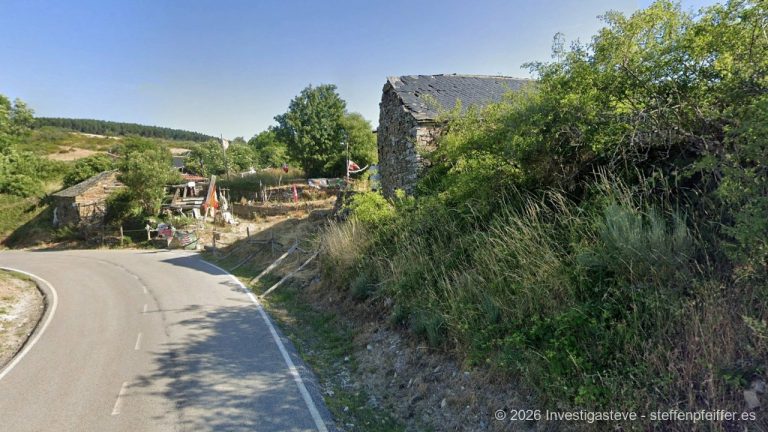
When the gates of Arzúa close behind the pilgrim in the early morning and the dense fog banks of Galicia lie like a whispering shroud over the green hills of San Vicenzo de Burres, you reach Preguntoño. It is that magical moment of the stage to O Pedrouzo in which the body still feels the stiffness of the night in its limbs, while the mind is already awakened by the cool, oxygen-rich air of the Galician agricultural landscape. Preguntoño does not greet you with the hustle and bustle of an urban center, but with the archaic silence of a classic Galician Aldea. Beneath your soles crunches the damp asphalt, here and there interrupted by the typical, coarse granite grit, while the rhythmic clicking of the pilgrim poles in the morning mist acts almost like a metronome of constancy.
The auditory panorama in Preguntoño is determined by a fascinating duality: on the one hand, there is the steady, soothing rustle of the leaves in the distant eucalyptus groves and the occasional, deep lowing of the Galician blonde cattle from the nearby stables. On the other hand, you hear the distant, still muffled roar of the national road N-547, which runs parallel to the path like a warning messenger of civilization. The olfactory impression is intoxicating and multi-layered – it smells of freshly mown grass, of the heavy, earthy moisture of the ground, and, the closer you get to the heart of the hamlet, of the irresistible, sweet-fatty aroma of freshly fried dough. It is the smell of churros, mixing with the ethereal sharpness of the eucalyptus and signaling to the pilgrim that the first hurdle of the day has been overcome. Psychologically, Preguntoño marks the transition from the “cheese town” of Arzúa into rural seclusion; here you leave the noise of the hostels behind and immerse yourself in the five-dimensional reality of the Galician hinterland.
Haptically, we experience this place through the coolness of the morning dew, which lies like a fine film on the skin, and through the noticeable relief when the first gentle incline after leaving Arzúa transitions into a soft plateau. You feel the vibrations of the path, the historical causality of every step that has been taken here for 1,200 years by millions of pilgrims. Preguntoño is not a place to rush through; it is an atmospheric lock that decelerates the walker and prepares them for the upcoming kilometers of rural isolation. Here, at about 360 meters above sea level, time seems to possess a different consistency – it does not flow, rather it seeps through the cracks of the old granite buildings, while the light of the rising sun bathes the world in a diffuse, almost sacred gold.
What This Place Tells
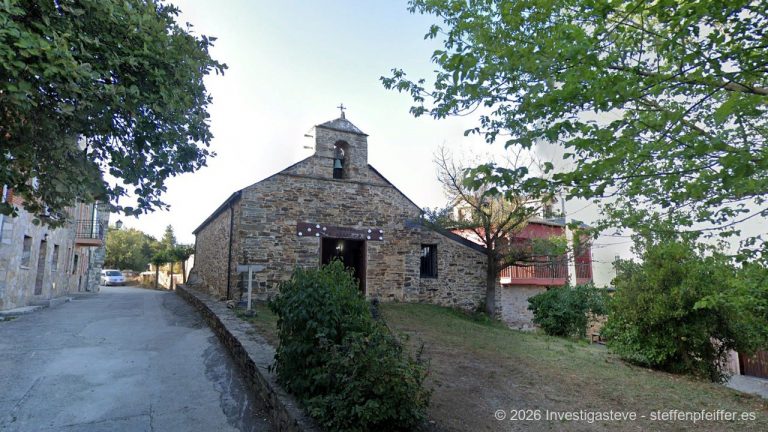
Preguntoño, often also written Pregontoño, is a place whose history is deeply rooted in the sacred and agricultural tradition of the parish of San Vicenzo de Burres. The heart and silent chronicler of this hamlet is the Chapel of San Paio. This simple but characterful ermita from the 18th century tells of the deep popular piety of Galicia. The architecture, characterized by massive granite ashlars that have acquired a silver-gray patina and thick carpets of emerald-green moss over the centuries, acts like an anchor in time. San Paio himself, the child martyr of Córdoba, is a saint whose veneration is widespread in northwestern Spain. When you stand before the chapel and touch the rough surface of the stone, you feel the haptic connection to an era in which faith and daily struggle for survival were inextricably intertwined.
Historically, Preguntoño functioned for centuries as a strategic point on the “Vía Kuntis,” an ancient trade and pilgrim route. The causality of its origin lies in the fertility of the soil and the water availability of the region. The surrounding fields, which still shape the landscape like a green patchwork quilt, testify to the constancy of Galician agriculture. Nothing was left to chance here; every wall, every hórreo – the traditional Galician granary on its characteristic mushroom supports – tells of the laborious stocking up and the respect for the forces of nature. In the annals of the Camino de Santiago, Preguntoño is often mentioned as the place where pilgrims coming from Arzúa held their first spiritual retreat. The Chapel of San Paio was a place of purification, where one asked God for protection for the remaining stages to Santiago.
The psychological significance of Preguntoño is underscored by the modern route guidance. The underpass of the national road N-547, located immediately before the hamlet, functions like a ritual portal. You leave the sphere of modern transport routes and enter the world of tradition through a cool, shady tunnel. This haptic experience of temperature change and the sudden silence behind the underpass intensifies the feeling of having plunged into another time. Preguntoño is thus not only a geographical point but a historical fragment that depicts the transformation of the Camino de Santiago from a medieval path to a modern pilgrim route. If you look closely, you discover stones in the foundations of the houses that are probably much older than the chapel itself – silent witnesses to a settlement history that dates back long before the era of the great pilgrim streams.
Addresses & tips in Preguntoño
Camino Distances
In Preguntoño, the phase of final approach begins. The distances are manageable, but the topography demands a conscious allocation of energy.
| Previous Location | Distance (km) | Next Location | Distance (km) |
|---|---|---|---|
| Arzúa | ca. 2.1 km | A Peroxa | ca. 1.0 km |
Sleeping & Arriving
Arriving in Preguntoño is a haptic experience of a special kind, because it is not an arrival for the night, but an arrival in the community of the Way. Since the hamlet has no pilgrim hostels of its own, the feeling of arriving here is inextricably linked to the first big break of the day. You usually reach the place after about 45 minutes of walking from Arzúa. Your muscles have just warmed up, the first sweat has formed under your backpack, and the desire for a moment of rest becomes the driving force. When you leave the last meters of the gentle ascent behind and see the first houses of Preguntoño, you feel a sudden relief. It is the end of the “approach march” and the beginning of the actual pilgrim day.
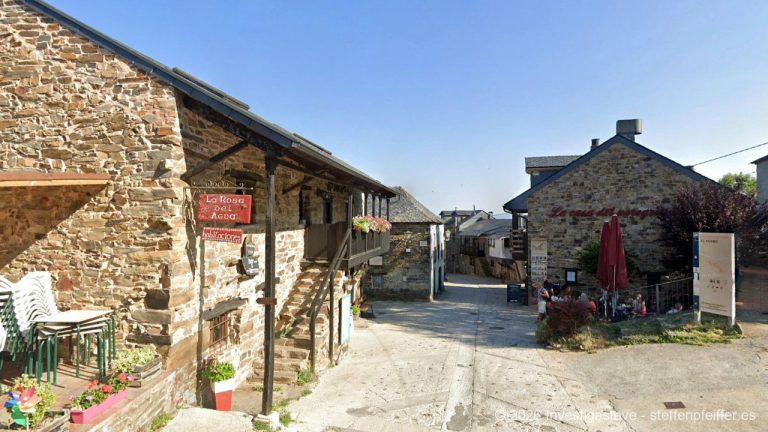
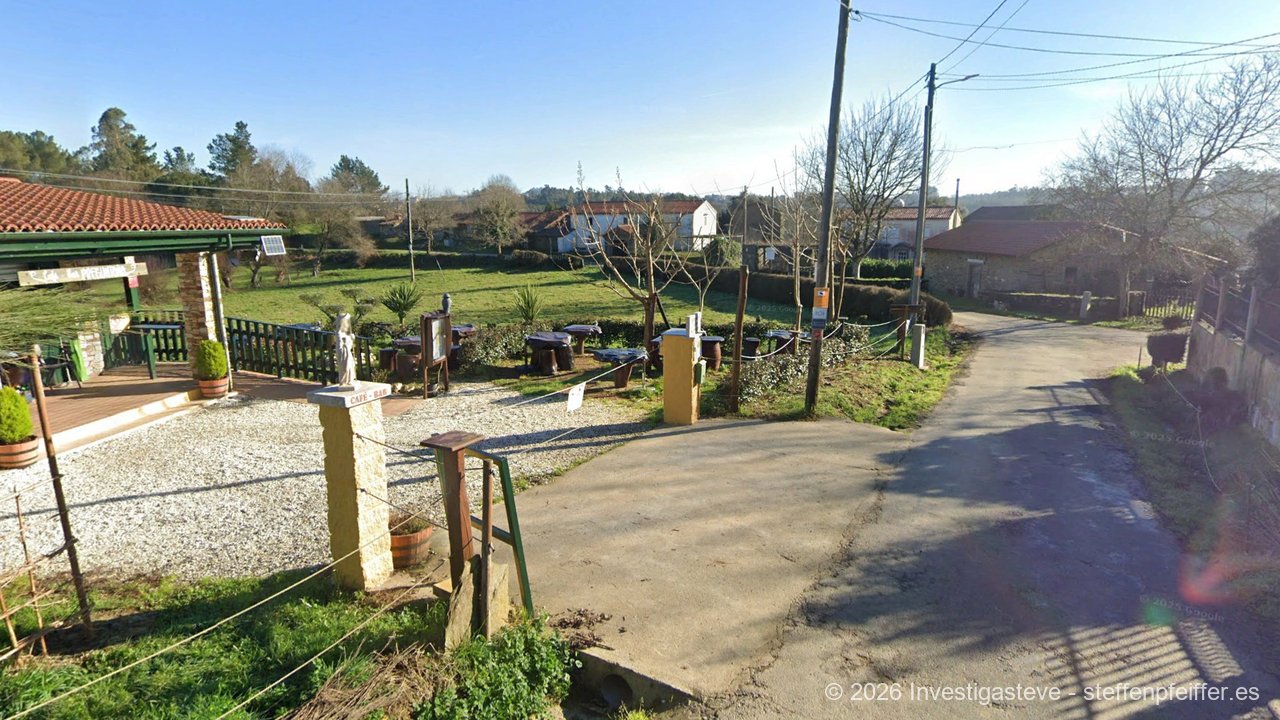
The social dynamics of arriving are determined here by the bar “A Pausa do Peregrino” (Casa de los Churros). There is no anonymous check-in here, but a lively exchange. You see the familiar faces of the past days, hear laughter in different languages, and feel the warmth radiating from the terrace. Setting down your backpack against one of the old stone walls is a ritual act; the haptic feeling when the weight lifts from your shoulders and the cool air reaches your back is pure luxury. You sit down on the rustic wooden benches, feel the grain of the wood under your fingers, and let your gaze wander over the Chapel of San Paio. It is an arrival in the here and now, far away from stage plans and time pressure.
Psychologically, Preguntoño fulfills the function of a “safe haven.” After the often noisy and bustling Arzúa, the seclusion of this hamlet feels like a balm. You arrive at a place that wants nothing from you except that you pause briefly. This form of arrival strengthens mental resilience for the rest of the day. You feel the constancy of nature and the calm of the inhabitants, who observe the daily passage of the crowds of pilgrims with a stoic but warm serenity. Arriving in Preguntoño means being part of a centuries-old chain, a brief link in an endless stream of people who all have the same goal in mind. It is a moment of grounding before the path takes you back under its spell and leads you further west.
Eating & Drinking
Culinarily, Preguntoño is a place of absolute legend on the Camino Francés. There is hardly a pilgrim who passes through this hamlet without having heard of the irresistible call of “churros with hot chocolate.” The bar “Casa de los Churros” is far more than a refreshment station; it is an olfactory sanctuary. As soon as you approach the bar, your nose captures the scent of boiling vegetable oil and roasting grain, combined with the heavy, sweet note of melted dark chocolate. It is a haptic experience when you hold the first cup in your hands – the warmth of the ceramic transfers to your often still cool morning fingers, and the first sip of the thick, almost creamy chocolate lays itself like a protective film over your soul.
The churros themselves are a masterpiece of simple Galician cuisine. Golden brown and crispy on the outside, soft and airy on the inside – the sound when you bite into them, that characteristic crunch, is music to the ears of any hungry walker. You dip the greasy pastry into the dark chocolate, watch the brown mass cling to the ridges, and enjoy the explosion of flavor on your tongue. The psychological effect of this meal is enormous; it not only provides the necessary calories for the further ascent, but it is also an emotional reward for the early departure from Arzúa. In Preguntoño, breakfast becomes a ritual feast that brings the pilgrim community even closer together as you exchange views on the quality of the chocolate and the crispiness of the churros.
Alongside this sweet temptation, Preguntoño also offers the honest, hearty fare of Galicia. A simple “Café con Leche,” whose milk foam is so firm you could almost spoon it, or a piece of freshly baked empanada – that traditional pie filled with tuna, meat, or vegetables – are ideal companions for those who prefer it less sweet. Drinking in Preguntoño is an act of regeneration; the water from the local fountains is ice-cold and clear, a haptic pleasure when you cool your heated forehead with it. Here, you eat in harmony with the surroundings, on a terrace framed by eucalyptus groves, while the birds in the trees compete for the crumbs of the churros. It is a gastronomic panorama that combines the simplicity of the Way with the highest quality of local products.
Supplies & Logistics
The logistical infrastructure in Preguntoño is precisely tailored to the needs of the passing pilgrim, without overwhelming the hamlet. The focus here is clearly on short-term regeneration and supply during the first stage of the day. Since Preguntoño is very close to Arzúa, it functions as the first “infrastructure check” after the start.
Shopping: There are no supermarkets or grocery stores in Preguntoño. Pilgrims should have already stocked up on supplies in Arzúa, although the bar often keeps small necessities like water or energy bars.
Gastronomy: The gastronomic supply is excellently covered by the bar “Casa de los Churros” (A Pausa do Peregrino). It is specialized in pilgrims and opens early in the morning (approx. 6:30 AM) to serve the breakfast business.
Accommodation: There are no registered pilgrim hostels or guesthouses in Preguntoño. Anyone wishing to stay here must rely on Arzúa, about 2.1 km away, or head to accommodations in A Peroxa, about 1 km away.
Public Facilities: There are no administrative facilities, pharmacies, or banks. In an emergency, dial the general emergency number 112; the nearest basic medical care is in Arzúa.
Logistically, Preguntoño is the place of “first aid for the soul.” The bar not only offers food but also WiFi, clean toilets, and often the opportunity to get your pilgrim passport stamped. Haptically, logistics here means: short distances. Everything the pilgrim needs is concentrated on a few square meters around the chapel and the bar. The connection to the national road N-547 also makes the place easily accessible for backpack transport services, making Preguntoño a practical meeting point for organized groups. If you find here that your equipment is failing or the blisters on your feet are becoming too large, you won’t find a pharmacy in Preguntoño, but you will always find a helpful hospitalero or fellow pilgrim who can help with a band-aid. It is a functional simplicity that relieves the mind.
Don’t Miss
- The Chapel of San Paio: An archaic place of silence from the 18th century; touch the cool granite stones and let the sacred atmosphere work on you.
- Chocolate with churros at Casa de los Churros: An absolute must for every pilgrim; enjoy the haptic experience of the crunch and the warmth of the dark chocolate.
- The underpass of the N-547: Pay attention to the moment of transition from road noise to the absolute silence of the hamlet; a psychological experience of transformation.
- The view of the Galician blonde cattle: Observe the livestock in the meadows around Preguntoño; it is an image of timeless, rural calm.
- The traditional hórreos: Look for the granaries in the gardens of the houses; they are masterpieces of Galician rural architecture.
Insider Tips and Hidden Places
Beyond the terrace of the well-known bar and the marked path, Preguntoño hides small, almost forgotten corners that reveal themselves only to the attentive eye. If you follow a narrow, almost overgrown path behind the Chapel of San Paio towards the fields, you reach a spot where the old stone walls of the “Minifundios” are particularly well preserved. Here, far from the conversations of other pilgrims, you find a deep, almost mystical silence. The ground is especially mossy and soft here, making every step soundless. It is an ideal spot for a short, meditative break, far away from the route. The scent of old wood and damp stone is especially intense here, and you can hear the soft sighing of the wind in the cracks of the walls, which in the wind-protected valley sounds like a whisper from the past.
Another insider tip is to observe the details in the architecture of the residential buildings. In the side alleys of Preguntoño, you often find small, hand-laid stone walls covered with rare species of lichen and tiny ferns. Discovering these micro-worlds requires a patient eye and a willingness to slow down. If you look closely, you will find old symbols or inscriptions on some doors that tell of the long history of the inhabitants. The small stream that skirts the hamlet at one point is also a place of refreshment. The water is ice-cold and clear – a haptic pleasure when you cool your heated wrists in it. These small natural wonders and historical fragments make Preguntoño a place of absolute authenticity that goes far beyond the cliché of the churros stop. Here you find the “real” Galicia in its purest, most unvarnished form.
Moment of Reflection
Preguntoño invites you to confront the rhythm of your own journey. In the silence before the Chapel of San Paio, far from the hustle and bustle of the larger stage destinations, the existential question arises: What really drives you? Is it the destination of Santiago, or is it the joy of these small, unexpected moments of calm? The place is a psychological filter. The experience of the first rest washes away the superficiality of daily life and reveals the true core of pilgrimage. Here, you feel the haptic reality of your own transformation – your legs have become stronger, your breath deeper, and your senses sharpened for the subtle details of the surroundings.
You reflect on the historical causality of your own steps: Why am I here? What led me to this point? The 1,200-year history of the Camino de Santiago becomes a personal experience in Preguntoño. You are part of a chain, a link in an infinite series of seekers who all have drunk from this fountain and stood before this chapel. This realization brings a deep humility. The smell of the chocolate, the rough bread, the cool water: all these are haptic anchors that remind you that life consists of moments, not destinations. You breathe deeply, feel the cool forest air in your lungs, and realize that you have already arrived – not in a city, but in the full presence of your own being. Preguntoño gives you the strength not only to walk the Way but to feel it with every fiber of your body.
Camino of the Stars
This place lies on the Camino Francés, on the stage from Arzúa to O Pedrouzo (or Santiago). The sequence of locations is:
Arzúa → Preguntoño → A Peroxa → Tabernavella → Calle → Boavista → Salceda → O Empalme → A Brea → Santa Irene → A Rúa → O Pedrouzo
Did you enjoy the legendary hot chocolate with churros in Preguntoño and take your first really deep breath of the day? Which sounds of Galician nature particularly stand out in your memory in this quiet hamlet, and did you find a moment of inner reflection in the Chapel of San Paio? Share your personal experiences and thoughts from this first golden rest with us – every story enriches the collective soul of the Camino de Santiago and helps other pilgrims discover the magic of this place!
About the Author