A First Glance – Introduction & Atmosphere
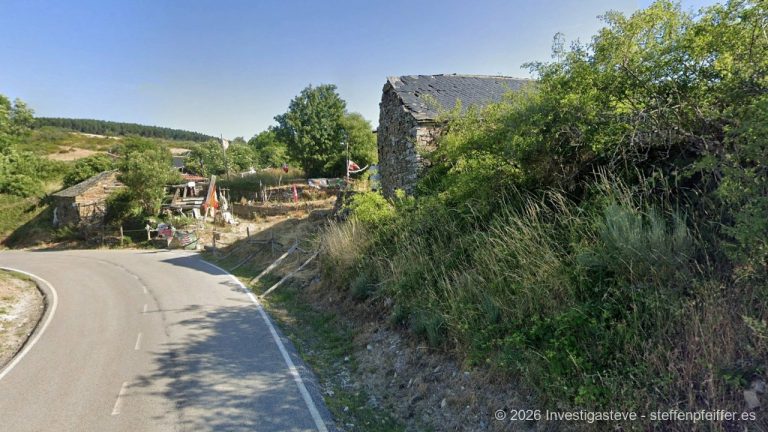
When you leave the gentle, often mist-shrouded hills behind Amenal and the path slowly leads you down into the valley of the Parroquia de Sabugueira, you reach San Paio. It is a place that does not impose itself through monumental splendor, but rather captivates through an almost meditative reserve. Here, barely nine kilometers before the gates of the Cathedral of Santiago de Compostela, the atmosphere condenses into a tension-filled standstill. You feel the distant, barely perceptible vibration of the nearby national road, a deep, rhythmic hum that seems like the heartbeat of approaching civilization. Yet in San Paio itself, the whisper of leaves in the eucalyptus groves still dominates. The wind carries the tart, almost medicinal scent of resin and essential oils, mixed with the damp, heavy sweetness of the Galician earth, which seems to breathe deeply after a morning shower – the typical orballo.
Tactilely, San Paio is a place of harsh contrasts. Your fingers grasp the pilgrim staff, its wood feeling smooth and almost warm in your palm after weeks of use, while your soles register the transition from the soft forest path to the unyielding asphalt of the hamlet. The air here has a very particular consistency; it is cool, almost clammy, and settles like a protective film on your heated skin. Psychologically, San Paio marks the boundary. It is the last place where rural Galicia wraps its arms around you before the urbanity of the city finally demands your attention. It is a phase of emotional preparation, a deep inhale in an environment characterized by functional modesty and a deeply rooted calm. Here, in the silence of the valley location, time seems to pause for a moment, giving you the opportunity to gather your thoughts before the final triumphal march begins.
What This Place Tells
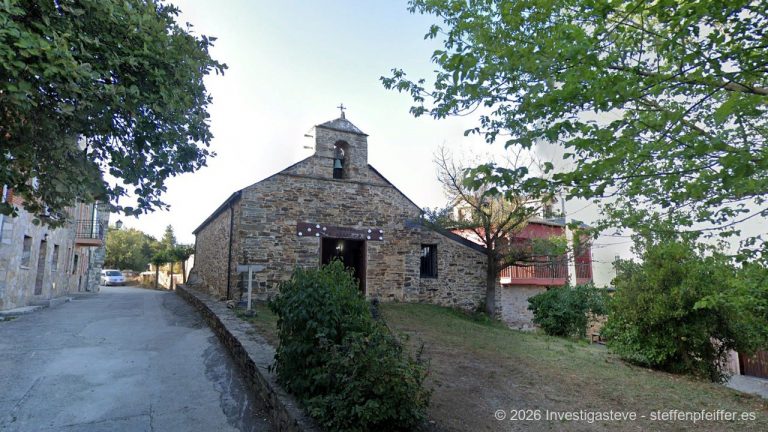
The name San Paio – the Galician form of Pelagius – carries the weight and the luster of over a thousand years of history. The place is dedicated to Saint Pelagius, a young martyr from the 10th century whose fate is closely linked to the Reconquista and the resistance against the Caliphate of Córdoba. This historical causality lends the small hamlet a spiritual gravity that far exceeds its geographical size. The parish church, San Paio de Sabugueira, stands as a stone guardian in the middle of the settlement. Its walls of gray granite, covered with golden-yellow lichen, speak of the constancy of faith in a constantly changing world. When you touch the rough surface of the stone, you feel the cold of winter and the stored warmth of countless summers – a tactile testimony of timelessness that reminds you that you are only a brief link in an infinite chain of wanderers.
Architecturally, the church presents itself in a simple yet dignified 19th-century classicism, but its roots reach much deeper into the Galician earth. For centuries, San Paio was an important hub for the local population, a place of gathering and prayer. The Parroquia de Sabugueira, to which San Paio belongs, was always characterized by agriculture and livestock farming. In the gardens of the surrounding houses, you can still see the dark green Galician cabbage jutting out of the earth like small palm trees, and hear the distant clatter of tools – sounds of a way of life that has preserved its own rhythm. Historically, the place served as a buffer zone; whoever reached San Paio had largely traversed the wilderness of the Galician forests and was mentally preparing for the encounter with the holy city.
In more recent history, San Paio witnessed a massive change due to infrastructure. The construction of the N-634 national road and the proximity to Santiago de Compostela Airport have radically altered the physiognomy of the surroundings. Where once only narrow cattle trails ran, gray asphalt ribbons now cut through the green landscape. Yet San Paio has managed to preserve its soul within this embrace. It is a place of transition, where the archaic pilgrimage meets technological modernity. This friction generates a psychological dynamic that can be almost painfully intense for you. You stand between the fronts of history: on one side the legend of a child martyr, on the other the hiss of aircraft engines. San Paio tells of how to find your own center amidst the noise of the world, and how the tradition of the Way outlasts even the greatest structural interventions.
Addresses & tips in San Paio
Camino Distances
The path section around San Paio is the last major rest phase before the urban finale, with the trails being flat and easy to walk.
| Previous Location | Distance (km) | Next Location | Distance (km) |
|---|---|---|---|
| Amenal | approx. 2.0 km | Lavacolla | approx. 2.0 km |
Sleeping & Arriving
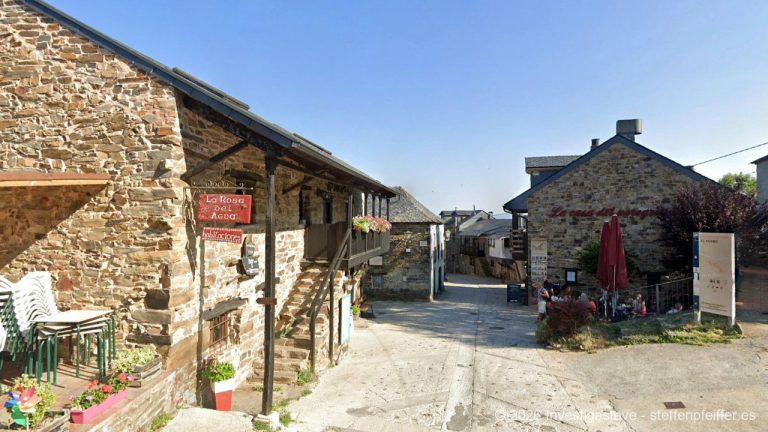
Arriving in San Paio is characterized by a deep relief, yet paired with a quiet melancholy. When you loosen your hiking boots in front of the Restaurante y Hostal San Paio, you feel the sudden release of pressure on your joints – a tactile moment of liberation that takes on almost religious qualities. The accommodation here is not an anonymous mass hostel, but a place of familial hospitality. In the rooms, it smells of soap and freshly aired textiles, a clean, clear scent that displaces the musty smell of the past weeks from your consciousness. The hostal feels like a safe harbor in a world that is about to become hectic and loud again.
Psychologically, staying overnight in San Paio is a deliberate act of retreat. While many pilgrims feel the urge to cover the last kilometers to Santiago on the same day, the one who stays here chooses the quality of the final meal. It is the last night in the silence of rural Galicia. You lie in bed and hear through the open window perhaps the distant rustle of the trees or the soft murmur of other pilgrims in the dining hall below you. It is an acoustic carpet that rocks you to safety. The mattress beneath you feels firm and reliable, a stark contrast to the often sagging beds of the large albergues. In this moment of calm, a psychological metamorphosis takes place: the tension of the journey begins to flow away, and a deep gratitude for what you have achieved spreads within you.
In the hostal’s sanitary facilities, you experience the comfort of warm water, washing the last dust of the country road from your shoulders. The pattering of the water is the only sound that exists in that moment, an auditory cleansing that throws you back to the essentials. You prepare yourself – not only physically, but also ritually. Arriving in San Paio is thus far more than just reaching a stage destination; it is entering an anteroom to holiness. Those who stay overnight here often do so with the plan to set out at first light to reach the cathedral while the city is still asleep. This sleep in San Paio is precious, almost fragile, borne by the certainty that everything will be different tomorrow.
Eating & Drinking
The cuisine in San Paio is a celebration of simplicity and regional authenticity. At the Restaurante San Paio, you are welcomed with a warmth that is immediately reflected in the quality of the food. The smell of homemade Galician soup – the legendary Caldo Gallego – wafts enticingly through the dining room. It smells of smoked bacon, of the earthy note of cabbage and potatoes. When you bring the first spoonful of this hot, nutritious soup to your mouth, you feel the tactile warmth spreading from your stomach throughout your entire body. It is the taste of home and arrival, a culinary promise that your physical needs are taken care of.
The pilgrim’s menu here is often highly praised, not because of its extravagance, but because of its honesty. A juicy piece of Galician beef or fresh fish from the nearby coastal waters, accompanied by a hearty, dark country bread whose crust crunches crisply under your fingers. The wine, a local red from the surrounding vineyards, has a deep, ruby-red color and an earthy finish that harmonizes perfectly with the weight of the day. You feel the cool glass in your hand, hear the clinking of cutlery and the murmuring of satisfied guests – an auditory backdrop that conveys coziness and security. In San Paio, you don’t just eat to get full; you celebrate the end of a long deprivation.
A special highlight is breakfast the next morning. When the day is still young and the mist hangs over the fields of Sabugueira, it smells of strong, dark coffee and freshly toasted bread. The taste of honey and butter on your tongue is the perfect starter for the last eight kilometers. Psychologically, this breakfast is the fuel for the spirit. You sit in the quiet dining room, perhaps still a little sleepy, and feel the energy returning to your limbs. It is a moment of calm before the storm of emotions. The innkeeper, who often has pilgrimage experience themselves, might add a few encouraging words that act like balm for the weary soul. In San Paio, the Way tastes sweet and full of promise at the end.
Supplies & Logistics
Logistically speaking, San Paio is a minimalist anchor point, which is precisely why it is so valuable. In a region increasingly dominated by airport infrastructure, the hamlet offers exactly what is necessary without distracting you through unnecessary consumer frenzy. The main road N-634 is the logistic lifeline of the area, meaning that despite its rural seclusion, San Paio is excellently accessible. If you have to interrupt your journey here or start here, you will find all the necessary connections to the global transport network near Lavacolla and Santiago de Compostela Airport.
Shopping: There are no supermarkets or shops on site. Pilgrims should definitely stock up on supplies in Arca (O Pedrouzo) or fall back on the offerings at the Restaurante San Paio.
Gastronomy: The Restaurante y Hostal San Paio is the culinary and social center of the place, offering comprehensive care for pilgrims.
Accommodation: With the Hostal San Paio, there is a high-quality overnight option, but due to its limited capacity, it is often booked up early.
Public Facilities: There are no other administrative offices or medical services in San Paio itself; these are centrally reachable in nearby Santiago de Compostela (approx. 10 km).
The logistic strength of the place lies in its function as an “emergency exit” or “entry aid.” Many pilgrims who only begin their Way shortly before Santiago use San Paio as their first quiet point of contact. The waymarking here is exemplary; the yellow arrows shine on the gray granite of the walls like golden promises. The paths are flat and easy to walk even in the rain, which reduces physical strain to a minimum. Nevertheless, you should bear in mind that San Paio is a pure transit station. If you are looking for banks, pharmacies, or post offices, you will not find them here, which sharpens the psychological focus: in San Paio, it’s only about you, your Way, and the impending arrival.


Don’t Miss
- The parish church of San Paio de Sabugueira: A neoclassical jewel from the 19th century that captivates through its simple elegance.
- The stone wayside cross (Cruceiro): A typical Galician monument by the wayside, inviting a short prayer or pause.
- The look back: When you leave the hamlet, turn around once more and enjoy the green valley location before the cityscape begins.
- Interaction at the hostal: Use the opportunity for one last intense conversation with the innkeepers about the changes to the Way.
- The sound play of nature: Pay attention to the contrast between the chirping of crickets in the fields and the distant roar of the highway.
- The architecture of the old farmhouses: Observe the massive granite walls that have survived the centuries without mortar.
Insider Tips and Hidden Places
Beyond the official path that cuts through San Paio, there is a small, almost forgotten trail that leads behind the church to an old, dilapidated washhouse. Here the acoustics are completely different: the distant roar of the road is almost entirely swallowed by the dense hedges and walls, and what remains is the soft gurgle of a small stream. It smells here of damp fern and old, decaying stone – an olfactory experience that transports you directly to pre-industrial Galicia. It is a place for absolute solitude, a hidden corner where you can dip your feet into the cool water without being observed. Here you feel the psychological power of the earth particularly intensely; it is as if San Paio is entrusting you with one last secret before you plunge into the anonymity of the big city.
Another hidden treasure is a small elevation northwest of the hamlet, accessible via a narrow cattle trail. From up there, you have an unusual perspective on the flight path of Santiago Airport. It is a psychologically fascinating place: you stand in the tall grass, surrounded by the silence of nature, and watch the metal giants thunder past only a few hundred meters above you. The vibration of the air is palpable on your skin, a tactile shock that illustrates the fragility of your pilgrim bubble. It is the perfect place to reflect on the causality of modernity and to realize that your journey on foot was a conscious decision against this speed. This friction between stillness and movement makes San Paio one of the most interesting places on the final stage.
A third, often overlooked place is a small stone wall on the edge of the Parroquia, on which ancient ivy growth has created a natural artwork. In the crevices of the granite, small birds nest, whose song in the early morning hours acts like an orchestral prelude to arrival. Here you can settle down and explore the structure of the stones with your hands. Every indentation, every edge tells of the hard work of the people who created this place. It is a tactile experience of grounding that reminds you that the Way consists of matter and sweat, not just dreams. This wall is a silent witness of permanence, against which you can reflect on your own transience.
Finally, there is a small path that leads to a hidden spring, still valued by the locals. The water is ice-cold and tastes of iron and stone – the true taste of Galicia. Whoever drinks here absorbs the essence of the soil. It is a ritual act of incorporating the landscape. Near the spring grow wild mint and lemon balm, whose scent has an invigorating effect when you crush the leaves. Such places are not signposted in San Paio; you only find them if you are willing to slow down the pace even further and let yourself be guided by instinct. They are the reward for the attentive pilgrim who has understood that the goal is not just the cathedral, but every single moment before it.
Reflection Moment
In San Paio, you reach a psychological threshold that could be called “the calm before fulfillment.” You no longer reflect on the physical pain of the first weeks – the blisters have healed, the muscles are toned. Instead, a mental clarity sets in that can be almost painfully intense. You look back on the causality of your departure: why did you really set off? In the simplicity of San Paio, where there are no distractions, you often find the answers in the silence of your own heartbeat. You feel the connection to Pelagius, the child martyr, and recognize that your journey too was a small act of sacrifice and steadfastness. It is a moment of inner reconciliation with the mistakes and detours of the past weeks.
The tactile experience of the last rural kilometers lets you perceive the nature of Galicia once more with a new intensity. You feel the resistance of the wind, the moisture of the fog, and the warmth of the sun as divine gifts. Psychologically, you prepare for the loss – the loss of the freedom of the Way, the simplicity of daily walking. San Paio is the place where you learn to let go, so that tomorrow you can walk through the Portico de la Gloria with empty hands and a full heart. It is a moment of absolute presence, where the boundary between the self and the world blurs. When you leave San Paio, you no longer do so as a hiker, but as someone who has absorbed the essence of the Way and is now ready not just to see their goal, but to become it.
Camino of the Stars
This place lies on the Camino Francés, on the stage from O Pedrouzo (Arca) to Santiago de Compostela. The sequence of locations is:
O Pedrouzo (Arca) → San Antón → Amenal → San Paio → Lavacolla → Vilamaior → San Marcos → Monte do Gozo → Santiago de Compostela
Did you feel this last moment of absolute rural silence in San Paio, before the city welcomed you with open arms? Was the Restaurante San Paio also a place of familial warmth for you, where you gathered new strength for the final kilometers? Share your personal impressions, your photos of the church, or your thoughts about this special outpost before Santiago with us. Your story helps other pilgrims to discover and appreciate the magic of the small places on the Way!
About the Author