First Glance – Introduction & Atmosphere
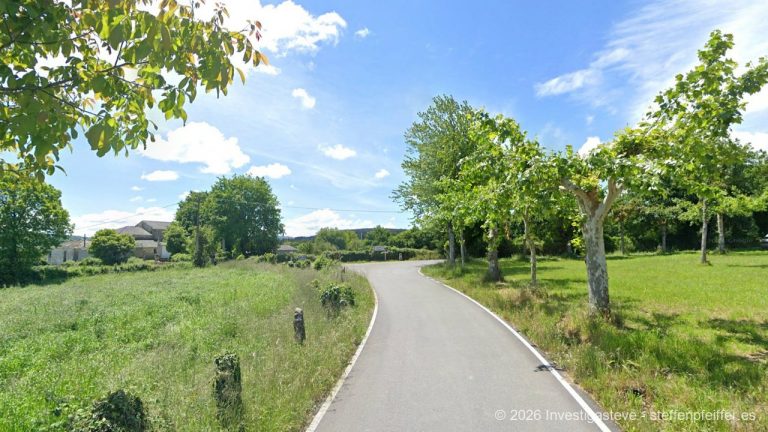
When you have left the rugged mountain ranges of San Xil behind you and the path slowly leads you down into the fertile valley of Sarria, you reach Calvor, a place that feels like a gentle pause. It is that moment on the Camino de Santiago when the rough wilderness of the mountains gives way to a cultivated, deep silence. You immediately feel a change in the atmosphere: the air here is milder, saturated with the scent of flowering chestnut trees and the heavy, earthy aroma of damp fern that lingers in the shade of the ancient stone walls. The rhythmic click of your pilgrim staff on the firm ground finds a soft echo in the expanse of the surrounding meadows, while the distant, melancholic ringing of a cowbell remains the only auditory signal in this rural idyll.
In Calvor, you feel the constancy of Galician granite beneath your soles. The grey, often lichen-covered walls of the farmsteads seem to absorb the warmth of the midday sun and radiate a gentle cosiness in the cooler evening hours. Psychologically, arriving in this hamlet marks for many pilgrims a decisive threshold. You have overcome the lonely paths of the foothills and now feel the growing energy of nearby Sarria, that pulsating hub that marks the beginning of the last hundred kilometres. Yet here, in the shelter of the old oaks, you can take one more deep breath. The visual panorama of countless shades of green and the timeless grey of the stones acts like a balm for the senses. In Calvor, you are no longer just a walker on a map; you become part of an ancient rhythm that has welcomed pilgrims for generations and prepares them for the grand finale.
What This Place Tells
Calvor is a stone chronicler whose roots reach far back into the pre-Christian era of Galicia. The name itself carries the heritage of antiquity and probably refers to a Roman settlement or the striking nature of the hill on which the place sits. The historical causality of its significance lies in its strategic location on the route that, even in Roman times, connected the regions. The heart of the narrative is undoubtedly the church of Santo Estevo de Calvor. When you stand before this simple but dignified building, you touch stone that was built on the foundations of an ancient castro – a Celtic settlement that once crowned the entire hill. Archaeological excavations here have brought to light evidence of continuous settlement from the Iron Age, through the Visigothic period, right into the deep Middle Ages.
The sacred history of Calvor is inseparable from the spirit of charity. As early as the 12th century, there was a pilgrim Hospital here, run by the Order of the Knights Hospitaller. This historical immersion becomes tangible when you look at the massive walls; you can almost imagine how tired medieval walkers sat here by the fire, telling stories of their experiences in the mountains. A particularly fascinating detail are the Visigothic marble fragments that have been incorporated into the current church building. They tell of a time of transition and spiritual continuity that has survived even wars and the ravages of time. In Calvor, history is not consumed as a dry date but experienced as a physical presence.
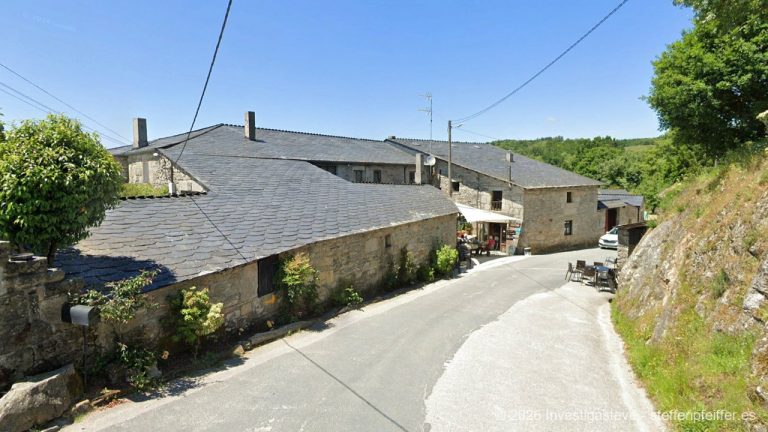
But the place also tells of the everyday business of survival. The architecture of the houses reflects the hard work on Galician soil – stocky construction, heavy slate roofs, and the typical hórreos, the granaries on stilts that stand like stone guardians at the edge of the fields. In Calvor, you feel the psychological sharpness of rural tradition: world history was not written here, but daily bread was earned and hospitality lived as a sacred promise. Every stone in the walls of Santo Estevo seems to have stored the prayers of millions of people who paused here to gather strength for the last great section of their journey. It is a place that proves to you that true significance often lies in the simplicity and constancy of the hidden.
Addresses & tips in Calvor
Camino Distances
Calvor lies as an idyllic outpost on the stage from Triacastela to Sarria (San Xil variant), shortly before the path dips into the urban centre of Sarria.
| Previous Town | Distance (km) | Next Town | Distance (km) |
|---|---|---|---|
| Furela | ca. 1.2 km | Sarria | ca. 2.5 km |
Sleeping & Arriving
Arriving in Calvor is like entering a protected harbour of rural tranquillity. When you leave the last bend of the forest path behind you and the church of Santo Estevo appears before you, a psychological weight lifts from your shoulders. There is no urban noise here, no honking, no hustle. The heart of the accommodation is the public Albergue de Peregrinos de Calvor. In this simple building made of massive stone, the original philosophy of the Camino de Santiago is lived. You put down your backpack on the cool floor and feel the immediate grounding that this historic place offers. Arriving here is defined by silence – you only hear the soft rustle of sleeping bags and the muffled whispers of those who, like you, seek the special energy of this place.
The atmosphere in the hostel is characterised by an almost monastic calm. The absence of distractions such as televisions or urban bustle promotes a psychological metamorphosis: the focus shifts from kilometre performance to pure perception of the moment. It is a blessing for the senses to rest on the simple beds after a shower and watch how the golden light of the evening sun falls through the small window openings onto the rough granite walls. The acoustic backdrop of the night consists only of the distant rustling of the wind in the trees and the occasional call of a tawny owl. Those who sleep here wake up the next morning with a clarity sought in vain in the often overcrowded accommodations of Sarria.
The communal areas of the hostel, often outdoors in the garden or in the cool stone rooms, are places of social encounter in their purest form. Here you meet pilgrims who have consciously chosen the solitude of the hamlet. Stories are shared, blisters and plans are compared, while the scent of brewed tea wafts through the rooms. Arriving in Calvor also means reconciling with your own exhaustion and feeling gratitude for the path you have covered across the mountains. It is this specific feeling of “having arrived” that makes Calvor one of the most authentic stopping points of their journey in the memory of many walkers.
For many, Calvor is the place of the last great peace before the storm. You know that bustling Sarria is only a short walk away, yet the magic of the place forces you to linger. The tactile reality of the cool stone and the purity of the water from the old fountains act like a preparation for the finale of the Way. Sleeping in Calvor means connecting once more deeply with the soul of Galicia before you plunge back into the stream of thousands the next morning. It is a healing stay that regenerates the body and sharpens the mind for the coming hundred kilometres.
Eating & Drinking
The culinary experience in Calvor is characterised by the honest simplicity of Galician country cooking. In the small settlement, there are no pretentious restaurants, but places of true satiety. In the bar of the hostel or with the few local providers, eating is celebrated as an act of care. The smell of freshly prepared tortilla española and the strong scent of homemade stew often waft through the lanes in the afternoon. The warmth of a soup bowl in your often cool hands is the first step towards physical regeneration. Each spoonful of this honest food brings the power of the Galician soil directly into your system.
Particularly appreciated in this region is the artisan-baked country bread, whose crust is so crispy that it gives a loud, auditory signal of freshness when broken. Combined with the mild, buttery taste of the regional cheese, Arzúa-Ulloa, a sensory feast of rare purity is created. You taste the herbs of the meadows and the purity of the Galician water. To drink, a simple but characterful wine of the region is often served, offered in traditional white ceramic bowls. The cool weight of the bowl in your hand and the earthy taste of the wine form the perfect end to a strenuous day of walking.
Eating in Calvor also means perceiving silence as an ingredient. Since there is no urban hustle, you perceive every bite more consciously. The psychological component of eating is closely linked here to gratitude: you sit at a simple wooden table, feel the last rays of sun on your skin, and enjoy a meal that does without trendy frills. It smells of freedom and simplicity. Those who dine in Calvor experience a form of hospitality deeply rooted in the tradition of pilgrim care. It is food for the body and peace for the mind, prepared from what the land gives in abundance.
Supplies & Logistics
Logistically, Calvor is a place of radical reduction to the essentials. Those who come here must be aware that this hamlet is not a supply centre in the modern sense. The strategic causality of its location makes it an ideal resting point before Sarria, but requires a certain degree of forward planning from the pilgrim.
Shopping: There are no supermarkets or independent shops on site. Pilgrims should have already replenished their main supplies of special hygiene items or medications in Triacastela. Smaller snacks and drinks can usually be obtained from vending machines or the hostel’s offerings. For comprehensive shopping, Sarria, about 2.5 km away, is the next destination.
Gastronomy: Catering is covered by the offering of the albergue and a small bar. Here you get hot meals, breakfast, and provisions tailored specifically to the rhythm of the walkers. Opening hours are strictly aligned with the flow of pilgrims.
Sleeping: With the public hostel, a solid and budget-friendly overnight accommodation is available. As bed capacity is limited, arriving early in the absolute high season is recommended, as advance reservation is usually not possible in public hostels.
Public Facilities: There are no medical facilities, banks, or post offices in Calvor. All formal administrative care must be used in Sarria. In an emergency, however, the connection via the nearby country road is excellent, and the emergency services are quickly reachable via 112.
Safety in Calvor is exceptionally high due to the clarity of the site and the social control of the small community. You immediately feel part of a protected world. Acoustically, the place remains an oasis of peace. Logistically, Calvor acts as a “safety valve” of the stage: those who realise that their strength is no longer sufficient for the final sprint to Sarria find a safe haven here. Logistical handling of luggage transport functions smoothly, as all major services visit the place. Calvor proves that efficient pilgrim logistics do not consist of the number of shops, but of the reliability of basic services at a historic point.
Don’t Miss
- The church of Santo Estevo de Calvor: An absolute must for every pilgrim; pay attention to the Visigothic marble fragments incorporated into the masonry.
- The old pilgrim Hospital: Look near the church for the historical traces of the Knights Hospitaller – a testimony to centuries of hospitalitas.
- The castro hill: Climb the height behind the village and feel the archaic power of the Iron Age settlement beneath your feet.
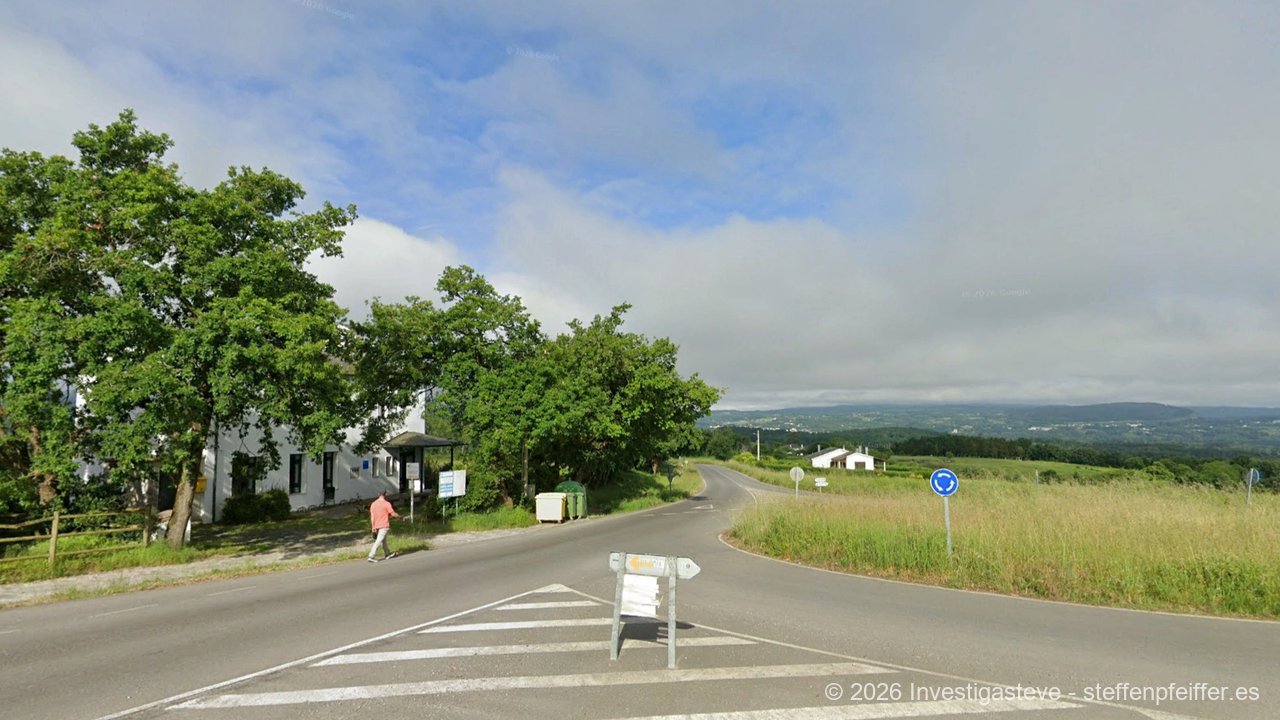
- The view into the valley of Sarria: Stop at the edge of the village and enjoy the wide panorama – a visual proof of your physical achievement of the last hours.
- The stone walls of Calvor: Touch the rough stones of the ancient dry stone walls that line the fields around the village – a testimony to centuries of labour.
- The silence of the evening: Step outside the hostel after 9 p.m. and simply listen to the wind – an auditory meditation of the highest order.
Insider Tips & Hidden Places
Away from the marked pilgrim path, just a few steps behind the church of Santo Estevo, a narrow, almost invisible path leads to a small stone wall that borders a forgotten meadow. When you stand there and lower your gaze towards the wooded slope, you discover a small hollow in the ground, overgrown with dense moss and fern. Local legends say that this is one of the secret entrances to the underground passages of the old castro. It is a place of extreme acoustic isolation, where you only hear the distant rustle of the leaves. The ground here is so soft that it yields under every step – a pleasant change from the hard stone of the path. In the air lies an intense scent of wild mint and damp alder, making this hidden corner a place of deep purification.
Another hidden treasure in Calvor is the small stone fountain on the western edge of the village, often overlooked by walkers hurrying past. The water there is ice-cold and of a clarity rarely found today. When you dip your hands into the water, you feel a freshness that immediately clears your senses. In the evening hours, when the light falls flat through the branches of the chestnut trees, the silhouettes of the distant mountains are reflected in the well water, creating an almost mystical atmosphere. It is a place of ritual purification, such as pilgrims of the Middle Ages might have used to wash the dust of the stage from their skin. Such small, inconspicuous places are what give Calvor its deeper meaning – as a place of small wonders that only reveal themselves to the seeker.
Did you know that there is an old stone near the church into which tiny, almost faded crosses are carved? These “petroglyphs of faith” are not official monuments, but personal testimonies of hope from pilgrims of past centuries. When you run your fingertips over these cool, rough notches, you touch the individual history of a person who stood at this very spot three hundred years ago. This form of silent communication across time makes the psychological depth of the Camino truly tangible. At dusk, when the mist rises from the valley, Calvor transforms into an almost unreal scene, where the shadows of the Celtic ancestors seem to come alive.
Finally, it is worth directing your gaze at dusk to the silhouettes of the old stone ovens that can still be discovered in some of the backyards. When the last daylight disappears behind the hills, these soot-blackened structures appear as archaic guardians of domestic community. The smell of damp stone and the cool breeze whistling through the lanes create an atmosphere of timeless constancy. Those who lose themselves in these moments in Calvor often find a part of themselves that they had forgotten in the hustle of preparing for the Camino de Santiago. The hamlet offers the rare opportunity to integrate your own journey once more in absolute silence just before reaching the great goal of Sarria, far from the cameras and expectations of the world.
Moment of Reflection
In Calvor, you stand at a point of maximum temporal depth. The presence of the old castro beneath the Christian church challenges you to think about your own foundations. In the cool silence of Santo Estevo, ask yourself: “What are the layers of my own personality that have carried me this far? What ancient beliefs support me, and what new insights have I gained on this path?” The psychological metamorphosis that takes place here is the change from outward movement to inward reflection. The granite gives you the necessary grounding, while the wide view into the valley opens your soul for what is to come.
The historical causality of your being here connects you with the Celts, the Romans, and the medieval Knights Hospitaller alike. Do you feel the responsibility to carry forward this heritage of peace? In Calvor, you become aware that the Camino is not a race, but a search for your own centre. The coolness of the rough stone under your hands reminds you of your own resilience. Use this moment of reflection to recalibrate your inner compass. When you leave Calvor tomorrow and plunge into the pulsating life of Sarria, take a piece of the stone calm and timeless dignity of this place with you. It will be your anchor when the hustle of the destination finally reaches you. Here, on the ground of the ancestors, you have found the strength to continue your journey with a new, clear sovereignty.
Camino of the Stars
This place lies on the Camino Francés, on the stage from Triacastela to Sarria (San Xil variant). The sequence of places is:
Triacastela → San Xil → Montán → Furela → Calvor → Sarria
Did you also feel that special shiver of history in the Romanesque silence of Calvor, or find a moment of absolute peace at the old stone fountain? Perhaps you were deeply moved by the archaic power of the castro hill, or you experienced a special encounter in the small hostel? Share your personal impressions, your photos of the church of Santo Estevo, or your thoughts on the knightly history of the region with us. Every story makes this special threshold point on the Camino come alive for the community – we look forward to your tale!
About the Author