Why Sunrises in Galicia Turn Romantics’ Heads (and Fishermen Couldn’t Care Less)
Sometimes nature delivers kitsch so flawless that, as a trained Central European, you automatically start looking for the copyright clearance. The Costa da Morte is a prime example. Here, where the morning wind cordially shouts at you: “Put your hood on, you idiot, it’s raining”, the cosmos stages an opera twice a day for which nobody charges admission. If you want to understand it, you have to get up in the morning – even if your inner couch potato barks like a junkyard dog.
Gold in the Masts, Wet Shoes on Feet: The Ría de Corcubión Awakens
When morning breaks over the Ría de Corcubión, a quiet yet mighty spectacle of nature begins. On the so-called “forgotten loop” along the harbor promenade, one can watch the very first ray of sunlight bathe the masts of the fishing trawlers in glowing copper. For romantics, the light softly refracts in the orballo – the fine Galician drizzle – making the mica in the ancient granite stones of the villages sparkle as if countless tiny diamonds were woven into the walls.
The unvarnished truth behind it, however, is far more prosaic: morning dew is primarily a polite euphemism for “everything is soaking wet.” The fisherman preparing his boat at five in the morning couldn’t care less about this diamond lyricism. He simply wants to know where the sardines are swimming and whether the engine will start.
A bit further along, in the sheltered bay of Estorde, the brétema – that infamous coastal fog – slowly recedes. When it yields over the water and the sun’s first gold brushes the pine tops, an atmosphere of absolute purity reigns. It brings no philosophical answers, but it reliably reminds you that you forgot your raincoat once again. Classic.



The Evening Program: Liquid Silver and the “Blue Hour”
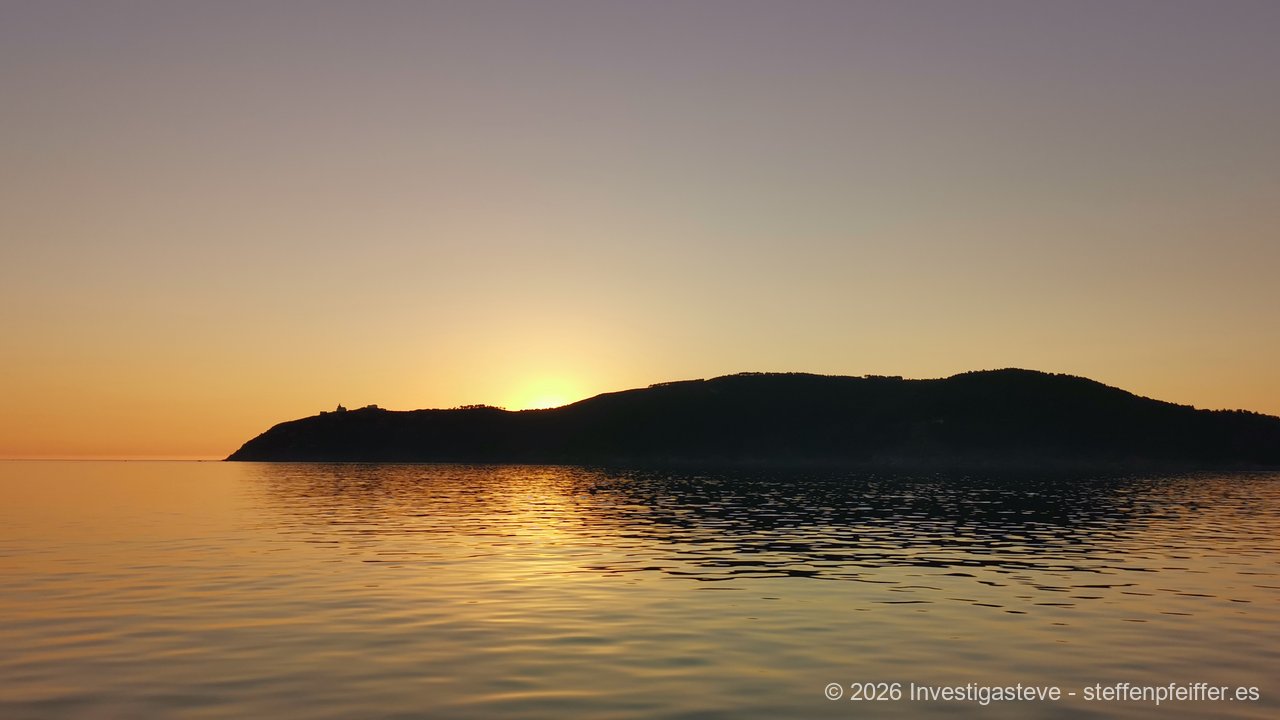
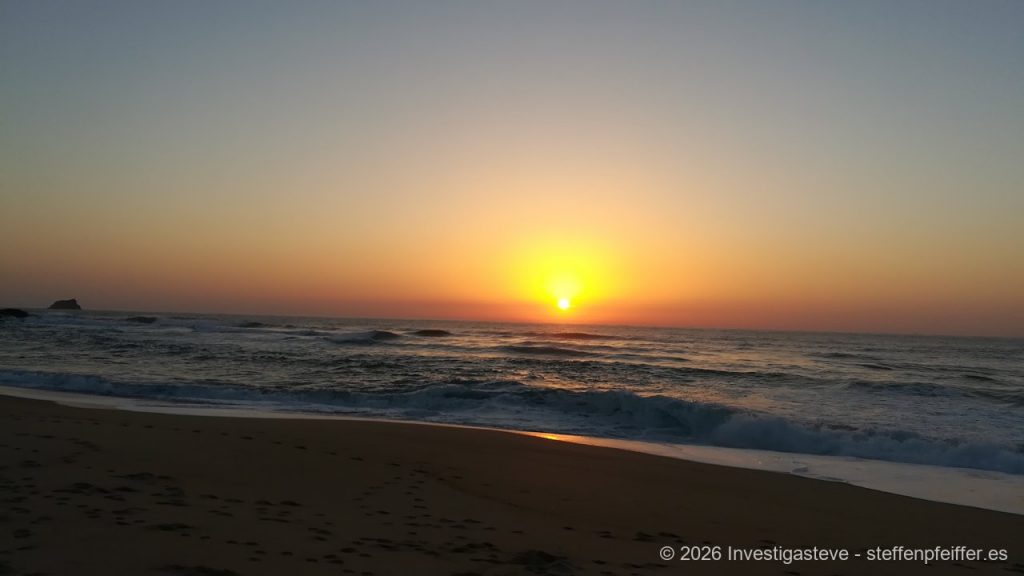
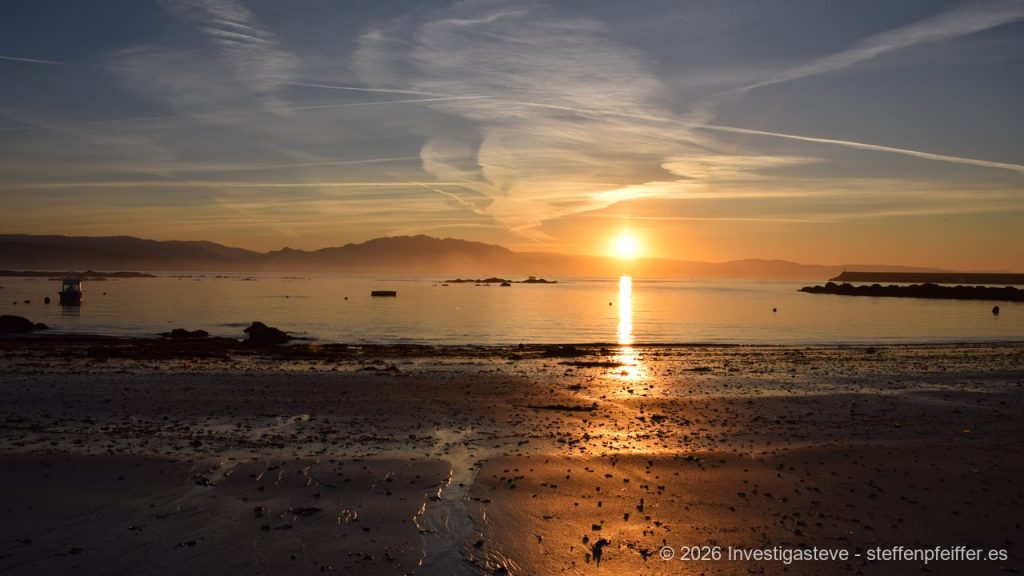
While the morning merely offers a timid promise, the sunset along the coast whips out a thick paintbrush. Wandering around the bay offers a visual drama that would make any travel agency turn green with envy. At the Mirador de Amarela, the low sun pours pure gold over the bay of Corcubión, while the sea surface in Estorde behind the hills of Toba transforms into a sheet of liquid silver. In Sardiñeiro, on the other hand, the sky is bathed in deep gold and purple, enveloping the crescent bay in a downright magical, amber glow.
When the sun finally disappears behind the horizon, the “Blue Hour” sets in across small villages like the Romanesque hamlet of Redonda. Sky and ocean merge into an unreal deep blue or indigo, giving the granite stones of old churches and houses an almost eerie life of their own. You sit there, silent, sipping a glass of Mencía, and realize: life’s grandest questions are usually answered much better by standing quietly than by brooding intensely.
Cape Fisterra: Where the Sun Dies with a Hiss
The absolute visual and spiritual climax of the region, however, awaits at Cape Fisterra. This sunset is no mere natural phenomenon, but historically and psychologically a daily staging of death. Even in pre-Christian times, the Ara Solis, the ancient sun altar, stood here. As early as 137 BC, the Romans under General Decimus Junius Brutus watched with numinous dread as the sun seemingly sank hissing into the ocean waves, interpreted as the physical death of the lightbringer and his entry into the underworld.
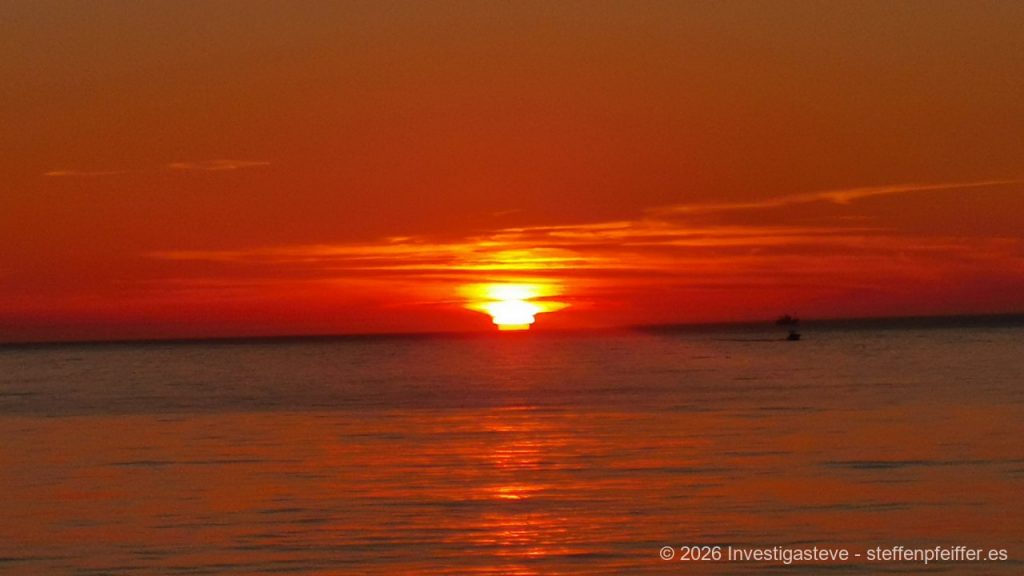
For the modern pilgrim, the myth has evolved, but the impact remains unchanged. Where antiquity feared the triumph of the underworld, today’s hiker seeks transformation. As the fireball slowly submerges into the Atlantic, soaking the sky in shades of violet, orange, and deep red, this burning bath of light marks for many the symbolic death of the “old self.”
A deep, almost painful serenity takes over. No stamp in the world and no selfie at the 0.00 kilometer stone can replace this moment. Standing up here, smelling the ocean, and feeling the chill, you understand the true meaning of the journey: a genuine path only begins where the to-do list ends.
And now: Cheers to Mencía – and onward we go.
About the Author