First Glance – Introduction & Atmosphere
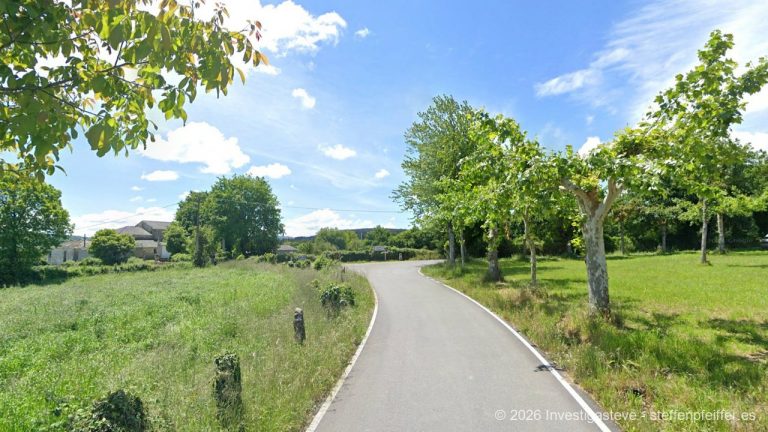
When you take the narrow path, often lined with dense ivy and moss, behind Triacastela and decide on the variant via Samos, you enter a world where time follows a different, much slower beat. The path leads you down into the valley of the river Sarria, which up here still bears the name Oribio. San Cristovo do Real is the first place that welcomes you in this deep green hollow. It is a moment of absolute peace: the distant roar of the mountain streams gives way here to the steady, soothing gurgle of the river, which surrounds the hamlet like a silver ribbon. The air is cool and carries the heavy, earthy scent of damp fern, old chestnut trees, and the tart aroma of flowing water. You hear the rhythmic click of your pilgrim staff on the uneven stone slabs, a sound that finds a soft echo in the narrow lane between the ancient granite houses.
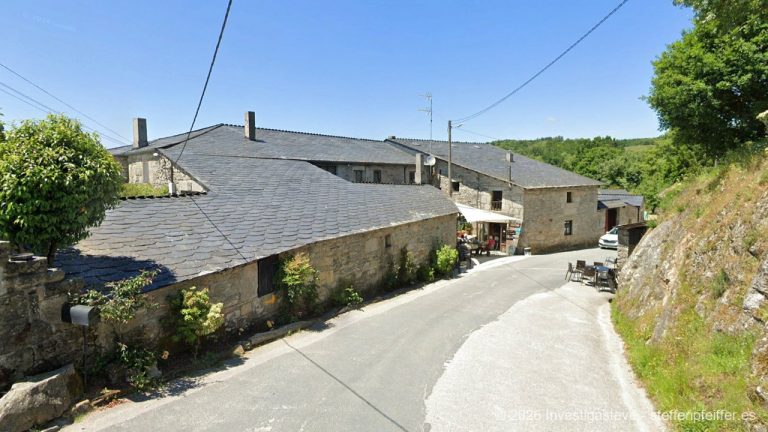
In San Cristovo do Real, you feel the constancy of the Galician hinterland. The grey walls of the farmsteads, often covered with silvery lichen, seem to absorb the moisture of the valley. You feel the cool aura emanating from the metre-thick stone walls and perceive the softness of the moss spreading like green velvet in the joints of the masonry. Psychologically, this place marks a decisive threshold: the rugged wilderness of the mountains lies behind you, and ahead of you opens a corridor of silence that will lead you directly to the monumental monastery of Samos. The visual panorama is dominated by an almost overwhelming abundance of shades of green – from the dark leaves of the oaks to the bright emerald of the river meadows. Here, you are no longer just a walker; you become part of a timeless ensemble of water, stone, and centuries-old tradition.
What This Place Tells
San Cristovo do Real is a stone chronicler whose roots reach far back into the pre-Christian era. The hamlet is strategically located at the entrance to the valley that has served as a lifeline for the Samos region since the early Middle Ages. The name “do Real” indicates a former royal significance or at least a special status within the local jurisdiction. The historical causality of its existence is inseparable from the protection and supply of pilgrim streams. The heart of the narrative is undoubtedly the stately Casa Forte de Lusio, located a little away from the core. This fortified manor house from the 16th century tells stories of Galician noble families who watched over the land and its people here for generations. The defiant walls and the proud coat of arms above the portal testify to a time when defensibility and representation went hand in hand.
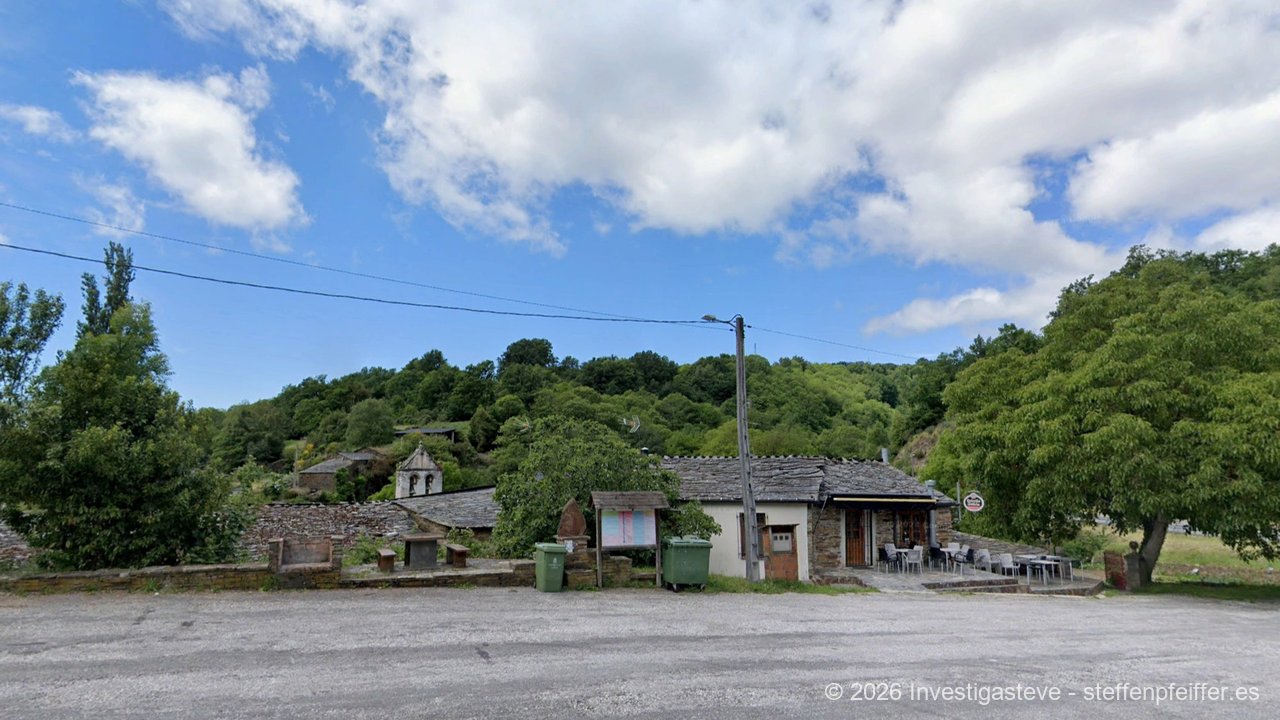
The sacred history of the place is centred on the parish church of San Cristovo. When you stand before this simple but dignified building, you feel the historical constancy of a place that has been a spiritual anchor for the surrounding settlements for centuries. The cemetery that surrounds the church is a tactile document of generational succession; the old tombstones tell of a hard but God-fearing life in harmony with nature. Historical immersion becomes tangible when you look for the old stonemason marks on the ashlars of the houses – signatures of nameless craftsmen who shaped the character of the village with their chisels. San Cristovo was also an important place for local crafts; old smithies and mills on the river testify to a self-sufficiency that seems almost legendary today.
But the place also tells of the deep connection to the nearby monastery of Samos. San Cristovo functioned for centuries as a kind of outpost, an anteroom to the monastic world. The causality of the landscape – the fertile valley, the abundant water, and the protection of the mountains – made the hamlet an ideal location for agricultural enterprises that supplied the monastery with provisions. Those who wander through the narrow lanes can almost still hear the echo of the oxcarts that transported grain and wool. In San Cristovo, history is not presented as a pompous monument, but as a living breath in the cracks of the granite. It is a place of transition that teaches you that true strength lies in durability and adaptation to the environment.
Addresses & tips in San Cristovo do Real
Camino Distances
San Cristovo do Real lies at the picturesque start of the Samos variant of the Camino Francés.
| Previous Town | Distance (km) | Next Town | Distance (km) |
|---|---|---|---|
| Triacastela | ca. 4.4 km | Renche | ca. 1.0 km |
Sleeping & Arriving
Arriving in San Cristovo do Real is an experience of radical deceleration. When you reach the village after the first stage section from Triacastela, a peace settles over you that is almost physically tangible. There is no urban hustle here; arriving is defined by the cool forest air and the soft murmur of the river. The highlight of the accommodation is undoubtedly the Albergue Casa Forte de Lusio. In this masterfully restored medieval manor house, history becomes a place to sleep for the pilgrim. You put down your backpack on the massive wooden floors and immediately feel the security of the thick stone walls that buffer the heat of summer and the cold of winter alike. The acoustic backdrop is characterised by an almost sacred silence, interrupted only occasionally by the creaking of an old door or the distant call of a bird of prey.
In the hostel, the tradition of hospitalitas is lived with a touch of historical splendour. The communal areas with their heavy beams and deep window niches invite you to relax. Arriving here becomes a ritual act: you wash your clothes in the old basins, feel the freshness of the water on your hands, and enjoy the coolness of the stone. The psychological effect of this setting is immense – you do not feel like an anonymous tourist, but like a guest of a house that has outlasted the centuries. Those who stay here consciously choose solitude over the mass quarters of the larger towns. The night in San Cristovo is of a darkness and silence that allows deep, regenerative sleep, rarely found on the Camino.
The sanitary facilities in the Casa Forte are modern and offer that comfort necessary after the strenuous kilometres through the Galician forests. Particularly appreciated is the social immersion in the communal kitchens, where pilgrims share their experiences amidst the scent of freshly brewed herbal tea. Arriving in San Cristovo do Real also means reconciling with slowness. You have the destination of Samos almost in sight, yet the magic of the place urges you to stay. Those who come to rest here wake up the next morning with a clarity that will carry them light-footedly, following the course of the river, through the valley. It is a healing stay that grounds the body and opens the mind for the coming spiritual highlights of the journey.
For many pilgrims, San Cristovo is the place where they first feel the true rural essence of Galicia. The accommodations are often family-run, which gives the stay a personal touch that goes far beyond business. You feel part of a small, protected world where hospitality is still a true promise. When the evening sun bathes the slate roofs in a soft light and the mist slowly rises from the river valley, you realise that arriving here is not a logistical endpoint, but an emotional homecoming to a simpler, more honest time. Sleeping in San Cristovo do Real means drawing strength from the constancy of stone.
Eating & Drinking
The culinary experience in San Cristovo do Real is a homage to the gifts of the water and the surrounding forests. In the small bars and the hostel, eating is celebrated as an act of care. The smell that wafts through the village in the late afternoon is an olfactory promise: it smells intensely of freshly fried trout, which often comes directly from the crystal-clear Oribio. Truchas con jamón (trout with ham) is a speciality of the region that you can try here in its most authentic form. The coolness of the room combined with the warmth of the freshly prepared fish creates a sensory contrast that satisfies hunger in a very primal way.
Alongside the abundance of fish, the valley is known for its excellent meat products and local cheese. You taste the artisan-baked country bread, whose crust is so crispy that it gives a loud, auditory signal of freshness when broken, while the inside remains soft and airy. The mild, buttery taste of the regional cheese, often served with quince paste, is a sensory feast of rare purity. You taste the herbs of the meadows and the purity of the mountain water in every bite. To drink, a light wine of the region or a cool beer is often served, offered in traditional vessels. The cool weight of the glass in your hand and the honest taste of the drink form the perfect end to a day of walking in the coolness of the valley.
Eating in San Cristovo do Real also means perceiving silence as an ingredient. Since there is no urban hustle, you enjoy every bite more consciously. The psychological component of eating is closely linked here to reward: you have left the mountains behind and are richly gifted in the lap of the valley. The taste of homemade stews, such as Caldo Gallego, often prepared here with fresh cabbage from the home gardens, warms the body from the inside out. Those who dine here absorb a piece of Galician joy of life that lets them continue strengthened. It is food for the soul that teaches you that true enjoyment lies in simplicity and closeness to the source.
Supplies & Logistics
Logistically, San Cristovo do Real is a place of concentration on the essentials. As a pilgrim, you must be aware that this hamlet is not a supply centre in the modern sense; it rather functions as a highly efficient rest stop at a strategically important point on the Samos variant. The administrative simplicity of the place is more than compensated for by the high quality of the services available in the hostel.
Shopping: There are no supermarkets or independent shops on site. Pilgrims should have already replenished their main supplies of special hygiene items or medications in Triacastela. Smaller snacks, water, and refreshments can usually be obtained from the points of sale within the albergue. The next comprehensive shopping opportunity is only in Samos, about 5 km away.
Gastronomy: Catering is excellently covered by the offering of the albergue and a small local bar. Here you get hot meals, breakfast, and provisions tailored specifically to the rhythm and needs of walkers. Opening hours are strictly aligned with the flow of pilgrims.
Sleeping: With Casa Forte de Lusio, one of the most extraordinary accommodations on the entire Camino de Santiago is available. Due to the limited bed capacity compared to the popularity of the house, advance reservation is strongly recommended for psychological planning security.
Public Facilities: There are no medical facilities, banks, or post offices in San Cristovo. All formal infrastructure must be used in Samos. In an emergency, however, the connection via the nearby country road is excellent, and the emergency services are quickly reachable via 112.
Safety in San Cristovo do Real is exceptionally high due to the clarity of the site and the social control of the small community. You immediately feel part of a protected world. Acoustically, the place remains an oasis as it is located far from major traffic arteries. Logistically, the hamlet acts as a “check-in of attention” – here you do not check your luggage weight, but your mental state for the further course through the river valley. San Cristovo proves that good pilgrim logistics sometimes consist of needing nothing but what you carry in your own heart. The efficiency of the on-site supply ensures that you can concentrate entirely on the spiritual preparation for the Samos monastery.
Don’t Miss
- Casa Forte de Lusio: Visit this impressive fortified manor house from the 16th century and feel the breath of the Galician nobility in the cool corridors.
- The parish church of San Cristovo: A quiet jewel of rural architecture; linger for a moment in the coolness of the nave and feel the constancy of faith.
- The cemetery: A walk among the historic graves offers contemplative peace and deep insight into regional history.
- The riverside path along the Oribio: Follow the path directly along the bank and enjoy the play of light and shadow under the old chestnut trees – a visual meditation.
- The stone coat of arms of Lusio: Look for the magnificently carved family coat of arms above the portal of Casa Forte – a masterpiece of Galician stonemasonry.
- The old granite farmsteads: During your walk through the village, pay attention to the traditional construction that endures for an eternity without modern mortar.
Insider Tips & Hidden Places
Away from the marked pilgrim path, just a few hundred metres behind Casa Forte de Lusio, an almost invisible footpath leads down to the ruins of an old watermill, the Molino de Lusio. Here the world seems to come to a complete standstill. The building, almost completely recaptured by ivy and wild bramble vines, appears like a relic from another dimension. The sound of the flowing water is louder and more primal here than in the village centre. In this corner, it smells intensely of wild mint, wet stone, and damp alder. It is the perfect place for a private reflection or a small meditation, far from the cameras and conversations of other walkers. Here you feel the historical causality of water usage that once kept this hamlet alive. The ground is soft and springy, making every step silent and promoting deep psychological calm.
Another hidden treasure is the small, mossy stream below the church hill, which can only be reached via a steep path through the fern bushes. Here the water emerges crystal clear from the slate rock and forms tiny cascades. The air is noticeably cooler here and acts like a natural cleanser for the senses after a strenuous march. It is said that this place once served the locals as a sacred spring. When you dip your hands into the water, you feel a freshness that immediately clears your senses. In the evening hours, when the light falls flat through the oak branches, light reflections appear on the water surface that sparkle like small jewels. Such small, inconspicuous places are what give San Cristovo its deeper meaning – as a place of small wonders that only reveal themselves to the seeker.
Did you know that there is a stone on one of the outer walls of Casa Forte into which tiny, almost faded crosses are carved? These “petroglyphs of faith” are not official monuments, but personal testimonies of hope from pilgrims of past centuries who sought protection here. When you run your fingertips over these cool, rough notches, you touch the individual history of a person who stood at this very spot three hundred years ago. This form of silent communication across time makes the psychological depth of the Camino truly tangible. At dusk, when the mist rises from the valley, this corner transforms into an almost unreal scene, where the shadows of the knightly past seem to come alive. It is a space without distraction where the history of Galicia whispers in every crack of the granite.
Finally, it is worth directing your gaze at dusk to the silhouettes of the old chimneys that can still be discovered in some of the backyards. When the last daylight disappears behind the hills, these soot-blackened structures appear as archaic guardians of domestic community. The smell of damp stone and the cool breeze whistling through the lanes create an atmosphere of timeless constancy. Those who lose themselves in these moments in San Cristovo often find a part of themselves that they had forgotten in the hustle of everyday life. The village offers the rare opportunity to integrate your own journey once more in absolute silence just before reaching the great monastery of Samos. In these hidden corners, you feel the “true” Galicia – untouched, wild, and of an archaic beauty that pretends nothing.
Moment of Reflection
In San Cristovo do Real, you stand at a point of maximum spiritual purity. The presence of Casa Forte and the silence of the river valley challenge you to think about your own “fortresses”: what in your life is as constant as this granite, and what might perhaps need a new defensibility? The psychological metamorphosis that takes place in this hamlet is the change from the identity of the “walker” to that of the “guest of history”. San Cristovo challenges you to pause and question your own role in this infinite chain of seekers. The silence of the valley acts as a filter for your thoughts. In the cool darkness of the stone walls, you become aware that wealth on the Camino does not lie in the number of kilometres, but in the depth of the moments experienced.
The historical causality of your being here connects you with the noble families, the blacksmiths, and the millions of pilgrims for whom this place has been a safe haven for centuries. Do you feel the responsibility to carry forward this heritage of respect for the earth? In San Cristovo, you become aware that the Camino is not a race, but a search for your own centre. The coolness of the rough stone under your hands reminds you of your own resilience. Use this moment of reflection to recalibrate your inner compass. When you leave San Cristovo tomorrow and set out on the path to Samos, take a piece of the stone calm and timeless dignity of this place with you. It will be your anchor when the hustle of the destination finally reaches you. Here, in the silence of the valley, you have found the strength to continue your journey with a new, clear sovereignty.
Camino of the Stars
This place lies on the Camino Francés, on the Samos variant from Triacastela to Sarria. The sequence of places is:
Triacastela → San Cristovo do Real → Renche → Lastres → San Vitoiro de Ribas de Miño → Samos → Teiguín → Pascais → Gorolfe → Aguiada → Sarria
Did you also feel that special shiver of history in Casa Forte de Lusio, or find a moment of absolute peace on the banks of the Oribio? Perhaps you were deeply moved by the archaic power of the valley, or you experienced a special encounter in this small hamlet? Share your personal impressions, your photos of the granite coats of arms, or your thoughts on the constancy of this place with us. Every story makes this special threshold point on the Camino come alive for the community – we look forward to your tale!
About the Author