A First Look – Entry & Atmosphere
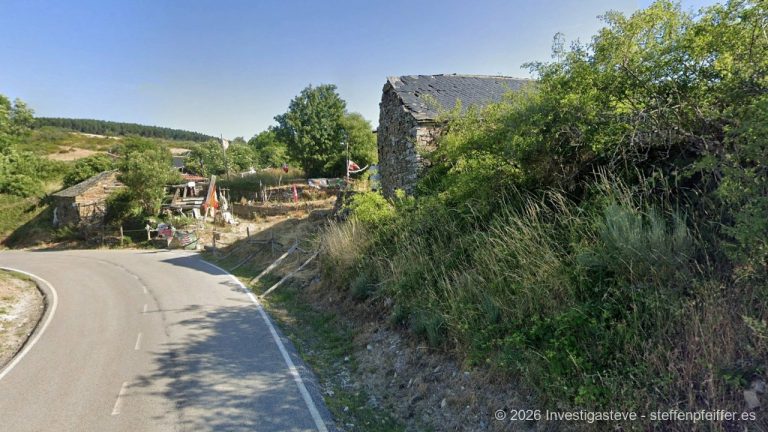
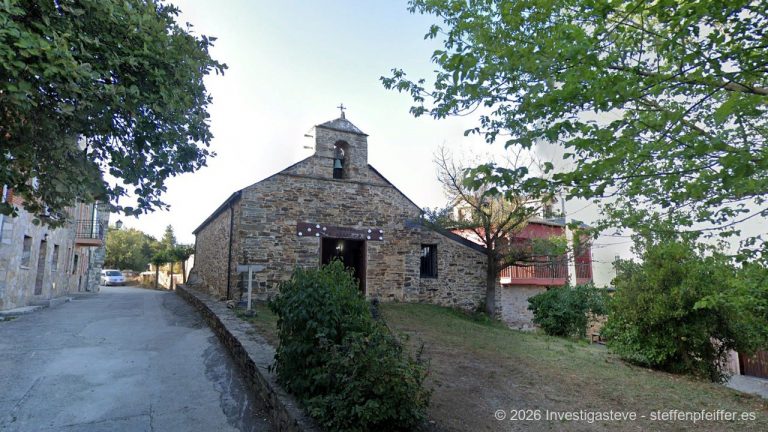
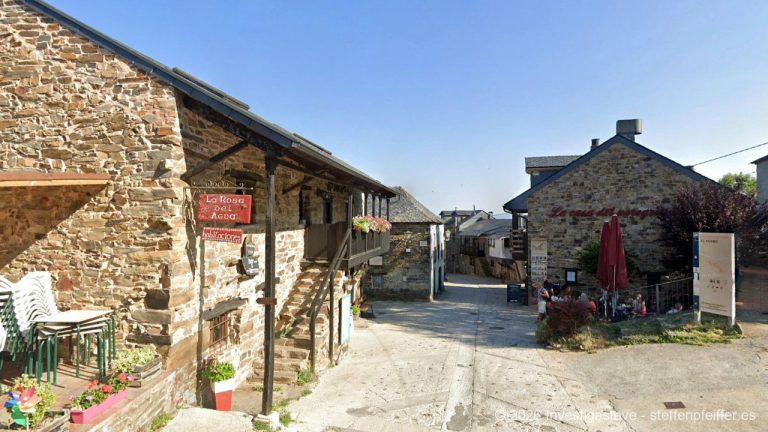
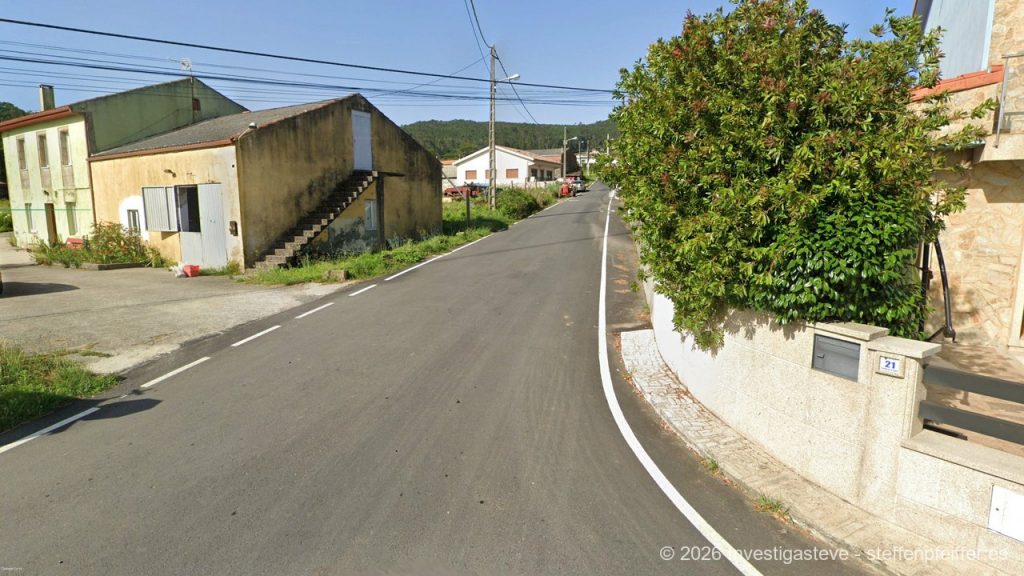
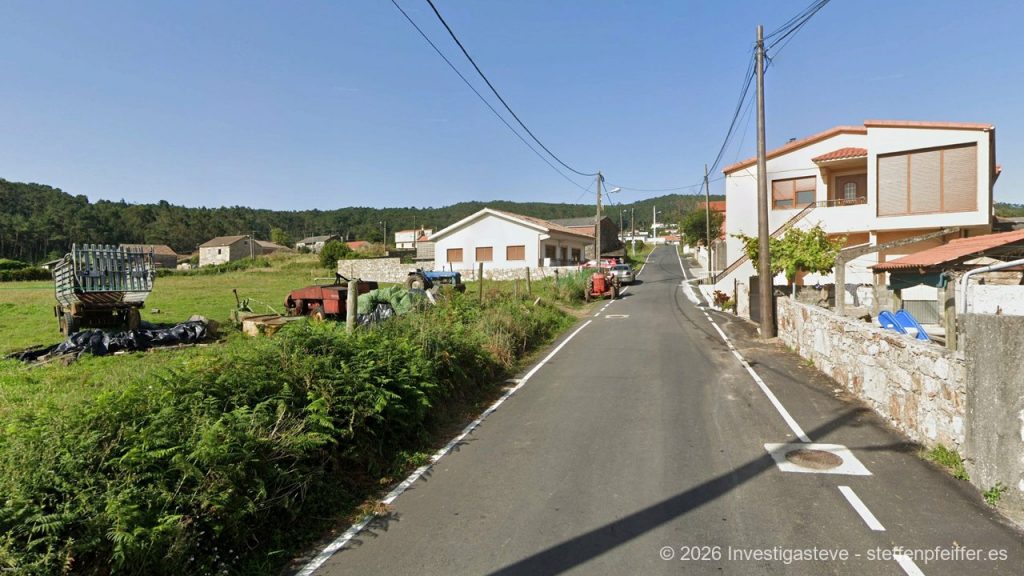
Hardly have you left the emotional waves of Fisterra behind and immersed yourself deeper into the green labyrinth of the Galician hinterland, you reach Hermedesuxo, one of those places that feel like a breather of history. It is a tiny hamlet, a collection of houses joined from heavy granite, huddled so deeply into the landscape as if they wanted to become one with the earth, the moss, and the eternal west wind. Here, on stage CFM 4 of the Camino Fisterra y Muxía, you encounter a silence that possesses an almost physical quality. When the “Orballo,” that fine, almost invisible Galician drizzle, saturates the air, the colors of the surroundings – the deep green of the ferns, the matte gray of the stones, and the vibrant yellow of the lichens – seem to take on an intensity that is often lost in the glinting sunlight. It is a light without hard contours, a world in pastel that immediately lets you feel that you are standing at a threshold.
You perceive the ground beneath your feet in Hermedesuxo quite consciously. The path here is often lined with low stone walls that have separated the farmers’ tiny plots from one another for centuries. It smells intoxicatingly of a mixture of damp eucalyptus wood, the heavy aroma of pine resin, and the earthy, almost sweet scent of rotting leaves blowing over from the adjacent forests. The acoustic backdrop is minimalist: the rhythmic clicking of your trekking poles on the asphalt or the slaty ground and the distant, almost imperceptible rustling of the Atlantic surf, which acts here like a deep, calming echo of infinity. Hermedesuxo is not a place that seeks to impress through monumental architecture; it captivates through its radical authenticity. It is the “true” Galicia, far away from the glossy tourist brochures, a place of transition where you learn to understand silence as part of your own pilgrim path before the wilderness of the Costa da Morte finally takes you in.
What This Place Tells Us
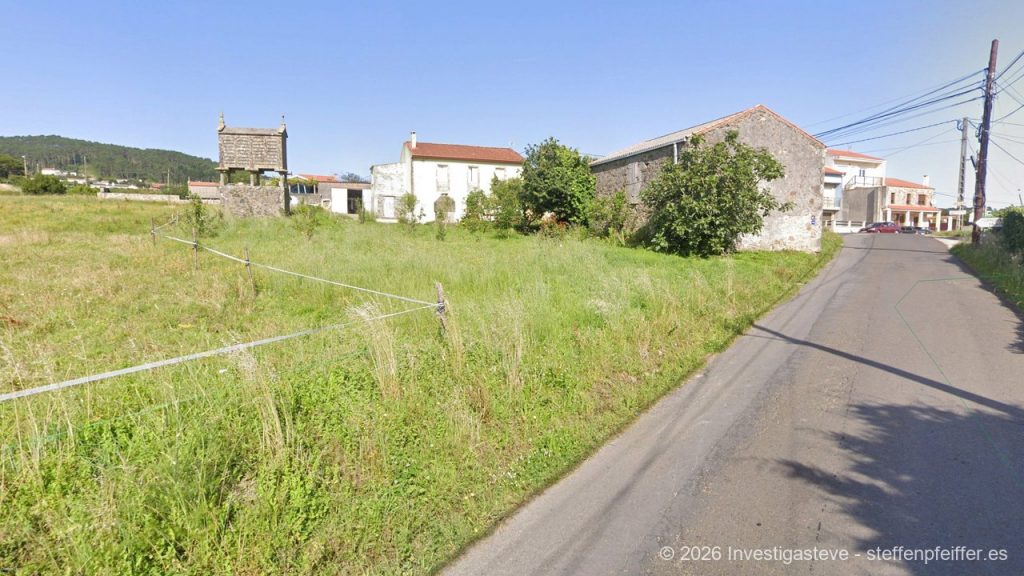
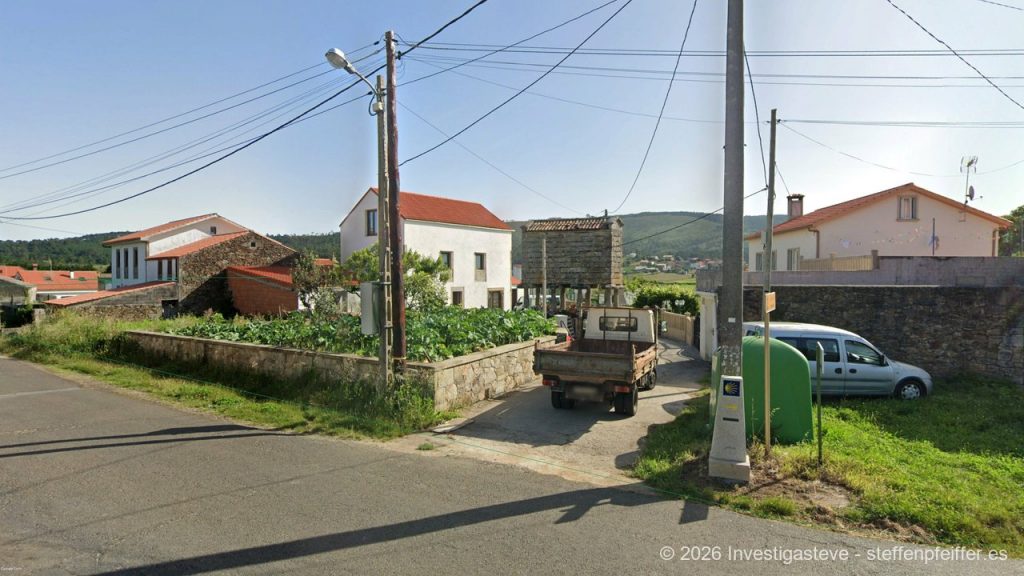
Hermedesuxo tells a story of persistence and deep-rootedness in a land that demands everything from its inhabitants. Administratively, this hamlet belongs to the parish of Sardiñeiro within the municipality of Fisterra. This location is historically significant, as Hermedesuxo has always marked a strategic junction for travelers and cattle herders. The settlement structure is a prime example of Galician “Minifundismo” – that extreme fragmentation of the land into tiny plots laboriously wrested from the rocky soil. As you wander through the narrow alleys, the numerous hórreos immediately catch your eye. These characteristic granaries on stone stilts are not mere decoration in Hermedesuxo; they are stone monuments to the art of peasant survival. Their construction with the round stone plates – the “Muelas” – as protection against rodents and moisture bears witness to an engineering skill refined over generations to preserve the precious harvest from Atlantic weather whims.
The historical causality of this place reaches far back into the time of the Castro culture. You can literally feel that this soil was already settled by the Celtic Nerii long before the Romans established their administrative structures. The massive granite walls of the houses in Hermedesuxo are often joined from stones already used in earlier centuries for other structures – an eternal cycle of material. This hamlet was always a transit point, a place where pilgrims on their way to Muxía paused briefly to orient themselves on the further course of the path. Particularly striking is the fork in the path in Hermedesuxo de Baixo: here the pilgrim must make a decision that often stands representatively for the entire Camino – the direct path or the scenically more attractive variant. This function as a “place of decision” lends Hermedesuxo a psychological depth that is often missed in larger cities.
Culturally, Hermedesuxo is closely interwoven with the Christian mythology of the region, especially with the legend of the Translatio. The proximity to the valley of Duio and the church of San Martiño let the historical weight of this stretch of land become tangible. In local folklore, Hermedesuxo is considered a place where the spirits of the ancestors are still present in the mists of the “Brétema.” It is a world where myths and hard reality flow into one another. Whoever walks through Hermedesuxo enters a space that has hardly changed its form over the centuries. The haptic quality of the surroundings – the rough, cold stone, the soft moss on the walls, and the feeling of total seclusion – connects you directly with the pilgrims of the Middle Ages who may have stood exactly here in the same spot, driven by the same hope and the same exhaustion.

Camino Distances
In Hermedesuxo, you reach a critical point of orientation. The path often makes a small kink here, and you must decide how to shape your further march toward the north.
| Previous Location | Distance (km) | Next Location | Distance (km) |
|---|---|---|---|
| San Martiño de Arriba | approx. 1.9 km | San Salvador de Duio | approx. 0.15 km |
Addresses & tips in Hermedesuxo
Opening hours
Arriving & Staying Overnight
Arriving in Hermedesuxo means accepting the total absence of commercial bustle. There are no glowing neon signs here, no cafés luring you with “pilgrim menus,” and no modern bed-factories with air conditioning. The place is a pure transit hamlet that invites meditative passage rather than staying overnight. Arriving in Hermedesuxo is therefore a purely internal process. It is that moment when you might take off your backpack for ten minutes, sit on one of the old stone walls, and realize that you have finally left the protection of Fisterra’s tourist infrastructure. You are now part of the working, rural world of Galicia.
Anyone wishing to stay overnight here will be disappointed, as there is no dedicated hostel or hotel directly in the hamlet. The few houses, the “Casales,” often seem closed, but if you look closely, you recognize the small signs of lived hospitality: a bench under a porch or a well whose cool water gurgles incessantly. The nearest reliable accommodations are located either backward in Fisterra or about 10 to 11 kilometers further north in Lires. This circumstance makes Hermedesuxo a “solitude test” on stage CFM 4. The quality of the place lies precisely in this isolation. It forces you to divide your provisions and your energy wisely for the rest of the day.
The atmosphere in the narrow, often crooked alleys is characterized by the haptics of the cold granite. When you place your hand on the walls, you feel the stored coolness of the last night. It is a place that forces nothing on you, but invites you to become part of its slow rhythm. For many pilgrims, crossing Hermedesuxo is a moment of radical deceleration. You feel no more haste here, because in a village with so few inhabitants, the concept of time loses its usual sharpness. It is the ideal point to recalibrate your inner clock before the journey leads you deeper into the wooded hills of Galicia.
Arriving in Hermedesuxo is often accompanied by deep relief. After the first kilometers of the ascent from Sardiñeiro, the hamlet offers natural wind protection due to its location in a slight hollow. You can literally feel the body switching to rest mode while the lungs suck in the pure, salty forest air. It is an unpretentious welcome that reminds you that the St. James Way is above all a journey through simplicity. Hermedesuxo is the base camp of your thoughts, a space where you forget the weight of your everyday life for a moment and concentrate fully on the next step.
Eating & Drinking
Culinarally, Hermedesuxo is a place of absolute asceticism – and precisely therein lies its very special charm. There are no bars here, no restaurants, and no grocery stores of any kind. The kitchen remains cold for the traveler passing through, unless you carry it with you in your own backpack. In the air, however, there is often the scent of the private kitchens of the few residents: the tart smell of a fire in the wood stove or the aroma of freshly picked vegetables from the gardens behind the houses. For the pilgrim, this means a return to the essentials.
A picnic on one of the ancient stone walls in Hermedesuxo can become one of the most intense taste experiences of your entire journey. When you eat a simple piece of Galician cheese or a rustic bread here, which you perhaps still bought in Fisterra, it tastes more intense in the midst of this archaic silence than any gourmet menu in the city. The cool water from the few, often inconspicuous wells in the village is a blessing for heated faces and dry throats. In Hermedesuxo, you learn that hunger and thirst are the best spices and that the joy of a simple rest at the roadside is a true luxury.
The absence of commercial gastronomy radically directs your focus to the quality of your own provisions. It is a lesson in humility and preparation. You learn here to plan ahead, as the next refreshment possibility in Lires is still several kilometers away. This conscious break in the “supply desert” not only cleanses the body but also sharpens the senses for the fine nuances of the surroundings – the scent of wild thyme or the distant ringing of cowbells. Hermedesuxo teaches you to get by with what you have and to be grateful for it.
Supplies & Logistics
It must be stated clearly: Hermedesuxo is infrastructurally a “desert in the green.” There are no shops, no vending machines, no pharmacies, and certainly no ATMs. Pilgrims should therefore strictly ensure that they have completely replenished their supplies of water and provisions already in Fisterra or Sardiñeiro. The hamlet acts as a reminder that on the Camino we are often guests in a working world that is not primarily oriented toward tourism. For the modern person of the 21st century, this emptiness is often a challenge, but at the same time a healing exercise in autarky.
The next possibility for serious errands is only offered again in Muxía or backward Fisterra. For medical emergencies, you are dependent here on the solidarity of your fellow pilgrims or the help of the locals, who are known for their quiet helpfulness. Hermedesuxo tests your logistics: Do you have enough water for the upcoming section? Are your energy reserves replenished? This infrastructural emptiness, however, also creates space for true human encounter – often people help each other out here with a sip of water or a piece of glucose.
Shopping: No shops in town; replenishment of supplies must strictly be planned in Fisterra or Lires.
Gastronomy: No bars or restaurants available; pure self-catering is required.
Accommodation: No hostels in the hamlet; nearest accommodations in Lires or Fisterra.
Public Facilities: No notable buildings except for the historical agricultural structures.
In summary, it can be said that Hermedesuxo is logistically a “blank spot” that is more than made up for by its scenic beauty and archaic peace. It is a place for pilgrims who do not understand the path as a mere completion of services, but as a true adventure. Use Hermedesuxo as a logistical checkpoint for your own well-being and your equipment before the path releases you deeper into the unsupplied forest sections of Galicia.
Don’t Miss
The Hórreos of Hermedesuxo: Pay attention to the different construction methods of these traditional granaries. Some specimens here are particularly finely crafted and stand symbolically for the peasant prosperity of days gone by.
The Haptic Stone Walls: Stroke your hand over the moss-covered walls that line the path through the village. Feel the rough granite and observe the micro-ecosystems that have thrived here for decades.
The View Back to the Atlantic: Before you finally leave Hermedesuxo toward the forest, a look back is worthwhile. The view over the gentle hills to the shimmering ocean is of a calming vastness.
The Cruceiro at the Roadside: Look out for the simple stone cross, which is often covered with lichens. It is a silent witness to folk piety and an important spiritual signpost for generations of pilgrims.
The Botanical Diversity: In the surroundings of Hermedesuxo, pines, eucalyptus, and native deciduous trees mix in a striking way. A paradise for nature observers.
Insider Tips and Hidden Places
Beyond the marked path, Hermedesuxo reveals small, almost invisible treasures for the attentive soul. One such place is a small, weathered Cruceiro, which is often hidden half in the shade of old oaks. These stone wayside crosses often mark ancient places of power or crossroads and are a haptic experience – place your hand on the rough granite and feel the cool weight of the centuries. Here, away from the yellow arrows, a silence reigns that is even deeper than in the center of the hamlet, an ideal place for a private prayer or a short meditation.
Another insider tip is the observation of the architecture of the residential houses in the narrow side paths. Often you will discover carved dates or family coats of arms above the door lintels there, dating back far into the 18th or 19th century. These details tell of a time when Hermedesuxo was a wealthier farming community than one might suspect today. In the late afternoon sun, when the light falls on the gray walls at a flat angle, the mica content in the granite begins to sparkle as if small diamonds were embedded in the stone – a magical moment of visual poetry.
Also look for the small, nameless well on the edge of town, whose water is often ice-cold. A brief refreshing of the face with this natural wetness immediately connects you with the energy of the Galician earth. A last hidden place is a small hill immediately after the village, from which in clear weather you can already sense the foothills of the Costa da Morte in the north. It is a “sea view window” that opens only for a brief moment before the trees block the view again. It is these small, unagitated discoveries that make Hermedesuxo a place that remains in the memory for a long time.
Reflection Moment
In Hermedesuxo, you stand at one of those invisible turning points that reveal the true core of your pilgrimage. While the great cathedrals and the lively harbor promenades of Fisterra provide images for the photo album, this silent hamlet demands something quite different from you: the confrontation with your own direction. In the physical fork of the path at Hermedesuxo, your inner turmoil is reflected. Are you looking for the most comfortable path or the one that leads you deeper into the raw, unvarnished truth of the Galician coast? Here, where the tourist infrastructure finally disappears behind the hills, you begin to understand that the “End of the World” is not a destination point that one reaches once, but a state of radical openness that one must choose anew with every step. Do you feel how the expectations of the outside world lose their power in this dense forest silence?
The rhythm of your steps on the hard pavement becomes the metronome of your self-knowledge in Hermedesuxo. In the isolation of these few houses, the concepts of time and progress are put into perspective. You are no longer the guest here consuming a sight; you become part of an ancient cycle of stone, wind, and work. When you touch the rough bark of a pine or listen to the distant, melancholic ringing of cowbells, you ask yourself the question: How much of what I call “identity” in everyday life is still of significance in this absolute silence? Hermedesuxo gives you the space to shed the ballast of your social roles and reduce yourself to the essential elements of your existence. It is the moment of deep purification before the path finally releases you into the wilderness of the Costa da Morte – a place where you learn that the most valuable discoveries are not to be found in museums, but in the quality of your own presence between the moss-covered walls of a forgotten village.
Camino of Stars
This place is located on the Camino Fisterra y Muxía, on the stage from Fisterra via Lires to Muxía. The sequence of locations is:
Fisterra →San Martiño de Arriba → Hermedesuxo → San Salvador de Duio → Buxán → Castrexe → Lires → Frixe → Guisamonde → A Canosa → Morquintián → Xurarantes → Muxía
Did you also experience this special moment of pause in the archaic silence of the alleys of Hermedesuxo, or did you discover a detail on one of the hórreos that we should definitely add here? Share your personal impressions and perhaps even a photo of this hidden gem of the Costa da Morte with us. Your experiences make this guide come alive for all subsequent pilgrims!
About the Author