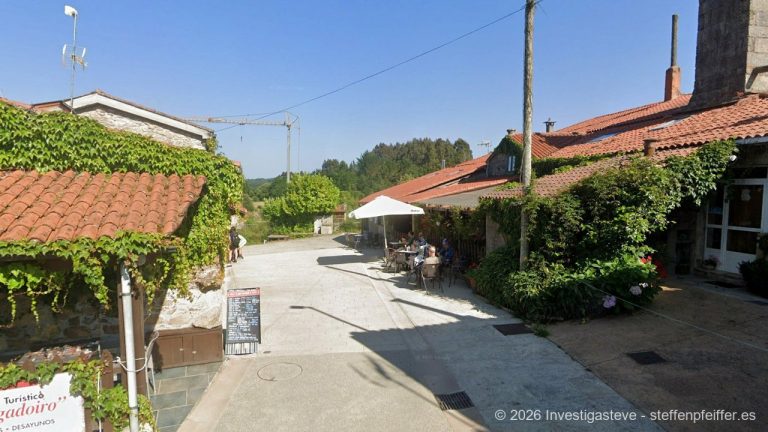
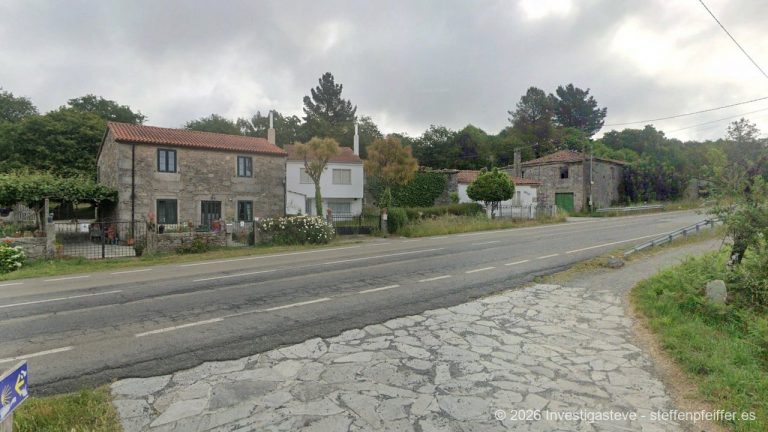
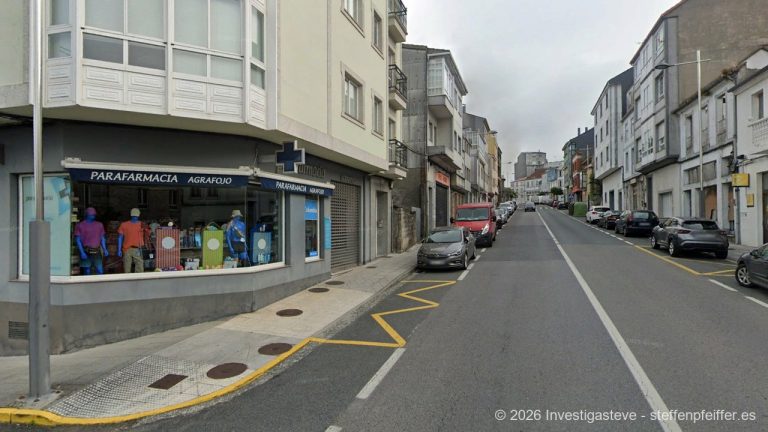
A First Glimpse – Arrival & Atmosphere
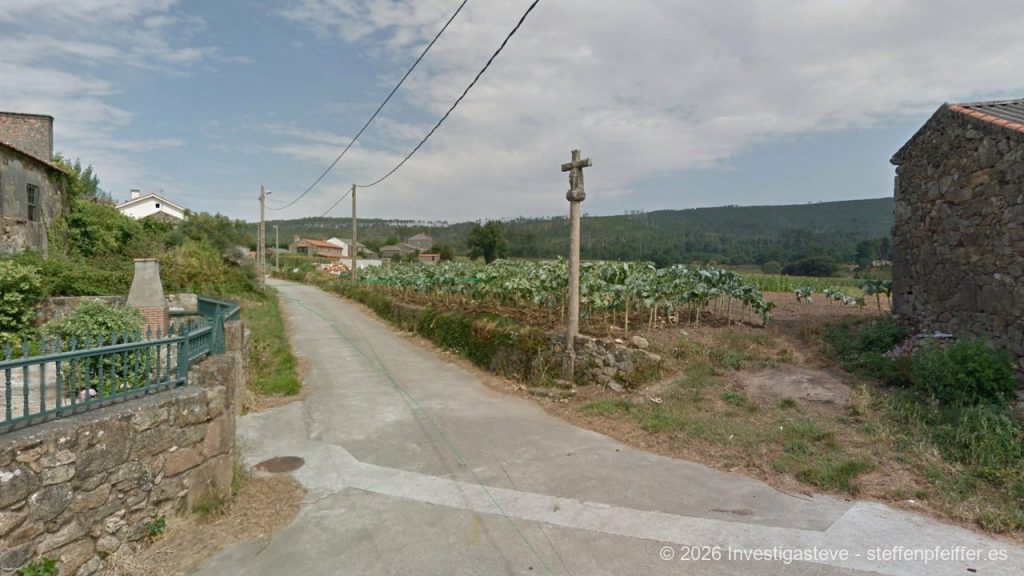
You have barely left the last houses of Fisterra and the often exuberant tourist chatter at the harbor behind when something magical happens to your perception. You immerse yourself in a green, almost reverent silence that welcomes you like a protective cocoon. San Salvador de Duio is the first deep, liberating breath on your way towards Muxía – a place often respectfully named by pilgrims after its striking church, San Martiño de Duio. The path here may initially be marked by competing yellow arrows and the emotional echo of farewell from Fisterra, but as soon as you reach this small hamlet after the first few kilometers, the frequency of your journey perceptibly changes. You leave the realm of the visible and enter a zone where the legends of Galicia are as tangible as the rough granite under your fingers.
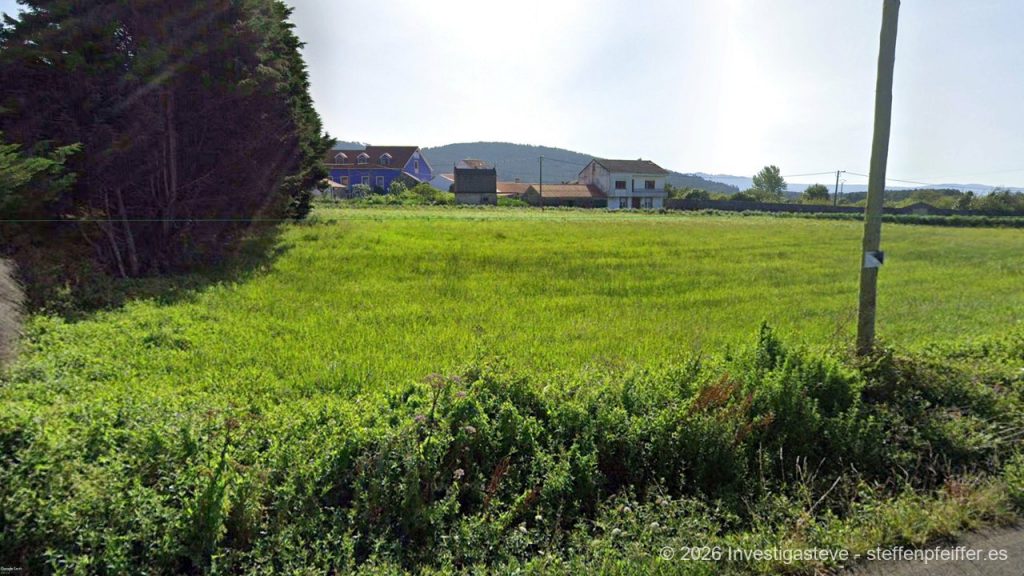
You are here in a gentle, forest-rich hollow, strategically located to protect you from the direct, often relentless lashing of the Costa da Morte sea wind. Yet the ocean is omnipresent: you can still taste the salt of the nearby surf on your lips, while the heavy scent of pine needles and damp forest floor saturates the air. In San Salvador de Duio, time seems to layer itself in dense, sedimented strata. Before you rises the proud Baroque church from 1707, a stone anchor amidst an archaic landscape of deep green pines and waving cornfields. It is a classic place of thresholds: the definitive transition from the bustling activity of the harbor into the rural solitude of Galicia. San Salvador does not welcome you with the aroma of freshly brewed café con leche, but with the meaningful weight of a place where history has been written, erased, and rewritten again and again over millennia.
What This Place Tells
San Salvador de Duio tells one of the most powerful and simultaneously most mystical stories of the entire Way of St. James. When your feet stand on this ground, you unconsciously wander over the invisible ruins of Dugium, a legendary city of the Celtic Nerios, already mentioned in the famous “Codex Calixtinus” from the 12th century. The legend that wafts around this place is as bloody as it is fascinating: it is said that exactly here once stood the “Ara Solis,” the holy Altar of the Sun. Pre-Roman peoples performed their fertility rites at this spot and watched with religious awe as the day-star sank hissing into the vast, unknown Atlantic. For the ancient people, this was the end of all things, the gate to the underworld.
Christian tradition, however, has radically recoded this place. It is reported that the Apostle James himself destroyed this pagan altar to anchor the new faith deep in Galician soil. Later, the medieval texts whisper, the entire city of Dugium was annihilated by an act of divine wrath. A Galician Atlantis that sank into the floods of the ocean because the inhabitants refused to grant the disciples of James permission to bury the apostle. This narrative of destruction is a powerful image of the victory of a new era over the old world. Today’s Iglesia de San Martiño de Duio, built in 1707 on the foundations of this mythical past, serves as an unshakeable testimony to this continuity. The inscription “1707” on a stone tablet inside is the visible proof of its age, but anyone who absorbs the silence between the walls feels that the stones themselves have been breathing much longer.
This hamlet is the living proof that the Camino did not begin in the Middle Ages, but walks on paths that people have used since time immemorial to seek the divine at the edge of the known world. In San Salvador de Duio, you encounter the “Paganismo” that still pulses beneath the Christian surface. The geographical isolation of the place has helped keep the atmosphere of the “Cidades Asolagadas” – the sunken cities – alive to this day. As you walk through the lanes, you step into a field of spiritual energy that reminds you that we are all just wanderers on the ruins of those who came before us. The place forces you to acknowledge that history is not a linear path, but an eternal cycle of emergence, decay, and transformation.

Camino Distances
San Salvador de Duio functions as your first significant waypoint after departing from Fisterra. It is the place where the wheat is often separated from the chaff: while many casual hikers stay close to the city, the genuine pilgrims move on from here into the lonely wilderness of the Costa da Morte.
| Previous Place | Distance (km) | Next Place | Distance (km) |
|---|---|---|---|
| Hermedesuxo de Baixo | approx. 2.1 km | Rial / Buxán | approx. 2.7 km |
Addresses & tips in San Salvador de Duio
Opening hours
Accommodation & Arrival
We must be very clear here: In San Salvador de Duio, you will not find a bed, unless you are willing to lose yourself in dreams of the Roman splendor of Dugium under the starry sky. In this hamlet, there are no official accommodations whatsoever – no albergue, no guesthouse, and no hotel to welcome you with modern amenities. “Arriving” in San Salvador is therefore purely limited to the spiritual and emotional level. It is a place for a short, highly conscious rest, but definitely not for the night’s sleep. Your next hostel is either already two kilometers behind you in Fisterra or still about eleven kilometers ahead in picturesque Lires. This circumstance makes San Salvador a pure transit station, but one of extraordinary spiritual quality.
Arriving here feels like entering another dimension of time. When you reach the small forecourt of the church, you often feel an almost physical relief. The hectic pace of everyday life is meaningless up here. You pause to sort your thoughts, wipe the sweat from your brow, and find the rhythm for the rest of the day. The silence of the forest surrounding the hamlet acts like a balm for the pilgrim-weary soul. It is that rare moment on the Camino when you realize that you have left the protection of civilization and are now completely dependent on yourself and the path. This psychological break is important to grasp the seriousness of the stage to Muxía.
The absence of beds forces you to see San Salvador for what it is: a sacred space of transition. You arrive here to draw strength from the earth and history, not to lay your head on soft pillows. The feel of the place – the cold granite of the church wall you might sit on, and the springy forest floor – connects you directly with the physical reality of Galicia. Many pilgrims report that exactly here, in this place of rest, they felt for the first time that they had truly begun the “epilogue” of their journey. It is a place of preparation for what is to come, a school of frugality before the path leads you deeper into the wooded hills.
When the Galician sun is low and casts long shadows over the cornfields, San Salvador de Duio gains an almost unreal aura. Whoever arrives here at this time feels the melancholy of the end and, simultaneously, the promise of the new. Even if you must move on, a part of your attention remains stuck to this place of stillness. You understand that true arrival does not mean closing a door behind you, but opening yourself to the vastness of the landscape and the depth of your own history. San Salvador is the base camp for your soul, a space where you forget the weight of your backpack for a moment and instead breathe in the heaviness of centuries.
Food & Drink
Also in culinary terms, San Salvador de Duio is a place of radical reflection and ascetic calm. Do not expect quaint taverns, lively bars, and certainly no restaurant that serves you a pilgrim menu. In this hamlet, there is simply no commercial gastronomy. Anyone hoping for a late breakfast or a fortifying snack here will inevitably be disappointed. The only “kitchen” available to you here is the one you carry on your own back. Your backpack is your sole provider at this point, and this is a conscious part of the experience in this region.
A simple sip of water from your own bottle and a small energy bar on the stone wall of the Baroque church – that is the Spartan menu San Salvador offers you. But it is precisely this absence of commercial consumption that sharpens your senses for the essentials. Instead of counting calories or studying menus, you count the centuries embedded in the mighty walls of San Martiño. You taste the purity of the forest air and perceive the scent of wild thyme and pine resin, which seems more intense here than anywhere else. The simplicity of your meal connects you with the pilgrims of the Middle Ages, who also paused at this very spot to share their modest provisions.
It is advisable that you have already filled your water reserves to the brim in Fisterra. San Salvador is a notable supply gap on the way, and official drinking water fountains directly on the path are rarely documented here. Drinking thus becomes a ritual act of foresight and gratitude towards nature. When you break your bread here in the silence, you feel a deep satisfaction that goes beyond mere satiation. It is the joy of the true hiker, who has learned that real luxury lies in the quality of the moment and the sublimity of the surroundings. The culinary anticipation of the excellent seafood in Lires or Muxía remains your driving force, but the simple stop in San Salvador will remain in your memory as a moment of humility.
Supplies & Logistics
Logistically speaking, San Salvador de Duio is what one could call a “supply desert.” There are no shops here, no vending machines, and no possibility to replenish your provisions or first-aid supplies. For your time and resource management, this place is a serious test. It is absolutely essential that the provisions you packed in Fisterra are necessarily sufficient until you reach Lires, about eleven kilometers away. Do not underestimate this stretch, even if it is scenically attractive. When the Galician sun powerfully breaks through the canopy of the pines, every kilometer on the ascent to Rial becomes a physical challenge that will demand your hydration.
San Salvador de Duio teaches you the necessary self-sufficiency of pilgrim life in a very direct way. Up here, you are on your own and must plan ahead. There are no ATMs for quick cash replenishment and no medical stations. If you have problems with blisters or minor injuries, you must rely on your own first-aid kit. However, this infrastructural void is not a deficiency, but an invitation to return to the essentials. You learn here to divide your strength wisely and to trust what you carry with you.
Shopping: There are no shops whatsoever in the village. The last reliable chance to replenish supplies was in Fisterra.
Gastronomy: No bars or restaurants available. Absolute self-catering from your backpack is strictly necessary.
Accommodation: No hostels or lodgings in the hamlet. The next sleeping option is offered by Lires (approx. 11 km away).
Public Facilities: The church of San Martiño is the only significant building; otherwise, the place serves as a pure transit and rest point without sanitary facilities.
In summary, San Salvador de Duio is a critical logistical point that puts your preparation to the test. If you notice here that you are missing something essential, it is already too late to buy it, but exactly the right time to train your improvisation skills. Use this place as a logistical checkpoint for your equipment and well-being before the path releases you deeper into the unserviced forest sections. San Salvador forces you to take full responsibility for your journey, which is one of the most valuable lessons of the Way of St. James.
Don’t Miss
The Church of San Martiño de Duio: This Baroque jewel from 1707 is the heart of the hamlet. Pay attention to the simple but powerful façade and the relief above the portal.
The Pilgrim Stamp (Sello): If the church is opened by the dedicated volunteers in the morning, you should definitely get the sello. It is the physical symbol that you have traversed the place of the sunken city of Dugium.
The Archaeological Ground: Take a moment to consciously walk across the square in front of the church. You are standing on the invisible foundations of Galicia’s ancient history.
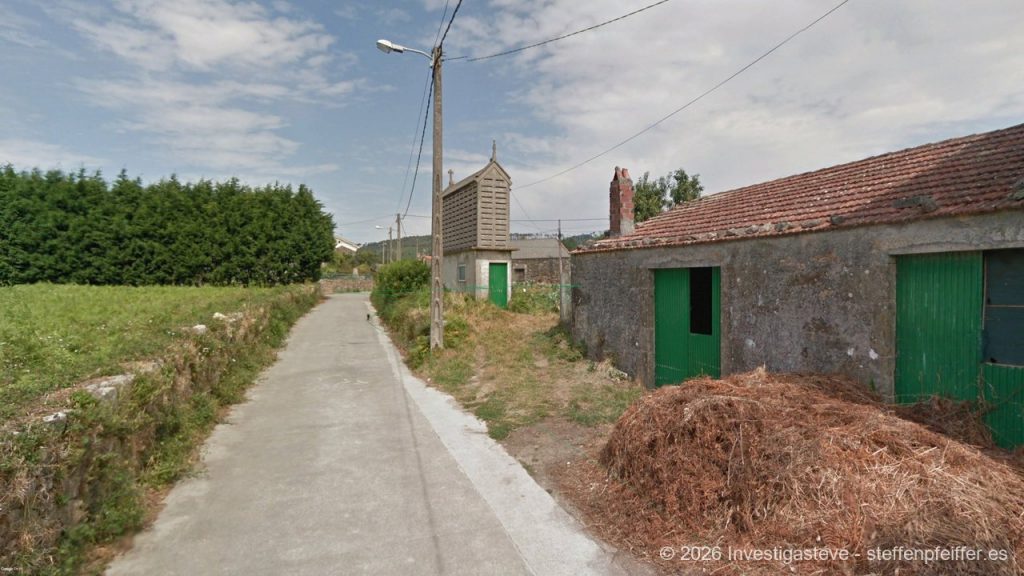
The Cornfields and Hórreos: In the surrounding area, you will find beautiful examples of Galicia’s rural architecture. The Hórreos stand here like small stone guardians of the harvest.
The Look Back: Before you ascend deeper into the forest, a look back towards Fisterra is worthwhile. You see the city from a perspective that remains hidden from many day tourists.
Insider Tips and Hidden Places
Beyond the official path, San Salvador de Duio reveals small, almost invisible treasures for the attentive soul. One such place is the “archaeological view” from the edge of the church forecourt. If you close your eyes for a moment and imagine the topographical location – sheltered in the hollow, but close to the sea – you can almost guess what the Roman city of Dugium might have once looked like here. It is a mental time leap that only succeeds if you abandon the haste of hiking. Look for the small irregularities in the terrain; remnants of old walls often hide under the lush grass, testifying to the long settlement history.
Another insider tip is the conversation with the volunteers who keep the church open in the mornings. Often they are locals whose families have lived in this region for generations. They know the orally transmitted stories about Dugium, the Sun Altar, and the “Meigas” (witches) of the area far better than any printed travel guide. A few exchanged words in broken Spanish or Galician can give you insights into the soul of this place that you won’t find in any blog. It is the human dimension of the Camino that becomes particularly palpable here in the silence.
Also, pay attention to the botanical transition immediately after the church, when the ascent towards Rial begins. You pass through a forest section here where pines and native deciduous trees mix in a very striking way. It is a botanical border zone that many hikers often overlook in their concentration on the path. When the light falls at a flat angle through the different foliage, plays of light of almost sacred beauty appear on the forest floor. It is an ideal place for a short “forest meditation,” to fill your lungs with the pure, oxygen-rich air before the path becomes physically more demanding.
A final hidden place is a small, nameless spring somewhat off the path, whose water is often ice-cold. Look for the spots where the ferns grow particularly lushly. A brief refreshment of your face with this natural moisture is a haptic experience that instantly connects you with the energy of the Galician earth. San Salvador de Duio is a place of small discoveries that only become visible when you are ready to adapt the pace of your steps to the heartbeat of nature. It is these inconspicuous moments that turn a hike into a true pilgrimage.
Moment of Reflection
You are in the middle of the area at the end of which you will reach the symbolic “End of the World” at Cape Fisterra and touch the stone with the inscription 0.00 km. But for now, you are still putting one foot in front of the other. Why are you still on the move? What are you searching for in these silent, almost forgotten villages like San Salvador de Duio, which lie in the deep shadow of the great cathedrals? This place asks you this radical question about your motivation with an urgency that is hard to escape. Perhaps you recognize exactly here, amidst the gray stones and the wide fields, that the goal of your journey was never a specific number, a certificate, or a monumental landmark.
Here, too, you can feel the enormous historical significance and ancient energy of this region. The spiritual beginning of the path found its climax here with the Translatio of James by his disciples. Legend reports how they were captured, imprisoned, and isolated at Vilar de Duio, the land of the Celtic Nerios, by the Roman prefect Filotrus. Only through the divine intervention of an angel did they owe their liberation from the dungeon. On their desperate flight from the soldiers of Filotrus, a bridge over the Tambre River collapsed, exactly at the moment when the pursuers wanted to cross it. This miracle enabled the disciples to escape and secured the continuity of the Christian message in Galicia.
Yet, to better understand the energy and historical significance behind these momentous terms, let it simply be laid out how it began here in the settlement and when. It began in the Middle Iron Age. The Celtic people of the Nerios (Latin Nerii), a sub-tribe of the Gallaeci, settled the region around today’s Fisterra on the Galician Costa da Morte from the 6th century BC. Originally migrated from Central Europe, they shaped the Castro culture characteristic of northwestern Spain over centuries. This Iron Age civilization was primarily distinguished by its fortified hilltop settlements, the so-called Castros. In these complexes, the Nerios lived in typical round stone houses, with the settlement of Dugium (present-day Duio) functioning as their most significant administrative and religious center at the then “End of the World.”
A central element in the life of the Nerios was their deep spiritual connection to astronomy, especially the veneration of the sun. They erected the legendary altar Ara Solis on Cape Fisterra to honor the point where the sun seemed to sink into the Atlantic every evening. This religious significance of the cape as a sacred site was established by the Nerios long before the Roman presence. The culture reached its peak between the 5th and 1st centuries BC, before the gradual integration into the Roman Empire began with the arrival of the Roman general Decimus Iunius Brutus Callaicus in the 2nd century BC.
After the end of the Cantabrian Wars around 19 BC, the independent Castro culture was finally integrated into the Roman administrative structures. In the following decades, the Celtic traditions of the Nerios increasingly merged with the Roman lifestyle into the so-called Gallaico-Roman culture. Although their political independence ended, the Nerios left a lasting legacy: they laid the foundation for the spiritual aura of Finisterre, which to this day calls and sometimes magically attracts pilgrims and travelers from all over the world.
Just like you, dear reader and pilgrim.
Camino of the Stars
This place lies on the Camino de Fisterra y Muxía (CFM), on the history-laden stage from Fisterra to Muxía (Stage CFM 4). The sequence of places on this section is:
Fisterra → San Martiño de Arriba → Hermedesuxo → San Salvador de Duio → Buxán → Castrexe → Lires → Frixe → Guisamonde → A Canosa → Morquintián → Xurarantes → Muxía
Did you find the church of San Martiño open and could you feel the presence of the old city of Dugium among the pines? Did the first pilgrim stamp on your way to Muxía have this special symbolic meaning for you, too? Share your experiences and perhaps a photo of this legendary hamlet with us. Your story helps to keep the spiritual depth of the Costa da Morte alive for all pilgrims!
About the Author