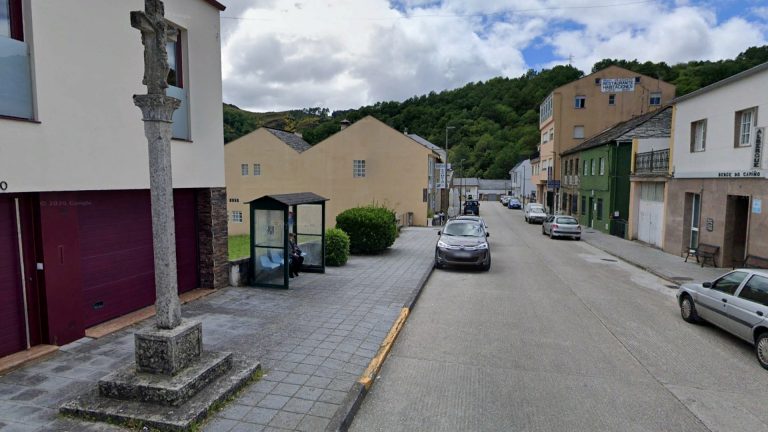
A First Glimpse – Entry & Atmosphere
When you reach Morquintián, you step into a world where time is not a linear sequence of minutes, but a layered sediment of granite, moss, and the ceaseless whisper of the Atlantic wind. This tiny hamlet, hidden deep in the heart of Galicia’s coastal landscape, is far more than just a geographic point on stage CFM 4. It is a place of absolute deceleration, where the “Brétema,” that almost sacred fog of Galicia, wraps the gray walls of the houses in a diffuse, silvery light that blurs the boundaries between reality and legend. You immediately feel a shift in the atmosphere: the air here is heavier, more saturated with the salt of the nearby ocean and the earthy, almost sweet scent of rotting fern and damp slate.
It’s an archaic silence that welcomes you in Morquintián—one so dense that the rhythmic click of your trekking poles on the hard, uneven ground feels like an improper intrusion into centuries-old quiet. Only 17 souls live here, and their lives seem to move to a tempo that completely escapes the hectic pulse of the outside world. You feel the resistance of the ground beneath your boots—the terrain here is demanding, shaped by the harsh conditions of the Costa da Morte, the “Coast of Death,” whose breath you can already feel on your neck, just a few kilometers before your destination in Muxía. For the pilgrim, Morquintián is a psychological vacuum, a space to pause before the last major ascent to the Facho de Lourido begins. It’s a place that forces you to turn your gaze inward while cool spring water and rugged stones sharpen your senses.
What This Place Tells You
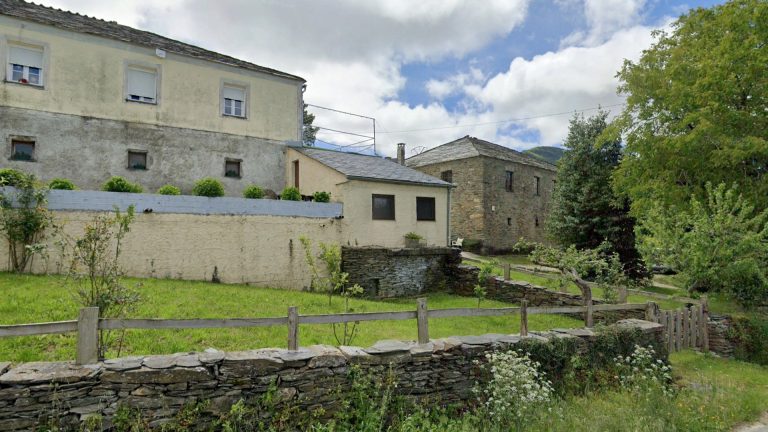
Morquintián is a stone testament to Galician endurance. The centerpiece of the hamlet—the element that defines its story and its soul—is the parish of Santa María de Morquintián. The sacred building, shaped by a simple yet dignified Baroque style, rises above the low roofs of the homes and hórreos like a silent guardian of this region’s spiritual heritage. Although Baroque is often associated with splendor, what you find here is a rural, almost austere variation that perfectly matches the rugged landscape. The church stones, weathered by the elements and painted in yellow and gray by lichens, speak of generations of pilgrims and farmers who sought shelter here from the Atlantic’s raging winter storms.
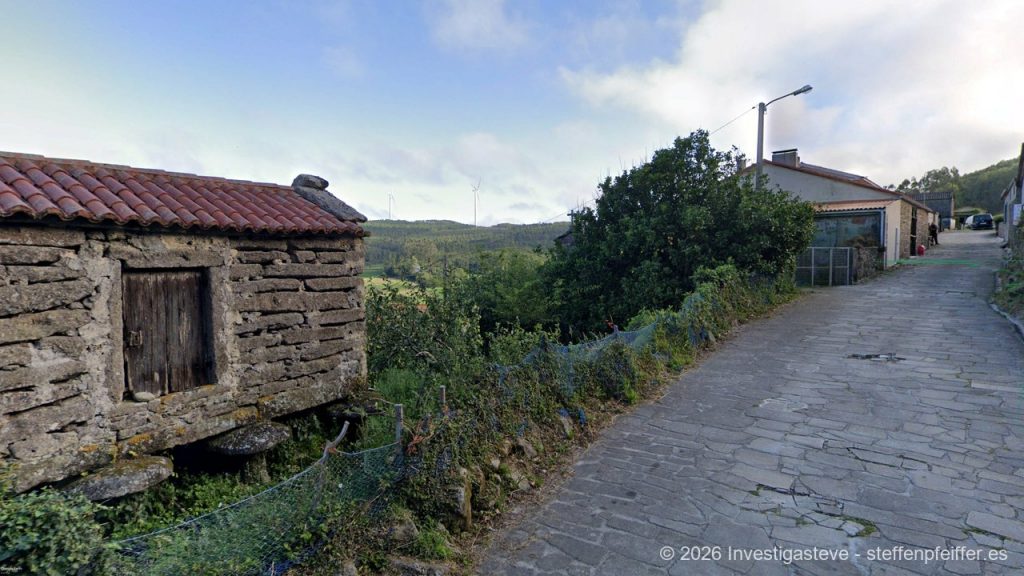
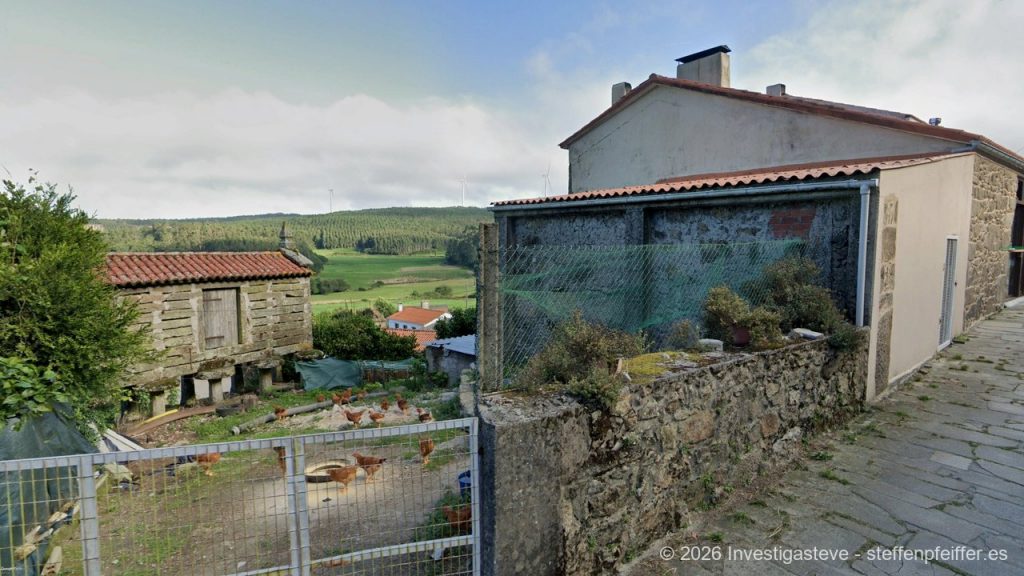
Morquintián’s historical role is rooted in its function as a place you pass through. For centuries, this small hamlet was a strategic stop on the way to the sanctuary of the Virxe da Barca. The settlement pattern is typical of Galician “minifundismo”—small-scale farming in which every patch of earth was painstakingly wrested from the rocky subsoil. When you look at the hórreos, those characteristic grain stores on stone stilts, you recognize the millennia-old ingenuity used here to protect the precious harvest from rodents and the sea’s all-pervading moisture. Morquintián is not a place of great battles or royal palaces; it is a place of everyday survival, shaped by the deep religiosity of its inhabitants and the constant dialogue with the elements. The rural architecture, presented here so unvarnished, is a physical manifestation of the Galician soul: hard, resilient, and yet full of hidden beauty.
Camino Distances
After about 2.5 kilometers of steady walking through the hilly landscape—heavy with the scent of eucalyptus—toward Guijín, the gateway to the final ascent toward the Facho de Lourido opens here.
| Previous place | Distance (km) | Next place | Distance (km) |
|---|---|---|---|
| Guijín | approx. 2.5 km | Facho de Lourido | approx. 4.2 km |
Addresses & tips in Morquintián
Overnight Stays & Arrival
Arriving in Morquintián means accepting the absence of commercial hustle. There are no big hostel complexes here, no neon signs promising you a “pilgrim menu.” The place is a refuge of silence—one that invites you more to pass through meditatively than to linger overnight. The few homes, the “casales,” often seem closed off, but if you look closely, you’ll spot small signs of lived hospitality: a stone bench under an awning, a fountain whose cool water gurgles without pause, or the distant ringing of cowbells announcing the arrival of evening.
If you want to stay overnight here, you’ll be disappointed, because there is no dedicated pilgrim hostel or hotel directly in the hamlet. The nearest reliable accommodations are about 3 to 4 kilometers away, primarily in the harbor town of Muxía. But that isolation is exactly Morquintián’s strength. It forces you to tighten your backpack straps one more time and turn your anticipation of the nearby goal into energy. The feeling of standing in a village of only 17 residents while you yourself are part of a worldwide stream of pilgrims creates a fascinating psychological tension. You sense the isolation of rural architecture and the raw beauty of the Galician coast in its purest form before the tourist infrastructure of the destination takes you back in.
The atmosphere in the narrow, often wind-leaning lanes is defined by the tactile feel of cold granite. When you place your hand on the walls, you feel the stored chill of the last night. It’s a place that doesn’t push anything on you, yet invites you to become part of its slow rhythm. Morquintián is the ideal point to recalibrate your inner clock before the emotional wave of arriving in Muxía crashes over you.
Food & Drink
Culinarily, Morquintián is a place of absolute renunciation—and that’s exactly where its appeal lies. There are no bars, no cafés, and certainly no restaurants. The air, however, is often heavy with the scent of private kitchens: the pungent aroma of “Caldo Gallego” simmering for hours on an old wood stove, or the smell of freshly baked bread slipping through the cracks of heavy wooden doors. For you as a pilgrim, that means you have to rely on your own provisions.
Sit down on one of the ancient stone walls along the path and enjoy a piece of cheese or a piece of fruit. Simple food tastes more intense here—in the middle of untouched nature and under Galicia’s wide sky—than any gourmet menu. The focus is radically shifted to what matters: the pure quality of the air, the silence, and the knowledge that the sea’s culinary treasures in Muxía are only a short march away. In Morquintián, you learn to appreciate the way’s austerity one last time before you can give yourself over to the enjoyment of octopus and fresh empanadas in Muxía’s lonxas.
Supplies & Logistics
In terms of infrastructure, Morquintián presents itself as a “supply desert,” which is a deliberate part of the experience on stage CFM 4. There are no shops, no pharmacies, and no ATMs. Pilgrims should have topped up their supplies in Lires or Frixe, since Morquintián is fully oriented toward the residents’ self-sufficiency.
The next opportunity to shop is Muxía again, about 3 to 5 kilometers to the north. For medical emergencies or urgent logistical support, you’re dependent here on the solidarity of fellow pilgrims or the arduous way back to civilization. Morquintián teaches you to make do with what you carry on your back. It’s a valuable lesson in humility and preparation, reminding you that the security of modern infrastructure on the Camino is never a given. Make sure your water bottles are filled before you leave this hamlet, because the way to the Facho de Lourido will test your reserves.
Don’t Miss
The Church of Santa María: Take the time to pause in front of the Baroque portal. Look at the details in the stone that bear witness to people’s struggle against time and weather.
The Hórreos: Look for the finest examples of these traditional grain stores. Their stilts and the round stone plates (Muelas) are masterpieces of rural architecture.
The View of the Coast: Shortly before or after Morquintián, panoramic views open up over the Atlantic, making the sheer force of the Costa da Morte unmistakable.
The Local Cruceiros: Keep an eye out for the simple stone crosses along the path, often covered with lichen, serving as spiritual signposts.
Insider Tips and Hidden Places
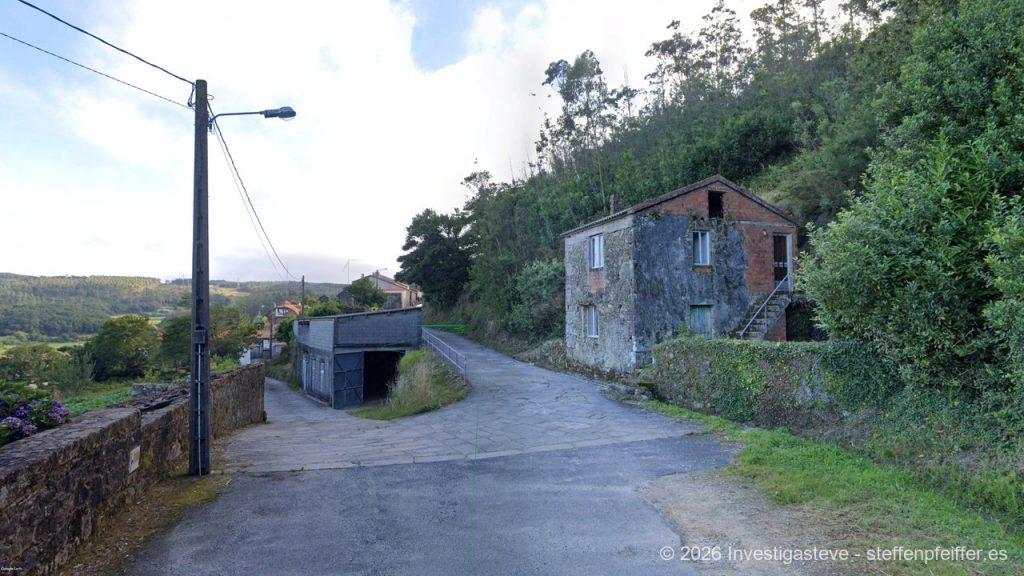
Beyond the marked path, Morquintián hides small, almost invisible treasures that reveal themselves only to the patient observer. If you leave the main route for just a few meters, you’ll often discover half-collapsed stone walls completely engulfed by bright green moss and ferns. They are the remnants of former stables or small utility buildings that now stand in the landscape like admonishing stone skeletons. Here you can physically grasp the transience of human striving.
One special tip is to pay attention to the small details in the masonry of the old houses. You’ll often find carved symbols or dates that go back as far as the 18th or 19th century. Another hidden spot is a small, unnamed fountain at the edge of the village where the water emerges especially cool and clear from the rock—an intensely physical experience that refreshes your face and hands before the shade-free climb to the Facho begins. In the late afternoon sun, the glitter in the granite of the church starts to sparkle, giving the entire hamlet an almost magical, unreal aura.
Moment of Reflection
In Morquintián, your journey reaches a level of inner silence that has become rare. You stand in a village of 17 inhabitants whose roots run deep in this barren earth, while you yourself are only a fleeting shadow passing through their world. This contrast between the place’s permanence and your own restlessness is the core of reflection in Morquintián.
Do you feel the weight of your backpack more clearly here—or lighter? In this hamlet’s isolation, the hardships of the past days are put into perspective. Looking at Santa María’s simple façade reminds you that faith and endurance often don’t need big words, but only solid stones and a long breath. Morquintián is the place where you ask yourself: What am I taking with me to the end of the world? Is it pride in the kilometers—or humility before the silence? Your heartbeat adjusts here to Galicia’s slow pulse, and you understand that the destination isn’t the end, but only the moment when the path’s silence flows into the vastness of the sea.
Camino of the Stars
This place lies on the Camino Fisterra y Muxía, on the stage from Fisterra via Lires to Muxía. The sequence of places is:
Fisterra → San Martiño de Arriba → Hermedesuxo → San Salvador de Duio → Buxán → Castrexe → Lires → Frixe → Guisamonde → A Canosa → Morquintián → Xurarantes → Muxía
Did you experience that special moment of inner contemplation in Morquintián’s absolute silence too—or was it Santa María’s Baroque façade that impressed you? Share your experiences and maybe even a photo of the mysterious hórreos of this little hamlet with us. Every story helps keep the hidden treasures of the Costa da Morte alive!
About the Author