A First Glimpse – Arrival & Atmosphere
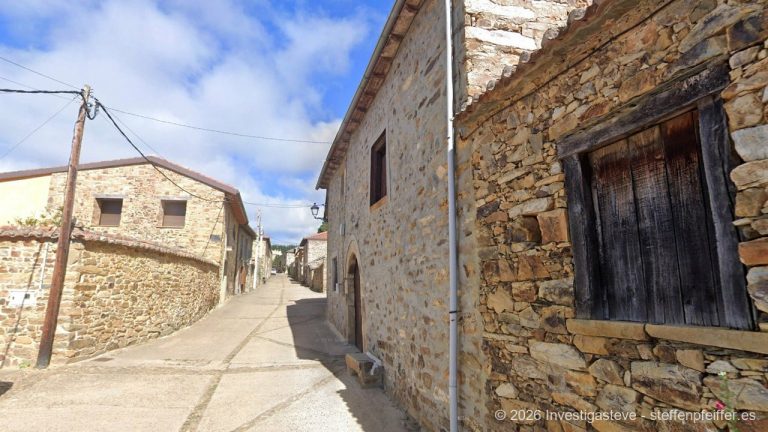
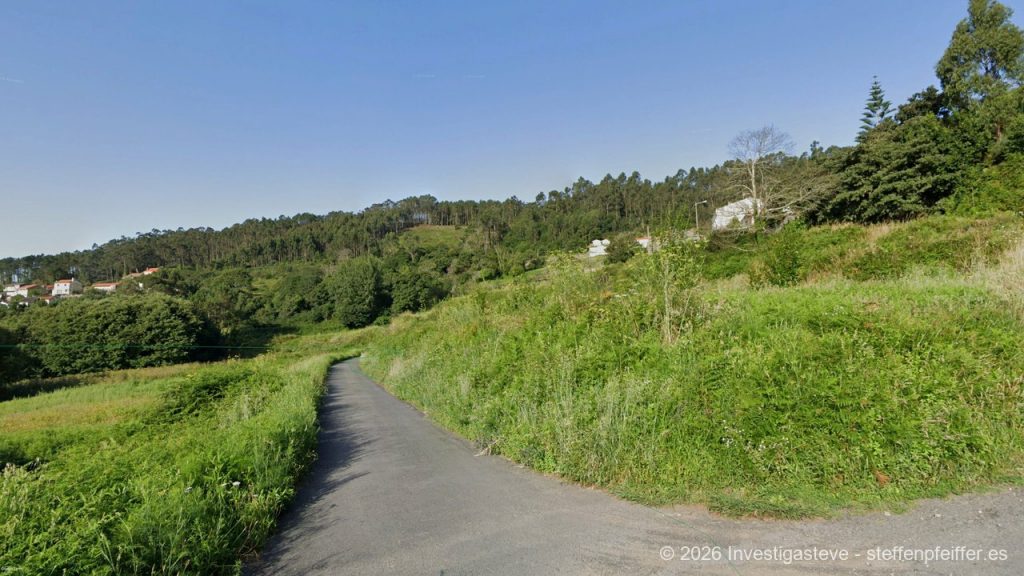
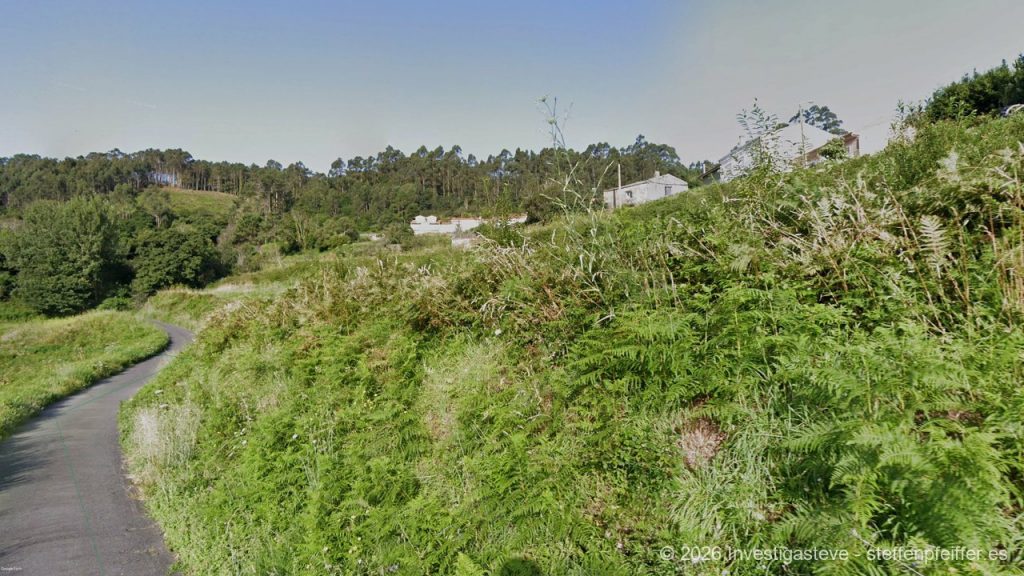
When you leave the port of Fisterra behind, where the cries of the seagulls and the bustling activity of the fish auctions gradually fade into a distant echo, an ascent begins that is far more than just a geographical overcoming of meters in altitude. Your boots find their rhythm on the asphalt and the gravel paths that wind persistently up the slope, away from the glittering surface of the Ría de Cee-Corcubión, towards a world that has preserved its archaic silence like a precious treasure. It is the way to San Martiño de Arriba, one of those places that elude the fleeting eye because they do not rely on loud spectacle, but on an almost meditative calmness. Up here, at about 145 meters above sea level, the consistency of time changes. It no longer flows to the rhythm of the tides or the tourist arrival numbers; instead, it seems to be captured in the massive granite blocks of the ancient farmhouses and in the deep furrows of the surrounding fields.
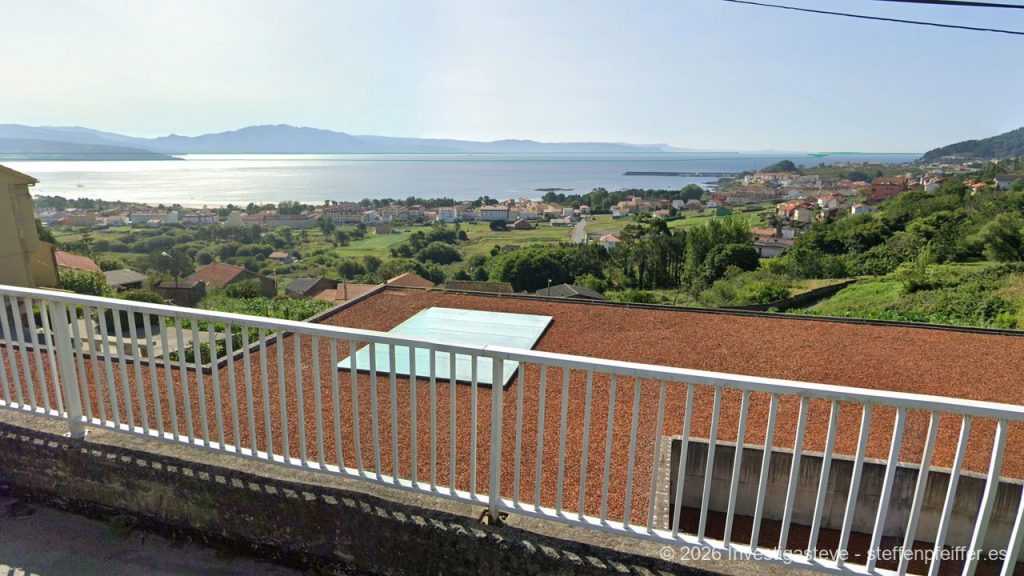
The wind that blows up here carries a different message than down at the cape. It smells less of the open, wild ocean crashing against the cliffs and is instead laden with the spicy aroma of the huge eucalyptus forests that envelop the place like a protective cloak. It is a scent of camphor and resin, mixed with the damp earthiness of Galicia, which is called “terriña” here. Arriving in San Martiño de Arriba, the view expands in a way that makes the pilgrim pause. Below you lies the sea of houses of Fisterra, nestling against the shore like a white sickle, and in the distance you can make out the silhouette of Monte Pindo, that sacred granite mountain of the Celts, which often glows in an unreal violet in the evening light. San Martiño de Arriba is a place of threshold experiences: You have the supposed destination – Cape Finisterre – already behind you, or you are preparing for the final, spiritual roundabout towards Muxía. It is a village that grounds you before the wind of the “end of the world” tries to carry you away again.
What This Place Tells Us
The history of San Martiño de Arriba is inextricably linked with the fate of the entire Parroquia San Martiño de Duio, a name that resonates like a thunderclap in the ears of historians and myth researchers. When you wander through the narrow lanes between the lichen-covered stone walls, you are stepping onto the ground of a legend that reaches deep into pre-Christian times and the beginnings of the Jacobean tradition. The legendary city of Dugium was once located here, the capital of the Nerii, a Celtic tribe that settled this rugged coastal land. Legend tells that the disciples of the Apostle James came here to seek permission for his burial, but they met with resistance from the powerful Queen Lupa and the Roman governors. As divine punishment for the inhabitants’ unbelief, the magnificent city of Dugium is said to have sunk into the floods of the Atlantic – a Galician version of Atlantis, whose bells, according to the locals, can still be heard ringing deep below sea level on stormy nights.
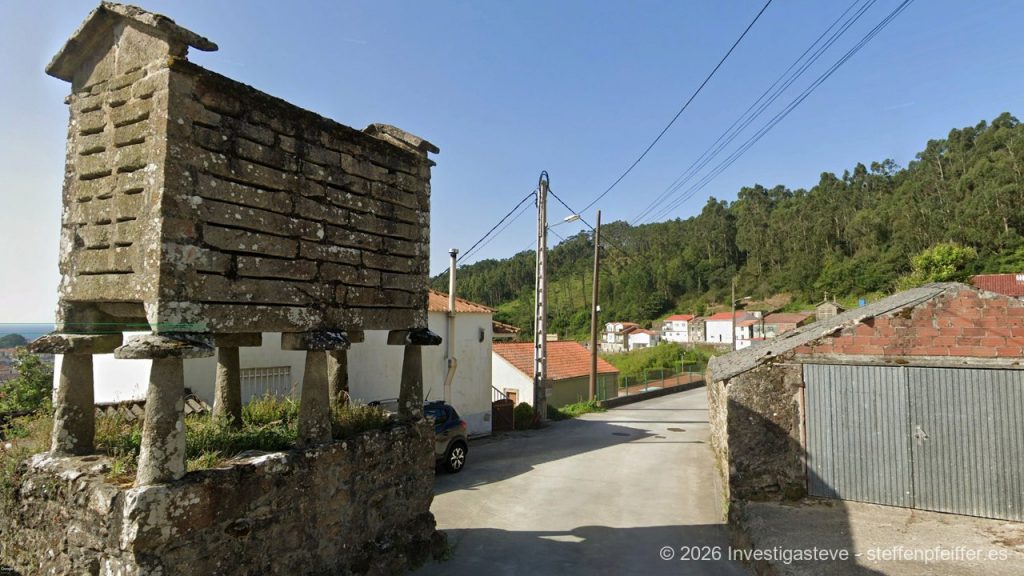
San Martiño de Arriba is the “upper” part of this historically significant region and today serves as a silent witness to these sunken epochs. While the lower part of the district is characterized by the Romanesque church of San Martiño de Duio – a building of simple, powerful beauty, erected on the ruins of Roman temples – the mountain village represents the traditional, agrarian life of Galicia. For centuries, the settlement served as a refuge for those who wanted to escape the dangers of the coast and pirate attacks. Up here, one was safe, the land was fertile, and the herds could be grazed among the hórreos, the typical corn granaries. These stone-built granaries, resting on pillars to protect the harvest from rodents and moisture, stand here like small temples of permanence. Every stone slab, every cross on the gable tells of a time when survival was laboriously wrested from the earth and faith in God and the forces of nature was the only insurance.
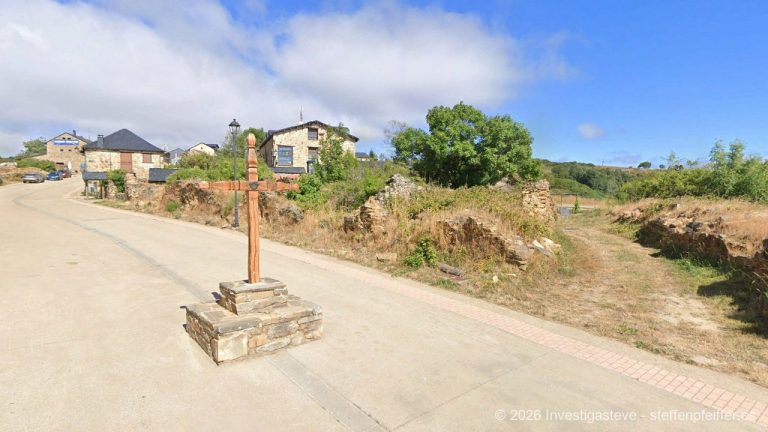
In modern times, especially between the 16th and 19th centuries, San Martiño de Arriba retained its strategic importance. From here, the movements of the fleets in the Ría could be monitored. It is no coincidence that modern architectural testimonies that utilize this panoramic view can be found in the immediate vicinity. The place has managed to balance its role as a guardian of Celtic myths and modern, quality-conscious tourism without losing its identity to the mass market. Anyone walking through San Martiño feels the presence of the ancestors in every cruceiro, those stone wayside crosses that stand at intersections to banish the “Santa Compaña,” the ghostly procession of Galician mythology, and to bless the wanderer.
Camino Distances
In the following table, you will find the distances for the current stage on the Camino Fisterra y Muxía (CFM 4):
| Previous Location | Distance (km) | Next Location | Distance (km) |
|---|---|---|---|
| Fisterra (town center) | approx. 1.7 km | Hermedesuxo | approx. 0.9 km |
Accommodation & Arrival
Arriving in San Martiño de Arriba has little in common with the triumphant entry into a great cathedral city. It is more of a gentle gliding into a rural sense of security. In this hamlet with its barely 70 inhabitants, there are no large hotel complexes or impersonal accommodations. Anyone who stays overnight here consciously opts for deceleration. The options are limited to a few, but all the more authentic, Casas Rurales and private guest rooms, which are often housed in lovingly restored farmhouses. These accommodations breathe the history of their walls: thick granite walls that keep out the heat in summer and retain the warmth of the fireplace in winter, chestnut wood-beamed ceilings, and windows that often frame nothing more than the gentle green of the pastures and the blue of the sky.
When you loosen your backpack straps after the ascent and sit down on a stone wall, you feel the tension of the coast falling away from you. Most pilgrims use San Martiño de Arriba as a short stopover on the way to Muxía or as the first climb after leaving Fisterra. But those who linger here are rewarded with a night that is as dark and full of stars as is rarely found in Europe anymore. The absence of street lighting and urban noise makes the firmament over the Costa da Morte shine with a clarity that makes it understandable why people once suspected the star path to be here. The feeling of arriving in San Martiño is the feeling of arriving within oneself – far from the souvenir shops and the selfies at the lighthouse.
Food & Drink
Although San Martiño de Arriba is small, it is home to one of the gastronomic jewels of the entire region. It is a place where traditional Galician cuisine has entered into a liaison with modern architecture and the highest quality standards. In the area, the restaurant “O Fragón” is particularly well-known, nestling almost organically into the hillside. Here, eating is not just consumed, but celebrated. The ingredients come almost exclusively from a radius of a few kilometers – “Km 0” is not a marketing term here, but a lived reality. The seafood comes directly from the ports of Cee or Fisterra, the meat from the cattle that you can see grazing on the surrounding meadows during the day, and the vegetables often still have the earth from their own garden on them.
A typical experience in San Martiño is tasting a freshly prepared empanada, that Galician pastry pocket, which here is often filled with tuna, squid, or stockfish. The dough is crispy, the inside juicy and characterized by the sweetness of braised onions and peppers. To accompany it, you drink a cool Albariño or a Godello, whose mineral note corresponds perfectly with the salty air. For the pilgrim, this offers the opportunity to replenish energy reserves for the further way to Lires and Muxía. It is an honest, earthy cuisine that does without frills and is therefore so deeply impressive. Those who prefer something simpler will find small bars in the surrounding hamlets where “Café de Cunca” – coffee from a bowl – is still the best medicine against the morning fog.
Supplies & Logistics
Logistically speaking, San Martiño de Arriba is a place of basic amenities in the best sense. There is no supermarket and no pharmacy here – for that, you have to make the short trip back to Fisterra or look towards Cee. But what the place offers is often more important for the pilgrim: a well with ice-cold, clear water that comes directly from the mountains, and the certainty of being on the right path. The Parroquia San Martiño de Duio is only about 400 meters away and is the spiritual point of contact. Here, you can often obtain one of the coveted pilgrim stamps, which shows the motif of the Romanesque church or Saint Martin.
The paths are well marked, but you should note that San Martiño de Arriba is located at a junction where various hiking trails, such as the “Camiño dos Faros” and the official Way of St. James, cross or touch. The signage in Galicia is usually exemplary, but the dense fog that often rises suddenly from the Atlantic here can reduce visibility to a few meters within minutes. For drivers, there are designated parking spaces near the restaurant, which also makes the place an ideal starting point for smaller circular hikes that do not include the entire route to Muxía. The sanitary facilities in the restaurant area are modern and well-maintained, but you will search in vain for public toilets in the actual hamlet.
Don’t Miss
The viewpoint over the Ría: From the higher points of the village, you have a panoramic view that reaches to Cape Vilán in clear weather.
The Hórreos of San Martiño: Observe the architecture of these granaries; they are masterpieces of ventilation and statics.
The Church of San Martiño de Duio: Just a short walk away, this church offers a peace that is almost tangible. Pay attention to the Romanesque capitals.
Culinary Delights at O Fragón: Even if you only stay for a glass of wine – the architecture and the view through the huge glass fronts are an experience in themselves.
The Cruceiro at the Village Entrance: A moment of pause at this stone cross connects you with the centuries-old tradition of the pilgrims of St. James.
Secret Tips and Hidden Places
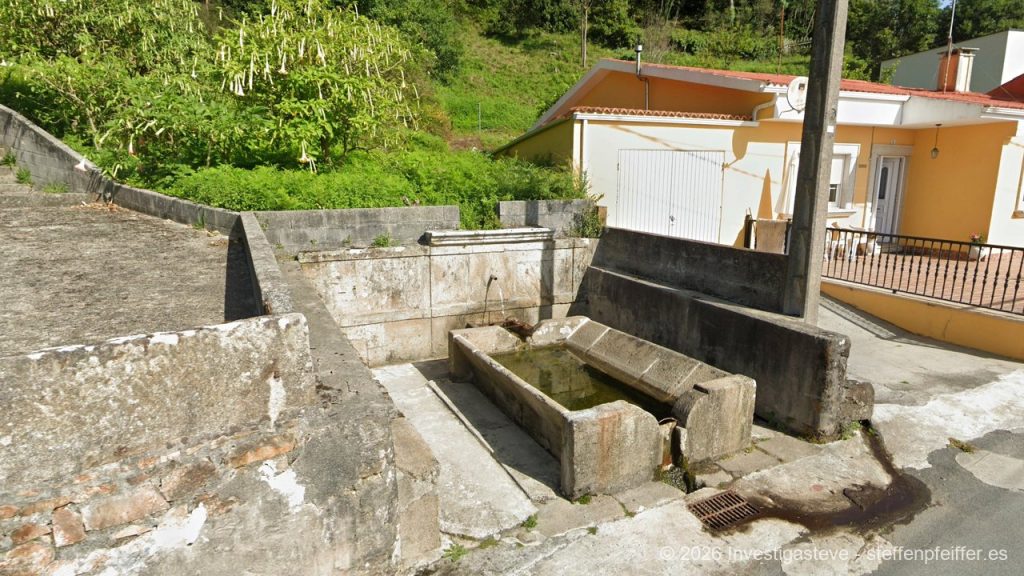
Off the marked paths, San Martiño de Arriba conceals small secrets that only reveal themselves to the patient observer. If you leave the main path and follow the narrow trails that lead between the fields, you often come across abandoned stone ruins that are almost completely overgrown with ivy and bramble vines. These are the silent witnesses of a time when the village had significantly more inhabitants. In the wall crevices of these ruins, rare ferns and mosses thrive, a small ecosystem of silence. Another secret tip is the old wash place, which is somewhat hidden in a hollow. The women of the village once met here, and the rhythmic beating of laundry on the stone slabs set the pace of everyday life. Today, it is a place of absolute tranquility, where only the quiet rippling of water can be heard.
San Martiño is particularly magical around the time of the autumnal equinox. Historians suspect that the entire orientation of the Parroquia Duio was once connected with the solar cults of the Celts. There are certain spots on the surrounding hills from which the sun sets exactly behind the cliffs of the cape, as if sliding into a gate to the underworld. If you ask the locals, they might tell you about the “Pedras de Abalar,” the rocking stones, or about places where the earth’s energy is said to be particularly strong. It is a landscape that invites you to dream and in which the boundary between reality and legend is as thin as the Galician coastal mist.
A Moment of Reflection
Standing in San Martiño de Arriba means being between two worlds. Behind you lies the decision not to stop in Fisterra, but to continue the journey – an act of spiritual perseverance. Many pilgrims experience a form of “second birth” here. The hustle and bustle of Santiago and the finality of the cape are overcome, and now begins a section of the path that is often much lonelier, but also more intense. The vastness of the landscape and the simplicity of village life challenge you to shed ballast. Not just the physical ballast in your backpack, but also those thoughts that have accompanied you for weeks.
Perhaps you recognize up here that the destination was never a specific point on the map, but the ability to stay with yourself while walking. The silence of San Martiño is not a lack of sounds, but a presence of peace. It is the ideal place to ask yourself: What do I take with me from the end of the world? And what do I leave behind in the stone alleys of this village? The answer often lies in the wind that gently sweeps through the eucalyptus trees and reminds you that every step on this holy ground is a connection to those millions of souls who stood here before you and looked at the same stars.
Camino of the Stars
This place is located on the Camino Fisterra y Muxía (CFM 4), on the stage from Fisterra to Muxía. The sequence of locations is:
Fisterra → San Martiño de Arriba → Hermedesuxo → San Salvador de Duio → Buxán → Castrexe → Lires → Frixe → Guisamonde → A Canosa → Morquintián → Xurarantes → Muxía
Did you also feel that moment during the ascent to San Martiño de Arriba when the look back towards Fisterra suddenly cast everything in a new light? Or did you discover a detail in one of the small alleys that no travel guide notices? Share your experiences, your photos of the ancient hórreos, or your culinary discoveries with us. Your story helps other pilgrims not just to pass through this special place, but to truly experience it. We look forward to your comment!
Excerpt: San Martiño de Arriba is an authentic Galician mountain village above Fisterra that welcomes pilgrims on their way to Muxía with archaic silence and spectacular views. Between Celtic Dugium legends, historic hórreos, and modern top quality at the O Fragón restaurant, the place unfolds a magical attraction. Learn everything about this stone guardian of the Costa da Morte, which serves as a place of reflection and deceleration, forming the perfect transition between the “end of the world” and the sanctuary of Muxía.
Hashtags: CaminoFisterraMuxía, WayofStJames, SanMartiñoDeArriba, CostaDaMorte, Galicia, Pilgrimage, DugiumLegend, OFragón, Deceleration, CaminoDeSantiago, Fisterra, Muxía, SpiritualTravel, PilgrimLife, GalicianCuisine,
About the Author