A First Glance – Entry & Atmosphere
If you leave behind the gentle, often mist-covered hills of Terra de Xallas and the path slowly leads you down into the deep valley of the Río Xallas, you feel a change in the air. You set foot on the massive granite blocks of the Ponte Olveira bridge, smoothed by centuries – and immediately realize that this is no ordinary crossing. Here, at the junction between the municipalities of Mazaricos and Dumbría, the atmosphere of the Camino condenses into an almost tangible moment of transition. The roar of the water beneath you is not a gentle babbling; it is a deep, orchestral rumble rising from the depths of the river and vibrating through the soles of your pilgrim boots into your very core. It is the sound of the border, the acoustic signal that you are crossing an invisible gate.
Entering Ponte Olveira is a sensory experience that hits you with an almost archaic force. The air here smells of damp moss, of the cool breath of the river, and of the tart, almost sweet scent of eucalyptus leaves dancing in the wind along the shore. It’s that typical Galician smell, already carrying the promise of the nearby ocean within it, even though the sea is still a few days away. You feel the texture of the place: the rough granite of the bridge railing, cool and unyielding under your hands, and the fine Galician drizzle – the legendary orballo – that lays on your skin like a silky film and bathes the colors of the surroundings in a deep, rich emerald green.
In Ponte Olveira, your steps slow down automatically. The bridge forces you to pause. As you walk across the six wide arches, stretching like the stone ribs of a prehistoric creature over the Xallas, you feel the weight of history. It is a place that radiates tranquility but also preserves a quiet, warrior-like energy. Pilgrims in dusty shoes often lean against the stone here, gaze down into the dark eddies of the water, and for a moment leave behind the dust of the Meseta and the hustle of Santiago’s outskirts. In Ponte Olveira, you’re not just a wanderer; you’re a witness to the eternal river, part of a chain of travelers who have held their breath at this very spot since the 16th century.
What This Place Tells
Ponte Olveira is a stone history book, its pages written by the Río Xallas. The bridge itself, a masterpiece of engineering from the 16th century, stands on the foundations of an even older, possibly Roman connection. It tells of a time when rivers were insurmountable barriers and bridges like this were the lifeblood of trade and pilgrimage. The granite it’s made from comes from the surrounding hills and carries the signature of nameless stonemasons who knew their work had to withstand the storms of the Atlantic. But Ponte Olveira doesn’t just tell stories of peaceful trade; this place has seen blood and felt the wrath of locals against foreign invaders.
In 1809, when Napoleon’s troops swept over Galicia like a firestorm, Ponte Olveira became the scene of a desperate but heroic resistance. The inhabitants of the surrounding villages, simple farmers and craftsmen, stood at this strategic bottleneck against the overpowering force of the French invaders. It’s said that the Xallas flowed darker that day than usual. The bridge became a symbol of Galician stubbornness – that indomitable will to defend one’s land at any cost. When you walk across the stones today, you can almost hear the echo of shouts and the clashing of weapons in the rushing water. It’s a place of border experiences, where death and life often faced each other only an arm’s length apart.
In the tradition of the Camino de Santiago, Ponte Olveira marks the entry into the Terra de Dumbría. It’s the moment when the landscape loses its softness and reveals its full, rugged, granitic splendor. The place tells of survival in a harsh environment, of minifundismo – the small fields separated by stone walls – and of the deep religiosity of the people, who saw every river crossing as a spiritual act. Ponte Olveira is more than a geographic coordinate; it’s a memorial to endurance. While kingdoms came and went, the bridge remained, unmoved by the passage of time, offering every pilgrim the same sure footing, whether medieval penitent or modern backpacker. Here, historical causality connects with the individual metamorphosis of the wanderer, creating a powerful narrative of persistence.
Camino Distances
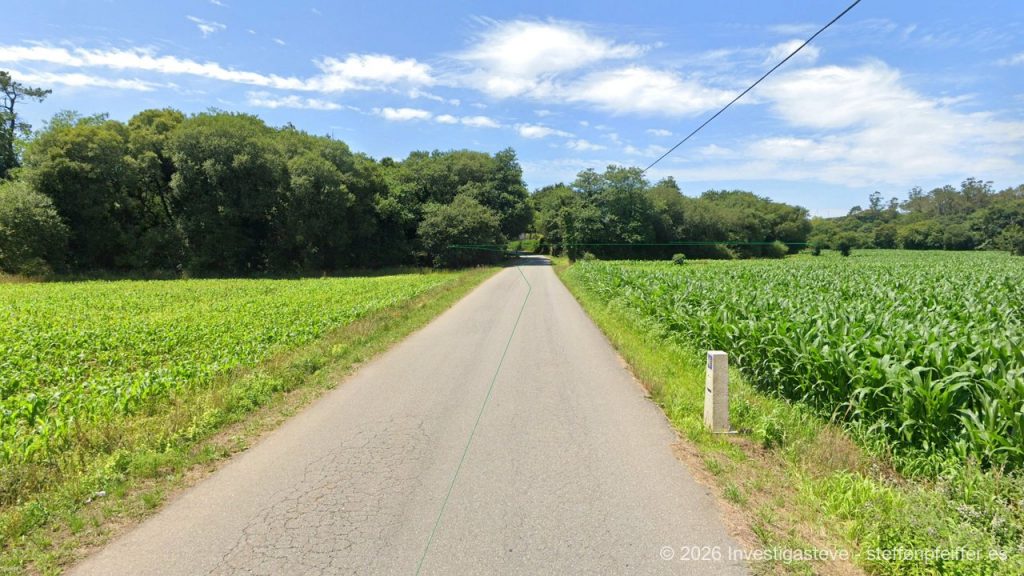
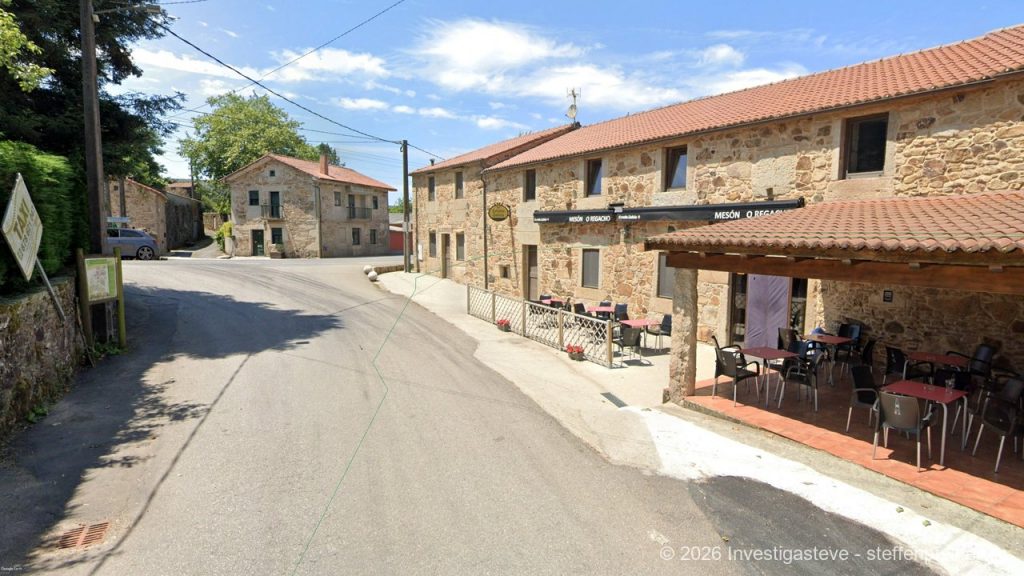
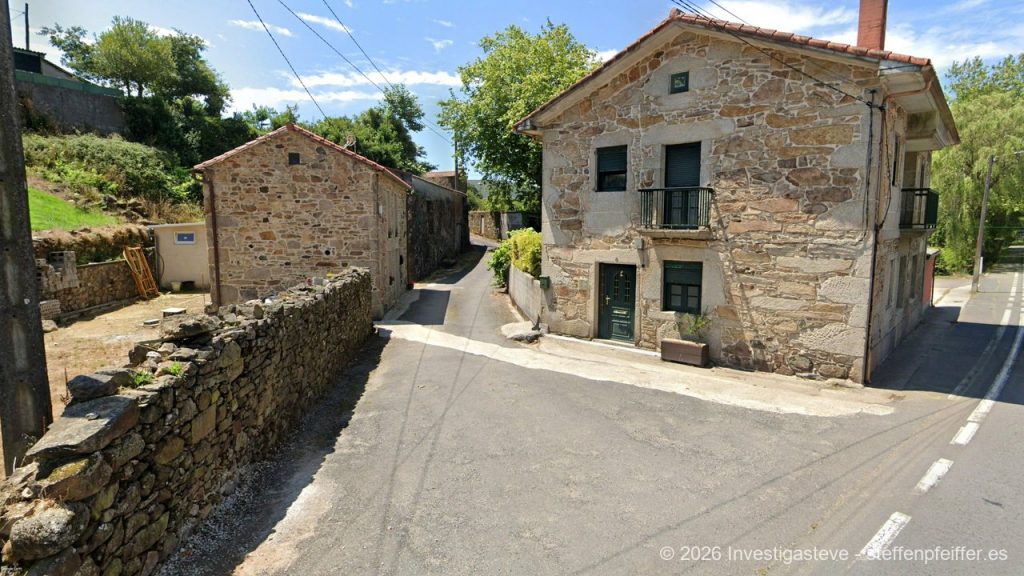
After about two kilometers across the open pastures of Terra de Xallas, the stone gate opens here to the bridge over the Xallas.
Overnight Stays & Arrival
Arriving in Ponte Olveira means exchanging the solitude of the fields for the protective closeness of the water. The village itself is small, almost a hamlet, but it has an energy that instantly puts you at ease. There are no large hotel complexes here, only accommodations that fit harmoniously into the landscape. The private albergue in Ponte Olveira is a place where the spirit ofhospitalitasstill resonates within the thick stone walls. When you settle in there, you hear at night the distant, soothing roar of the river – a natural lullaby that lets you sink deeper than any silence in the mountains.
Arrival here is a ritual act. Many pilgrims immediately take off their shoes and sit by the banks of the Xallas, dipping their tired feet into the icy, crystal-clear water. It’s a tactile experience like no other: the sudden cold draws the pain from your limbs, and the feeling of cleansing goes far beyond the physical. The hostels have a family-like atmosphere. People gather together, share the narrow benches, and exchange stories about the last stage while outside the wind sweeps through the willows along the riverbank. It’s the kind of community only the Camino can produce – stripped down to the essentials, without masks, united by the dust of the road.
The night in Ponte Olveira has a special quality. The humidity of the river cools the rooms pleasantly, and the rustling of sleeping bags mixes with the distant croaking of frogs and the rustling of leaves. In the old stone hostel, the walls whisper stories of distant lands, while outside pilgrims lean their walking sticks against the wall – ready for the next day, but for this moment completely arrived in the here and now. It’s a place where you learn that home doesn’t always have to be a permanent house, but often just a safe roof for a single, meaningful night on the banks of a wild river.
Food & Drinks
The culinary world of Ponte Olveira is as honest and down-to-earth as the granite of the bridge. Here, you won’t find menus with complicated names, but dishes that taste of fire, smoke, and fresh ingredients from the land. In the small bar at the bridgehead, you’ll find a gastronomy that makes no compromises. A pintxo here isn’t a delicate snack, but a hearty meal: a piece of homemade tortilla, as thick as your thumb, or an empanada whose dough is still baked in the stone oven. The aroma of fried chorizo and fresh bread drifts across the terrace and mingles with the scent of the river to create an irresistible invitation.
The pilgrim’s menu is especially noteworthy here, often with its own rustic touch. There’s hardly anything better than a hot sopa de cocido after a long day in the rain. The warmth of the soup slowly spreads through your body as you take a hearty sip from your glass. The wine here isn’t a fine vintage from the shelf, but often a local wine, dark and earthy, tasting of the Galician sun and slate soil. It’s food that grounds you, giving you back the energy the hills of Mazaricos have taken. You sit at wooden tables, elbows on the table, and feel the tension slowly slip away.
A secret tip for the palate are the local cheeses, often a creamy queso de tetilla , served with a bit of quince bread. The sweetness of the fruit and the mild acidity of the cheese form a perfect contrast to the rugged surroundings. In Ponte Olveira, food isn’t celebrated, but lived. It’s part of survival and the joy of existence. If you sit by the riverbank here, a simple meal in front of you and your gaze on the old bridge arches, you realize that true luxury isn’t found in exclusivity, but in the purity of the moment and the quality of simple things.
Provisions & Supplies
In terms of infrastructure, Ponte Olveira is a place of concentration. There’s no supermarket, bank, or pharmacy in the usual sense here. This “supply desert” is a deliberate part of the experience on this section of the Camino. Here, you learn to make do with what you carry and to appreciate the small supply islands for what they are: lifesavers. The bar right at the bridge serves as the logistical nerve center of the place. Here, you can get not only water and a sandwich, but also information about the condition of the trail to Olveiroa and the coveted stamp for your pilgrim passport.
The pharmacist in Mazaricos is far away, but in the hostel you’ll often find a small emergency box with blister plasters and disinfectant – a silent testimony to the solidarity among walkers. It’s wise to have replenished your supplies already in Negreira or Maroñas, because in Ponte Olveira, the offerings focus on immediate regeneration. But this reduction has something liberating. You don’t have to choose between ten different granola bars; you take what’s there and realize it’s perfectly sufficient. It’s the logistics of minimalism that clear your mind and refocus you on walking.
Shopping: There are no shops. The next shopping options are only in Olveiroa about two kilometers away or back in Maroñas. So plan your backpack provisions wisely.
Gastronomy: The bar at the bridge offers good pilgrim meals, sandwiches, and drinks. The atmosphere is welcoming and fully geared toward walkers.
Overnight Stays: A private hostel and a few guest rooms offer good options for spending the night. The location right by the river is priceless and makes up for the lack of urban comforts.
Public Facilities: Apart from the public fountain with cool drinking water at the village entrance, there are no authorities. The bridge itself is the most important public structure and often serves as a meeting point for pilgrims from around the world.
Ponte Olveira teaches you self-sufficiency. It’s a valuable lesson just before you reach the next major stage destination. In the absence of temples of consumption, you discover the quality of service from person to person. The innkeepers here know almost every pilgrim by their facial expression, and a kind word often weighs more here than a fully stocked shelf.
Don’t Miss
The 16th Century Bridge: Don’t just walk across it. Go down to the riverbank and look at the six arches from below. The craftsmanship of the stonemasons and the sheer mass of granite are impressive and a testament to eternity.
The Río Xallas Riverbank: Take the time for a foot bath. The water is icy cold and clear. It’s a natural therapy for your joints and a moment of absolute connection with Galician nature.
The Cruceiro at the Bridgehead: Look for the small stone cross at the edge of the path. It marks the spiritual entrance to the municipality of Dumbría and is a classic place for a brief prayer or a moment of thanks for a safe crossing.
The View into the Valley: When you leave the bridge toward Olveiroa, turn around one more time. The view back at the stone structure, nestled in the lush green of the pastures and the dark river, is one of the best photo ops of the entire stage.
Insider Tips and Hidden Places
Off the marked path, just a few steps upstream, Ponte Olveira hides one of its most beautiful treasures. There is a narrow path, almost completely overgrown by ferns and blackberry bushes, leading to the ruins of an old mill. The roof has long since collapsed, but the massive millstones still lie there, half buried under bright green moss. It’s a place of absolute silence, where time seems to have stood still. Here, you can feel the melancholic beauty of Galicia, that specific mix of decay and natural power, in its purest form. Only the sound of the river accompanies you – an ideal place for deep, undisturbed meditation.
Another hidden spot is a small rock niche directly under the third bridge arch. When the water level is low, you can reach it. It’s like a secret room of stone and water. The acoustics under the vault are fascinating; the rumble of the water becomes a deep, vibrating hum that envelops your whole body. There, you feel as if you’re in the belly of the earth, protected by tons of granite. It’s a place that shows you how small we humans are compared to the structures we build for eternity.
When dusk sets in and the mist rises from the river, the lichens on the stones of the bridge almost glow in the remaining light. It’s a magical moment that only those who stay overnight in Ponte Olveira and don’t rush onward experience. Standing then on the bridge and seeing the world disappear into gray while only the water below you shines silver, you realize the true mystique of this place. Here in Ponte Olveira, it’s the invisible things, the small details off the path, that make the difference and turn your journey into a real experience.
Reflection Moment
In Ponte Olveira, your path reaches a threshold that goes beyond the physical. When you stand in the middle of the bridge, you are literally between two worlds: behind you familiar Mazaricos, ahead of you unknown Dumbría. This place asks you about your own inner bridges. What have you already left behind on this journey, and what do you dare to take to the other side? Bridges are places of decision; you can’t stay on them forever, you must cross them to move forward.
The psychological effect of flowing water here is immense. The Xallas beneath you carries away everything – the dust, the fatigue, maybe even the worries you’ve carried with you since Santiago. Let them fall symbolically into the river and watch them be swallowed by the eddies. Ponte Olveira is a place of cleansing before the final stage. Use the stability of the 16th-century stones under your feet to strengthen your own determination. When you leave the bridge, you are not the same person who entered it. You have crossed a border, not just on the map, but within yourself. The path to Olveiroa now leads you deeper into the soul of Galicia – and deeper into yourself.
Camino of the Stars
This place lies on the Camino Fisterra y Muxía, on the stage from Negreira to Olveiroa (CFM 2). The sequence of places is:
Negreira → A Pena → Vilaserío → Santa Mariña → Maroñas → Ponte Olveira → Olveiroa
Did you feel the icy cold water of the Río Xallas at your feet or did the historic silence on the old bridge arches of Ponte Olveira make you reflect? Share your personal impressions of this magical transition point with us. Maybe you took a photo of the bridge in the morning mist or discovered a hidden spot on the riverbank that enriched your journey? We look forward to your personal story of this stone guardian of the Camino!
About the Author