A First Glance – Introduction & Atmosphere
When you leave the medieval walls of Saint-Jean-Pied-de-Port behind, that place which for so many represents the triumphant portal of their journey, and decide against the heroic, yet often merciless Route Napoléon, your path leads you almost imperceptibly into a world marked by a deep, humid silence and an almost unreal intensity of colour. You follow the course of the water, the Nive d’Arnéguy, which winds like a silver thread through the dense foliage of the Basque pre-Pyrenees. It is a slow gliding into a landscape that unfolds before you in layers. Upon arriving in Arnéguy, you immediately feel that you are in an in-between space. It is not a place of loud gestures, but a place of subtle transitions. The air here, at about 240 metres altitude, is saturated with the moisture of the nearby Atlantic, which often settles as a fine mist – the mystical “orballo” – over the roofs. It smells of heavy, wet fern, the tart aroma of beech bark, and the cool, almost metallic promise of the nearby mountain stream.
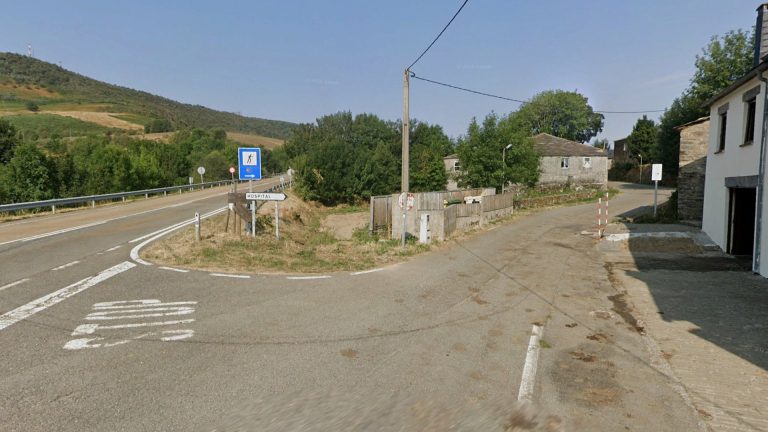
The village itself appears like a stone still life of white plaster and reddish limestone, defying the unpredictable winds of the gorges for countless centuries. It is a place that initially escapes the fleeting eye. The houses stand compact yet with a certain distance from each other, as if seeking protection from the elements while also needing space to breathe. When you cross the border, often marked here only by the rhythmic roar of the Nive, the frequency of your walking changes. The tension of the first kilometres, the uncertainty of what lies ahead, gives way to a deep, almost monastic concentration. You hear the distant, metallic ringing of bells from mountain pastures, a sound that carries far in the dense air and reminds you that you are in a land that has lived in the rhythm of nature for millennia.
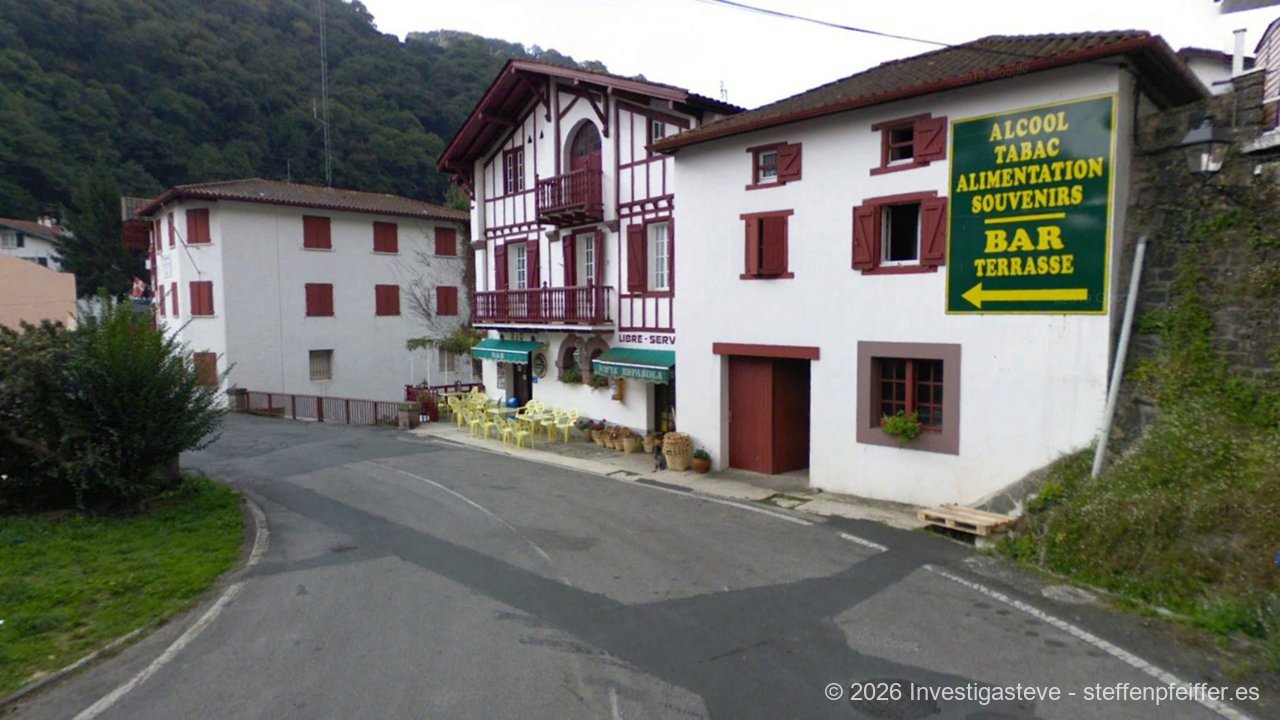
In Arnéguy, arriving becomes an act of deceleration. The visual composition of the place is a masterpiece of the Basque Country’s rural aesthetics. The white facades of the houses glow so intensely in the soft light of the sun that they almost blind, while the deep red or dark grey slate and tile roofs form a sharp contrast to the infinite green of the surroundings. You feel the tangible weight of history clinging to every crevice of the masonry. Here, French influence ends, and Navarrese identity begins to send its first harbingers. It is a moment of pause before the landscape prepares for the next great exertion. Arnéguy is not merely a stage destination; it is a zone of neutrality where time seems to possess a completely different consistency. It does not flow like the water of a mountain stream; it rather seeps through the tiny cracks of the ancient walls.
What This Place Tells
Arnéguy bears its name with pride; in Basque, it means something like “place on the mountain slope.” Indeed, the history of this place is inextricably linked to its location at the foot of the Pyrenean passes. As a classic border village, it was a strategic hub for hunters, smugglers, and of course, the Crown of Navarre for centuries. The historical causality is engraved in every stone here. The place was for long periods the scene of lively border trade, the so-called “Ventas.” These businesses are far more than just commercial establishments; they are the pulsating heart of a community that has learned to navigate between two nation-states while preserving its own indestructible identity. The knowledge that Charlemagne’s troops passed by here on their retreat from Spain lends the place a monumental depth. Every step across the bridge that separates France and Spain is a journey through time, where the boundaries between the 8th and 21st centuries blur.
Arnéguy’s identity is deeply rooted in the Basque heritage of Lower Navarre. Euskera, the Basque language, still echoes through the alleyways, reminding you that you are in a cultural space older than most of Europe’s borders. The old houses, often bearing the names of the families, testify to a social structure based on constancy and mutual protection. In the air lies the weight of history, mixed with the lightness of the river. While the Nive flows tirelessly northwards, Arnéguy remains a fixed point, a place of reliability. The historical metamorphosis of the place is also evident in its role during the Coalition Wars and the Carlist unrest, when it often served as the last bastion before the impassable mountain wilderness. When you run your hand over the rough surfaces of the old walls, you touch the layers of history that have made this place what it is today: a silent guardian of the passage.
The parish church of the Assumption of Mary deserves special attention. Although it appears simple compared to the monumental cathedrals of the Camino, it preserves at its core the spiritual energy of a place that received wanderers as early as the High Middle Ages. The simple austerity of the architecture testifies to a time when faith and the struggle for survival went hand in hand in this rugged mountain landscape. The portal of the church welcomes you with a seriousness that tolerates no distraction. It is a space of silence, where the dancing light through the narrow windows creates an atmosphere of security. Arnéguy tells us that true meaning often lies in inconspicuousness. The historical weight of the place is understood here not as a burden, but as a foundation upon which today’s hospitality rests. Every layer of stone, every crack in the masonry is a silent testimony to the metamorphosis this place has undergone over the centuries – from a strategic border halt to a spiritual haven for people from all over the world.
Addresses & tips in Arnéguy
Camino Distances
Arnéguy is the first milestone on the valley variant of the Camino Francés after starting in Saint-Jean-Pied-de-Port. The distances here mark the first real progress of your inner journey.
| Previous Place | Distance (km) | Next Place | Distance (km) |
|---|---|---|---|
| Saint-Jean-Pied-de-Port | approx. 7.5 km | Valcarlos | approx. 3.5 km |
Sleeping & Arriving
Arriving in Arnéguy after the first short stage is an experience of reduction. Those who stop here often consciously seek to turn away from the large, overcrowded hostels of the better-known starting places. In this border village, there are no dormitory fortresses, but mostly private initiatives or small guesthouses that breathe the spirit of genuine Basque hospitality. When you cross the threshold of one of these houses, you are often greeted by the smell of floor wax, old wood, and a hint of fireplace smoke, which seems to linger in the thick beams even in summer. The floorboards beneath your feet tell a story with every creak of generations who sought shelter here from the unpredictability of the mountains. It is a feeling of security that instantly envelops you and lets the first nervousness of the path fade away.
The emotional resonance of staying overnight in Arnéguy lies in intimacy. Here you are not a number on a list, but a guest who often sits with the residents at the same heavy oak table in the evening. The water from the tap is ice cold and clear, coming directly from the springs of the surrounding mountains and tasting fresh – a true drink of the gods for a dusty walker. The beds are often simple, but the blankets are heavy and convey a feeling of security, while outside the wind sweeps through the gorges. In the communal areas, languages blend into a harmonious hum, while the first blisters are treated and the first profound conversations about the meaning of the journey arise. It is the place where exhaustion is perceived not as a burden, but as a deserved state.
Staying in Arnéguy also means exposing yourself to the silence of the valley. When after sunset the few lights in the windows go out, it becomes so dark that the stars above the mountain ridges reach an intensity that is almost painfully beautiful. The village sinks into a calm broken only by the distant rushing of the Nive. For the walker, this is an important moment of integration: the impressions of the departure in France can settle here. The musculature finds rest in the absolute stillness of the surroundings. Whoever arrives in Arnéguy chooses the quality of encounter over the quantity of infrastructure. It is a place of grounding, before the path leads steeper up into the heart of Navarre the next morning. The cool water from the village fountains tastes sweeter here than anywhere else, for it is the water of the first triumph over the first kilometres.
Eating & Drinking
The gastronomy in Arnéguy is as honest and robust as the landscape itself. When you sit down at one of the heavy wooden tables in a local bar or Venta after the first day, the first thing you need is sustenance that warms heart and soul. Basque cuisine is famous for its freshness, and Arnéguy does not disappoint. An absolute must is the local “Gâteau Basque” – a crumbly cake filled with black cherry jam or fine cream. The scent of fresh butter and vanilla fills the small bakeries and cafés. The first bite is a revelation: the sweetness of the cherries harmonises perfectly with the buttery pastry. It is a taste that immediately makes you forget the day’s exertions and gives new energy.
In the Ventas along the road, you can enjoy the typical border menu. It often begins with a hearty vegetable soup or a salad with fresh goat cheese from the nearby mountains. The cheese smells of herbs and wild thyme; its taste is intense and lingers long on the palate. The main course is often hearty meat dishes like lamb stew or local ham specialities smoked over beech wood. The air in the dining rooms is saturated with the aroma of roast flavours and the heavy scent of the regional wine, gleaming deep dark in the glasses. Drinking here is equally a social event. A glass of local cider, sparkling with a tart fruity note, is often served and wonderfully invigorating.
In the convivial company of fellow travellers, while the Nive sings its eternal song outside, every bite tastes of the pure essence of life in the borderland. For dessert, you should definitely try the sheep’s cheese with quince paste, a combination that unites the tartness of the mountains with the sweetness of the gardens. Eating in Arnéguy is a culinary return to the essentials. You eat not just to become full, but to absorb the energy of the earth. The experience of the shared meal – breaking the bread with your hands, cutting the firm cheese – connects you directly with the tradition of the shepherds who have traversed this valley for millennia. It is a preparation for the coming weeks, a spiritual priming through the stomach.
Supplies & Logistics
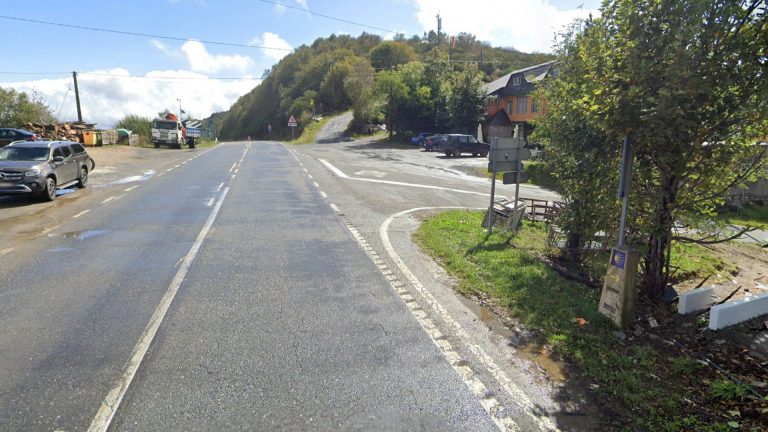
As a border crossing, Arnéguy is excellently equipped for the needs of travellers, making it an ideal strategic stop. Here you find everything essential for the continuation of your journey, embedded in the relaxed structure of a Basque mountain village. The logistics here are straightforward, as almost everything is concentrated along the main road cutting through the village.
Shopping: In the centre and especially in the Ventas on the Spanish side of the border, there are shops offering everything a heart desires. From foodstuffs to tobacco products to small equipment items. It smells here of tobacco, coffee, and the aroma of dried cod. Prices are often somewhat lower than inland, making Arnéguy a popular shopping place.
Gastronomy: Several bars and restaurants consistently offer hot meals and the classic pilgrim menu. The service is often bilingual and used to walkers, facilitating communication. The scent of freshly brewed coffee in the morning is the only signal that awakens the village from its slumber.
Accommodation: Capacity is limited but of high quality. Besides the small guesthouses, there are isolated Gîtes d’étape, particularly attractive for pilgrims. However, it is advisable to enquire early in high season.
Public Facilities: Arnéguy has a post office and a small information point. For more serious medical matters or banking, you must resort to nearby Valcarlos or the larger Saint-Jean-Pied-de-Port. The presence of these facilities gives you the assurance that here you are not only physically but also logistically well taken care of.
Logistics in Arnéguy are characterised by a warm directness. The people here are used to travellers but still treat them with genuine curiosity. Should you have a problem with your equipment or need specific information, you will often be met with a calm helpfulness. It is a functional harmony allowing you to fully concentrate on your regeneration without having to worry about the details of everyday life. It is the place where you check your supplies once more and fill your water bottles at the cool village fountain before finally leaving the border behind.
Don’t Miss
Arnéguy offers moments that engrave themselves deep in memory if you are willing to look beyond the mere roadside.
1. The bridge over the Nive d’Arnéguy: Stand for a moment right in the middle of the bridge. Below you, the water flows undisturbed by national borders. It is the place where you physically feel yourself leaving one country and entering another.
2. The Church of the Assumption of Mary: Step inside and enjoy the coolness and simple silence. The acoustics of the space amplify your own thoughts and create a space for inner reflection, far from the bustle of the Ventas.
3. The Ventas at dusk: Watch the lights come on in the shops and the busy activity gradually give way to the calm of the evening. It is a fascinating spectacle between commerce and village idyll.
4. A walk along the riverbank: Find a shallow spot on the bank of the Nive, feel the coolness of the water, and let the current wash the heat from your limbs. The smooth pebbles beneath your feet tell of the water’s power.
5. The view of the peaks of Ibañeta: Look south, where the mountains rise steeper. It is the view of your coming challenge, which here in Arnéguy still appears majestic and inviting.
Insider Tips and Hidden Places
Beyond the beaten paths, Arnéguy hides small corners that only the attentive observer discovers. One of these places is a narrow alley leading steeply down to the river behind the church. Here stand ancient houses whose facades are almost completely overgrown with wild vines. In the midday stillness, when most travellers have already moved on, you hear here only the buzzing of bees and the distant splashing of a small hidden fountain. It is a place of absolute retreat, where for a moment you can forget that you are part of a large mass phenomenon. Here you find untouched nature, offering a stark contrast to the valley’s industrial history.
Another hidden spot is the small path leading upstream along the right bank of the Nive. After just a few hundred metres, you leave the sounds of the village behind. Here the forest becomes denser, the air more humid, and the light breaks in a thousand nuances in the leaves of the alders. In some places, small coves have formed where the water is almost still. These are the spots where the inhabitants of Arnéguy seek peace in summer. Here you find untouched nature inviting you to linger. The smell of damp moss and freedom is so intense here that it almost numbs the senses. It is an ideal spot for a short meditation or simply to listen to your own breath.
Also look for the small niches in the walls of the outbuildings. Often you find tiny statues or dried bouquets there – signs of a popular piety still deeply rooted in these remote valleys. These small signs of faith are like secret messages to the attentive walker. When you wander through the narrow side alleys, where laundry flutters on the balconies in the wind and the scent of fresh wood fires rises from the chimneys, you discover the true, unvarnished face of Arnéguy. It is a place of small wonders waiting to be found by you. It is the discovery of slowness in a valley that has already seen it all.
In one of the old backyards, which you can see through an open wooden gate, stands an ancient wooden cart, slowly being overgrown with ivy. This silent still life tells more about the constancy of the people in the Basque Country than any history book. It is a tactile memory of the roots of this place, deeply anchored in the earth of Lower Navarre. Such discoveries make the stay in Arnéguy a multi-layered experience. You just have to be willing to lift your gaze from the map and let yourself be guided by the atmosphere of the place. Then the small border village becomes an unforgettable part of your own story.
Moment of Reflection
For many, Arnéguy marks the moment of the first real caesura. The euphoria of the start has faded, the physical reality of walking sits deep in the bones, and the first national border lies behind you. Here, on the banks of the Nive, an emotional metamorphosis takes place. You are no longer in the country of your arrival; you are entering a space that challenges you to shed your accustomed thought patterns. The rushing of the water acts like a catalytic sound, simply washing away the unnecessary thoughts of everyday life. It is a cleansing that goes deeper than just washing off the dust. In Arnéguy, you recognise that the path is not against nature or against your own body, but with them.
In the stillness of your accommodation, as you stare at the massive oak beams, you may realise that borders often exist only in our minds. The historical weight of this place, which has led millions of people before you to the same point, gives you a sense of belonging to something greater. Your exhaustion is ennobled here by tradition. This realisation can be frightening, but in Arnéguy it acts more like an anchor. You learn to understand silence not as emptiness to be filled, but as space for growth. The emotional state shifts from concern for the goal to appreciation of the moment. Arnéguy teaches you humility before the landscape and respect for your own resilience. It is the place where the mind begins to keep pace with the body.
Camino of the Stars
This place lies on the Camino Francés (Valcarlos variant), on the stage from Saint-Jean-Pied-de-Port to Valcarlos. The sequence of places is:
Saint-Jean-Pied-de-Port → Arnéguy → Valcarlos → Ibañeta Pass → Roncesvalles
Did you also feel that moment of peace in Arnéguy when you crossed the border? Was it the cool water of the Nive or the warm welcome in one of the Ventas that gave you new strength? Share your experiences in Arnéguy with us! Every story enriches the community of seekers. Perhaps you found your own hidden corner by the riverbank? Tell us about it and inspire others on their path through the silent borderland!
About the Author