A First Glance – Introduction & Atmosphere
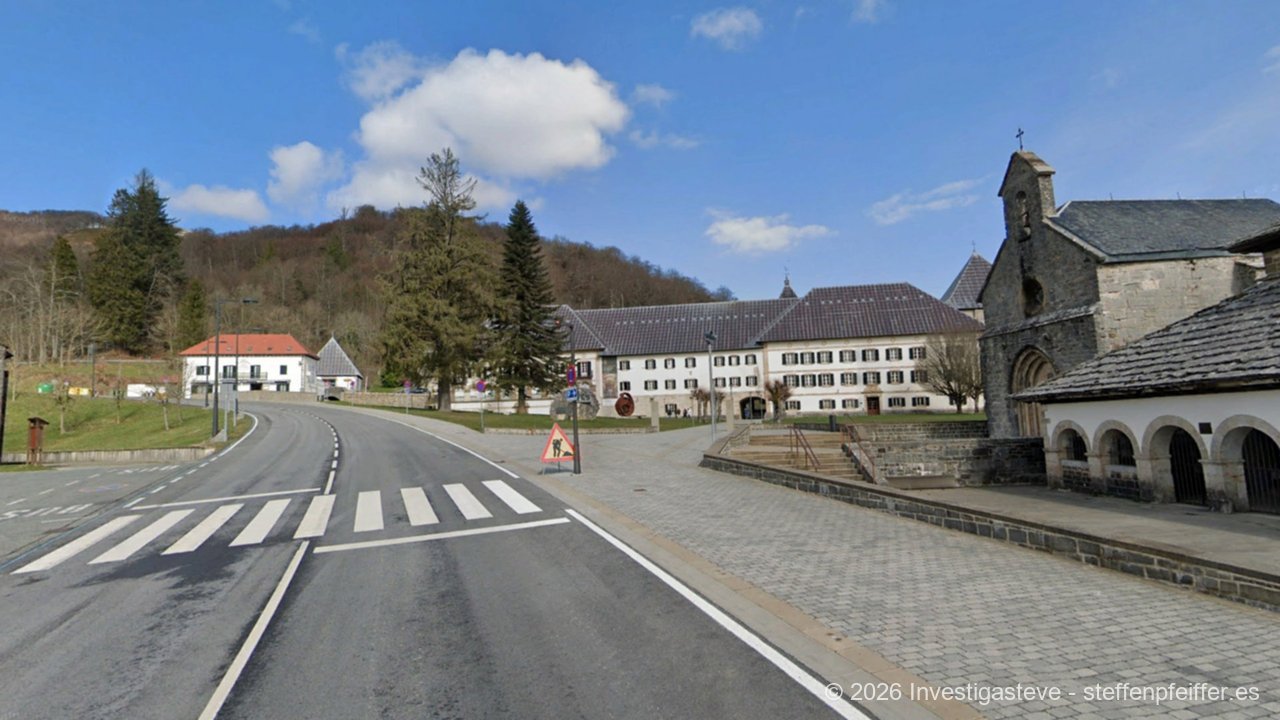
When you have conquered the last, steep descent from the Ibañeta Pass, where the wind often lashes the barren ridges with relentless cold, a depression opens before you that seems to have fallen from another time. Here, nestled deep in the dark green of the Navarrese beech forests, lies Roncesvalles – or Orreaga, as the locals call this mystical place in their resonant language. It is not a village in the conventional sense, but a monumental ensemble of grey stone, slate, and history. The first thing that greets you is the heavy, almost tangible silence, broken only by the distant, deep ringing of the bells of the collegiate church. The air here, at over 900 meters altitude, is of a purity that burns in the lungs and simultaneously clears the mind. It carries the scent of damp moss, ancient masonry, and the tart aroma of the nearby mountain meadows.
Arriving in Roncesvalles is a deeply emotional moment for every pilgrim. After the tremendous effort of crossing the Pyrenees, often spent hours in complete solitude, the sight of the mighty collegiate church of Santa María feels like a stone embrace. You feel the hard, uneven ground beneath your hiking boots as you head towards the central square. The massive limestone walls radiate a coolness that, even in high summer, recalls the harsh winters of this region. The light refracts in the narrow windows of the Gothic buildings, creating a play of shadows and silver that bathes the scene in an almost unreal, sacred atmosphere. Here ends the first, arguably hardest stage of the Camino Francés, and the relief is practically etched into the faces of those arriving.
As you pass through the archways, the acoustics change. The rushing of the wind in the treetops is muffled, and the echo of your own footsteps on the pavement comes to the fore. It is a place of concentration. Roncesvalles demands your respect, not through pomp, but through a simple, powerful presence. You feel the tangible weight of history clinging to every crevice of the masonry. There is no small talk, no distraction here. Everything is reduced to the essentials: shelter, reflection, and preparation for the long path that still lies ahead. Roncesvalles is the gateway to Spain, but above all, it is the gateway to your inner path, a place where time seems to stand still to give you space to breathe.
What This Place Tells
The stones of Roncesvalles whisper stories of heroic epics, bloody battles, and unwavering faith. The place is inextricably linked with the legendary battle of 778, when Charlemagne’s rearguard under the leadership of the brave Roland was annihilated by Basque tribes. The “Song of Roland,” the first great heroic epic of French literature, immortalized this place in European identity. When you stand before the chapel of Sancti Spiritus, the oldest building in the complex, you stand above the bones of those who fell in that fateful battle. The historical causality is tangible here: from the blood of the fallen and the suffering of the survivors grew a place of protection. In the 12th century, the Bishop of Pamplona founded a Hospital here to secure the steadily growing flow of pilgrims over the Pyrenees.
Architecturally, the collegiate church of Santa María is a jewel of French Gothic on Spanish soil. King Sancho VII, called “the Strong,” had it built in the 13th century, inspired by the great cathedrals north of the mountains. In the center of the choir rests the image of the Virgin of Roncesvalles, a wooden statue plated with silver, whose gaze appears so deep and compassionate that it has comforted millions of pilgrims over the centuries. In the chapter house chapel, you find the tomb of Sancho the Strong. It is an impressive sculpture reflecting the king’s immense size – it is said he was over 2.20 meters tall. The chains are also kept here, which the king is said to have broken with his own hands at the Battle of Las Navas de Tolosa in 1212, a central symbol in the coat of arms of Navarre.
Roncesvalles has undergone a remarkable metamorphosis: from a bloody battlefield to the most important spiritual center of the Pyrenees. The Augustinian canons, who have administered the place for centuries, have preserved a tradition of hospitality second to none. The Hospital was once so famous that it possessed properties throughout Europe to finance the care of pilgrims on this inhospitable mountain pass. The place also tells of the destruction by French troops during the Coalition Wars and the laborious reconstruction, which demonstrates the resilience of the Navarrese people. As you wander through the cloister, you feel the energy of all those who sought shelter here before you. Roncesvalles is not a museum; it is a living organism of pilgrimage, drawing its identity from the constant renewal of its ancient traditions.
Addresses & tips in Roncesvalles
Camino Distances
In Roncesvalles, the paths of those who have completed the arduous ascent from France and those beginning the descent into the basin of Pamplona cross. It is a point of absolute caesura.
| Previous Place | Distance (km) | Next Place | Distance (km) |
|---|---|---|---|
| Saint-Jean-Pied-de-Port | approx. 24.5 km | Burguete | approx. 3.0 km |
Sleeping & Arriving
Arriving in Roncesvalles marks the end of a physical boundary experience. As you approach the reception of the large pilgrim hostel, housed in the monumental building of the former Itzandegia Hospital, you feel a mixture of deep exhaustion and incredulous pride. The modern hostel is an architectural marvel inside ancient walls. Here, hundreds of pilgrims share a space, yet the atmosphere is characterized by an almost monastic order. You feel the coolness of the stone floor under your socks after leaving your heavy hiking boots at the entrance – a sensory liberation that is hard to put into words. It smells of disinfectant, fresh bed linen, and the metallic aroma of backpacks and gear.
The check-in procedure is a centuries-old ritual. The stamp in your pilgrim passport (Credencial) here is more than just ink on paper; it is the testament to your victory over the mountains. The hospitaleros, often volunteers from all over the world, receive you with a calm that immediately transfers to your overstimulated senses. In the washrooms, you hear the incessant rushing of warm water, a sound that becomes the sweetest melody for the pilgrim after the cold wind at the pass. You feel the warmth loosening your tense muscles and the day’s burden flowing off you. The tactile quality of the thin mattresses and the functional character of the bunk beds bother no one here, for the sleep in Roncesvalles is as deep and dreamless as in hardly any other place.
Away from the large hostel, there is the Hotel Roncesvalles and the Casa Sabina, offering a more private atmosphere. Here you sleep behind thick walls that completely absorb the sounds of the outside world. The rooms smell of old wood and the freshness of the mountain air filtering through the narrow windows. Arriving in Roncesvalles also means becoming part of a community of fate. In the common areas, you see pilgrims silently tending to their feet or processing the day’s experiences with a distant gaze out the window. It is a phase of inner consolidation. The tension of the Pyrenees must give way to make room for the endurance of the coming weeks.
A special moment of arrival is the participation in the daily pilgrim mass in the evening. When the clergy speak the blessing in various languages, the universal dimension of your journey becomes tangible. You sit on the hard wooden benches of the collegiate church, surrounded by the magnificent architecture, and hear the sacred chants echoing in the high vault. In this moment, it becomes clear: you made it. You are in Spain. You are on the Way. The psychological relief accompanying this ritual conclusion of the day is essential for spiritual regeneration. You leave the church into the cool night air of Roncesvalles and feel a new, quiet strength within you.
The night in Roncesvalles is of a darkness long forgotten in the brightly lit cities. When the lights in the hostel are extinguished, only the soft breathing of the many people and the distant rushing of the wind in the beech forests remain. It is a collective rest before the next step. Arriving here is not a goal, but a necessary caesura, a moment of purification and reflection. When you wake up in the first grey light the next morning, you feel reborn. Roncesvalles has taken you in, tested you, and deemed you worthy to continue the path.
Eating & Drinking
The food in Roncesvalles is as down-to-earth and robust as the harsh climate of the Pyrenees demands. Pilgrim gastronomy focuses on the few establishments on site, such as the Restaurant La Posada or the Casa Sabina. When you sit down at one of the long wooden tables in the evening, the first thing you need is a warm fortification. The classic pilgrim menu often begins with a “Sopa de Ajo,” a garlic soup bound with bread and egg. It smells intensely of olive oil, pimentón, and garlic – an aroma that immediately awakens the spirits and dispels inner cold. The taste is salty, earthy, and immensely nourishing.
The main course here often features trout Navarrese style, stuffed with a slice of spicy ham, or hearty meat dishes like lamb stew or veal steaks from the cattle seen grazing on the mountain pastures during the day. The meat is of a quality you can taste: firm, flavourful, and honest. It is usually accompanied by simple potatoes and a small portion of vegetables. The wine from the nearby Navarre region is served in heavy glass carafes. It is deep red, full-bodied, and carries the warmth of the Spanish sun you have missed on the other side of the mountains. The first sip settles like a protective film over your senses and lets the exertions of the Pyrenees fade.
For dessert, there is often a regional cheese with quince paste (Membrillo) or a simple yogurt. The food in Roncesvalles needs no culinary frills; it is about energy and community. You hear the clatter of cutlery on the simple dishes and the murmur of voices in a dozen languages. It is a loud, joyful celebration of the survivors. The smell of fried meat and freshly baked bread blends with the scent of red wine to form an olfactory signature you will forever associate with this first evening in Spain. Eating in Roncesvalles means absorbing the strength of the Navarrese earth to be prepared for the coming kilometers.
In the early morning hours, the bars offer a quick breakfast. A strong Café con Leche, whose heat you feel through the thick porcelain cups, and a piece of toasted bread with olive oil or a sweet croissant. Drinking the hot coffee while the morning mist still hangs in the trees outside is the fuel for departure. There is no great selection, but everything served is of solid quality. The tart taste of the coffee banishes the last drowsiness and mentally prepares you for the descent towards Pamplona. Eating and drinking in Roncesvalles is a functional act made unforgettable by the shared experience of fellow pilgrims.
Supplies & Logistics
Logistics in Roncesvalles are reduced to the essentials, as the place consists almost exclusively of the ecclesiastical complex. Nevertheless, you find everything crucial for the continuation of your journey here. The structure is clear and efficient, tailored to the needs of the thousands of pilgrims who make their first stop here annually.
Shopping: There is a small shop within the building complex that carries basic items like water, snacks, and some pilgrim accessories. It smells of new nylon and hiking maps. For larger purchases, Roncesvalles is not suitable; you should have stocked up in Saint-Jean-Pied-de-Port or wait for nearby Burguete.
Gastronomy: Catering is provided by the two main restaurants (La Posada and Casa Sabina), which specialize in pilgrim menus. It is advisable to get a voucher for dinner upon arrival at the hostel, as places are allocated at fixed times.
Accommodation: The main capacity is offered by the modern hostel of the collegiate church. Additionally, there is the Hotel Roncesvalles and the guesthouse Casa Sabina for those seeking higher comfort or tranquility.
Public Facilities: A central point is the pilgrim information office, where you receive your first official Spanish stamp and information about the path conditions ahead. There are also public toilets and a fountain with excellent drinking water in the square.
The logistical challenge in Roncesvalles lies in the concentration of many people in a confined space at certain times. You quickly learn the virtue of patience here. Should you need medical assistance, the hostel staff are trained to provide first aid for blisters or muscular problems; for more serious cases, however, you must resort to the larger village of Burguete or Pamplona. Roncesvalles acts like a well-oiled filter: here, equipment is checked once more, supplies are replenished, and the logistics of the coming days are planned. It is a functional island of reliability at the end of a wild mountain passage.
Don’t Miss
There are places in Roncesvalles with such a deep aura that a fleeting glance is not enough.
1. The chapel of Sancti Spiritus (Silu de Charlemagne): A mystical site built over a charnel house from the 12th century. Here, you feel the connection between death, heroism, and sacred protection most intensely.
2. The collegiate church of Santa María: Admire the Gothic vault and the statue of the Virgin. Take time to study the details of the stained-glass windows as the evening light falls through them.
3. The chapel of Saint Augustine: Here lies the tomb of Sancho the Strong. The chains from the Battle of Las Navas de Tolosa are a tangible piece of Navarrese history that must be seen.
4. The museum of Roncesvalles: A small but fine treasure, featuring the famous “Chessboard of Charlemagne,” a reliquary of inestimable value, and many other sacred artworks.
5. The cloister: A place of absolute tranquility. Walk slowly through the stone arches and feel the cool air and meditative silence that has reigned here for centuries.
Insider Tips and Hidden Places
Beyond the great streams of pilgrims, Roncesvalles hides small corners that only reveal their magic on a second look. One of these places is the small path leading into the forest behind the collegiate church. After just a few minutes, you leave the bustling activity of the hostel behind and stand among ancient beeches, whose bark feels like cool, smooth skin. Here, where light falls only sparsely through the dense canopy, you hear the true heart of the Pyrenees beating. The ground is covered with a thick carpet of ferns and moss that cushions every step. It is a place where you can almost tangibly sense the presence of ancient myths – such as those of the Basque Lamia or Basajaun.
Another hidden treasure is the small chapel of San Salvador in Ibañeta, about 1.5 kilometers above Roncesvalles. Most pilgrims leave it to the left during the descent, yet a visit at dusk is unforgettable. The monument to Roland also stands there. When the mist descends from the pass and the chapel appears like a lonely island in the white sea, you understand the existential dimension of this place. You hear the echo of the legendary battle and feel the loneliness of those who kept watch here for centuries. It smells there of wet stone and freedom. It is the perfect place to internally conclude the adventure of the Pyrenees before fully immersing yourself in the Spanish interior.
Also look for the old cemetery of the Augustinian canons. It is simple, almost inconspicuous, but the atmosphere there is marked by a deep, peaceful melancholy. The simple crosses tell of a life in the service of the Way and the pilgrims. Here you realize that Roncesvalles is not just a stage destination, but a life’s work for those who preserve this place. When you sit on one of the old stone walls and watch the shadows of the beeches wander over the graves, you find a peace that touches you deep inside.
Near the Urrobi River, which flows softly gurgling past the edge of the complex, there are spots where you can touch the water. It is ice cold and clear, a testament to the purity of the mountains. Washing your hands in this water is a small, private ritual of purification. The tactile coolness of the water dispels the last heat of the hike and connects you with the elemental power of nature. Such undiscovered corners make Roncesvalles a multi-layered experience that goes far beyond the sacred architecture. It is the quiet tones that echo the longest here.
Moment of Reflection
Roncesvalles is the place where the pilgrim undergoes their first great shedding. The path over the Pyrenees has challenged you, perhaps even pushed you to your limits. In the silence of the collegiate church or while gazing at the tomb of Sancho the Strong, a fundamental question arises: Who is the person who left France yesterday, and who is the person who has arrived here in Spain today? The spiritual metamorphosis is almost physically tangible here. The mountains have ground away the trivialities of everyday life, and what remains is a new, raw clarity. You recognize that you are capable of overcoming obstacles of which you previously had only a vague idea.
The historical weight of Roncesvalles gives your personal path a new meaning. You are not alone; you are part of an endless procession of seekers, heroes, and sinners. Reflection at this place often leads to deep humility. You understand that the path does not dominate you, but shapes you. In the exhaustion of your limbs and the stillness of your mind, you find a harmony you have often sought in vain in the noise of the world. Roncesvalles teaches you that every great path begins with a great effort, and that the protection you find here is the basis for your onward journey. You learn to endure silence and understand it as a gift. When you shoulder your backpack the next morning, you do so with a different posture – more upright, more conscious, and ready for the transformation the Camino still holds for you.
Camino of the Stars
This place lies on the Camino Francés, at the end of the first stage and the beginning of the second. The sequence of places (via the Napoleon route) is:
Saint-Jean-Pied-de-Port → Honto → Orisson → Auberge Borda → Roncesvalles → Burguete → Espinal → Bizkarreta → Lintzoain → Zubiri
Did you also experience that goosebump moment in the collegiate church of Roncesvalles when the pilgrim’s blessing was spoken? Or was it the silence of the beech forest that brought you back to yourself after the hardships of the mountains? Share your experiences in Roncesvalles with us! Every story is a small stone in the great mosaic of the Way of St. James. We look forward to your personal impressions and insider tips from this magical gateway to Spain!
About the Author