A First Glance – Introduction & Atmosphere
When the pilgrim traverses the wide, often merciless plain of the Tierra de Campos, that notorious “granary of Spain,” which in summer undulates like liquid gold and in winter freezes in an ascetic, brown-gray severity, then Carrión de los Condes does not announce itself through a monumental skyline. It is a slow approach. First, you notice the change in the air: it becomes cooler, more humid, almost velvety, as soon as the rows of poplars along the Río Carrión come into view. The steady crunch of gravel on the “Senda” gives way to the soft rustling of leaves and the distant, soothing gurgle of water. When you cross the medieval bridge over the river, you feel the tactile weight of the centuries-old stones under your soles. It is a moment of physical redemption – the transition from the infinite horizontality of the Meseta into the vertical security of a city that lies like a stone anchor in history.
In Carrión, you are greeted by an olfactory panorama deeply rooted in rural Castile. It smells of damp limestone, of the tart aroma of incense seeping from the numerous monastery doors, and of the sweet heaviness of almonds and sugar wafting from the convent kitchens of the Poor Clares. Acoustically, the city is a symphony of pause: the deep, sonorous beating of the bells of Santa María mingles with the distant laughter in the bars under the arcades and the soft murmuring of pilgrims brushing the dust of the stage from their clothes. Psychologically, Carrión marks a caesura. You have conquered the first half of the Meseta and now stand before the notorious, 17-kilometer, shade-free stage to Calzadilla de la Cueza. Carrión is the vestibule to solitude, a place of final spiritual and physical armament, where the emotional metamorphosis from walker to arrival and back to seeker reaches its peak.
What This Place Tells
The history of Carrión de los Condes is a narrative of power, betrayal, and deep piety. The name itself – “City of the Counts” – points to a time when Carrión was one of the most important centers of medieval Spain. The historical causality of the city is closely linked to the rise of the Beni-Gómez count family, whose ambitions often collided with the interests of the Crown of Castile. Yet far beyond realpolitik, Carrión is inextricably linked to the literary mythology of the “Cantar de mio Cid.” Here, so the epic tells, the infamous Infantes of Carrión married the Cid’s daughters, only to later mistreat and rob them in the forest of Corpes. When you walk through the narrow alleys, you imagine hearing the echo of this ancient betrayal still in the dark corners of the adobe walls. It is a psychological layering of history that shows how legend and reality have merged into an indissoluble fabric.
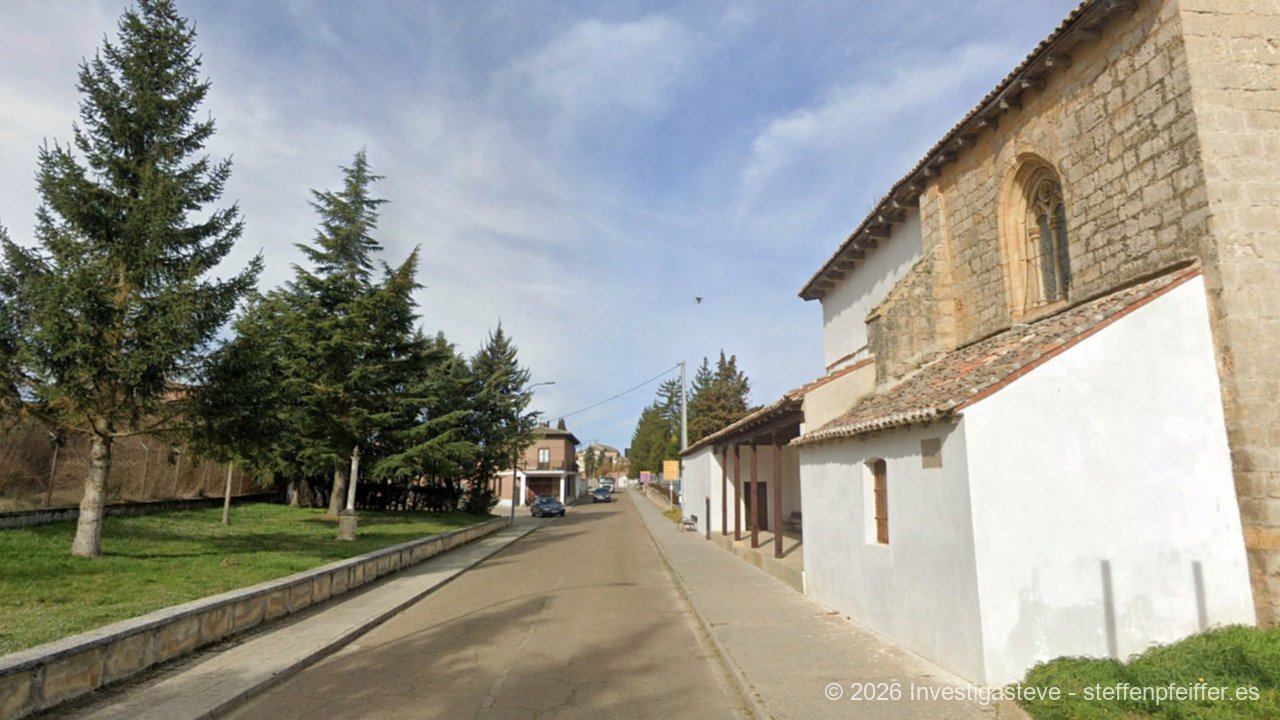
Architecturally, Carrión is an open-air museum of the Romanesque spirit. The monastery of San Zoilo, located on the western bank of the river, once functioned as the pantheon of the counts and as a power center of the Cluniac order. Those who enter the cloister experience a tactile sensation: the filigree stonework of the Plateresque style is so fine that it feels almost like petrified lace under the fingertips. Every capital, every figure tells of a worldview in which the order of God was carved into the stone. The church of Santiago, in turn, presents one of the most spectacular portals on the entire Camino. The depiction of the Pantocrator, surrounded by the 22 craftsmen and musicians of the city, is a five-dimensional immersion into medieval everyday life. You see not only sacred scenes; you see the hard hands of the blacksmiths and the concentrated expressions of the harpists. It is the visual confirmation that the Camino was always a path of people and their work.
Carrión also tells of the symbiosis between Judaism and Christianity. The former Jewish quarter, the Judería, was an economic engine of the region before the expulsion in 1492 left deep wounds. The historical causality becomes painfully clear here: the loss of this community permanently changed the city’s DNA. Nevertheless, the city remained a spiritual lighthouse. The presence of the Poor Clares and the Benedictine nuns created an atmosphere of continuous devotion that is still palpable today. When you stand before the church of Santa María del Camino, whose façade tells the legend of the “Tribute of the 100 Maidens,” you grasp the depth of religious resistance and pride in this region. Carrión is not a museum of a dead past; it is a living archive whose parchment pages are made of stone and whose ink is the blood, wine, and sweat of generations of pilgrims.
Addresses & tips in Carrión de los Condes
Camino Distances
Carrión de los Condes lies strategically as a hub at the transition to the treeless high plateau. The distances reflect the vastness of the Palencian hill country.
| Previous Place | Distance (km) | Next Place | Distance (km) |
|---|---|---|---|
| Villalcázar de Sirga | approx. 6.0 km | Calzadilla de la Cueza | approx. 17.2 km |
Sleeping & Arriving
Arriving in Carrión de los Condes is an act of conscious deceleration after the often wind-swept kilometers from Frómista or Villalcázar. When you leave the last meters of the dusty Senda behind and pass the city limits, the tactile quality of the journey changes. The soft ground of the riverside promenade soothes the swollen feet. Accommodation in Carrión offers a spectrum ranging from monastic asceticism to historical splendor. Those who stay at the Hotel Real Monasterio de San Zoilo immerse themselves in a world of thick monastery walls, cool tiled floors, and a silence so dense it seems almost viscous. The smell of old parchment and polish mingles here with the fresh breeze of the river – an olfactory signature that promises immediate psychological regeneration.
A contrasting but equally profound experience is offered by the hostel of the Augustinian nuns (Santa María) or the Albergue Parroquial. Here, the acoustics of the evening are characterized by communal singing. It is a tactile experience of a special kind when you stand in a circle and hold the hands of fellow pilgrims while the nuns raise their bright, clear voices. The psychological effect of these communal celebrations is enormous; they break down the barriers of speechlessness that often arise after the lonely hours on the Meseta. You feel the heart of the Camino beating, not in the monuments, but in the moment when you say your name and receive a smile in return. The dormitories in the old buildings have their own thermal inertia – they store the coolness of the day and protect the pilgrim’s sleep from the nighttime restlessness of the city.
The ritual of arrival in Carrión inevitably includes washing clothes in the river or in the deep stone basins of the hostels. The tactile feeling of cold water on your hands and the rough linen of the clothing is a form of ritual purification. Many pilgrims use the afternoon to sit in the monastery gardens. The visual appeal of blooming roses against the gray stone walls creates an atmosphere of harmony essential for the emotional metamorphosis. You mentally prepare for the coming 17 kilometers, which will be completely without settlement. This knowledge hangs like an invisible veil over the evening in Carrión – you enjoy the abundance of the city even more intensely, as you already sense the emptiness of the next day’s path.
The night in Carrión is of a solemn weight. When the light of the street lamps bathes the arcades of the Plaza Mayor in a yellowish glow, the stone columns look like guardians of a bygone era. You hear the distant clinking of glasses from the bodegas and the soft murmuring of pilgrims sorting their gear for the next morning. It is a time of deep introspection. Within the thick walls of the hostels, you feel safe and secure, like in a fortress of hospitality. The rustling of sleeping bags and the steady breathing of fellow pilgrims form the acoustic backdrop for dreams that in Carrión often feature kings, counts, and the endless fields of Castile.
Eating & Drinking
The gastronomy in Carrión de los Condes is an honest homage to the yields of the Tierra de Campos and the river. Here, the “cuisine of substance” reigns, designed to supply the pilgrim’s body with the energy needed for the Meseta. The first olfactory impression upon entering the local mesones is often dominated by garlic, olive oil, and the smoky aroma of chorizo. An absolute must is the “Sopa de Ajo” (garlic soup), often served here particularly creamy. When you bring the first spoonful of this hot, spicy liquid to your mouth, you feel the cold of the often drafty stages leaving your limbs. It is a tactile feast of warmth and spice that instantly focuses the senses.
A specialty reflecting the city’s historical causality is the sweets from the convents. Particularly the almond cookies of the Poor Clares (Amarguillos) are legendary. When you buy these little delicacies through the revolving hatch (Torno) of the convent wall, it is an almost sacred experience. You do not see the nun, you only hear her voice and feel the cool texture of the wood as you turn the hatch. The taste of the almonds, finely balanced with a hint of lemon and sugar, is a reward for every kilometer. These sweets are not just food; they are psychological anchors of comfort, bearing witness to a centuries-old tradition of care.
In the city’s bodegas, the wine of the province of Palencia is served, often a robust red from the Arlanza or Cigales region. Its deep red color recalls the blood of the martyrs of whom the city’s stories tell, and its earthy finish directly connects the palate to the marl soil of the surroundings. Acoustically, meals in Carrión are often accompanied by the lively conversations of the locals, whose rough but warm dialect fills the room. It is a five-dimensional immersion into the Castilian way of life. Those who eat in Carrión taste the sun, the wind, and the deep religious seriousness of a region that never understands pleasure without the memory of the path’s hardship.
Supplies & Logistics
Carrión de los Condes functions as the logistical heart for the entire middle section of the province of Palencia. Since the notorious 17-kilometer “dry stretch” without water or shade begins behind the city, supply here is not just comfort but a survival strategy. The city offers infrastructure that is compact and highly functional.
Shopping: There are several well-stocked supermarkets and specialty stores directly on the pilgrim route. Particularly important: supplies for the shade-free stage to Calzadilla de la Cueza should be replenished here (at least 2 liters of water per person!).
Gastronomy: The density of bars and restaurants is high; many offer a hearty pilgrim breakfast from 6:00 AM onwards to enable the early start into the Meseta.
Accommodation: From church hostels with over 100 beds to private hostals and the luxurious Hotel San Zoilo, every category is represented. In high season, booking private rooms is advisable.
Public Facilities: A modern Centro de Salud (health center), several pharmacies, and post offices are available. ATMs are also plentiful along the Calle Mayor.
The psychological security that Carrión offers is an enormous relief for many pilgrims. After days in smaller hamlets, you enjoy the certainty of being able to receive any form of technical or medical help. Acoustically, the cityscape is underscored by the clattering of storks on the towers and the regular ringing of church bells, lending the logistical bustle an almost meditative rhythm. Supply in Carrión is an inheritance of medieval hospitality, translated into the necessities of the 21st century. Those who leave the city usually do so with a heavy backpack but a light heart, knowing they are well equipped for the coming trials of the plain.
Don’t Miss
1. Church of Santiago – Pantocrator Portal: The absolute highlight. Observe the 22 craftsmen on the archivolts. The tactile quality of the stone masonry is unsurpassed here; you feel as if you can almost hear the instruments of the musicians.
2. Monastery of San Zoilo: A must for architecture fans. The cloister is a masterpiece of the Plateresque style. Take time to study the details of the capitals – it is a five-dimensional journey into the symbolic world of the 16th century.
3. Church of Santa María del Camino: Known for the legend of the Tribute of the 100 Maidens. The portal shows four wild bulls – a visual symbol of strength and divine intervention.
4. Riverside Promenade of the Río Carrión: Walk to the river at sunset. The tactile experience of the cool breeze and the visual play of light on the water are the best preparation for the dry Meseta.
5. Singing of the Augustinian Nuns: Attend Vespers at the Santa María convent. The clear voices of the sisters offer an acoustic immersion that penetrates deep into the soul and grants psychological peace.
6. Plaza Mayor: Sit under the arcades. Life pulsed here 500 years ago as well. Observe the bustle – it is the best place to experience the emotional metamorphosis of city dwellers and pilgrims.
Insider Tips & Hidden Places
Beyond the great monastery walls, Carrión de los Condes conceals small refuges of stillness that only those who shed their haste will find. One such place is the small park “La Calzada” directly on the riverbank, somewhat off the main route. Here, where the old willows let their branches hang down into the water, the ground is soft and mossy – a tactile blessing for battered feet. You hear only the soft gurgling of the water and the distant rushing of the weirs. It smells of damp earth and river mint. It is a psychological refuge, ideal for a meditation before the next day’s great stage. Here, the historical causality of the city’s founding on the river becomes physically tangible; water was and is the source of all life in this dry region.
Another insider tip is the small Ermita de la Piedad. While the large churches are often crowded with pilgrim groups, you often find absolute solitude here. The cool air inside exudes the smell of beeswax and old stone. Those who place their hand on the smooth wooden benches feel the friction of centuries of devotion. It is a place of acoustic isolation, where you hear your own heartbeat. This stillness is not emptiness, but a space filled with history, inviting total introspection. You find small votive offerings from locals there, telling of Carrión’s unshakeable popular piety.
Those who keep their eyes open will find small, hidden bakeries in the side streets of the Judería that are not listed in the major guides. There you find the “Toscanas,” a pastry made of flour, honey, and nuts so nutritious that it serves as a real energy booster for the Meseta. The tactile experience of holding a still-warm pastry, wrapped in paper straight from the oven, in your hands is pure happiness. The scent of roasted nuts and caramelized sugar is an olfactory highlight that sweetens the farewell to Carrión. These small pleasures are what complete the pilgrim’s emotional metamorphosis – you learn to accept the small gifts of the path again with childlike joy.
Finally, a nighttime walk to the medieval bridge is worthwhile when the day’s heat has faded. The visual experience of the city lights reflected in the river and the acoustic rushing of the water create an almost mystical atmosphere. You feel the historical causality of the bridge as the bottleneck of the Camino. Here, pilgrims from all over the world met, stories were exchanged, and alliances were forged. The tactile feeling of the cold stone railing under your hands and the gaze into the dark water directly connect the modern walker with the souls of all those who stood at this very spot 500 or 800 years ago. It is a moment of transcendent connection that places your own journey in a cosmic context.
Moment of Reflection
Carrión de los Condes is the place of the great stocktaking. In the psychological structure of the Camino Francés, the city functions as a mirror. Here, you reflect on the legends of the counts, on betrayal and forgiveness, and often recognize your own inner struggles in the process. The tactile presence of the Romanesque portal figures, patiently gazing upon the passersby every day, challenges an emotional metamorphosis: Am I only a spectator of history, or am I writing my own right now? The city teaches us that greatness lies not only in power (as with the counts) but in constancy and the ability to welcome others.
In the stillness of Carrión’s monasteries, while listening to the chants and smelling the incense, a deep clarity often sets in. You prepare for the “desert” of the next stage. This preparation is not only physical (water, bread) but above all spiritual. You learn in Carrión to deeply absorb the abundance of community once more, in order to draw from this inner reserve in the coming solitude. The historical causality of the city as a protection zone becomes a personal experience: you feel equipped. Those who leave Carrión do so with a new seriousness in their step, carried by the strength of the stones and the gentleness of the songs, ready for the infinite horizontality waiting beyond the horizon.
Camino of the Stars
This place lies on the Camino Francés, on the stage from Carrión de los Condes to Sahagún. The sequence of places is:
Carrión de los Condes → Calzadilla de la Cueza → Lédigos → Terradillos de los Templarios → Moratinos → San Nicolás del Real Camino → Sahagún
Did you feel the whispering history of the counts in the cloisters of San Zoilo, or did you find your inner center during the singing of the sisters in Santa María? Share your experiences in Carrión de los Condes with us! Perhaps you took a photo of the Pantocrator portal or discovered a very special insider tip in the Judería? We look forward to your story, which makes this stone anchor point on the Camino even more alive for all pilgrims!
About the Author