A First Glance – Introduction & Atmosphere
When the pilgrim leaves behind the proud walls of Frómista, that place which with its perfect Romanesque architecture acts almost like a stone manifesto, he steps out into a landscape that immediately challenges the mind. It is the Tierra de Campos, the “land of fields,” an seemingly endless, gently rolling high plateau where the horizon appears not as a boundary but as a promise. In the midst of this immense vastness, only a few kilometers to the west, Población de Campos emerges from the shimmering haze of the Meseta. It is a place that does not impose itself on the walker, but receives him with a silent, almost stoic serenity. The first contact is often tactile: the fine, calcareous dust of the path, which settles like a second skin on the heated calves, mingles with the dry, warm breeze sweeping over the endless grain fields.
The atmosphere in Población de Campos is characterized by an archaic stillness that becomes almost physically tangible. You hear the rhythmic, wooden clattering of the storks on the massive roofs, a sound that seems like an echo from a time when clocks here still ticked according to the position of the sun and not the pace of the big city. It smells of dry straw, of the spicy sweetness of drying wheat, and occasionally of the cool, damp breath of the Río Ucieza, which flanks the village like a lifeline. Psychologically, reaching this place marks a turning point: you leave the monumental splendor of Frómista behind and dive deeper into the meditative solitude of Castile. It is a place of transition, where the visual overstimulation of the great buildings gives way to an intense, inner contemplation, while the light of the Meseta bathes the ochre-colored adobe façades in a glowing amber.
What This Place Tells
The history of Población de Campos is a narrative of settlers, knights, and the inexorable causality of geography. The name itself, derived from the Latin “Populatio,” speaks of a targeted repopulation during the Reconquista, when the Christian kings sought to cultivate the desolate no-man’s-land between the Duero and the Cantabrian Mountains. Yet the roots go deeper: archaeological finds in the Loncejares area point to Roman villas and possibly even to settlements of the Vaccaei, those Celtiberian natives who already considered this plain their home two millennia ago. Those who walk today along the Calle Mayor literally walk on the layers of centuries, where ancient logistics intersect with medieval piety.
Particularly formative for the historical memory of the place is the presence of the Order of St. John (Sovereign Military Order of Malta). Población was once the seat of a significant encomienda, a knightly commandery that ensured the protection of pilgrims and the administration of the lands. This historical causality explains the unusual density of sacred buildings for a village of this size. You feel the spirit of knightly hospitality in the massive walls of the church of San Pedro, whose imposing tower rises like a guardian over the Ucieza valley. The Knights of the Order of St. John were not only landlords here but guarantors of security in a landscape that was as dangerous as it was beautiful in the Middle Ages. The psychological weight of this history – the constant struggle against the adversities of nature and the threats of the road – has shaped the character of the village: resilient, hospitable, and deeply rooted in the soil.
Architecturally, Población tells of the mastery of adobe construction, that combination of clay, water, and straw that makes the Tierra de Campos so unique. These houses breathe; they store the coolness of the night for the murderous summer days and preserve warmth in the biting cold of the Castilian winter. When you touch the rough texture of an old wall, you feel the stalks of grain mixed into the clay generations ago – a tactile connection to the soil that shows the pilgrim the transience and at the same time the constancy of human endeavor. Every cracked door and every weathered coat-of-arms stone on the façades of the stately houses is a chapter in a book that tells how a simple “Populatio” became a bastion of pilgrim care.
Addresses & tips in Población de Campos
Camino Distances
Población de Campos lies in the heart of the Palencian Meseta and offers the pilgrim a strategic decision point for the further course of the stage to Carrión.
| Previous Place | Distance (km) | Next Place | Distance (km) |
|---|---|---|---|
| Frómista | approx. 3.4 km | Revenga de Campos | approx. 3.4 km |
| Frómista | approx. 3.4 km | Villovieco (variant) | approx. 4.0 km |
Sleeping & Arriving
Arriving in Población de Campos is an act of physical and mental relief. After the first kilometers of the day from Frómista, often characterized by a high pace, the village offers an opportunity for the first true deceleration. The tactile experience begins at the threshold of the hostels, such as the well-known Albergue La Finca or the municipal accommodation. When you take off your backpack and loosen your hiking boots for the first time, you feel the vibration of relief in the soles of your feet. The smell in the accommodations is a mix of fresh linen, the tart aroma of hiking boots, and that cool earthiness that only thick adobe walls exude. It is a scent of security that immediately puts the pilgrim in a state of regeneration.
The psychological effect of arriving in a place with about 180 inhabitants is profound. Here, you are not an anonymous number in the pilgrim stream, but are often received with a direct, earthy warmth. Acoustically, the afternoon is dominated by the distant barking of a dog and the rustling of the poplars on the Río Ucieza. An atmosphere of community arises, in which the experiences of the last kilometers are shared. Many pilgrims use the gardens of the hostels to put their feet up and let their gaze wander into the wide sky of Palencia, which possesses a depth and clarity here that seems almost transcendent. This visual experience of infinity helps to put one’s own worries and physical pains into a new, larger perspective.
Staying overnight in Población also means surrendering to the rhythm of the village. The tactile perception of the often cool stone floors in the communal areas forms a pleasant contrast to the burning heat of the Meseta outside. You feel the historical causality of hospitality: for centuries, people have sought refuge here, nourished by the yields of the surrounding fields. This continuity lends the stay a special weight and dignity. When you lie in the cool sheets at night and hear only the occasional clattering of the storks, you experience an emotional metamorphosis. The pilgrim becomes part of history, a link in an infinite chain of walkers who all sought protection from the vastness of the Tierra de Campos at this point.
Particularly noteworthy is the tranquility that settles over the place after sunset. The visual panorama transforms; the ochre-colored houses merge with the darkness, while above the village a canopy of stars lights up with a brilliance that is almost intimidating. It is the “Camino de Estrellas,” which seems tangibly close up here. The psychological effect of this cosmic dimension often leads to a deep inner peace, a preparation for the coming stages that will lead through even more solitary regions. Those who wake in Población de Campos do so with a mental clarity that can only grow from the deep silence of the Meseta. It is an awakening in a world that still seems in order, strengthened by the honest hospitality of a place that has done nothing else for centuries than accompany people on their path.
Eating & Drinking
The gastronomic landscape of Población de Campos is an honest homage to the products of the Castilian earth. Here, the cuisine of substance reigns, designed to fill the exhausted body with new energy. The first olfactory impression upon entering one of the local bars or inns is often dominated by garlic, olive oil, and the smoky aroma of smoked paprika. An absolute must is the Sopa de Ajo, the traditional garlic soup, often served here with a particular creaminess. When you bring the first spoonful of this hot, spicy soup to your mouth, you feel the warmth penetrating to your limbs – a tactile feast of satiety that warms the soul.
An indispensable part of every meal is the local bread, which in the Tierra de Campos possesses a quality you would search for in vain in big cities. It has a crust that cracks loudly under your fingers and a crumb so dense and fragrant that it almost passes as a dish in its own right. The hosts often serve a robust red wine from the region with it, whose deep, ruby red color looks like liquid velvet in the light of the evening sun. Its taste carries the full force and dryness of the Castilian sun – mineral, tart, and with a long finish. Drinking this wine from simple glasses, surrounded by fellow pilgrims, is a social act of fraternization, underscored by the lively acoustics of clinking glasses and laughter about the day’s anecdotes.
For the big hunger, the restaurants often offer “Lechazo” (suckling lamb) or stews with chickpeas and chorizo. The texture of the meat, which almost falls off the bone without resistance, is a culinary poem. You taste the historical causality of nutrition: in this region, food was always a source of strength for the hard work in the fields. This psychological level of eating – the knowledge that you are consuming real, honest food – contributes significantly to well-being. Those who dine in Población de Campos experience an emotional metamorphosis; you learn to understand simplicity again as luxury. For dessert, you must not miss the simple but delicious pastries, often crumbly almond cookies that dissolve in the mouth and leave a fine sweetness. It is a rounded conclusion to a day full of hardships and small wonders.
Supplies & Logistics
Although Población de Campos is a small place, logistics here function with a pragmatic efficiency that pleasantly surprises the pilgrim. The village is compact enough to reach everything necessary within a few minutes, yet offers the tranquility of a remote hamlet.
Shopping: There is a small village shop covering basic needs. Here you find fresh fruit, water, and typical pilgrim supplies. The selection is limited, but the quality of local products like cheese or honey is often excellent.
Gastronomy: The bars in the village are the social hubs. They offer pilgrim menus, bocadillos, and small tapas throughout the day. Especially at lunchtime, there is a lively bustle here when the day’s pilgrims take their first rest.
Accommodation: Capacities range from the simple municipal hostel to private hostels like “La Finca,” which often have spacious outdoor areas. In high season, early arrival or reservation is advisable.
Public Facilities: A public fountain with drinking water is located in the center of the village, ideal for replenishing supplies before the march to Carrión. Basic medical care is only available in the larger Carrión de los Condes (approx. 7 km away).
The psychological security of encountering functioning infrastructure in this isolated region takes much pressure off daily planning. You feel the historical causality: Población exists today almost exclusively through and for the Camino. Acoustically, the village order is occasionally interrupted by the distant rattle of a tractor – a constant reminder that you are in the heart of a living agricultural region. The emotional relief of replenishing supplies at the cool village fountain is a tactile ritual that initiates departure the next morning. Población proves that true supply lies not in quantity, but in reliability and warmth.
Don’t Miss
1. Ermita de San Miguel: An absolute jewel from the 13th century, located on the edge of the village. The transitional style from Romanesque to Gothic is masterfully executed here – a must for architecture enthusiasts.
2. Ermita del Socorro: A small Romanesque chapel from the 12th century, lying directly by the wayside. Its simplicity and the cool sacred stillness inside offer a perfect retreat for a moment of reflection.
3. Parish church of San Pedro: Admire the massive brick tower and the altarpiece inside. The tactile weight of the stone and the smell of old wood exude an aura of permanence.
4. The bridge over the Río Ucieza: An ideal place to pause. The rushing of the water and the view of the poplar avenues offer a visual and acoustic contrast to the dry plain.
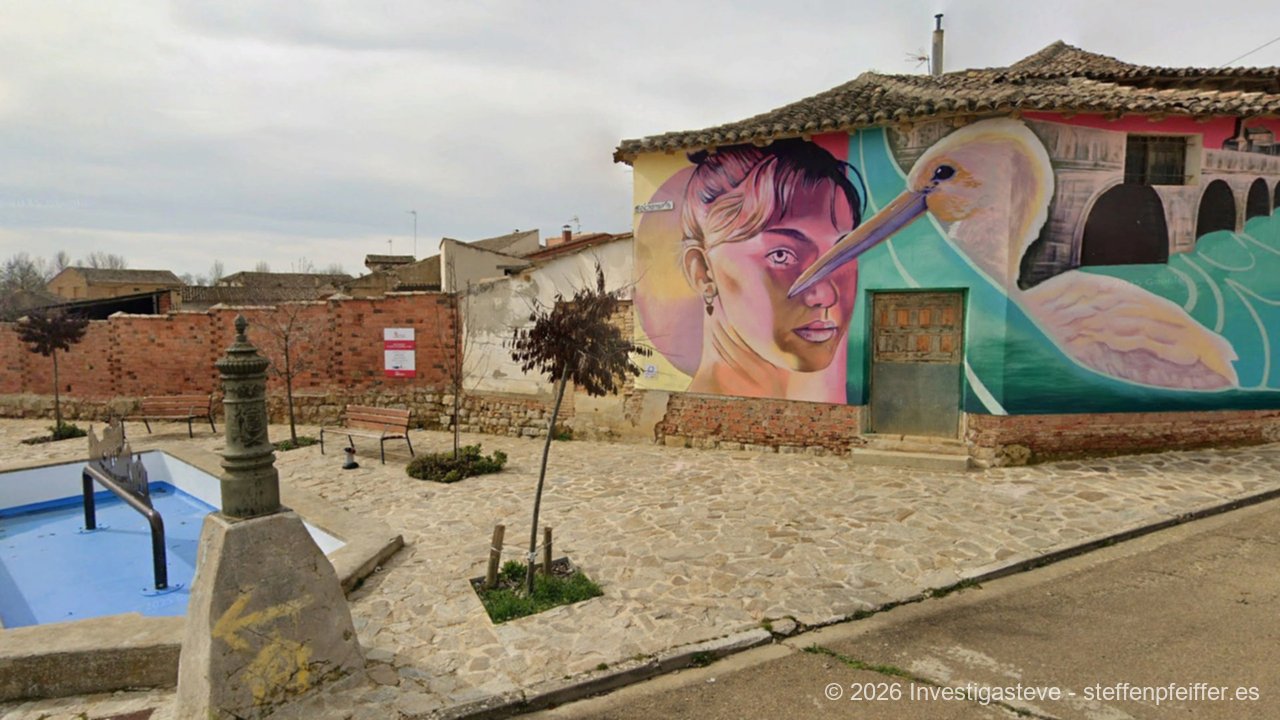
5. The storks of Población: Observe the bustling activity in the huge nests on the roofs. The clattering is part of the village’s acoustic identity and a symbol of luck along the wayside.
6. Historic coat-of-arms stones: Pay attention to the façades of the old stately houses when strolling along the Calle Mayor. They tell of the knightly past and the pride of the encomienda.
Insider Tips & Hidden Places
Away from the main street, Población de Campos conceals small refuges that only the attentive walker discovers. One such place is the small path leading from the village center down to the Río Ucieza. While most pilgrims hurry on, you find a small oasis of coolness on the riverbank. The ground here is soft and mossy, a tactile pleasure for battered feet. You hear the soft gurgling of the water and the rustling of willow leaves – an acoustic contrast to the dry silence of the fields. Here it smells of damp earth and river mint, an olfactory refuge that regenerates the senses. It is the perfect place for a silent meditation on the meaning of water in a barren world.
Another insider tip is the “Senda de los Ríos,” that alternative route beginning in Población and leading along the river via Villovieco. Those who choose this variant exchange the dust of the country road for shady poplar avenues and soft riverbank grass. The psychological effect of this change is enormous: you suddenly feel like you are in a secret garden of Castile. The historical causality of this path as an alternative lifeline becomes tangible in the silence of nature. It is a place of total acoustic isolation, where you can stop time while above you the birds sing their songs. This variant is a gift to all who seek solitude with the landscape.
For lovers of adobe architecture, a look into the backyards of some dilapidated barns on the western edge of the village is recommended. Here, you can particularly well study the layering of the material. When you carefully run your hand over the cracked clay, you recognize the handprints of those who shaped these walls decades or centuries ago. It is a tactile history lesson about the poverty and ingenuity of the Meseta inhabitants. At dusk, when the light becomes diffuse, these ruins look like sculptural monuments of transience. It is a visual stimulus that invites reflection on becoming and passing away on the Camino, far from the great cathedrals.
Finally, a look into the small vegetable gardens, often hidden behind low clay walls, is worthwhile. If you are lucky and a door is open, a small green paradise of tomatoes, peppers, and vines reveals itself. The smell of freshly watered earth is enchanting here. These gardens are the psychological symbol of the fertility wrested from the barren soil. Those who observe a local at work understand the deep connection of the people to their land, which goes far beyond tourist perception. It is a lesson in patience and devotion that the Camino gives the attentive pilgrim in Población de Campos, before they immerse themselves again in the vastness of the Tierra de Campos.
Moment of Reflection
Población de Campos is a place of existential stocktaking. In the modesty of its size, the essence of pilgrim existence is reflected: recognizing the essential and shedding ballast. The psychological effect of the Tierra de Campos becomes palpable here in a special way. The infinite horizontality challenges the ego; you recognize your own smallness against nature and history. The emotional metamorphosis takes place in the stillness, while contemplating the Romanesque arches of San Miguel or listening to the river. You learn here to understand the quality of silence not as emptiness, but as fullness – a fullness of space for your own thoughts and dreams.
In the stillness of Población, while touching the sun-warm adobe walls and smelling the dry grain, a deep clarity often sets in. You mentally prepare for what lies ahead: the lonely kilometers to Carrión de los Condes. This preparation is not only physical but above all spiritual. You absorb the knightly steadfastness of the encomienda, that legacy of the Hospitallers that tells of protection and perseverance. Those who leave Población de Campos usually do so with a new seriousness in their step. They have learned that true strength lies in humility and deep connection to the soil – a lesson the Meseta gives to everyone willing to listen.
Camino of the Stars
This place lies on the Camino Francés, on the stage from Frómista to Carrión de los Condes. The sequence of places is:
Frómista → Población de Campos → Revenga de Campos → Villarmentero de Campos → Villalcázar de Sirga → Carrión de los Condes
(Note: From Población de Campos, there is alternatively the possibility to follow the more scenic variant “Senda de los Ríos” via Villovieco.)
Did you feel the knightly stillness of the Hospitallers in Población de Campos, or did you find a moment of absolute peace on the banks of the Río Ucieza? Perhaps you discovered an answer to your questions in the Ermita de San Miguel? Share your experiences, your photos of the adobe alleys, or your thoughts on the infinite Tierra de Campos with us. Every story makes this special place on the Camino even more alive for all of us!
About the Author