A First Glance – Introduction & Atmosphere
When the midday sun burns mercilessly down on the Tierra de Campos and bathes the infinite expanse of the Castilian high plateau in a shimmering gold, the pilgrim reaches a place that appears like an organic continuation of the earth itself. Moratinos nestles so humbly into the gentle waves of the Meseta that one could almost overlook it, were it not for the striking church tower of San Andrés, which rises like a stone index finger into the deep blue sky of Palencia. The first contact with this village is a tactile experience: the fine, almost floury dust of the Senda settles like a protective patina on the skin, while the soles of the hiking boots register the transition from the hard marl ground to the warm asphalt of the Calle Real. It is a place of absolute reduction, where time is measured not in minutes, but in the shadows cast by the adobe houses.
The atmosphere in Moratinos is characterized by an archaic stillness that is almost physically tangible. It smells here of dry wheat, of the tart aroma of wild rosemary defiantly growing in the ditches, and occasionally of the cool, earthy note rising from the underground wine cellars to the surface. Acoustically, the silence is only broken by the rhythmic, wooden clattering of the storks on the roofs and the soft whistling of the wind sweeping unhindered across the plain. Psychologically, Moratinos marks for the pilgrim a moment of deep introspection. After the often monotonous kilometers of the Meseta, the village feels like a cocoon in which the stimuli of the outside world are reduced to a minimum. It is the vestibule to the border of León, a place of last deep breaths in Palencia, preparing the soul for the coming historical force of Sahagún.
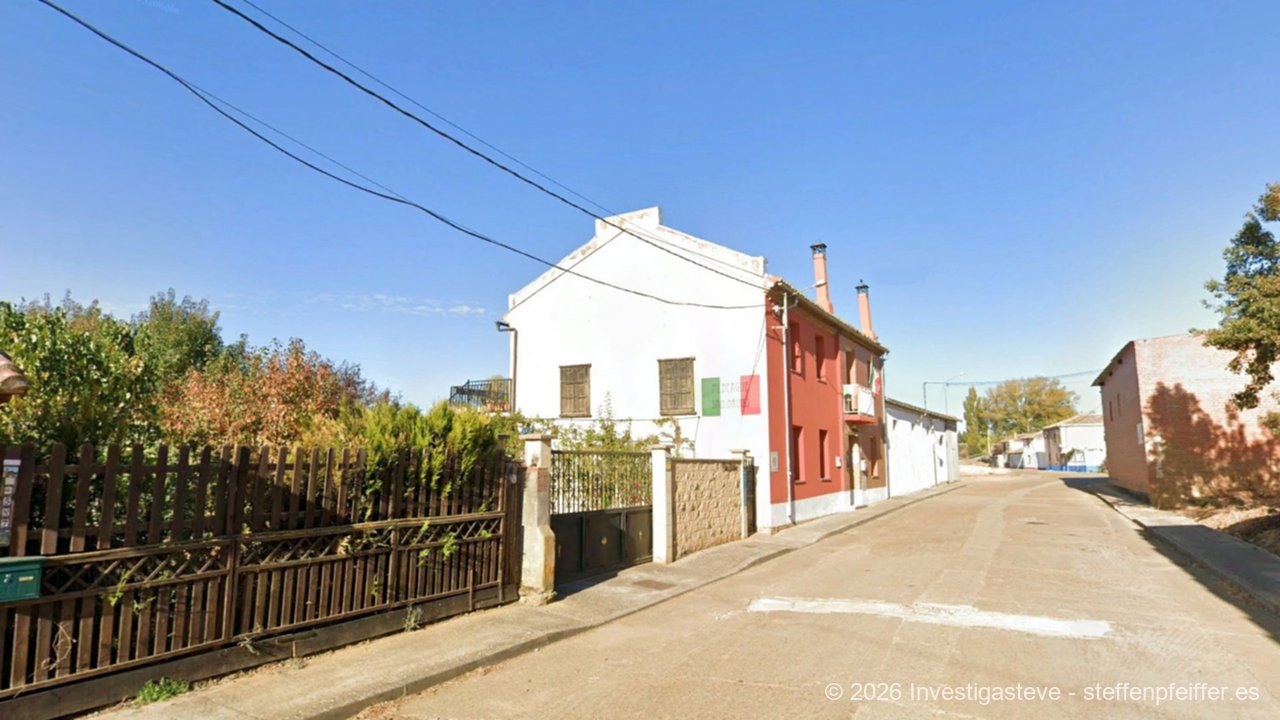
When you stroll through the only main street, you feel the historical causality of a region that has fought against depopulation for centuries and yet has preserved an unshakeable dignity. The visual panorama is dominated by the ochre-colored façades of the clay houses, whose texture bears the marks of harsh winters and glowing summers. When you place your hand on the sun-warmed adobe, you feel the stalks of straw and the graininess of the soil – an architecture that literally grew out of the earth on which you walk. Moratinos is a five-dimensional immersion into the “empty Spain,” a place that teaches the pilgrim that true abundance is often found in absolute simplicity.
What This Place Tells
The history of Moratinos is a fascinating palimpsest of resettlement, faith, and the will to survive of small communities. The name itself carries the echo of the Reconquista: “Moratinos” most likely derives from the Mozarabic settlers – those Christians who lived under Moorish rule and moved north during the expansion of the Christian kingdoms. This historical causality lends the place a subtle, oriental-tinged note, reflected in the simple but effective use of local materials. You walk here on ground that was strategically resettled in the 10th and 11th centuries to secure the border to the Duero basin. The village was never a center of power, but always a faithful guardian of the “Real Camino,” the lifeline connecting Europe with Santiago.
Architecturally, the parish church of San Andrés stands at the center of the narrative. Built from the characteristic brick of the region, it houses a figure of Saint Andrew and Saint Roch – symbols of protection and healing on the path. Yet the true history of Moratinos is written beneath the earth’s surface. The “Bodegas,” the wine cellars dug like small hobbit holes into the hills at the edge of the village, are stone witnesses to a centuries-old everyday culture. Each of these doors in the slope tells of families who stored their wine here and sought refuge from the Castilian heat in the coolness of the earth. It is a tactile archive of rural economy, showing how humans adapted to the conditions of the Meseta.
In the modern era, Moratinos is a symbol of the “España Vaciada,” the emptied Spain. The demographic development of the place, which today counts barely twenty permanent residents, is a psychological challenge for the observer. Yet it is precisely here that the Camino unfolds its transformative power. The emotional metamorphosis of the village through the pilgrim stream has prevented the alleys from dying. Where barns once decayed, today there are hostels run with a warmth long lost in tourist centers. Moratinos tells us that history consists not only of battles and treaties, but in the daily passing on of a “Buen Camino” and in preserving an ancient adobe wall against the ravages of time.
Addresses & tips in Moratinos
Camino Distances
Moratinos lies in the heart of the Tierra de Campos, shortly before the provincial border to León. The stage is characterized by the solitude of the fields and the vastness of the horizon.
| Previous Place | Distance (km) | Next Place | Distance (km) |
|---|---|---|---|
| Terradillos de los Templarios | approx. 3.5 km | San Nicolás del Real Camino | approx. 2.5 km |
Sleeping & Arriving
Arriving in Moratinos is an act of physical deceleration. When you leave the last meters of the Senda behind and reach the first houses, the noise of the world seems to fall completely silent. The tactile experience of arrival is characterized by the coolness of the hostels. When checking in, for example, at the Albergue San Bruno or the Hospital Moratinos, you immediately feel the thermal inertia of the thick clay walls. It is a moment of redemption when you set down your backpack and place your hand on the massive, cool stone or tiled floors. The acoustic panorama is reduced to the soft murmuring of fellow pilgrims and the distant ringing of the church bell, triggering an immediate psychological calming.
The accommodations in Moratinos are famous for their family atmosphere. Here, you are not a number, but a guest in a house that often breathes a long history itself. The smell in the dormitories is a mix of fresh linen, the tart aroma of hiking boots, and a note of dry wood. It is an olfactory signature that conveys security. The visual experience of the simple but clean beds triggers a wave of gratitude. You watch how the light falls through the small windows, making the dust particles dance like tiny stars in the air – a visual metaphor for the peace after the storm of the stage.
Staying overnight in Moratinos means surrendering to the quality of little. After the shower, when the warm water has washed the dust of the Meseta from the skin, a phase of deep regeneration sets in. Many pilgrims simply sit on the benches in front of the hostels and observe village life unfolding at a snail’s pace. This visual observation is an important part of the psychological processing of the path. You realize that you don’t have to run to arrive. The tactile experience of the cool evening wind, which drives away the heat of the day, is a reward for every kilometer covered under the burning sun.
The night in Moratinos is marked by a darkness and silence no longer found in modern cities. The acoustic experience of the night is only underscored by the occasional call of an owl or the rustling of the wind in the straw of the roofs. You lie in the cool sheets and feel your own existence with a clarity that only the solitude of the high plateau can bring forth. It is an emotional metamorphosis from the hustle of everyday life to the essence of being. Those who wake in Moratinos do so with a mental freshness that grows from the deep connection with this quiet place. It is the perfect starting point for the border crossing into the former Kingdom of León.
Eating & Drinking
The gastronomy in Moratinos is an honest homage to the treasures of the Tierra de Campos. Here, the cuisine of the Meseta reigns: powerful, down-to-earth, and designed to fill the exhausted body with new energy. When you sit down in one of the hostels or the local bar in the evening, the first olfactory impression is often the scent of a steaming “Sopa de Ajo,” the traditional garlic soup. The smell of olive oil, toasted bread, plenty of garlic, and the smoky aroma of Pimentón de la Vera wafts through the room and instantly awakens the spirits. It is an aroma that speaks of hard work and deep tradition, a culinary embrace that dispels the cold of the encroaching night.
The tactile experience of eating is dominated by the texture of the local bread. The crust is often hard and crispy, a tactile contrast to the soft, fragrant crumb inside, perfect for soaking up the remnants of the hearty stews. When you try a “Cocido,” a stew of chickpeas, meat, and vegetables, you experience an explosion of flavor that appeals to all the senses. The chickpeas are buttery soft, the chorizo has just the right spiciness, and the meat practically melts on the tongue. Psychologically, this form of eating is an act of self-care; you give back to the body what you demanded of it on the dusty kilometers.
A special highlight is the wine, often still stored in the traditional Bodegas of the place. It is usually a robust red wine of the region, whose color is a deep ruby red. When you touch the cool glass and take the first sip, you feel the minerality of the Castilian earth. Drinking this wine in the community of pilgrims is a social ritual that melts language barriers. Acoustically, the meal is underscored by the clinking of glasses and laughter in various languages. For dessert, you must not miss the simple “Amarguillos,” crumbly almond cookies that celebrate the sweetness of life amidst the barren plain. Eating in Moratinos is not mere calorie intake; it is the absorption of local identity.
Supplies & Logistics
Moratinos is one of the smallest villages on the Camino, which reduces logistics to the essentials. There is no large supermarket or post office here, but precisely this absence of urban bustle makes the charm of the place.
Shopping: There is no independent shop, but the hostels often sell the most necessary items like water, fruit, or small snacks. For larger purchases, you should plan for Sahagún.
Gastronomy: The bars in the hostels offer breakfast, midday snacks, and the classic pilgrim menu in the evening. The selection is limited, but the quality is often excellent due to the use of local products.
Accommodation: Despite the small population, there are several excellent hostels (Albergues) and a hostal, making Moratinos an ideal place for a quiet overnight stay.
Public Facilities: A public fountain with drinking water is available. Medical care or pharmacies are only found in Sahagún, about 7 km away.
The psychological security of finding everything necessary for a restful night in this small hamlet takes much pressure off daily planning. You feel the historical causality of hospitality; Moratinos today lives almost exclusively through and for the pilgrim. Acoustically, the logistics are underscored by the occasional passing of a tractor, a reminder of the region’s agricultural roots. The emotional relief of replenishing supplies at the fountain is a tactile ritual that initiates departure the next morning. In Moratinos, logistics work through personal proximity rather than anonymous automation.
Don’t Miss
1. Church of San Andrés: A simple but dignified 16th-century building. The cool air inside offers a perfect five-dimensional escape from the heat of the Meseta.
2. The Bodegas on the hill: An absolute must. The small doors in the slope look like something from a fantasy world. The visual experience of these earth mounds is unique on the Camino.
3. The storks of Moratinos: Pay attention to the massive nests on the roofs. The wooden clattering is the acoustic trademark of the village and a symbol of life in the wasteland.
4. Adobe Architecture: Stroll through the alleys and touch the old walls of sun-dried clay. It is the most authentic construction method of the Tierra de Campos.
5. Sunset over the Meseta: Walk a few hundred meters west out of the village. When the sky over León glows in flaming red and violet, you feel the true magic of the plain.
6. Local Red Wine: Try a wine aged in the underground cellars. The taste carries the cool depth of the earth within it.
7. The view of Sahagún: From the edge of the village, in clear weather, you can already make out the distant silhouettes of Sahagún’s towers on the horizon – a psychological motivational boost.
8. Conversation with a local: Take the time for a brief word. The warmth of the few residents is an emotional enrichment beyond all monuments.
Insider Tips & Hidden Places
Moratinos guards its secrets well behind the ochre-colored façades. One of these hidden places is the small elevation directly behind the Bodegas. While most pilgrims only briefly photograph the doors, the climb up the hill offers a visual panorama that feels almost transcendent. From up there, you see the Senda cutting like a white ribbon through the green or golden sea of fields. The wind blows more steadily up here, a tactile pleasure that blows away the dust of the stage. It is a place of absolute acoustic isolation, where you feel as if you are standing above time. Psychologically, this viewpoint is ideal for putting your own journey in relation to the infinity of the landscape.
Another insider tip is a visit to one of the private Bodegas, if you are lucky enough that an owner is present. Sometimes pilgrims are invited to take a look into the depths. The transition from the heat of the day into the constant coolness of the cellar is a tactile shock of the pleasant kind. It smells there of damp stone, old wood, and the sweetish aroma of fermenting must. This five-dimensional experience of rural tradition is deeply impressive. You feel the historical causality of wine culture, which has survived here despite all adversities. It is a place of absolute stillness, showing how deeply the people here are rooted in their soil.
Those who keep their eyes open will find faded symbols and inscriptions on the walls of some old barns, telling of the Mozarabic past or old pilgrim legends. They are small, tactile archives of history not found in guidebooks. When you trace the engraved lines in the stone with your fingers, you establish a physical connection to the people who did the same centuries ago. These small discoveries trigger deep curiosity and make it clear that Moratinos is much more than just a collection of houses – it is a living book of time.
Finally, a short detour to one of the abandoned farmsteads on the edge of the village at dusk is worthwhile. In the blue hour, these adobe ruins look like sculptural monuments of transience. There, you often hear the rustling of small animals or the call of a bird of prey. It is a place of psychological reflection on becoming and passing away, on the “España Vaciada,” and on your own mortality. The texture of the weathering clay walls, slowly becoming once again the earth from which they came, is a tactile lesson in humility. This place is an insider tip for all who seek the melancholy of the Meseta in its purest form, before diving back into the more lively world of Sahagún.
Moment of Reflection
Moratinos forces the pilgrim into an existential stocktaking. In the reduction of this small village, your own journey is reflected: you have shed the ballast of everyday life, just as this village has lost everything superfluous to survive in the harsh climate of the Meseta. The psychological effect of this environment is a form of catharsis. Those who pause here recognize that strength lies not in the monumental cathedral, but in the constancy of the adobe wall. The emotional metamorphosis takes place in the acceptance of simplicity. You learn to appreciate the quality of a cool sip of water and the peace of a shady spot more than any modern comfort.
The historical causality of the Mozarabic settlers who shaped this ground before us inevitably leads us to the question of our own legacy. What do we leave behind on this path? Is it only dust, or is it a changed perspective on life? In Moratinos, on the edge of Palencia, the boundary between the old and new self becomes fluid. The tactile experience of the earth and the visual experience of the infinite sky form the framework for a deep spiritual realignment. Those who leave Moratinos carry not only Palencia in their hearts, but also the anticipation of León – strengthened by the silence of a place that has done nothing else for 1200 years but prepare walkers for what is to come.
Camino of the Stars
This place lies on the Camino Francés, on the stage from Carrión de los Condes to Sahagún. The sequence of places is:
Carrión de los Condes → Calzadilla de la Cueza → Ledigos → Terradillos de los Templarios → Moratinos → San Nicolás del Real Camino → Sahagún
Did you also experience that magical silence in Moratinos that first opens the heart and then the mind? Perhaps you found a moment of absolute peace at the Bodegas or had an encounter in one of the adobe hostels that changed your view of the path? Share your stories, your thoughts on the vastness of the Meseta, or your tips for the best hostel in the village with us. Your experiences make this path come alive for all of us!
About the Author