A First Glance – Introduction & Atmosphere
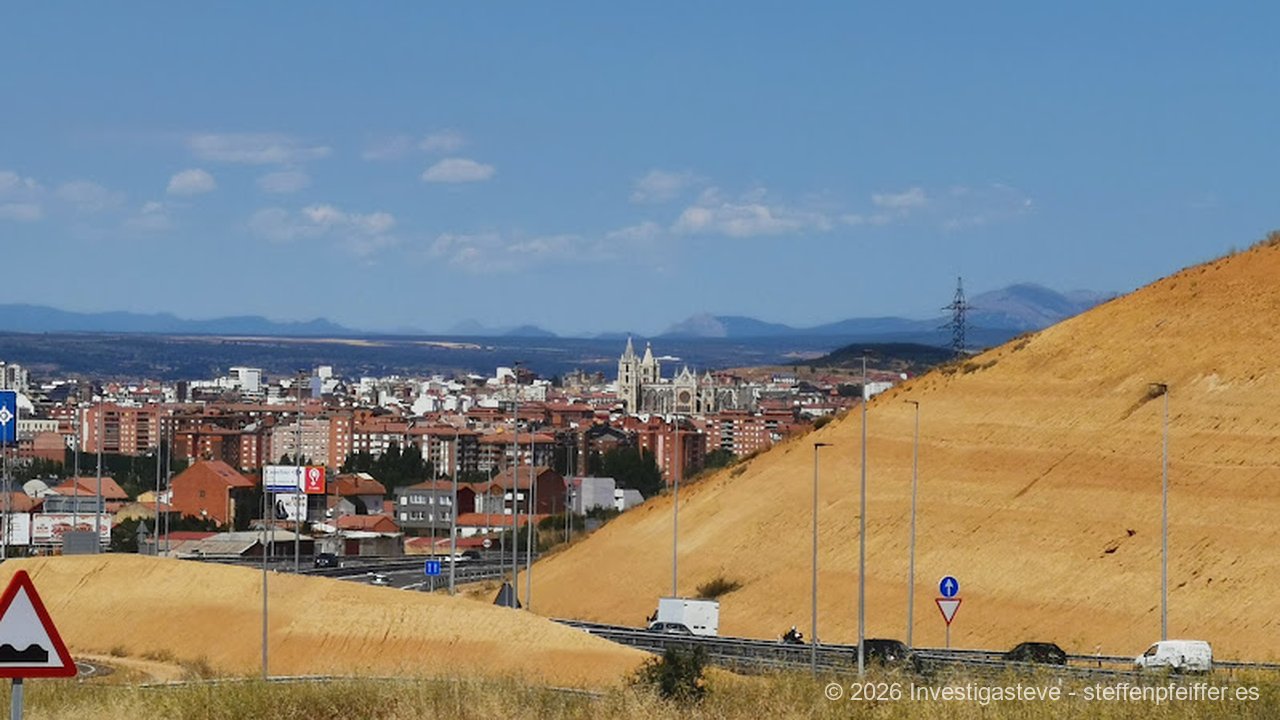
When you approach León, you already sense from afar that you are entering a monumental gravitational center of the Camino. After the wide, often lonely kilometers through the Leonese high plateau, where the horizon was often just a trembling line between sky and dust, the provincial capital rises at 837 meters like a stone palimpsest of history. Approaching León is a sensory experience of densification. The meditative silence of the fields gradually gives way to an urban crescendo: the distant roar of traffic mingles with the rhythmic ringing of countless bells reigning over the rooftops. It smells of damp limestone, of the tart scent of roasted coffee in the street cafés, and, the deeper you penetrate the old town, of the heavy, sweetish aroma of incense seeping from the portals of the churches. Psychologically, León marks a mighty threshold. You leave behind the hardships of the Meseta and enter a world that breathes knightly pride, royal splendor, and an almost intimidating spiritual density.
The tactile experience of the city begins as soon as your boots touch the uneven cobblestones of the old town. The cold of the stone seems to penetrate upward through the soles, while the narrow alleys of the Barrio Húmedo envelop you like a protective cloak. In the evening hours, when the low sun bathes the façade of the cathedral in a glowing orange, the mood changes. The city begins to breathe. You hear the laughter of the locals in the bars, the clatter of tapas plates, and the distant echo of pilgrim staffs, which set the rhythm of the evening like an archaic metronome. Arriving in León means placing your own pilgrimage journey into a larger, millennia-old context. You are no longer a lone wanderer here, but part of a triumphal entry into one of the most splendid stage towns of the Camino Francés. It is a moment of tactile relief and psychological elevation, preparing you for the fact that the path now gains a new, majestic quality.
What This Place Tells
León is not merely a place on the map; it is a stone chronicle, reaching from the Legio VII Gemina of the Romans to the visionary dreams of Gaudí. The historical causality of the city is deeply rooted in its military origin. Founded as a Roman legionary camp in 68 AD, the name León derives directly from the Latin “Legio.” You stand on ground literally soaked with the discipline of Rome. The massive Roman walls, which still enclose large parts of the old town today, feel rough and unyielding. When you let your hand glide over the ancient stone, you touch two thousand years of strategic will. Here the gold from the nearby Las Médulas was guarded, here the order of the empire was cemented. This historical weight is omnipresent in León and lends the city a gravitas you can feel in every corner.
With the Middle Ages, León transformed from a military outpost into the splendid center of the eponymous kingdom. As the capital of a realm stretching from Galicia to the Duero, León became the scene of royal power. In the Basilica of San Isidoro, the “Pantheon of the Kings,” this history becomes tactilely and visually tangible. The coolness of the crypt, the silence between the sarcophagi, and the luminous colors of the Romanesque frescoes – often called the “Sistine Chapel of Romanesque art” – tell of a time when life, death, and faith formed an inseparable unity. You feel the psychological force of the royal tombs; here lie men and women who determined the course of Spanish history. The echo of your steps on the stone slabs of the Basilica reminds you that León was the place where the first parliamentary Cortes of Europe took place in 1188 – a historical caesura that still shapes the democratic self-understanding of the West today.
The architectural and spiritual jewel of the city is undoubtedly the Cathedral of Santa María de Regla, the “Pulchra Leonina.” Built on the ruins of Roman baths, it is a triumph of Gothic and light. Over 1,800 square meters of stained glass transform the interior into a transcendent color space. When you stand in the nave and the light breaks through the “Vitrales,” you experience a visual metamorphosis. It is as if the heavy stone loses its mass and dissolves into pure light. Olfactorily, the smell of cold dust mingles here with the freshness of the incoming light. León’s historical continuity continues into the modern era, manifested in Gaudí’s Casa Botines, which rises like a neo-Gothic fairy-tale castle of gray granite in the midst of the city. This bridge from the Roman legion through the medieval kingdom to Modernisme makes León a place of infinite layers, where every epoch has left its traces in the collective memory and in the hard stone.
Addresses & tips in León
Camino Distances
The path now leads you from the fertile plain of the Vega into the pulsating center of the region, with the distances between logistical points being ideal for thorough planning.
| Previous Place | Distance (km) | Next Place | Distance (km) |
|---|---|---|---|
| Puente Villarente | approx. 12.0 km | Trobajo del Camino | approx. 4.0 km |
Sleeping & Arriving
Arriving in León means immersing yourself in a pilgrim infrastructure that ranks among the best on the entire Camino. The selection of accommodations is as diverse as the city’s history itself. The Albergue de Peregrinos del Monasterio de las Benedictinas (Carbajalas) in the heart of the old town offers an atmosphere that is tactilely and acoustically marked by deep spirituality. When you step through the heavy wooden gates of the monastery, you are enveloped by a sudden silence that immediately switches off the noise of the city. It smells of floor wax, old paper, and cool masonry. Sleeping in the historic halls, interrupted only by the gentle ringing of the monastery bells, is a psychological experience of security. You feel the centuries-old tradition of Benedictine hospitality, which receives the pilgrim not only as a guest but as part of a sacred mission.
For those seeking a more modern and lively environment, the Albergue de Peregrinos Municipal on the outskirts or numerous private hostels like the Albergue San Francisco de Asís offer an excellent base. Here, arrival is characterized by the lively exchange between walkers from all over the world. In the communal areas, you hear a polyphonic murmuring in dozens of languages, mingling with the clatter of cooking pots. It is a tactile experience of community; you share the space, the food, and the stories of the past days. Many pilgrims also choose León for a “Día de Descanso,” a rest day. The psychological effect of this pause in such a history-soaked environment is immense. You have time to care for your gear, regenerate your feet, and shed mental baggage before the next major stage towards the Montes de León begins.
Those seeking the ultimate historical luxury cannot miss the Hostal San Marcos. This former seat of the Order of St. James and pilgrim Hospital from the 16th century is now one of the most splendid Paradores in Spain. The Plateresque façade is a tactile marvel of filigree chisel work that looks like petrified lace. When you walk through the cloisters, you feel the historical causality of the power and wealth that the Camino brought to this city. It smells of exclusive leather, noble woods, and the cool elegance of bygone centuries. Whether in the modest dormitory or the luxurious Parador – arriving in León is always a ritual act of appreciation. You have left the wide plains behind and are received by the city with open arms and a diversity that compensates you for all the hardships of the Meseta.
Eating & Drinking
Culinarily, León is a revelation that makes your senses explode after the often sparse pilgrim menus of the villages. The center of this delight is the Barrio Húmedo, the “wet quarter.” The name says it all: in the countless bars, the wine flows, mostly a robust Prieto Picudo or an elegant Mencía from the nearby Bierzo region. The quarter is an olfactory labyrinth of fried garlic, spicy chorizo, and the smoky aroma of Morcilla de León. This blood sausage is a specialty of the city – creamy, spicy, and often refined with onions. When you try it on a slice of toasted fresh bread, you experience a tactile creaminess that unfolds a spicy warmth on the palate. It is honest, powerful food that reflects the peasant soul of the region.
Another tactile and gustatory highlight is the Cecina de León, the air-dried and lightly smoked beef. The deep red color and fine marbling are a visual promise that is fulfilled with the first bite. The meat is firm, almost silky in texture, and carries the aroma of the wide high pastures. In León, it is tradition to serve a free tapa with every drink. This leads to a very particular social dynamic: you move from bar to bar, hear the loud, hearty laughter of the Leonese, and feel the pulsating joy of life in the city. The psychological effect of this sociability is enormous for the pilgrim – you no longer feel like an outsider, but immerse yourself in the rhythm of a people who celebrate pleasure as part of their identity.
To conclude a culinary foray, something sweet must not be missing. The city’s bakeries lure with the scent of freshly baked Mantecadas and Hojaldres de Astorga, which are as popular here as in their hometown. When you bite into a Hojaldre, you feel the tactile shattering of the countless layers of dough, followed by the sweet stickiness of the syrup. It is a ritual pleasure, often rounded off with a café solo in one of the traditional cafeterias on the Plaza Mayor. Eating in León is more than just calorie intake; it is a form of historical immersion. Every ingredient tells of the fertility of the soil, the hardness of shepherd work, and the cultural exchange that the Camino has fueled for centuries.
Supplies & Logistics
Logistically, León is the undisputed supply center of the entire region. As the provincial capital, the city offers everything a pilgrim could need after hundreds of kilometers. There are specialized outdoor stores where you can tactically test and purchase high-quality merino socks, new hiking boots, or ultralight sleeping bags. The professional advice in these shops is often shaped by years of experience with the ailments of pilgrims. It smells there of new plastic, leather, and waterproofing agents – an olfactory promise of more comfort for the coming kilometers. Psychologically, this supply security gives the walker back a great deal of serenity. You know that you can fix any material defect here.
The medical infrastructure is excellent. From specialized pharmacies that understand foot care and blister treatment to the large university Hospital, everything is available. León’s logistical connections are also excellent: the modern train station and bus station connect the city with Madrid, Galicia, and Asturias. Many pilgrims use this to begin the path here or to interrupt it for a short time. ATMs are found on every corner, and the post office (Correos) offers efficient backpack transport as well as the shipment of packages to Santiago or home. León is the place to radically simplify your Camino logistics once more – what you don’t get here, you will hardly find on the rest of the path.
Shopping: On Calle Ancha and around the Ordoño II district, you will find everything from large supermarkets to exclusive delicatessens.
Gastronomy: The selection ranges from a quick snack in the Barrio Húmedo to an upscale dinner in the restaurants at San Marcos.
Accommodation: An enormous capacity of hostels, hostals, and hotels for every budget and requirement.
Public Facilities: Main train station, bus station, tourist information, post office, and numerous health centers are available.
In summary, León represents the last major “safety zone” logistically before the mountains. Use your stay to replenish your supplies of materials and energy. The paths in the city are well marked, and despite the size of the place, as a pedestrian you will intuitively find your way thanks to the yellow arrows, which here are often embedded as brass shells in the asphalt. It is a tactile pleasure to follow these markers and experience the logistical perfection of a city that has lived off the transit of people for over a thousand years.
Don’t Miss
1. The Cathedral of Santa María de Regla: Experience the wonder of the “Pulchra Leonina” and let yourself be enchanted by the play of light from the 1,800 square meters of stained glass.
2. Basilica of San Isidoro: Visit the “Pantheon of the Kings” and marvel at the Romanesque frescoes, which seem almost modern in their color intensity.
3. Casa Botines: Admire one of the few buildings by Antoni Gaudí outside Catalonia – a neo-Gothic jewel of gray granite.
4. Hostal San Marcos: Marvel at the spectacular Plateresque façade of the former pilgrim Hospital and immerse yourself in the knightly history of the Order of St. James.
5. Barrio Húmedo: Immerse yourself in the pulsating life of the old town and enjoy the traditional tapas in the narrow, history-soaked alleys.
6. The Roman city walls: Walk along the mighty fortifications and feel the tactile power of the ancient legionary camp.
7. Palacio de los Guzmanes: An impressive example of Leonese Renaissance architecture right next to Casa Botines.
8. MUSAC: The Museum of Contemporary Art impresses with its colorful glass façade and offers a radical contrast to the historic old town.
9. Plaza Mayor: Enjoy a coffee on one of Castile’s most beautiful squares and observe the colorful bustle under the arcades.
10. The Bernesga River: A walk along the bank offers a relaxing green break from the city’s stone heritage.
Insider Tips & Hidden Places
Away from the major tourist magnets, León conceals corners of a very particular, quiet intensity. One such place is the small Garden of the Cid (Jardín del Cid), hidden near the Barrio Romántico. Here, in the shade of old trees, there is a cool, almost monastic tranquility. You hear only the distant echo of the city walls and the splashing of a small fountain. It is a tactile retreat where you can stretch your aching feet into the soft grass. The smell of damp earth and moss is so intense here that it immediately erases the memory of the asphalt dust of the last days. Psychologically, this place is an important filter to process the impressions of the monumental buildings and find yourself.
Another insider tip is Calle del Cid itself, which often lies in the shadow of the bustling Calle Ancha. Here you will find small, artisanal shops where real Leonese leather is still processed. The smell of tanned leather and beeswax is an olfactory journey through time. When you enter one of the workshops, you hear the rhythmic beating of hammers and the hiss of awls. It is an encounter with the historical causality of craftsmanship that made León wealthy for centuries. The tactile quality of the handmade bags and belts is a tactile experience that underscores the value of honest work. Here you can acquire a piece of the city that is not mass-produced but has soul.
Behind the Basilica of San Isidoro, there is also a small square, the Plaza de San Martino. Here, in the late afternoon, the older residents meet to play cards. You hear the temperamental, deep Castilian and the clicking of game pieces. It is an auditory and social still life of great authenticity. Those who drink a wine here in one of the inconspicuous bars feel the pulse of the real León, far from the pilgrim streams. The taste of the simple tapa – perhaps a slice of spicy cheese or a marinated olive – is unadulterated and honest here. Such unsignposted places are what make the stay in the city a personal journey of discovery.
Finally, a look into the crypt of the Cathedral is worthwhile, if it is accessible. Down there, where the foundations of the Roman baths meet the Gothic pillars, you feel the historical causality of the city most intensely. The coolness is almost painful, and the silence is broken only by the distant drip of groundwater. It is a tactile experience of depth. You recognize that León was built on the ruins of empires that all came and went, while the light in the stained glass above shines imperishably. These hidden details make the city a place that offers far more than just a logistical stopover or a monumental sight.
Moment of Reflection
León challenges you to think about the meaning of splendor and permanence. When you stand before the cathedral and see how the hard stone almost becomes liquid in the light of the stained glass, the question arises: What in your life possesses this transformative power? The Camino has led you through the dusty Meseta, has taught you to make do with little and endure the silence. In León, you are confronted with abundance. Psychologically, this is a test: Can you enjoy the splendor without losing yourself in it? The historical context of the city teaches us that empires crumble, but the light of beauty and the faith of people outlast generations.
Feel the tactile reality of your exhaustion and transform it in León into a new form of strength. Just as the Roman legionaries tended their wounds here and the kings forged their visions, León is also for you a place of realignment. The historical causality of your own path now inevitably leads you from the plain into the mountains. Take the time to examine your motivation in the cool silence of San Isidoro or in the radiance of the Cathedral. Are you ready for the ascent? León gives you the psychological foundation and visual inspiration to recognize that the goal in Santiago is near, but the true transformation happens in every moment of perception. Continue with the awareness that you are now part of this city’s radiant chronicle.
Camino of the Stars
This place lies on the Camino Francés, on the stage from Sahagún to León (and onwards towards Astorga). The sequence of places is:
Sahagún → Bercianos del Real Camino → El Burgo Ranero → Reliegos → Mansilla de las Mulas → Villarente → Arcahueja → León → Trobajo del Camino → La Virgen del Camino → Valverde de la Virgen → San Miguel del Camino → Villadangos del Páramo → San Martín del Camino → Hospital de Órbigo
Did the “Wonder of Light” in León’s Cathedral touch you as deeply as it did us, or was it a hidden tapa in the Barrio Húmedo that gave you the strength for the onward path? Share your experiences from this majestic royal city with us – tell us about your moment in the silence of San Isidoro, your gaze at Gaudí’s Casa Botines, or a special encounter in the alleys of the old town. Your story enriches the pilgrim community and makes this radiant place on the Camino even more alive for all of us!
About the Author