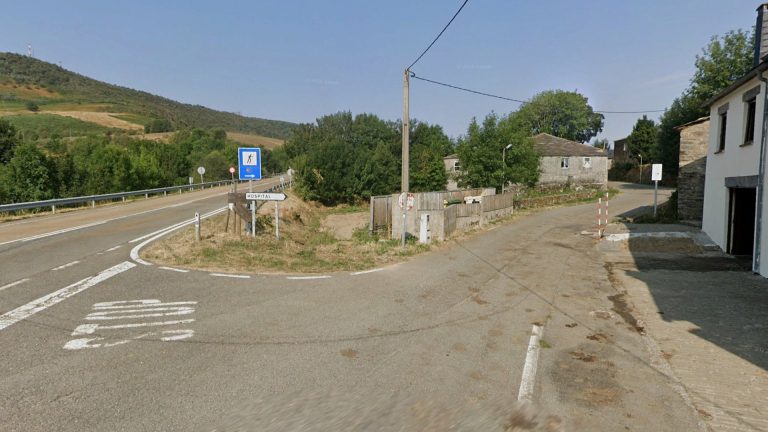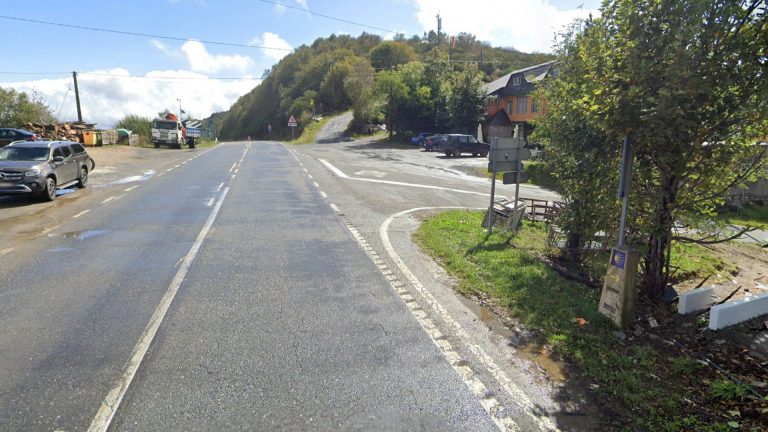
A First Glance – Introduction & Atmosphere
When you approach Hospital de Órbigo, you already sense from afar that you are approaching one of the most historic bottlenecks of the entire Camino Francés. After the often monotonous kilometers through the Leonese plateau, where the horizon shimmers and the dust of the Meseta cloaks your clothes in a dull gray, the landscape here suddenly breaks open. You leave the flat wasteland and enter the fertile floodplain of the Río Órbigo. It is a moment of tactile and sensory relief: the hard, dry crunch of the marl soil under your boots gives way to the sight of lush greenery, and the air suddenly becomes cooler, saturated with the moisture of the river. But what immediately captivates your attention is not just nature, but that monumental structure that lies like a stone giant in the valley: the Puente del Paso Honroso.
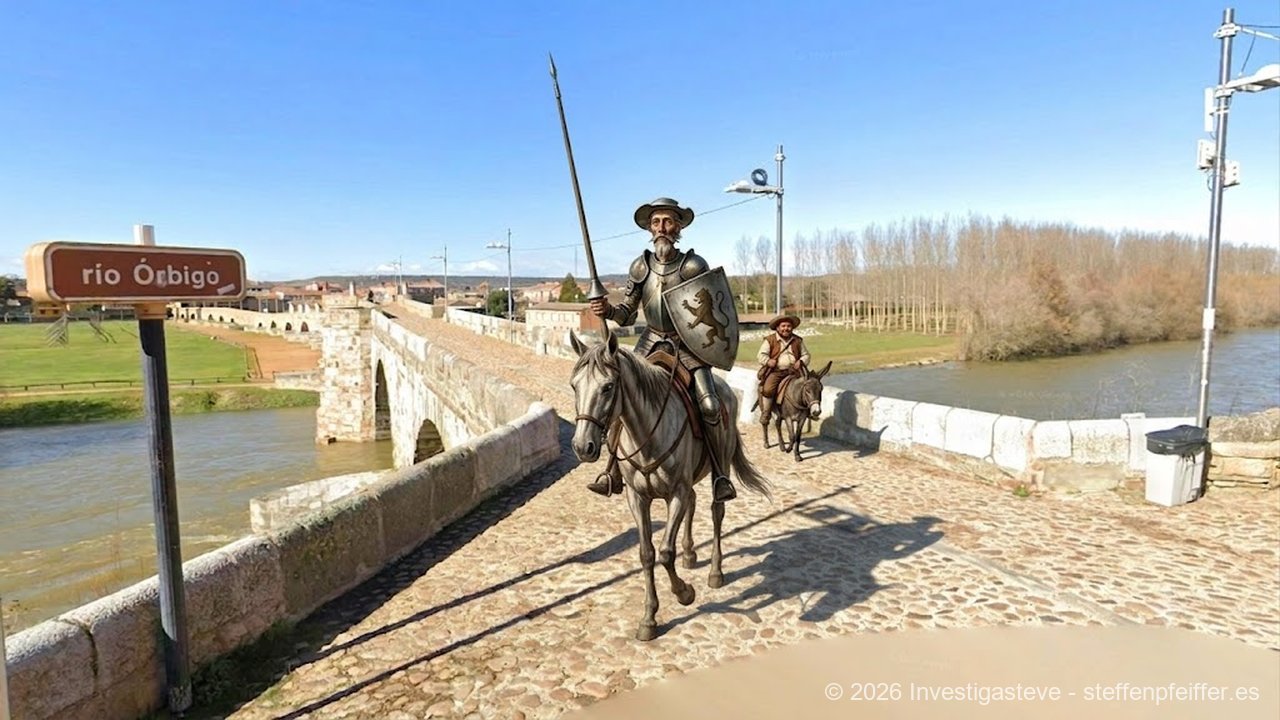
Stepping onto this bridge is an auditory and psychological experience like no other. Your steps on the massive, uneven stones of its 19 arches produce a hollow, rhythmic echo that mingles with the constant murmur of the water below you. It smells of river morning mist, of wet stone, and the tart scent of willows and poplars lining the banks. Above you, you hear the characteristic clattering of white storks nesting on the church tower of Puente de Órbigo – an archaic sound that has set the rhythm of this place for centuries. Psychologically, Hospital de Órbigo marks a threshold: you leave the solitude of the fields behind and enter a world that breathes knightly etiquette, honor, and monumental architecture. Here, every step feels meaningful, almost as if the spirit of the Middle Ages still hovers over the moss-covered pillars.
What This Place Tells
Hospital de Órbigo is far more than just a river crossing; it is the stage for one of the most spectacular episodes of European knightly history. The historical causality takes us back to the Holy Year of 1434. Here, at this bridge, the Leonese knight Suero de Quiñones proclaimed the legendary “Paso Honroso.” He asked King John II of Castile for permission to close the bridge for 30 days. His goal: to break 300 lances against any knight who wanted to cross the river, in order to free himself from a bond of love – an iron ring he wore around his neck every Thursday as a sign of his servitude to a lady. When you walk over the stones today, you can almost still feel the tactile trembling of the ground under the hooves of the warhorses. It is a story of pride, courage, and an almost absurd devotion to knightly ideals that still shrouds the place in an aura of invincibility.
The architectural depth of the bridge itself is a tactile textbook of the centuries. Its foundations date back to Roman antiquity, when it was part of the Via Trajana, that strategic artery that led the legions northward. In the Middle Ages, it was expanded and reinforced, with each stonemason leaving his own signature. The rough texture of the stone, the countless repair marks from the Napoleonic Wars, and the mossy hollows tell of a timelessness that fills the modern walker with awe. Olfactorily, the smell of centuries-old rock mingles here with the freshness of the flowing water. The psychological component is immense: you realize that you are not just crossing a river, but bridging the epochs.
The place itself is divided in two by the river and the bridge into Puente de Órbigo and Hospital de Órbigo. While Puente de Órbigo, with its church of Santa María and its striking gable tower, follows more the rural, peasant rhythm, Hospital de Órbigo breathes the history of the Order of St. John. The Knights of St. John founded a pilgrim Hospital here, which gave the place its name. The historical causality is clear: where knights protected the roads, pilgrims found healing and nourishment. The ruins of the old Hospital are still palpable when you wander through the narrow alleys. The knowledge that people have been cared for here for over 800 years lends the place a psychological warmth that forms the stark contrast to the warlike legend of the Paso Honroso. Hospital de Órbigo is a place of contrasts – combat and healing, stone and water, honor and humility.
Addresses & tips in Hospital de Órbigo
Camino Distances
The paths in the province of León are characterized by wide open spaces and isolated, historically charged centers.
| Previous Place | Distance (km) | Next Place | Distance (km) |
|---|---|---|---|
| San Martín del Camino | approx. 7.0 km | Villares de Órbigo | approx. 2.5 km |
Sleeping & Arriving
Arriving in Hospital de Órbigo means, after the heat of the Meseta, immersing yourself in a well-organized oasis of hospitality. The Albergue de Peregrinos San Juan de Órbigo is the spiritual center of pilgrim accommodations in the village. Housed in a former convent, you are enveloped here by an atmosphere of tranquility, intensified by the thick stone walls and the cool inner courtyard. The tactile experience of the cool air inside after a day in the scorching sun is almost like physical healing for the pilgrim. You hear the soft murmuring in the hallways and the clattering of dishes in the communal kitchen – sounds that convey security and structure.
Another excellent option is the Albergue Karl le Grand, run with great attention to detail. Here, the psychological component of the pilgrimage is taken particularly seriously; you sense the owners’ pride in the knightly tradition of the place. The beds are comfortable, and the communal areas invite you to exchange experiences about the Paso Honroso. Many pilgrims consciously choose Hospital de Órbigo as an overnight stop in order to cross the bridge early in the morning, when the mist still hangs over the river. The stillness of the morning, interrupted only by the distant chiming of the church clock, lends the departure an almost sacred quality.
Those seeking more privacy will find modern comfort in the numerous small hostals and the Hotel Paso Honroso, right at the bridgehead. The view from the window onto the illuminated bridge at night is a visual highlight that bathes the historical weight of the place in a mystical light. You feel the tactile comfort of a soft blanket and the psychological certainty of being in a place that has protected people for centuries. Arriving in Hospital de Órbigo is therefore always also a return to civilization after the vastness of the plain, a moment to catch your breath before the upcoming stages towards Astorga.
The hostel culture here is deeply rooted. You can tell that the residents know what a pilgrim needs: a kind word, cool water, and a place where feet can rest. It is a tactile hospitality that manifests itself in the firm handshake of the hospitalero and the scent of freshly washed bed linen. In Hospital de Órbigo, you do not feel like a tourist, but as part of an endless chain of walkers, all of whom must pass through this bottleneck of history.
Eating & Drinking
Culinarily, Hospital de Órbigo is inseparable from its river. The “Trucha del Órbigo” (trout) is the culinary flagship of the region and an olfactory experience you must not miss. When you stop at one of the restaurants on the riverbank, the scent of trout fried in olive oil with garlic and finest Jamón fills the room. The taste is a revelation – the meat is tender, fresh, and carries the aroma of the clear mountain water that feeds the Órbigo. It is a tactile pleasure to break through the crispy skin of the fish and feel the heat of the steaming dish.
A robust country bread is usually served with it, whose rough crust is perfect for soaking up the delicious juices of the dish. Psychologically, a meal in Hospital de Órbigo is a reward for the hardships of the preceding days. You drink a wine from the León region with it, often a Prieto Picudo, whose intense color and full body form a wonderful contrast to the delicate fish. The clinking of glasses and the laughter of the locals, who meet in the bars for tapas, form the acoustic backdrop for a successful evening.
Those with a sweet tooth should try the “Mantecadas,” which here are already considered a harbinger of the nearby city of Astorga. These small butter cakes smell of vanilla and fresh butter and practically melt on the tongue. It is a tactile sweetness that flatters the palate and provides new energy for the next day. Eating in Hospital de Órbigo is thus a perfect symbiosis of down-to-earthness and knightly indulgence – a strengthening that nourishes both body and soul.
Supplies & Logistics
Logistically, Hospital de Órbigo is a prime example of a pilgrim-oriented service point. Since the place is one of the most important stops before Astorga, you will find here everything you need to continue your journey. There are several well-stocked grocery stores that not only cover basic supplies but also offer local specialties like Cecina (dried beef). The smell in these stores is a mix of fresh fruit, tangy cheese, and the typical aroma of a Spanish general store. It is a tactile pleasure to choose the firm apples or freshly baked bread for the next morning’s picnic.
The place is also excellently connected infrastructure-wise. There is a pharmacy right on the main street, whose staff are well acquainted with the classic ailments of pilgrims – blisters, tendonitis, and sunburn. The advice is competent and warm, which psychologically conveys a great sense of security. ATMs are located near the Plaza Mayor and are easily accessible. For those who use luggage transport, Hospital de Órbigo is a fixed hub for all major service providers.
Shopping: Several supermarkets and small tiendas on Calle Mayor offer everything from blister plasters to regional delicacies.
Gastronomy: A high density of bars and restaurants offers pilgrim menus, tapas, and the famous trout dishes.
Accommodation: Over 10 hostels and several hotels offer capacity for hundreds of pilgrims in every price range.
Public Facilities: Pharmacy, ATMs, postal service, and a small health center are available.
In summary, Hospital de Órbigo offers logistical security that is very reassuring after the emptiness of the Meseta. You can replenish your supplies here, check your gear, and mentally prepare for the transition into the mountains. The compactness of the place allows you to run all errands within a 15-minute walk, which your joints will appreciate after a long day of walking.
Don’t Miss
1. The Puente del Paso Honroso: Don’t just cross the bridge, but pause in the middle, feel the wind, and let the story of Suero de Quiñones affect you.
2. The Church of San Juan de Órbigo: Admire the Romanesque and Gothic elements of this Order church, which was once part of the pilgrim Hospital.
3. The stork nests on the church tower: Observe the bustling activity of the Cigüeñas, which have been an integral part of the village’s auditory and visual fabric for generations.
4. The medieval tournament (Justas Medievales): If you are here at the beginning of June, experience the spectacular reenactment of the 1434 tournament with horses, lances, and medieval music.
5. The trout statue: A curious but charming photo opportunity that underscores the importance of the river for local identity.
6. A walk along the riverbank: Use the cool paths along the Órbigo to dip your tired feet in the water and enjoy nature.
7. The Plaza Mayor: A lively meeting point to observe the colorful bustle of pilgrims from all over the world over a café con leche.
8. The thick walls of the old Hospital: Look for the remains of the Hospitaller buildings, deeply integrated into the modern architecture of the place.
9. The sunset over the bridge: When the low sun bathes the 19 arches in a warm, orange light, this is the most magical moment of the day.
10. A conversation with a local fisherman: Learn first-hand the secrets of trout fishing in the Órbigo and feel the passion of the residents for their river.
Insider Tips & Hidden Places
Away from the great bridge, there are small corners in Hospital de Órbigo that are often overlooked but possess their own magic. One such place is the small park right on the riverbank, downstream from the bridge. Here, where the water flows more calmly and the trees stand denser, you find a silence that is psychologically extremely regenerative. You hear only the distant roar of the weir and the rustling of the leaves. It is a tactile retreat where you can lie down in the soft grass and feel the rough bark of an old oak against your back. Here it smells intensely of fresh water and mint growing wild on the bank.
Another insider tip is the small chapel in Puente de Órbigo, which is often closed, but whose fieldstone façade possesses a fascinating tactile quality. When you run your hand over the uneven stones, you feel the peasant humility with which this structure was built. Here, in the “small” part of the place, the historical causality is different: it is the legacy of the farmers who supported the pilgrim flow for centuries without standing in the spotlight of the great knightly legends. Psychologically, this place offers a wonderful contrast to the monumental splendor of the bridge.
Tucked away on one of the side streets of Hospital de Órbigo is also a small bakery that still works with an old wood-fired oven. The smell of burning holm oak wood and freshly baked bread is an olfactory revelation in the early morning. When you buy a still-warm loaf of bread there, you feel the heat through the paper bag – a tactile connection to the region’s original way of life. These small, inconspicuous places are what make the stay in Hospital de Órbigo a holistic experience and show you that behind the great story of the knights lie many small, human stories.
Finally, a look beneath the bridge is worthwhile. Many pilgrims only cross it above, but going down to the foundations reveals the true engineering of the Romans and medieval builders. The coolness under the arches, the echo of your own voice, and the tactile contact with the massive, sometimes smooth-worn pillars let you grasp the dimension of time anew. It is a moment of historical immersion that shows you how small we are compared to these millennia-old structures, and at the same time, how strong the human will is to blaze trails and build bridges.
Moment of Reflection
Hospital de Órbigo challenges you to think about your own “honor” and your “bonds.” Suero de Quiñones put on an iron chain to prove his love and broke lances to get rid of it. What chains are you dragging along on your Camino? Are they old commitments, fears, or expectations that psychologically constrain you? As you walk across the 19 arches of the bridge, let this image affect you. Each arch can be a step towards liberation. The tactile resistance of the uneven ground reminds you that honor and sincerity often require effort, but that freedom awaits at the end of the path.
The river Órbigo beneath you flows unceasingly, just like time. It has seen knights, pilgrims, soldiers, and modern walkers. This historical causality teaches us humility. We are only part of this path for a brief moment, but we stand on the shoulders of giants. Feel the stability of the bridge under your feet – it is a symbol of what remains when we have long since moved on. Take this moment of reflection: in Hospital de Órbigo, it is not just about crossing a river, but about overcoming inner limits. With every stone you tread, you solidify your own determination for the challenges ahead.
Camino of the Stars
This place lies on the Camino Francés, on the stage from León to Hospital de Órbigo. The sequence of places is:
León → Trobajo del Camino → Virgen del Camino → Valverde de la Virgen → San Miguel del Camino → Villadangos del Páramo → San Martín del Camino → Hospital de Órbigo → Villares de Órbigo → Santibáñez de Valdeiglesias → San Justo de la Vega → Astorga
Did you also feel the echo of the knightly lances when crossing the Puente del Paso Honroso, or was it the unexpected stillness in the shadow of the Hospitaller church that impressed you most? Share your experiences from Hospital de Órbigo with us – tell us about your moment by the river, your first bite of the famous trout, or the clattering of the storks above your head. Your story makes this legendary place even more alive for all of us!
About the Author