First Glance – Introduction & Atmosphere
When you have crossed the mist-shrouded heights behind O Cebreiro and the wind-swept Alto do Poio, the path opens to a place that sits like a defiant fortress of humanity in the barren mountain landscape. Fonfría does not welcome you with gentle valleys, but with the tart, honest beauty of the Sierra de Rañadoiro. It is a place of transition, where the acoustic signature of your journey changes from the silence of the peaks to the familiar, rhythmic ringing of cowbells that sound like a constant metronome through the often milky white of the Galician mist. The air up here, at almost 1,300 metres above sea level, is of a crystalline purity; it carries the spicy scent of heather, damp slate, and the distant smoke of fireplaces that warm the cool evenings even in summer.
In Fonfría, you feel the rough constancy of Galicia in every fibre. You set your foot on the uneven ground, which alternates between firm granite and soft, damp earth, and feel the immediate power of the elements. The orballo, that fine Galician drizzle, settles on your skin like a protective veil and softens the contours of the world, while the rhythmic click of your pilgrim staff finds an echo on the massive stone walls of the traditional houses. Psychologically, Fonfría marks the moment of the first great relief: you have conquered the highest passes of the Camino Francés in Galicia and now stand at the threshold of the descent into the green heart of the province of Lugo. It is a place of inner reflection, where the whistling of the wind in the cracks of the slate roofs becomes a song of endurance. In Fonfría, you are no longer just a walker in transit; you become a guest of a timeless ensemble of rock and mist that urges you to shed your inner ballast before the journey continues into the deeper valleys.
What This Place Tells
Fonfría is a stone chronicler whose name already reveals the essence of its existence. Derived from the Latin Fons Frigida – the cold spring – the place tells of the existential importance of water in this exposed high altitude. The historical causality of its foundation leads us back to the deep Middle Ages, when this hamlet functioned as a saving haven amidst an often hostile wilderness. As early as 1535, a significant pilgrim Hospital was documented here, offering protection to those who could hardly manage the dreaded ascent over the mountains on their own strength. When you walk through the narrow lanes today, you feel the historical immersion in the weight of the foundations; you can almost imagine how the hospitaleros of the Renaissance opened their doors here to save exhausted souls from freezing to death.
The architecture of Fonfría is a manifestation of frugality and protection. The heart of the sacred narrative is the parish church of San Xoán, a simple but dignified building from the 16th century. Its thick granite walls and dark slate roof tell of a faith that needed no cathedrals to be close to eternity. Inside, the church preserves a silence that is almost physically tangible, smelling of old wood and cool stone. Particularly fascinating is the connection to the Order of St. John, which for centuries organised the logistics of charity on this ridge. In Fonfría, history is not told through pompous monuments, but through the arrangement of stones by the wayside and the ancient dry stone walls that span the barren pastures like a stone net. Each of these stones carries the psychological weight and hope of millions of people who have bent their knees here since the Golden Age of the Camino de Santiago.
But the place also tells of the ethnographic depth of the Os Ancares region. Well into the 20th century, Fonfría was a place of pallozas – those round stone buildings with thatched roofs that housed humans and animals under one roof. Even though modern buildings dominate today, the spirit of this archaic way of life still resonates in the stocky construction of the village. The historical causality of the landscape – the necessity to crouch against the wind – has shaped the face of Fonfría. It is the story of a place that refused to disappear, despite the depopulation of rural areas, carried by the constant stream of seekers. Those who pause here touch the heart of a Galicia that pretends nothing, but preserves its dignity in the constancy of hard granite.
Addresses & tips in Fonfría
Camino Distances
Fonfría lies as a saving anchor point at the highest point of the stage from O Cebreiro to Triacastela, immediately after crossing the Alto do Poio.
| Previous Town | Distance (km) | Next Town | Distance (km) |
|---|---|---|---|
| Alto do Poio | ca. 3.3 km | O Biduedo | ca. 2.5 km |
Sleeping & Arriving
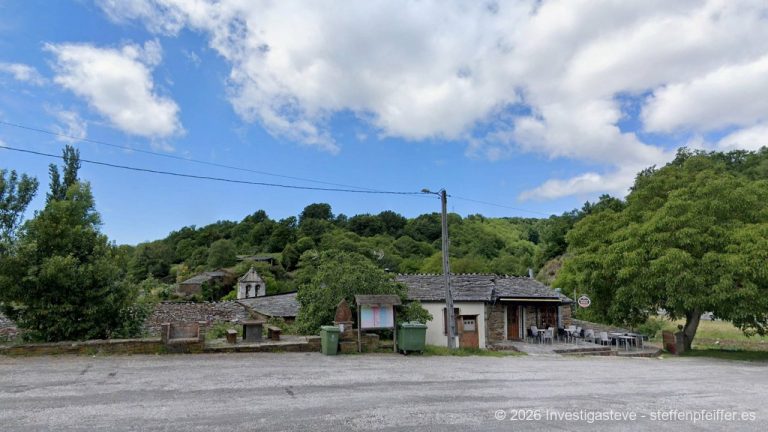
Arriving in Fonfría is like entering a protected space of security after a long march through the harsh mountain landscape. When you have left the last climb to the Alto do Poio behind you and the path gently descends into the village, you feel an immediate emotional relief. There is no urban hustle here; arriving is defined by the warm, almost family-like calm of the accommodations. The private Albergue A Reboleira is an architectural highlight that takes up the tradition of the pallozas. Checking into this circular stone building is associated with a ritual shedding of the load; you feel the coolness of the floor beneath your soles and hear the soft creaking of the massive wooden beams that give the house its soul.
The atmosphere in the hostels of Fonfría is characterised by a deep social warmth that forms a strong contrast to the cold of the outside world. At the Albergue Casa Galego or at Reboleira, arriving becomes a welcoming ritual: often a fire burns in the common room, whose scent of burnt oak wood immediately creates a feeling of home away from home. The rooms offer a quality of rest deeply rooted in rural silence. It is a sensory experience to snuggle into the clean sheets while outside the mist drifts over the ridge and the only sound is the rhythmic patter of rain on the slate roof. The psychological effect of Fonfría as an overnight stop is immense – up here, on the “roof” of Galicia, you feel a little closer to the sky and at the same time firmly rooted in the stone of the ancestors.
The sanitary facilities are mostly modern and offer that warmth perceived as pure luxury after a day in the unpredictable mountain weather. Particularly appreciated is the social immersion at the communal pilgrim dinner, where stories from all over the world are shared amidst the scent of hearty stew. Arriving in Fonfría also means reconciling with slowness. In the spacious communal areas, a psychological metamorphosis takes place: exhausted loners become a brotherly community for a night under the protection of granite. Those who come to rest here wake up the next morning with a clarity that will carry them light-footedly through the coming descent to Triacastela.
For pilgrims seeking spiritual depth, the absence of urban distractions offers the ideal setting. Arriving here means taking a step back to a time when a dry bed and a kind word were the most important milestones of the day. Sleeping in Fonfría means drawing strength from the constancy of the mountain. The acoustic backdrop of the night consists only of the distant howling of the wind and the soothing silence of the stones. It is a healing stay that regenerates the body and sharpens the focus on the essential before civilisation catches up with you again in the lower altitudes.
Eating & Drinking
The culinary world of Fonfría is a homage to the gifts of the mountains and the necessity of hearty satiety. In the kitchens of the hostels, eating is celebrated as an act of care. The smell that wafts through the village in the late afternoon is an olfactory promise of warmth: it smells intensely of freshly prepared Caldo Gallego, that nourishing soup of cabbage, potatoes, and white beans, which up here is often particularly richly refined with bacon and chorizo. The warmth of the soup bowl in your often cool hands is the first step towards physical revival after the windy march over the Alto do Poio.
An absolute highlight of the local gastronomy is the beef of the region and the famous Queso do Cebreiro, a creamy, heart-shaped cheese whose mild taste harmonises perfectly with the heavy Galician country bread. At the Albergue A Reboleira, a communal dinner is often offered, where traditional dishes such as cocido or juicy pork are served. The crust of the bread is so crispy here that it cracks loudly when broken – an auditory signal of freshness and craftsmanship. To drink, the characterful wine of the region is served in white ceramic bowls, the cuncas. The cool weight of the bowl in your hand and the earthy taste of the wine form the perfect soundtrack for a moment of deep gratitude.
Eating in Fonfría also means tasting the quality of simplicity. Since there is no urban hustle, you enjoy every bite more consciously. The psychological component of eating is closely linked here to reward: you have conquered the mountains, you are safe, and this meal seals the day’s success. The taste of homemade desserts, such as the Tarta de Santiago with its fine almond scent, rounds off the culinary experience. Those who dine in Fonfría literally absorb the archaic power of Galicia – food for the soul that sends you strengthened into the next day.
Supplies & Logistics
Logistically, Fonfría acts as a zone of specialised support at a geographically exposed point. As a pilgrim, you must be aware that this hamlet is not a modern commercial centre; those who come here seek reduction to the essentials at a strategically important point of the stage.
Shopping: There are no large supermarkets on site. The supply of small snacks, water, or simple hygiene items is exclusively through the points of sale within the hostels. Pilgrims should have already replenished their main supplies in O Cebreiro. The next comprehensive shopping opportunity is only in Triacastela, about 8-9 km away.
Gastronomy: Catering is excellently covered by the kitchens of the hostels (A Reboleira, Casa Galego). Here you get hot meals, hearty breakfasts, and provisions tailored specifically to the high calorie needs of mountain walkers. Opening hours are reliably aligned with the flow of pilgrims.
Sleeping: With two well-run private hostels and a guesthouse, solid capacity is available for the size of the place. In high season, advance reservation is strongly advisable to guarantee the psychological planning security of a fixed camp on the ridge.
Public Facilities: There are no medical facilities, banks, or post offices in Fonfría. In an emergency, however, the connection via the nearby LU-633 is excellently organised, and the emergency services are quickly reachable via 112. The nearest formal administrative infrastructure is in Pedrafita do Cebreiro or Triacastela.
Safety in Fonfría is extremely high due to the clarity of the site and the social control of the small community. Acoustically, the place remains an oasis as through traffic is minimal. Logistically, the village acts as a “safety valve” of the stage: those who realise that their strength is waning after the Alto do Poio find a safe haven here before the steep descent. Logistical processes, from luggage transport to stamping the credential, function smoothly and professionally. Fonfría proves that good pilgrim logistics do not consist of the number of shops, but of the reliability of basic services at a historically significant point.
Don’t Miss
- The church of San Xoán: Visit this simple jewel from the 16th century and feel the silence between the ancient granite walls – a place of deep spiritual immersion.
- The eponymous spring (Fons Frigida): Look for the historic water source in the village and refresh yourself with the ice-cold spring water – a tactile ritual of purification.
- The architecture of the Albergue A Reboleira: Admire the modern building in the style of the Celtic pallozas; the circular structure is unique on the entire Way.
- The view from the ridge: Stop at the edge of the village and let your gaze wander over the gentle, often mist-shrouded green waves of Galicia – a visual panorama of freedom.
- The fireplace fire: Enjoy the pleasant warmth in the communal kitchen in the evening; the smell of burning wood is the olfactory signature of the place.
- The silence of the night: Step outside the hostel after 9 p.m. and simply listen to the wind – an auditory meditation of the highest order at 1,300 metres altitude.
Insider Tips & Hidden Places
Away from the marked pilgrim path, just a few steps behind the old cemetery of Fonfría, a narrow, almost invisible path leads to a small hill hidden by dense broom bushes. Here you will find a flat stone slab that juts out like a natural viewpoint over the Oribio valley. It is a place of extreme acoustic isolation, where even the wind is only heard muffled. The ground here is covered with a thick layer of dry grass and soft moss, offering a tactile blessing for your strained feet. In the air lies an intense scent of wild thyme, often overpowered on the official rest stops by the dust of walkers. This is the perfect spot for a private reflection or a small meditation, far from the cameras of other pilgrims. Here you feel the primordial power of the mountains, when the place was still a sacred space without walls.
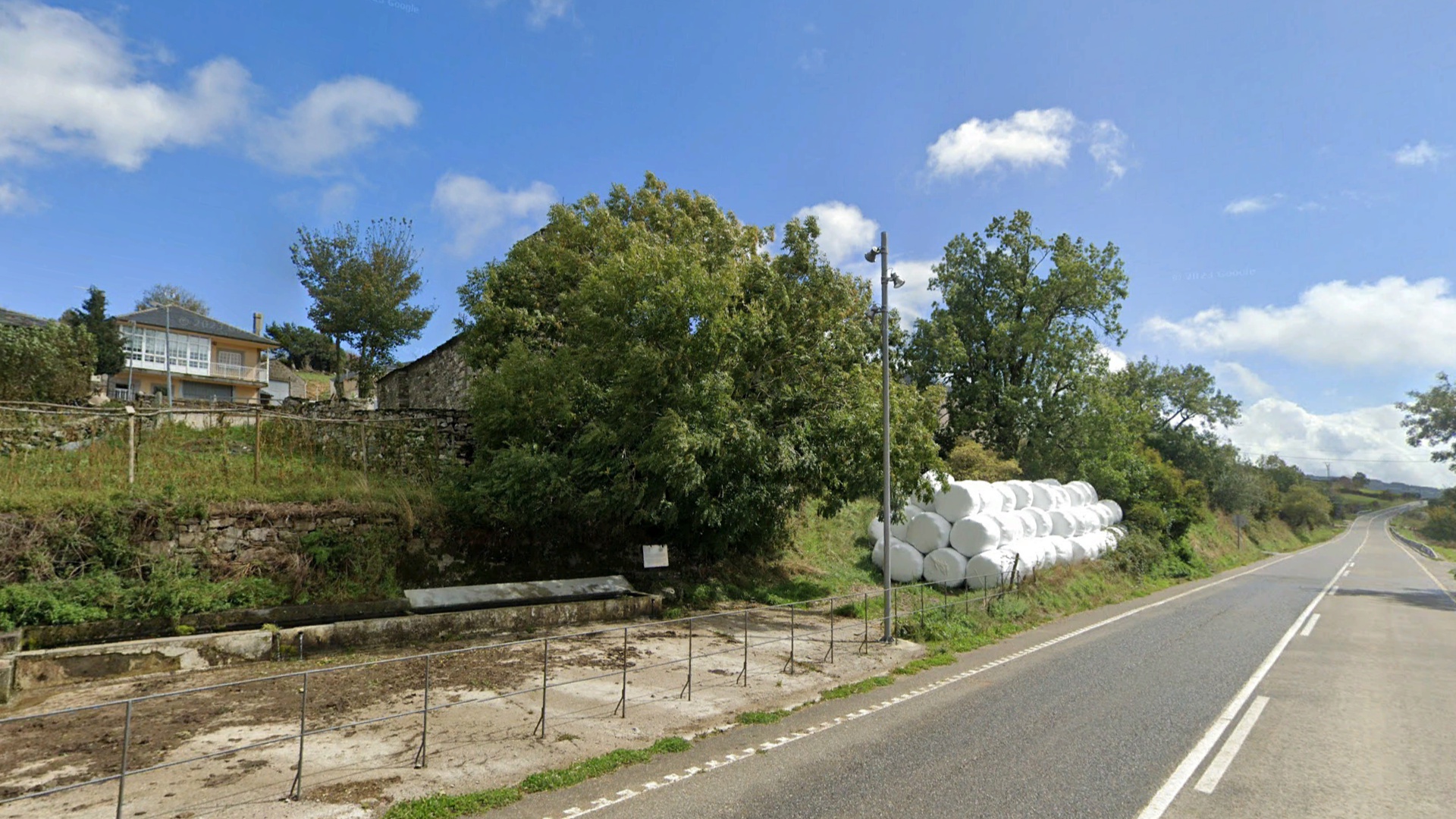
Another hidden treasure in Fonfría is the small, half-ruined stone fountain at the western exit of the village, often overlooked by walkers hurrying past. The water there emerges directly from a slate layer and is of a clarity rarely found today. When you dip your hands into the water, you feel a freshness that immediately clears your senses. In the evening hours, when the light falls flat over the ridge, light reflections appear on the water surface that sparkle like small jewels. It is a place of ritual purification, such as pilgrims of the 16th century might have used to wash the dust of the stage from their skin. Such small, inconspicuous details make Fonfría a place of discovery for those ready to look behind the façade of the obvious.
Did you know that inside the church of San Xoán there is a small, almost inconspicuous relief showing a pilgrim staff and a scallop shell, carved directly into the stone? It is not an official artwork, but rather a personal signature of hope from past centuries. When you run your fingertips over these cool, rough notches, you touch the individual history of a person who stood at this very spot three hundred years ago. This tactile communication across time makes the psychological depth of the Camino tangible. At dusk, when the mist rises from the valleys, Fonfría transforms into an almost unreal scene, where the shadows of the past seem to come alive. Here, in the silence of the stones, you often find a part of yourself that you had forgotten in the hustle of everyday life.
Finally, it is worth directing your gaze directly at the ground of the old dry stone walls that surround the village. Between the granite crevices grow rare lichens and tiny ferns that sparkle like small diamonds in the morning dew. This visual experience offers a fascinating contrast to the monumental hardness of the mountain landscape. It teaches you the psychological acuity of observation of detail: even in the small and inconspicuous lies the greatness of creation. Those who take the time to perceive these nuances in Fonfría discover a world behind the yellow arrows – a Galicia that pretends nothing, but preserves its beauty in silence. The hamlet offers the rare opportunity to reflect on your own journey once more in absolute peace just before the descent, before the hustle of the larger stage towns catches up with you again.
Moment of Reflection
In Fonfría, you stand at a point of maximum spiritual density. The centuries-old tradition of pilgrim hospitalitas at this exposed place challenges you to think about your own helpfulness and humility. In the cool silence of the cold spring, ask yourself: “What in my life is as refreshing and essential as this water, and what in me is as constant as this mountain granite?” The psychological metamorphosis that takes place here is the change from the identity of the “survival fighter” on the mountain to that of the “guest” in Galicia. Fonfría challenges you to pause before you begin the descent. It is a filter for your thoughts. In the vastness of the ridge, your everyday worries become small, and your true goals emerge more clearly.
The historical causality of your being here connects you with the hospitaleros of the 16th century and the millions of pilgrims for whom this place was a spiritual lifeline. Do you feel the responsibility to carry forward this heritage of pausing? In Fonfría, you become aware that the Camino is not a race, but a search for your own centre. The coolness of the rough stone under your hands reminds you of your own resilience. Use this moment of reflection to recalibrate your inner compass. When you leave Fonfría tomorrow, take a piece of the stone calm and honest dignity of this place with you. It will be your anchor when the hustle of Santiago finally reaches you. Here, on the ridge of Galicia, you have found the strength to continue your journey with a new, clear sovereignty.
Camino of the Stars
This place lies on the Camino Francés, on the stage from O Cebreiro to Triacastela. The sequence of places is:
O Cebreiro → Liñares → Hospital da Condesa → Padornelo → Alto do Poio → Fonfría → O Biduedo → Fillobal → Pasantes → Triacastela
Did you also feel that deep moment of grounding in the archaic silence of Fonfría, or gather new strength for the descent at the cold spring? Perhaps you experienced a special community in the round stone architecture of Reboleira, or found your own place of power in the mist? Share your personal impressions, your photos of the slate roofs, or your thoughts on the historical significance of mountain hospitalitas with us. Every story makes this special threshold point on the Camino come alive for the community – we look forward to your contribution!
About the Author