First Glance – Introduction & Atmosphere
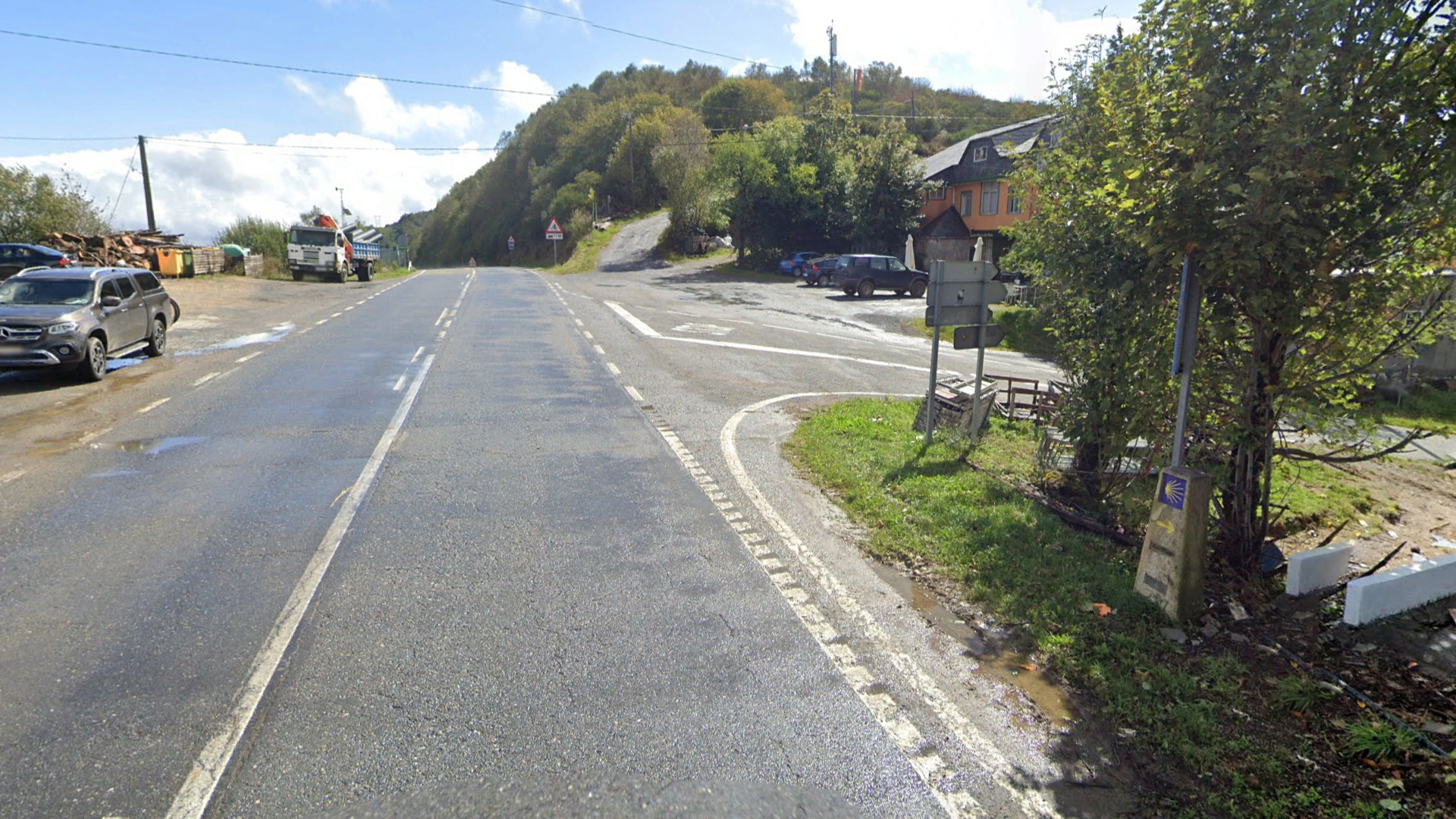
When you have painfully worked your way up the steep, almost merciless ascent from Hospital da Condesa and Padornelo, you reach the Alto do Poio, the literal zenith of your path through Galicia. At 1,337 metres above sea level, you stand at a point where the world seems to sink beneath you. The air up here is thinner, cooler, and often characterised by an impetuous wildness. The wind whistles incessantly over the ridge of the Sierra de Rañadoiro, carrying the metallic smell of approaching rain or the tart, spicy note of flowering broom and damp slate. It is a place of extreme acoustic signals: the roaring of the wind in your ears mingles with the rhythmic, heavy click of your pilgrim staffs on the rough asphalt of the pass road and the distant, almost ghostly echo of cowbells from the deeper valleys.
At Alto do Poio, you feel the physical reality of your journey in every fibre of your body. Your lungs still burn from the exertion, while your skin registers the sudden cold of the summit. The visual panorama is of an epic magnitude – an endless sea of green hills and deep valleys, often dipped in a milky white of mist and clouds. It is a moment of psychological overwhelm; you look back on the path you have covered coming from Castile and León and feel the triumphant weight of your success. Here, at the highest point of the Camino Francés in Galicia, you are no longer a simple walker; you are a border crosser between the elements, a seeker who can almost touch the sky with their hands. At Alto do Poio, it smells of victory, of exertion, and of the infinite vastness of the Galician mountain world.
What This Place Tells
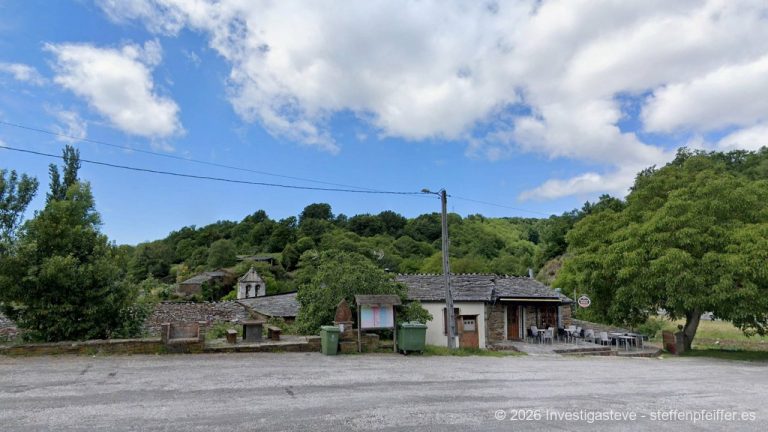
Alto do Poio is a silent chronicler of human endurance and a strategic guardian of the passes. In the historical causality of the Camino de Santiago, this point functioned as a puerto, a pass that could decide over life and death. History tells of countless pilgrims who, in snowy winters, reached their limits up here and for whom reaching the simple buildings was a true miracle of hospitalitas. There are no pompous palaces here, only the honest, defiant architecture of the mountain stations. The massive stone walls of the few houses are constructed to withstand the lashing autumn storms and snow loads – a form of constancy that does without any ornament.
The heart of the narrative is undoubtedly the iconic bronze statue of the pilgrim leaning against the wind. It is far more than just a photo opportunity; it is a manifestation of the collective experience of millions of people. When you stand before it, you feel historical immersion in its purest form. The statue symbolises the struggle against the elements and the psychological power of will that is stronger than the gravity of the mountains. Alto do Poio also tells of the development of infrastructure: where once only narrow mule tracks threatened by wolves and weather ran, today the small settlement offers a safe anchor point. The historical constancy lies here in the function – since the 9th century, this is the place where you lower your head, catch your breath, and reorient yourself for the long path to Santiago.
But the place also whispers quieter stories – of the shepherds who have driven their herds across these ridges for generations, and of the Celtic ancestors who suspected their sacred sites at these heights. The rough slate slabs that break out of the earth everywhere here carry the traces of millennia. At Alto do Poio, history is not consumed as a dry date but experienced as a physical presence. The smell of damp stone and the coolness of the mountain walls connect you directly with the era when crossing the mountains was a sacred act. Every gust that sweeps over the pass carries the echo of the prayers and curses uttered up here for centuries. It is a place of transition where the history of the Way becomes a tangible, breathing reality.
Addresses & tips in Alto do Poio
Camino Distances
Alto do Poio marks the summit point of the stage and is the last major orientation point before the descent to Triacastela.
| Previous Town | Distance (km) | Next Town | Distance (km) |
|---|---|---|---|
| Padornelo | ca. 0.5 km | Fonfría | ca. 3.3 km |
Sleeping & Arriving
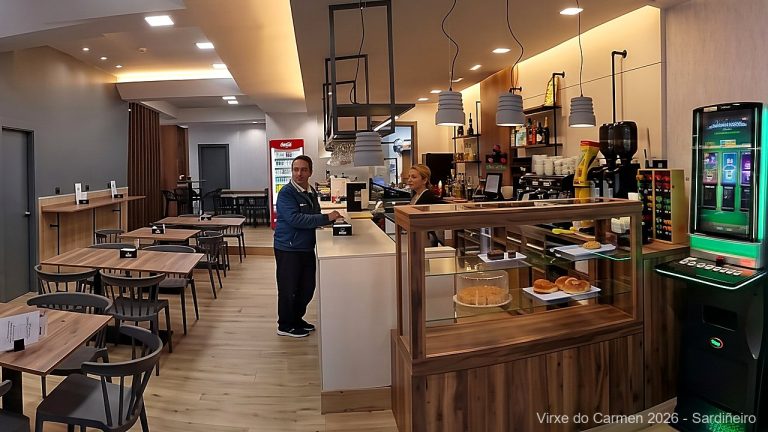
Arriving at Alto do Poio is an experience of radical reduction and maximum relief. When you have taken the last bend of the steep road and the few buildings of the pass appear before you, the physical tension of the past kilometres falls abruptly away from you. “Arriving” here is shaped by the direct, almost gruff warmth of the mountain hospitaleros. There is no anonymity; those who stay up here belong to the sworn community of summit conquerors for a night. The Hostal Santa María do Poio and the Albergue El Puerto are the two anchor points that offer the walker shelter. The tactile experience begins when you put down your backpack on the cool floors and take the first deep breath of the cold, pure air inside the stone buildings.
The rooms at Alto do Poio offer a very specific form of peace. Since the place is far removed from any urban noise, the silence of the night is almost physically tangible, only occasionally interrupted by the howling of the wind at the window frames. This auditory isolation is an essential part of psychological regeneration. Those who stay here consciously choose closeness to nature over the comfort of the larger towns in the valley. It is a feast for the senses to snuggle into the warm blankets while outside the mist drifts over the ridge, enveloping the world in a soft white. Sleeping at Alto do Poio means drawing strength from the height and waking up with the feeling of having already achieved one of the greatest victories of the Way.
The sanitary facilities are functional and clean, and the feeling of hot water on exhausted muscles is perceived up here at 1,300 metres as the highest conceivable luxury. Particularly appreciated is the social immersion in the bar of the hostel, where pilgrims from all over the world share their experiences over a cup of steaming tea or a glass of wine. You are not a number here, but part of a community of fate. The psychological effect of arriving at Alto do Poio is immense: you feel safe here in the “eye of the storm”, protected by massive walls from the unpredictable mountain world. It is an archaic form of hospitality that has a lasting effect.
For many pilgrims, Alto do Poio is the place where they first feel a true connection to the spiritual vastness of Galicia. The accommodations preserve the character of the region: the coolness of the stone and the warmth of the fire offer that contrast that sharpens the mind. Those who come to rest here wake up the next morning with a clarity that will carry them light-footedly through the coming descent to Fonfría. It is a healing stay that grounds the body and prepares the soul for the finale of the journey. Arriving at Alto do Poio means taking a step back to a time when a safe camp amidst the mountains was the most precious gift.
Eating & Drinking
At Alto do Poio, gastronomy becomes an act of physical rescue and mental edification. Since the exertion of the ascent is immense, the culinary offering focuses on honest, calorie-rich food that warms the body from the inside. The smell that wafts through the dining room of the hostel in the late afternoon is an olfactory promise: it smells intensely of freshly prepared Caldo Gallego, that nourishing soup of cabbage and potatoes, which is served particularly hearty up here. The warmth of the soup bowl in your hands is the first step towards regeneration. Each spoonful brings the power of the soil directly into your system.
An absolute highlight is the homemade bread and the local Tarta de Santiago, whose almond scent is particularly intense in the cool mountain air. In the bar of Alto do Poio, eating is celebrated as an act of community. You sit on massive wooden benches, share a platter of Galician ham and cheese, and feel your spirits returning. To drink, a robust wine of the region or a hot beverage is often served, offered in traditional ceramic cups. The coolness of the surroundings and the warmth of the food create a sensory contrast that makes the enjoyment an unforgettable experience.
Eating at Alto do Poio also means perceiving silence as an ingredient. Since there is no urban hustle, you enjoy every bite more consciously. The psychological component of eating is closely linked here to reward: you have conquered the highest point, you are safe, and this meal seals the triumph of the day. Those who dine here literally absorb the strength and peace of Galicia – food for the soul that lets you continue strengthened. It is an honest fare that shows that true luxury often lies in a simple, hot meal amidst the wilderness.
Supplies & Logistics
Logistically, Alto do Poio is a place of radical concentration on the needs of the pilgrim. Those who come here must know that this is not a place for shopping trips, but a strategic rescue station at the summit. The administrative simplicity of the place is more than compensated for by the reliability of the services available.
Shopping: There are no supermarkets on site. The supply of snacks, water, and basic hiking supplies is exclusively through the hostels and albergues. Pilgrims should have already replenished their main supplies in O Cebreiro or Hospital da Condesa. The next comprehensive shopping opportunity is only in Triacastela, about 8 km away.
Gastronomy: Catering is excellently covered by the bar and restaurant of the Hostal Santa María do Poio and the Albergue El Puerto. Here you get hot meals, breakfast, and provisions tailored specifically to the high calorie needs of mountain walkers. Opening hours are strictly aligned with the flow of pilgrims.
Sleeping: With the hostel and the private albergue, considerable capacity is available for the small size of the place. Nevertheless, advance reservation is strongly recommended in high season, as Alto do Poio is a coveted point for those who choose the pass as the psychological endpoint of the day.
Public Facilities: There are no medical facilities, banks, or post offices at Alto do Poio. All formal infrastructure must be used in Triacastela or Pedrafita. In an emergency, however, the connection via the LU-633 is excellent, and the emergency services are quickly reachable via 112.
Safety at Alto do Poio is exceptionally high due to the clarity of the site. Acoustically, the place remains an oasis, as traffic on the LU-633 almost completely stops at night. Logistically, the pass acts as a “check-in of the soul” – here you do not check your luggage weight, but your mental state after the hardest ascent in Galicia. Alto do Poio proves that good pilgrim logistics sometimes consist of needing nothing but what you carry in your own heart. Logistical handling of luggage transport functions smoothly here, as all major services visit the place daily.
Don’t Miss
- The bronze statue of the pilgrim: An absolute must; pause and feel the psychological power of this symbol of endurance and resilience against the wind.
- The sunset from the ridge: Experience how the golden light dances over the endless green waves of Galicia – a visual moment of total freedom.
- The “cold shower” of the mountain air: Step outside the hostel for five minutes and breathe the purest air of your entire journey – an olfactory revelation.
- The Caldo Gallego at the hostel: Try this traditional soup directly at the highest point; it is considered the best fortification for the coming descent.
- The panoramic photo: Capture the view back into the valley – a visual proof of your physical achievement of the last hours.
- The silence of the night: Step outside after 10 p.m. and simply listen to the silence of the mountains – an auditory meditation of the highest order.
Insider Tips & Hidden Places
Away from the marked pilgrim path and the statue, just a few hundred metres behind the hostel, a small, almost invisible path leads to a rocky outcrop that opens the view to the north. Here time seems to come to a complete standstill. In this corner, it smells intensely of forest honey and damp slate. It is the perfect place for a private reflection, far from the cameras of other walkers. Here you feel the primordial power of the Sierra de Rañadoiro, just as the Celtic ancestors saw it two thousand years ago. The ground is firm and covered with lichen, making every step almost silent and promoting deep psychological calm. Those who take the time to visit this hidden place are rewarded with an atmosphere that is not in any guidebook.
Another hidden treasure is the small, mossy spring that hides in the dense fern bushes somewhat below the pass. The water there emerges ice-cold directly from a rock fissure and is of a clarity rarely found today. It is said that this spring was already used as a ritual purification site in the Middle Ages before beginning the descent into holy Galicia. When you dip your hands into the water, you feel a freshness that immediately clears your senses. In the evening hours, when the light falls flat over the ridge, light reflections appear on the water surface that sparkle like small jewels. It is a space without distraction where the spiritual energy of the place becomes physically tangible.
Did you know that there is a spot at Alto do Poio where the echo of your own voice is reflected back from the opposite slopes in a very specific way? When you stand at the right point and speak softly, the wind seems to catch the words and bring them back as a gentle whisper. This auditory phenomenon intensifies the feeling of mystical presence that surrounds this place. It is as if the landscape itself is communicating with you. Those who take the time to explore these acoustic nuances discover an Alto do Poio that is far more than just a hamlet by the road – it is a place of fine vibrations that only reveal themselves when you adapt your pace to the speed of your soul.
Finally, it is worth directing your gaze at dusk to the silhouettes of the old stone walls that once served as animal enclosures. When the last daylight disappears behind the mountains, these soot-blackened structures appear as silent guardians of domestic community. The smell of damp stone and the cool breeze whistling through the cracks create an atmosphere of timeless constancy. Those who lose themselves in these moments at Alto do Poio often find a part of themselves that they had forgotten in the hustle of everyday life. The pass offers the rare opportunity to integrate your own journey once more in absolute silence just before reaching the 100-kilometre mark, far from the expectations of the world.
Moment of Reflection
At Alto do Poio, you stand at a point of maximum spiritual density. The sublimity of the pass challenges you to think about your own strength: what in your life has carried you this far, and what may you finally let go of up here, at the summit of your exertion? The psychological metamorphosis that takes place here is the change from “ascent” to “arrival”. Alto do Poio challenges you to pause and question your own role in this infinite chain of seekers. The silence of the mountains acts as a filter for your thoughts. In the cool purity of the air, you become aware that wealth on the Camino does not lie in the number of kilometres, but in the depth of the moments experienced.
The historical causality of your being here connects you with the millions of pilgrims for whom this place has been a spiritual lifeline for centuries. Do you feel the responsibility to carry forward this heritage of pausing? At Alto do Poio, you become aware that the Camino is not a race, but a search for your own centre. The coolness of the rough stone under your hands reminds you of your own resilience. Use this moment of reflection to recalibrate your inner compass. When you begin the descent tomorrow, take a piece of the stone calm and timeless dignity of this place with you. It will be your anchor when the hustle of Santiago finally reaches you. Here, on the roof of Galicia, you have found the strength to continue your journey with a new, clear sovereignty.
Camino of the Stars
This place lies on the Camino Francés, on the stage from O Cebreiro to Triacastela. The sequence of places is:
O Cebreiro → Liñares → Hospital da Condesa → Padornelo → Alto do Poio → Fonfría → O Biduedo → Fillobal → Pasantes → Triacastela
Did you also feel that deep moment of triumph at the summit of Alto do Poio, or gather new strength in the shadow of the pilgrim statue? Perhaps you have discovered your own secret corner on the ridge or experienced the warm hospitality at the Hostal Santa María? Share your personal impressions, your photos of the endless panorama, or your thoughts on the spiritual power of the highest point with us. Every story makes this special threshold point on the Camino come alive for the community – we look forward to your contribution!
About the Author