A First Glance – Introduction & Atmosphere
When you have conquered the last meters of the arduous ascent from the Valcarlos valley or over the bare ridges of the Route Napoleon, something happens that can hardly be put into words. Suddenly, the slope breaks off, and you stand on the crest of the Puerto de Ibañeta. At an altitude of 1,057 meters, a panorama opens up that expands not only your view but your entire perception. Up here, where the western Pyrenees show their rough, unvarnished side, weather fronts collide. Often you are greeted by a wind so steady and powerful from the north that it presses the moisture of the nearby Atlantic directly into your pores. The air here tastes of cold, of the distant salt of the sea, and the tart aroma of mountain grasses crouching low to the rocky ground under the pressure of the gusts.
It is a place of absolute caesura. Behind you lies the arduous path from France; below you spreads the Valle de Erro, and before you lies the wide, promising Spain. The silence up here is not emptiness; it is saturated with a constant rushing that whistles through the cracks of the small chapel of San Salvador and echoes in your ears. You feel the tangible weight of the moment. The ground beneath your feet is hard, a mixture of weathered limestone and sparse vegetation that acknowledges every step with a dull, solid sound. When the fog – the infamous Navarrese “bruma” – rolls over the pass, the contours disappear, and the world shrinks to a radius of a few meters. Then it smells of wet earth and the metallic scent of cool rock, and you feel like a time traveller standing on the threshold of another era.
The atmosphere on the Ibañeta Pass is marked by a solemn seriousness. There is no room for superficiality here. The light, when it breaks through the clouds, has a cutting clarity that highlights every detail of the landscape – every distant rocky ridge, every dark cluster of beeches – razor-sharp. In this moment of arrival, physical exhaustion yields to a deep inner peace. You feel the sweat on your skin, instantly cooling in the chilly breeze, and sense the tension in your calves now giving way to a pleasant heaviness. Ibañeta is not just a geographical point; it is the emotional gateway to the Camino Francés, a place where you shed the burden of the past and prepare yourself for the metamorphosis that the path holds in store for you.
What This Place Tells
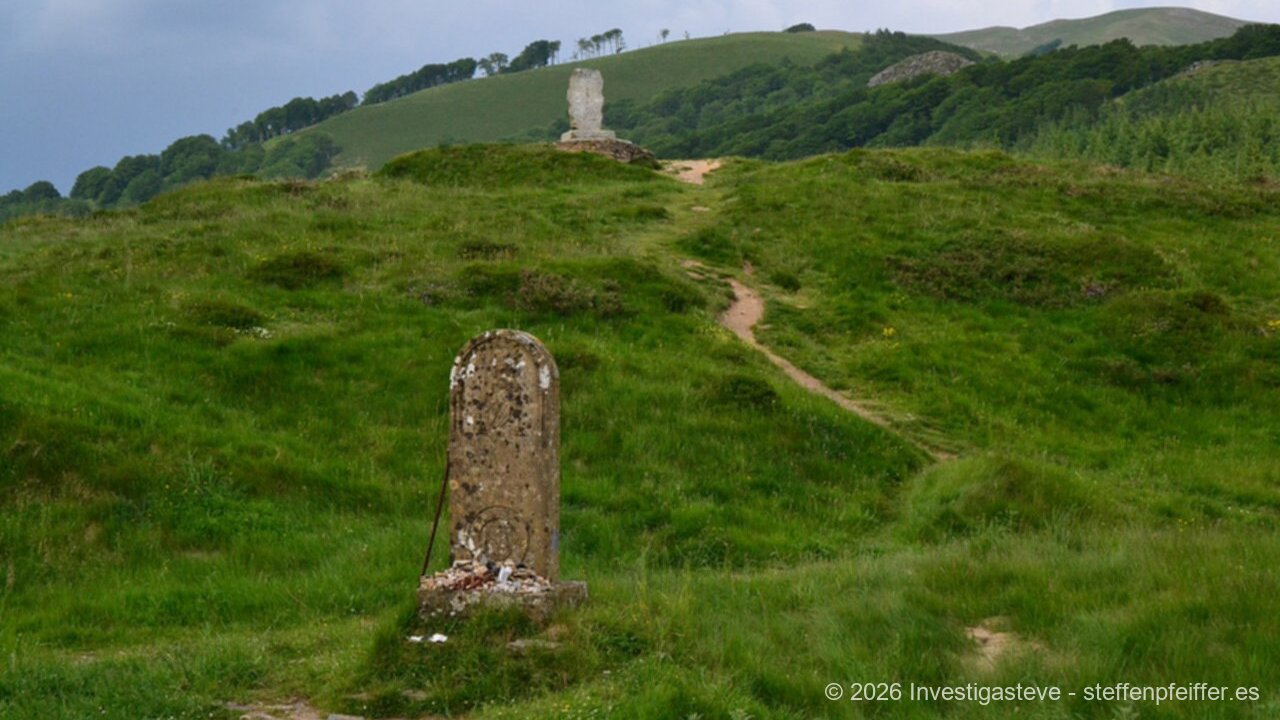
The history of the Ibañeta Pass is written in blood, iron, and immortal legends. Here, at this strategic bottleneck that the Romans already used for their road from Bordeaux to Astorga, an event took place in 778 that still shapes European memory today: the Battle of Roncesvalles. It was Charlemagne’s rearguard that was destroyed here by Basque tribes in the narrow ravines. Amidst the carnage, Roland, the bravest of the Frankish paladins, is said to have blown his legendary horn Olifant to warn his king – a cry so mighty that it split the rocks and still echoes in the songs of the troubadours today. When you stand at the monument to Roland, a simple stone monument with the carved horn, you feel the historical causality that has made this place sacred ground of chivalry.
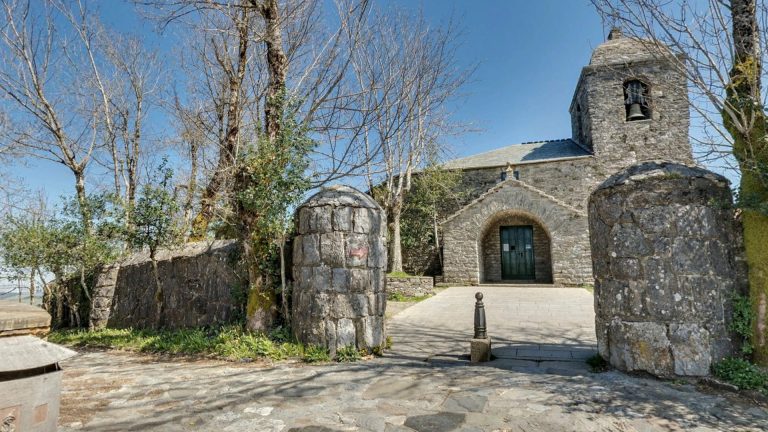
But Ibañeta tells not only of war, but above all of protection and mercy. As early as 1071, a monastery with a pilgrim Hospital was founded up here, dedicated to the Holy Saviour (San Salvador). It was the direct response to the dangers of the crossing – not only from human enemies, but above all from the unpredictable nature. In the snow-rich winters, when the pass was shrouded in a white shroud, the monks had the chapel bell ring continuously to guide lost wanderers in the dense fog to safety. This rhythmic ringing was the sound of survival for generations of pilgrims. Today, a modern reconstruction of the chapel from 1964 stands there, yet it rests exactly on the foundations of the old walls and absorbs their spiritual energy. The simple, massive stone walls of the chapel act like an anchor in time, a bulwark against transience.
The metamorphosis of the pass from a battlefield to a spiritual milestone is unparalleled. As you gaze at the stele commemorating the fallen, you grasp that Ibañeta is the place where myth became flesh. Every year in autumn, the pass also becomes the scene of a very different, ancient spectacle: millions of migratory birds use this depression in the mountains as a passage on their way south. The whirring of thousands of wings and the calls of the cranes mingle with the legend of Roland to form a polyphonic narrative of coming and going, of dying and moving on. Up here, history is not read, it is breathed. The roughness of the climate and the monumentality of the events merge into an experience that immerses the pilgrim deep in the roots of the Christian West.
Addresses & tips in Ibañeta-Pass
Camino Distances
At the Ibañeta Pass, you have reached the zenith of the first stage. From here, the path leads almost exclusively downhill into the protective Roncesvalles.
| Previous Place | Distance (km) | Next Place | Distance (km) |
|---|---|---|---|
| Valcarlos (Luzaide) | approx. 12.0 km | Roncesvalles | approx. 1.5 km |
Sleeping & Arriving
Arriving in Ibañeta means conquering an inner summit. There are no hotels here, no dormitory fortresses, and no cafés. “Arrival” here is a purely psychological process. Whoever reaches the pass has overcome the greatest hurdle of the first days. The feeling when you step over the crest and see the roofs of the Roncesvalles abbey flashing deep down in the valley between the trees for the first time is of an intensity that can demand tears of relief. The physical pain of the ascent – the burning in the lungs, the pressure in the knees – turns into euphoric pride in that moment. You stand on the roof of your journey and look down on the land you will traverse in the coming weeks.
There is no accommodation on the pass itself, which underscores the place’s significance as a pure transition point. Yet for a moment, the small chapel of San Salvador becomes your home. When you step through the heavy door into the tiny interior, a coolness greets you that feels like silk on your heated skin. The smell of old stone, dust, and a distant note of beeswax creates an atmosphere of security amidst the wild nature. Pilgrims sit here for a few minutes on the hard wooden benches, let their backpacks slide from their shoulders, and feel the blood circulation return to their arms. It is a sacred moment of silence where no words are needed. The only sound is your own breathing, slowly becoming calmer.
Arriving in Ibañeta is also a tactile experience. One tends to touch the stones of the chapel or the metal of the Roland monument, as if to assure oneself that one has truly reached this legendary place. The surfaces are often ice-cold and damp from the passing clouds, forming a stark contrast to the inner heat of exertion. This physical feedback from the place grounds the walker and prepares him for the short but steep descent. At Ibañeta, you are as close to the sky as at almost no other point on the Camino Francés, and yet you feel the heaviness of the earth as distinctly as never before. It is the place of total presence.
The transition from exertion to rest happens abruptly here. As soon as you reach the pass, the energy changes. The view forward, into the gentler green of Navarre, conveys a confidence that will carry you over the remaining kilometers to Roncesvalles. The emotional state shifts from concern about endurance to anticipation of the destination. Ibañeta is the refuge of the spirit before the body finds its rest in the abbey of Roncesvalles. Whoever stands up here understands the Camino no longer as a sporting challenge, but as a ritual act of transition. You are no longer the same person who set out in France in the morning.
Eating & Drinking
There is no gastronomy in the conventional sense on the Ibañeta Pass. There is no steaming café solo and no hearty bocadillo. Here, you depend on what you carry in your backpack – and that is precisely what makes the meal at this place an almost sacred experience. When you sit in the lee of the chapel on one of the flat rocks and drink your water from the bottle, it tastes better than any wine in the valley. It is ice-cold, metallic, and pure, and you feel how it cools your body from the inside and awakens the spirits. Every sip is a conscious act of self-preservation.
Pilgrims often share their last supplies up here: an apple, a piece of hard cheese, or a handful of nuts. The smell of the cheese, which unfolds particularly intensely in the thin mountain air, mingles with the scent of the surrounding pines and the earthy aroma of the soil. It is a simple, rudimentary meal, ennobled by the environment. The tactile experience of breaking bread with fingers that may still be trembling from the ascent connects you directly with the tradition of medieval wanderers, for whom this pass often represented a life-threatening trial. You eat not to still hunger, but to absorb the energy you need for the descent.
In the silence of the pass, chewing becomes a conscious process. You perceive textures more clearly – the sweetness of the fruit, the saltiness of the ham, the dryness of the bread. It is a culinary reduction to the essentials that perfectly matches the barren monumentality of Ibañeta. When you sit up there and watch the shadows of the clouds chase over the distant valleys while consuming your snack, you experience a form of enjoyment deeper than any restaurant visit. It is the satisfaction of elementary need in a place that tolerates no luxury. This picnic on the roof of the Pyrenees remains one of the most intense taste moments of the entire path in your memory.
Supplies & Logistics
Logistically, the Ibañeta Pass is a place of absolute self-sufficiency. Up here, there is nothing you can buy or book. That makes the preparation for this section so crucial. The pass is a functional transition point that forgives no mistakes but impresses with its clarity.
Shopping: There are no shops in Ibañeta. Pilgrims must ensure they have brought sufficient water and food from their starting point (SJPdP or Valcarlos). There is no way to replenish supplies up here, except counting on arrival in Roncesvalles in about 30 to 40 minutes.
Gastronomy: No bars or restaurants available. Occasionally, food trucks park in the lot during peak season, but you should never rely on this. The only “gastronomy” is your own canteen.
Accommodation: Strictly prohibited and also not advisable due to climatic conditions. Ibañeta serves exclusively as a waymark. The next accommodation is Roncesvalles, only 1.5 km away.
Public Facilities: There is a small parking lot and information boards about the Battle of Roncesvalles. The chapel of San Salvador offers a protected space for prayer and brief pause during opening hours.
The logistics at the pass are limited to orientation. Various route variants meet here, and the signage is excellent. It is a place of decision: you take one last look back and direct all your logistical attention to the descent. In emergencies, the pass is accessible via the N-135 road, offering a certain safety should your strength fail at the summit. Yet the true sustenance at Ibañeta is of a spiritual nature – it is the certainty that the goal of the first stage is now within reach. The pass acts like a funnel, gathering all streams of pilgrims and guiding them in an orderly fashion into the spiritual center of Roncesvalles.
Don’t Miss
Although the stay is usually short, there are details on the Ibañeta Pass that possess deep symbolic power.
1. The Roland Monument: A simple stele commemorating the heroic death of the paladin. Pay attention to the carved symbols – the horn and the sword Durendal. It is the place where myth and history merge.
2. The Chapel of San Salvador: Step inside and feel the coolness. The modern building honors a thousand-year-old tradition of protection. The view through the window southward shows you your destination.
3. The information boards on the battle: Take time to study the strategic sketches of the 778 battle. It helps to understand the topography of the pass and the narrowness of the ravines that proved fatal to Charlemagne’s troops.
4. The view back to France: On clear days, you can see the immense folds of the Pyrenees you have just overcome. It is a moment of triumph over geography.
5. Observation of birds of prey: Look to the sky. The thermals at the pass attract eagles and vultures, circling majestically over the abysses, embodying the freedom of this place.
Insider Tips and Hidden Places
Beyond the asphalted parking lot and the chapel, Ibañeta hides corners that radiate an almost eerie silence. If you follow the small path leading east above the chapel into the barren rock formations, you reach a viewpoint after a few minutes completely away from the pilgrim stream. Here, on the bare stone slabs, you are alone with the wind. You see not only Roncesvalles but the entire panorama of the Navarrese pre-Pyrenees, stretching like petrified waves to the horizon. It is a place of absolute isolation, where you feel as if you are floating above the world. Up here, it smells only of stone and clouds.
Another hidden place is the old, almost overgrown path leading below the current pass road into the dense beech forests. It is part of the original Roman road. When you walk a few steps there, you feel the moisture of the forest, the deep dark green of the ferns, and the coolness rising from the ground even in high summer. Here you hear no cars and no wind, only the soft dripping of dew from the leaves. It is a mystical place that gives you an idea of how medieval pilgrims must have felt when they plunged into these primordial forests, where danger could lurk behind every tree.
Also look for the small plaque for the ornithologists who have documented bird migration here for decades. It is a modest place reminding us that Ibañeta is an important crossing not only for humans. Near the chapel, there are also foundations of the old monastery complex, often overgrown with grass and moss. When you place your hand on the centuries-old stones there, you feel the continuity of assistance. These stones held the bell that saved lives. In these hidden details lies the true magic of the pass – it is a living palimpsest of faith, history, and nature.
Moment of Reflection
Ibañeta is the place of great inner reckoning. Up here, at the highest point of the first stage, a spiritual metamorphosis takes place. You stand physically between two countries and psychologically between two lives. The everyday life you left behind in Saint-Jean-Pied-de-Port or further away appears strangely pale and meaningless from here. The exertion of the last hours has caused a purification. In the thin air of the pass, priorities are rearranged. You recognize that you are capable of things you would not have thought possible a few days ago. The historical weight of the place, the memory of Roland’s sacrifice, gives your own small suffering a deeper dimension. You are no longer just a wanderer; you are part of an epic narrative.
In the silence of the chapel of San Salvador, a deep gratitude often sets in. It is not only gratitude for reaching the summit, but for the realization of one’s own vulnerability and strength at the same time. You feel the connection to the millions of people who stood here before you – kings, soldiers, beggars. They all breathed the same air, felt the same wind, and cast the same gaze into the valley. This historical causality acts like an anchor, solidifying you in your own existence. At Ibañeta, you learn that the path does not lead against nature, but through it – and that every descent into a new world must begin with a moment of absolute clarity at the height. When you leave the pass, you do so with a new seriousness and a deep confidence for the coming weeks.
Camino of the Stars
This place lies on the Camino Francés, at the end of the ascent of the first stage. The sequence of places is:
Saint-Jean-Pied-de-Port → Arnéguy → Valcarlos → Ibañeta Pass → Roncesvalles
Did you hear the call of Roland’s horn in the rushing of the wind on the Ibañeta Pass, or was it the sacred silence in the chapel of San Salvador that touched you most? Share your feelings upon reaching this monumental apex with us! Your experiences at the threshold to Spain are a valuable part of the eternal Camino. How did this place change you? We look forward to your story!
About the Author