A First Glance – Introduction & Atmosphere
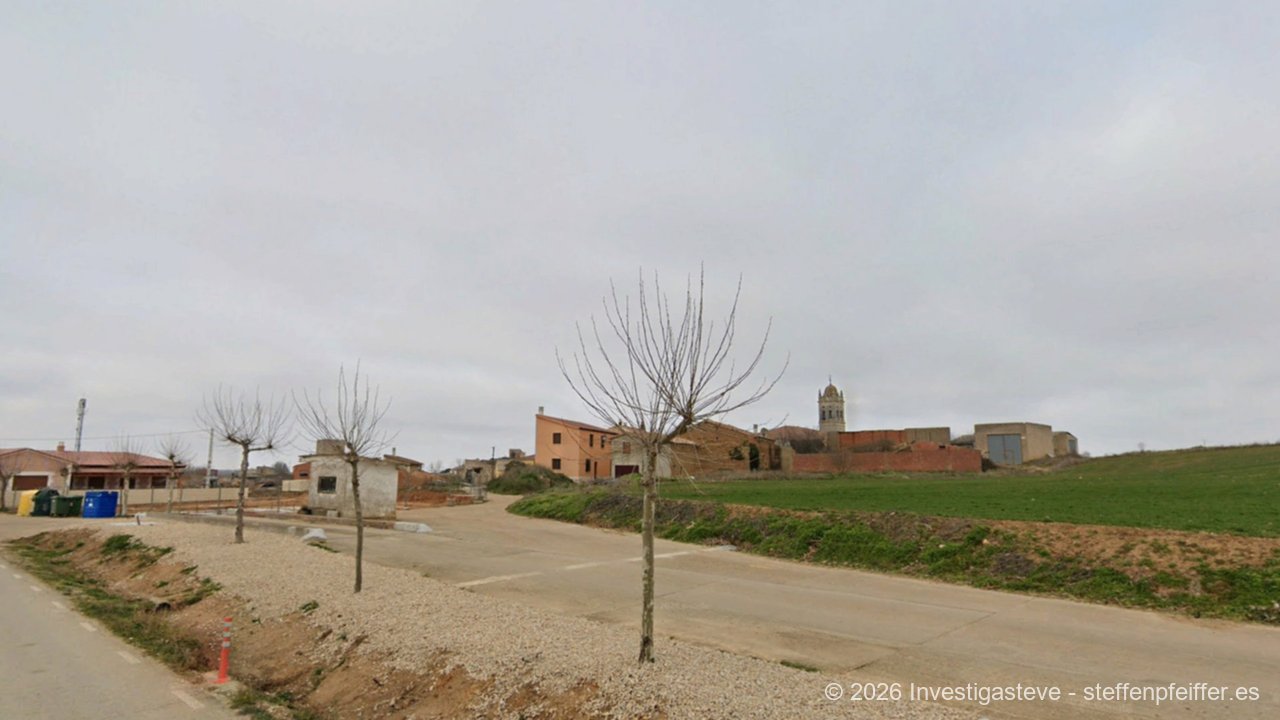
When you have left the dusty descent from the Alto de Mostelares behind you, that bare plateau where the wind often whistles so mercilessly that it seems to sweep the very thoughts from your head, Itero del Castillo appears before you like a medieval mirage. It is a sight that makes you pause. The air here is dry and tastes of swirling limestone and the tart aroma of withered thistles. Beneath your feet, you feel the shift in texture: the rough stones of the path give way to the firm, almost reverent ground of a village that has done nothing but keep watch for over a thousand years. You hear the rhythmic echo of your own hiking poles, reflected back by the massive walls of the Torre del Homenaje – a hollow, wooden sound that signals to you that you are not just entering a village here, but a fortress of history.
Itero del Castillo welcomes the pilgrim with a peculiar mixture of rugged seclusion and protective shelter. The sun burns here with an intensity that almost makes the ochre limestone of the houses glow. When you place your hand on the rough surface of the old defensive walls, you feel the stored warmth of centuries of Castilian summers. It is a tactile experience that immediately connects you to the earth. Psychologically, this place marks a deep caesura. Behind you lies the vast province of Burgos with its endless expanses, ahead of you lies the border, the river Pisuerga, and the new land of Palencia. You feel a strange vibration in the air here – the relief of having made the descent, paired with awe before the monumental silence that envelops this place.
In the alleys of the village, time seems to have a different consistency. It does not flow; it settles like dust on the windowsills of the adobe houses. You smell the distant smoke of a wood fire, even though it is high summer, an olfactory relic of eternal Castilian housework. The light in Itero del Castillo has a clarity that sharply outlines every contour – the cracks in the wood of the old doors, the delicate nests of the swallows under the roof beams, the deep shadows in the eye sockets of the church facade of San Cristóbal. Arriving here means finally exchanging the rhythm of the outside world for the beat of the Camino. It is a place of transition, where the soul begins to prepare for the new, while the body still carries the weight of the past journey in its bones.
What This Place Tells
The name “Itero del Castillo” is no coincidence, but a precise distillation of its purpose. Derived from the Latin “Hito” (boundary stone or post) and the obvious “Castillo,” the place tells of a time when borders were still drawn with blood and stone. In the 10th and 11th centuries, this patch of earth was the “Mojón de Castilla” – the outermost border post of the kingdom of Castile facing the often rival kingdom of León. Whoever stood here was no simple farmer, but a guardian. The mighty Torre del Homenaje, which dominates the village scene today, is the stone witness of this military necessity. It was the last refuge, a symbol of unyieldingness that signaled: thus far and no further.
The historical causality of Itero is closely linked to the Reconquista. As the Christian kings advanced southward, they had to secure their flanks. The Río Pisuerga was a natural barrier, and Itero the strategic height from which one could control every movement in the valley. Standing before the tower today, you can almost hear the clinking of chain mail and the snorting of horses once housed within these walls. It was a hard life, marked by constant vigilance against Moors and Christian neighbors alike. The psychological weight of this history is still palpable in the thick walls of the church of San Cristóbal. This church, an imposing structure from the 18th century resting on much older foundations, appears like a spiritual fortress – massive, unadorned on the outside, but a safe harbor within.
Yet Itero tells not only of war, but also of transformation through faith. When the Camino de Santiago gained importance in the Middle Ages, the function of the place changed. From a military border post, it became a logistical hub for pilgrims. The Puente Fitero bridge, just a stone’s throw away, made Itero the last safe haven on Burgos soil. Legends tell of knights who gave up their service to arms here to dedicate themselves to the protection of pilgrims. This metamorphosis from warrior to hospitalero is the essence of Itero. As you walk through the village today, you feel this dual identity: the defensive readiness of the tower and the open door of the hostel. It is a story of opening – a place that learned that true strength lies not in demarcation, but in being a bridge.
Addresses & tips in Itero del Castillo
Camino Distances
🗺️ After the spectacular but exhausting descent from the Alto de Mostelares, Itero del Castillo is the saving anchor point before the path crosses the provincial border into Palencia.
| Previous Place | Distance (km) | Next Place | Distance (km) |
|---|---|---|---|
| Castrojeriz | ca. 10.5 km | Puente Fitero | ca. 1.5 km |
Sleeping & Arriving
Arriving in Itero del Castillo has something ritualistic about it. After crossing the solitude of the plateau, the small village with its barely 30 inhabitants feels like an exclusive refuge. In the hostels, such as the municipal albergue, the welcome is marked by a warm simplicity typical of the smaller places on the Meseta. There is no mass tourism here. When you put down your backpack, you hear the creaking of the old floorboards beneath your feet – tactile proof of the authenticity of this place. The smell in the dormitories is often a mix of fresh laundry and the cool, damp aroma of old stone walls, which immediately conveys a sense of security.
Psychologically, staying overnight in Itero is a conscious decision for silence. While many pilgrims continue on to Frómista, Itero offers the rare opportunity to enjoy the solitude of the Meseta for one more night, but in a protected setting. When the evening sun bathes the Torre del Homenaje in a deep rust red, pilgrims often sit on the stone walls in front of the hostel. That is the moment of emotional metamorphosis: pride in the kilometers conquered from Castrojeriz mingles with the peace of the evening. You hear the distant bleating of sheep and the fluttering of kestrels circling the castle. It is a tactile peace when you stretch out your tired legs and feel the cooling air taking the heat of the day from your body.
At night, Itero del Castillo unfolds its true magic. Far from big cities, the starry sky here is so close and so bright that you feel you could touch it. The village sinks into an absolute, almost tangible silence. Only the wind, sweeping through the narrow alleys, tells stories of old border crossers. In this darkness, the pilgrim is thrown back upon themselves. The walls of the tower at night seem like a protective cocoon. Whoever sleeps here wakes the next morning with a clarity that only the Meseta can give – ready to cross the border into Palencia not only geographically, but also inwardly.
Eating & Drinking
The gastronomy in Itero del Castillo is honest, powerful, and deeply rooted in the earth of the Tierra de Campos. Cooking here is not for gourmets, but for people who need energy for the next day. The scent of “Sopa de Ajo” (garlic soup) often wafts through the narrow alleys, an aroma that immediately conjures images of cozy kitchens and steaming pots. This soup, made of old bread, garlic, paprika powder, and an egg, is the tactile equivalent of a warm blanket for the stomach. You taste the barrenness of the land and simultaneously the creativity that makes much out of little.
A highlight is the communal pilgrim meal, served in the village’s small bar or in the hostel. When the local red wine, a heavy drop from the region, flows into the glasses, language barriers disappear. Platters of “Chorizo” and “Lomo” are shared, their spicy aroma and fatty consistency exactly what the body craves after the heat. The local cheese, often a firm sheep’s cheese with a note of wild herbs, leaves a lasting impression on the tongue. It is an honest taste – rough, direct, and nourishing.
Whoever eats in Itero participates in a centuries-old rite. The wooden tables are often marked by the knives of past generations, a tactile link to history. When you break the fresh, crusty bread, you hear the crack of the crust – a small but fine auditory pleasure. The simplicity of the food forces you to be mindful. You taste the olive oil, the garlic, the salt. It is a culinary return to essentials, perfectly suited to the barren beauty of the surroundings. Here in Itero, you learn that a simple stew after a long journey can be more valuable than any luxury menu.
Supplies & Logistics
Itero del Castillo is a place of reduction, and this is reflected in its infrastructure. Anyone coming here should adjust their logistical expectations. There is no large supermarket and no pharmacy. Supplies are focused on the essentials, which has its own charm. You rely on the hospitality of the hostels and the one small bar, which often also functions as an unofficial post office and news center. This lack of commercial abundance has a psychologically relieving effect – you don’t have to worry about choices, you take what is there, and it is usually exactly the right thing.
Shopping: There is no regular grocery store. Occasionally, a delivery van for bread or fruit stops in the village, which is an acoustic event (honking). Small snacks and drinks are available in the bar or the hostel.
Gastronomy: The village bar is the social center. Here you can get coffee, bocadillos, and often a simple but hearty pilgrim dish in the evening. Opening hours depend on the flow of pilgrims and the season.
Accommodation: The municipal albergue is the main point of contact. It is simple, clean, and breathes the spirit of the Camino. Anyone seeking more comfort should have booked in Castrojeriz, as spaces in Itero are limited.
Public Facilities: There is a small municipal office, but no ATM. Medical help must be requested via emergency services or in Castrojeriz, 10 km away.
In summary, Itero del Castillo can be a small logistical challenge if you are not prepared. But for the experienced pilgrim, this very seclusion is a blessing. It is the last place in Burgos to gather yourself once more before crossing the bridge into Palencia. You should make sure you have enough water for the short distance to Puente Fitero, even if the distance is short – the sun in this area knows no mercy.
Don’t Miss
– Torre del Homenaje: The imposing residential tower from the 15th century is the heart of the village. It embodies Castile’s defensiveness. Pay attention to the small arrow slits and the massive corner ashlars – a tactile monument of defensive architecture.
– Iglesia de San Cristóbal: A church that looks like a fortress. The altarpiece inside is a hidden jewel of sacred art. The coolness of the walls is a physical salvation on hot days.
– The view back to the Alto de Mostelares: Standing in the village, look back at the mountain you have just crossed. The psychological effect of this perspective is immense – you see what you have physically achieved.
– The ruins of the city wall: Search for the remnants of the old fortification. They tell more about Itero’s strategic importance than any history book. The rough stone under your fingers connects you directly to the 10th century.
– Sunset at the edge of the village: Walk a few steps towards the bridge as the sun sets. The interplay of light on the ochre fields of the Tierra de Campos is an audio-visual total work of art, with the chirping of crickets keeping time.
Insider Tips & Hidden Places
A true insider tip is the small path that leads behind the tower to an elevated viewpoint. From here, you have an unobstructed view of the Río Pisuerga and the Puente Fitero in the distance. It is a place of absolute silence, where you feel time stands still. You hear only the rustling of the wind in the distant rows of poplars on the riverbank. This place is perfect for a meditation on the concept of “border” – both the geographical one and your own inner boundaries that you have already crossed on the Camino.
Another hidden place is the small, often overlooked bodega region on the edge of the village. These cellars, dug into the slope, are typical of Castile. If you are lucky enough to meet a local who allows you a peek inside, you experience a sensory sensation: the sudden cold, the smell of damp earth and fermented wine is an olfactory adventure. It is the hidden underworld of Itero, showing how deeply the people here are rooted in their land.
Pay attention to the inscriptions on the lintels of some adobe houses. Some bear symbols that go far beyond the Christian and suggest ancient protective rituals. It is a tactile journey of discovery to run your fingers over these old notches. These small details tell the story of the common people who, between the wars of kings, tried to secure their daily lives. They are the quiet voices of history that you only hear if you take the time to stand still.
Finally, there is a small square near the church, where an old fountain stands. The water is cool and fresh. When you wash your face with it, you feel a tactile revitalization that goes right through you. It is the simple luxury of Itero – a moment of purity before surrendering again to the dust of the path. This water is the liquid soul of the place, a gift from the earth to the exhausted wanderer.
Moment of Reflection
Do you stand here in Itero del Castillo as a defender of your old habits, or are you ready to leave the fortress of your ego and cross the bridge into a new land? The Torre del Homenaje reminds you that we all build walls to protect ourselves. Yet the Camino challenges you to tear down these walls, stone by stone. As you look toward the border with Palencia, ask yourself: Which “boundary post” in your life are you ready to move?
The silence of Itero is not a lack of sound, but an invitation to listen. In the barrenness of this landscape, every gesture, every word, and every taste becomes meaningful. Perhaps you recognize here that true freedom does not lie in having no boundaries, but in knowing where they are – and having the strength to cross them. Itero teaches you humility before history and the courage for your own transformation. Are you ready to leave the last stone of Burgos behind you?
Camino of the Stars
This place lies on the Camino Francés, on the stage from Castrojeriz to Frómista. The sequence of places is:
Castrojeriz → Hospital de San Antón (ruins) → Itero del Castillo → Puente Fitero → Itero de la Vega → Boadilla del Camino → Frómista
Did the sight of the mighty Torre del Homenaje fill you with awe, or was it the unexpected silence in the alleys of Itero del Castillo that touched you? Perhaps you heard a story in the village bar that changed your path? Write to us about your experiences and send us your impressions via the contact form – we look forward to every message, whether in German, Spanish, English, or Galician!
About the Author