A First Glance – Introduction & Atmosphere
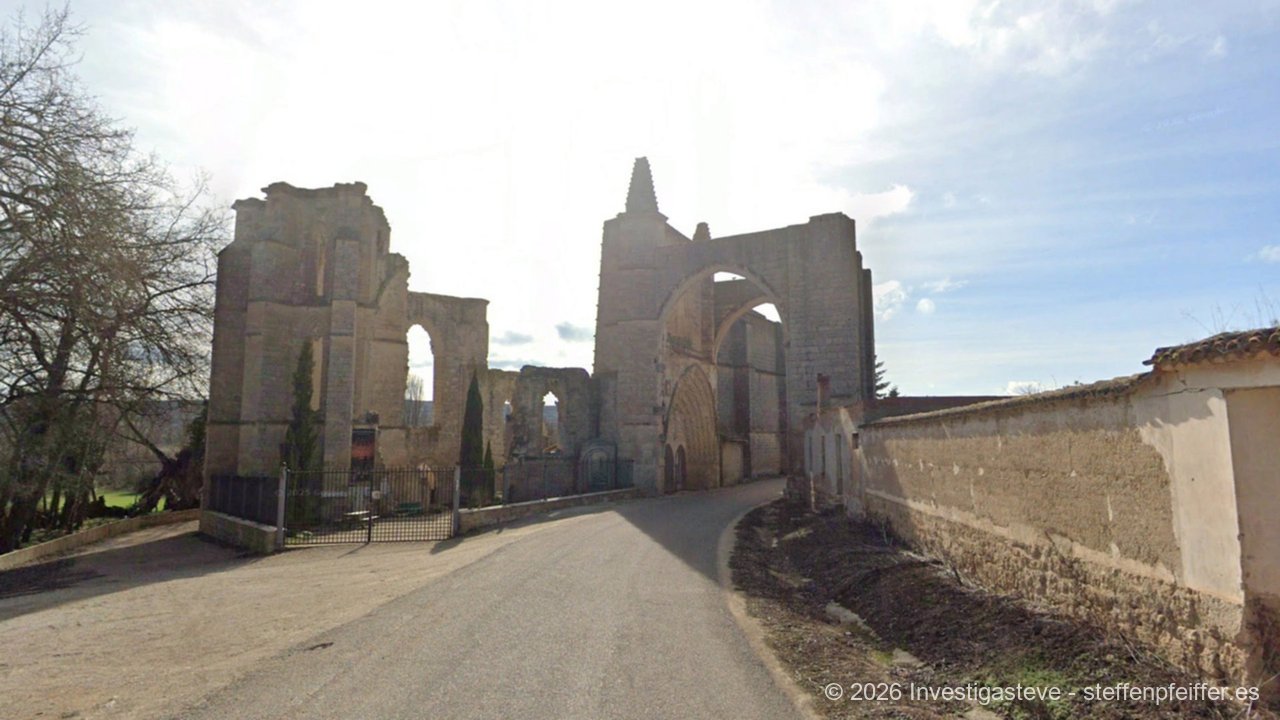
When you approach the ruins of San Antón, the frequency of your journey changes. Behind you lie the endless, often dusty kilometers of the Meseta, that meditative monotony that either wears down the mind or plunges it into a deep trance. Suddenly, almost like a mirage of ochre limestone, the silhouette of the former monastery emerges from the shimmering heat or the cool morning mist. It is a sight that makes you physically pause. The air here smells of dry wheat, of the centuries-old dust of the highway, and, when you reach the massive arches, of the cool, almost damp sublimity of stone that has defied the wind since the 14th century. You do not hear the usual rustle of civilization here; instead, the rhythmic echo of your own hiking poles dominates, reflected back by the Gothic vaults – a hollow, almost reverent sound that signals to you that you are crossing the threshold between the profane and the sacred.
The moment you pass under the mighty portal is a tactile experience of a special kind. The road leads right through the nave – an architectural curiosity unparalleled in the world. You feel the sudden drop in temperature when you enter the shade of the massive walls; the coolness settles like a protective cloak on your heated skin. Your fingers might brush over the rough, furrowed stone of the portals, and you feel the deep scars of time, the fine lichens, and the edges of the late-Gothic sculptures that have survived decay with stoic dignity. Psychologically, this is a point of absolute caesura. San Antón is not a place you simply pass; it is a place that penetrates you. The vastness of the landscape is channeled here for a moment, focused on this one passage, before it pours out behind you again into the infinity of the Tierra de Campos.
In the silence of the ruins, the distant chirping of the kestrels nesting in the high wall niches mingles with the soft rustling of the dry stalks by the wayside. It is a five-dimensional immersion: you see the sublimity of Gothic decay, you hear the silence of history, you smell the dry purity of Castile, you feel the coolness of the stone, and you grasp psychologically your own transience in the face of these monumental remains. Arriving here means losing the rhythm of modernity for a moment and immersing yourself in the slow, pulsating rhythm of the Middle Ages. San Antón does not receive you with pomp, but with the naked, honest beauty of the essential.
What This Place Tells
The history of San Antón is inseparable from the pain and hope of medieval humanity. The monastery was founded in the 12th century, but its architectural bloom and the present-day ruins primarily date from the 14th century, a time when the monastery rose to become the headquarters of the Antonine Order in Spain and all of Iberia. The Antonines were not ordinary monks; they were the specialists for one of the most terrible diseases of the Middle Ages: ergotism, popularly known as “Saint Anthony’s Fire” or “Ignis Sacer” (sacred fire). This disease, caused by the ergot fungus in rye bread, led to agonizing gangrene in the limbs, hallucinations, and often death. Pilgrims, writhing in pain, sought refuge in San Antón. Historical causality is tangible here: the place was built exactly where the flow of pilgrims was densest, to provide maximum help.
When you stand before the niches in the outer wall today, you see the stone witnesses of this care. Here, bread and food were deposited for pilgrims who were too ill to enter the monastery or who arrived after curfew. The monks of San Antón developed complex healing methods based on a mixture of faith, herbalism, and – revolutionary for the time – dietary changes. The “Holy Fire” was extinguished by “Anthony’s Bread.” Psychologically speaking, San Antón was a place of radical metamorphosis: the sick entered, and the healed (or at least comforted) left again. The Tau cross, the symbol of the Antonines, can be found everywhere in the masonry; it acts like a secret seal signaling to the seeker: here you will be supported.
The architecture itself tells of power and decline. Once this was a majestic ensemble of church, Hospital, and cloister. That the pilgrim path now leads right through the ruins is the result of centuries of coexistence between infrastructure and sacred building. After the desamortización in the 19th century, the monastery fell into ruin, but it refused to disappear entirely. It is a symbol of the resilience of the Camino. Every Gothic pinnacle, every pointed arch still reaching for the sky today is a silent cry against oblivion. When you walk through the main nave, you move on ground soaked with the tears of the suffering and the prayers of the healers. This historical depth gives San Antón an emotional weight that goes far beyond what an ordinary monument can offer. It is a place that teaches that new strength can also grow from ruins.
Addresses & tips in San Antón
Camino Distances
🗺️ San Antón lies like a stone gatehouse about two kilometers before Castrojeriz and marks the spiritual climax of the stage through the Burgalesan Meseta.
| Previous Place | Distance (km) | Next Place | Distance (km) |
|---|---|---|---|
| Hontanas | ca. 7.5 km | Castrojeriz | ca. 2.0 km |
Sleeping & Arriving
Arriving in San Antón is an experience that traces the term “pilgrim hostel” back to its radical, original meaning. Those who stay here consciously decide against the comfort of modern civilization and in favor of a night in direct contact with history. The albergue, housed in the remaining rooms of the ruin, often forgoes electric light and Wi-Fi. When the sun sinks behind the hills of Castile, San Antón transforms into a shadowy realm illuminated only by the flickering glow of candles. That is the moment when the psychological journey through time becomes complete. You feel the coolness of the massive stone walls, which only slowly release the heat of the day, and hear the distant howling of the wind sweeping through the open arches of the church.
The atmosphere in San Antón is marked by an almost monastic silence, broken by the communal interaction of pilgrims and hospitaleros. There are no bunk bed fortresses, but often simple mattress camps in rooms whose ceilings are supported by massive wooden beams and old stone vaults. The tactile experience of resting on this historic ground is incomparable. You do not feel like a guest, but as part of an infinite chain of seekers. The emotional metamorphosis usually begins with the communal candlelit dinner, when the shadows of the pilgrims dance on the rough stone walls. Arriving in San Antón means exchanging the noise of your own thoughts for the majestic peace of decay.
The night among the ruins is an auditory and tactile adventure. You hear the creaking of the old timber, the rustling of owl wings, and perhaps the distant ringing of the bells of Castrojeriz. The absence of artificial light sharpens the senses; the darkness here is deep and velvety, interrupted only by the sparkling sea of stars that seems to hang directly above you through the roofless parts of the ruin. Those who sleep here wake the next morning with a clarity that few other places on the Camino can convey. It is a return to the essentials: a roof over your head (if somewhat leaky), a warm meal, and the community of like-minded souls. San Antón is the heart of the pilgrim experience, raw, authentic, and profoundly moving.
Eating & Drinking
Catering in San Antón is a lesson in simplicity and spiritual nourishment. As there are no commercial restaurants or shops in the immediate ruin, the culinary experience is based almost exclusively on the community of the hostel. Dinner is usually celebrated as a “Cena Comunitaria,” a ritual meal that connects with the tradition of the Antonine monks. The scent of hearty vegetable soup (Sopa de Legumbres) or a classic Sopa de Ajo fills the ancient walls. You taste the honesty of the ingredients: the region’s olive oil, the garlic, the salt, and the fresh, crusty bread that still tastes like real craftsmanship in Castile. When you break the bread, you hear the characteristic crack of the crust – a small but fine auditory pleasure that heightens anticipation.
The wine served in San Antón is often a heavy, dark drop from the nearby growing regions of Burgos or Palencia. It tastes of sun-drenched earth and dry wood and warms the body from within as the cool night air blows through the ruins. Drinking from simple cups, sharing the bowls, and passing the wine create a tactile and social connection that goes beyond mere satiation. It is an olfactory journey into the past, as the smell of food mixes with the scent of beeswax candles and the tart aroma of the ancient stone. Here you do not just eat; you participate in a centuries-old rite of hospitality.
Those who pass through San Antón during the day should take time for a short rest in the shade of the arches. A sip of water from your own bottle tastes almost like an elixir here, surrounded by Gothic splendor. There are no Coca-Cola machines or garish advertising signs here, which intensifies the taste of what you have brought – be it an apple or a piece of cheese. The culinary reduction forces the pilgrim to be mindful. You taste the nuances of your provisions more clearly because the distractions are absent. San Antón teaches us that true luxury lies in gratitude for a simple meal in an extraordinary place. It is nourishment for the soul, just as important here as nourishment for the body.
Supplies & Logistics
Logistically speaking, San Antón is an island of deceleration that requires forward-looking planning. Since the place is not a village in the conventional sense, but an archaeological site with a hostel, there are no supermarkets, pharmacies, or ATMs here. Supplies are minimalist and focused on the offerings of the albergue for its guests. This means for the pilgrim: everything he needs for the evening or the next morning (except for communal meals) must have been brought from Hontanas or will only be found in Castrojeriz. This logistical “emptiness” is psychologically intentional; it reinforces the feeling of seclusion and protection within the ruins.
Shopping: No shopping options on site. The nearest tiendas are in Hontanas (7.5 km back) or Castrojeriz (2 km ahead).
Gastronomy: Exclusively for overnight guests in the form of communal meals. Day pilgrims will not find catering but should use the cool shade for a rest.
Accommodation: The Albergue de San Antón is one of the most iconic on the entire path. It is simple, often donation-based (Donativo), and offers only limited spaces (approx. 12-15). Reservations are usually not possible here – first come, first served.
Public Facilities: There are no public toilets or showers for day visitors. The sanitary facilities of the hostel are exclusively for overnight guests and are very simple.
In summary, San Antón poses a logistical challenge if you expect modern standards. But that is precisely its strength. It forces the pilgrim to reduce himself to the essentials and to manage his resources (water, strength, provisions) wisely. Those who cannot manage the two kilometers to Castrojeriz will find a refuge here that will carry them mentally far beyond the next day. You should definitely make sure you have enough water for the rest of the way, as the sun on the last stretch before Castrojeriz often burns mercilessly. San Antón is not a place for the hurried, but for those willing to exchange logistical simplicity for spiritual abundance.
Don’t Miss
– The Portal Experience: Take the time to walk under the mighty arch several times. Feel the draft and observe the sculptures on the portal, which show, among other things, the Tau symbol and scallop shells.
– The Gothic Tracery: Look up at the window ruins. The delicate stonework standing against the blue sky is a masterpiece of 14th-century stonemasonry.
– The Niches of Mercy: Search the outer wall for the small stone shelves where the monks once deposited bread for pilgrims. A tactile link to medieval social welfare.
– The Tau Cross: Look for the symbol of the Antonine Order in the masonry. It is a “T”-shaped cross that was embedded everywhere as a protective sign.
– Sunset in the Ruins: If you stay overnight or pass late: The interplay of light of the setting sun through the open vaults is a visual spectacle that almost makes the stones glow.
Insider Tips & Hidden Places
A true insider tip in San Antón is the search for the “acoustic points” within the former nave. If you stand in certain spots under the remaining arches and hum or sing softly, you will find that the stone amplifies and filters the sound in a way that seems almost otherworldly. It is an auditory pleasure that shows you how masterfully the medieval builders could handle sound spaces. This hidden harmony is a gift for the pilgrim who takes the time to pause and listen.
Another hidden place is the small area behind the main walls, where wild herbs like rosemary and thyme often grow. If you stand there and rub the herbs between your fingers, their intense scent mixes with the aroma of the old limestone to create an olfactory experience that penetrates deep into the limbic system. It is the smell of healing, already known to the Antonine monks. This small green oasis in the middle of the dry stone desert is a place of absolute peace, far from the actual path that leads right through the building.
Pay attention to the small, almost weathered stonemason marks on the bases of the columns. Each of these marks is a personal signature of a craftsman who worked here over 600 years ago. When you place your fingers in these indentations, you touch the human dimension of this monumental structure. It is a tactile connection to the workers who created this place of healing with their hands. This small journey of discovery relativizes your own exhaustion and connects you with the endurance of past generations.
Finally, there is a point at the western end of the ruin from which you can cast the first clear gaze at the castle of Castrojeriz while still standing in the shadow of San Antón. This visual transition – from the ruins of healing to the fortress of power – is psychologically immensely exciting. It is the moment when you realize that you are leaving a sacred space and entering again the world of strategic decisions. Enjoy this “in-between space,” where time seems to stand still for a few heartbeats.
Moment of Reflection
Do you stand in the ruins of San Antón to lament the decay, or do you recognize the beauty in what endures? This place is a powerful metaphor for our own lives: we all carry ruins within us, old pains and broken dreams. But San Antón shows us that you can walk through these ruins, that they can be a portal leading us to a new level. The path does not go around the pain, but right through it – just as the road leads through the nave.
Ask yourself: What is my personal “Saint Anthony’s Fire”? What burns in my soul that may find cooling here, in the silence of this stone Hospital? The Antonines taught that healing requires time, community, and a return to the essentials. San Antón challenges you to lay down your modern haste at the Gothic gates and to understand that even a broken building – or a broken person – can still be a place of grace. When you step out into the sunlight again on the other side of the portal, you are no longer the same. Which part of your burden have you left in the shadow of these walls?
Camino of the Stars
This place lies on the Camino Francés, on the stage from Hontanas to Frómista. The sequence of places is:
Hontanas → San Antón → Castrojeriz → Alto de Mostelares → Itero del Castillo → Puente Fitero → Itero de la Vega → Boadilla del Camino → Frómista
Did you also hear the mysterious whisper of the wind in the arches of San Antón, or was it the healing silence by candlelight that impressed you most? Perhaps you discovered a very special stonemason’s treasure in the ruins or had an encounter that changed your view of the Camino? Share your story, your photos, and your reflections with us via the contact form – we look forward to your message, in whatever language your heart speaks on the way!
About the Author