A First Glance – Introduction & Atmosphere
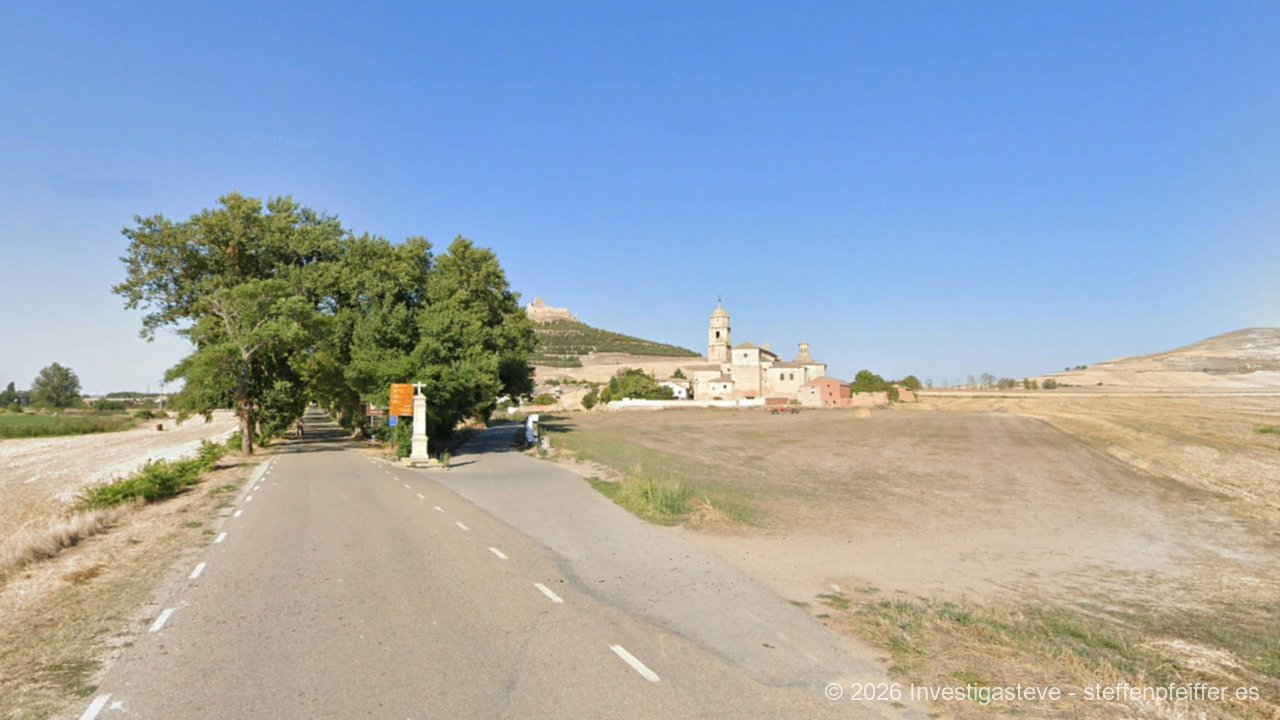
When you approach Castrojeriz, the geometry of your path changes. After the gentle waves and the almost meditative narrowness of the valley of Hontanas, the horizon suddenly expands with a force that takes your breath away. Before you rises the “Cerro,” that striking table mountain, on whose summit the ruins of the medieval castle jut into the deep blue Castilian sky like broken teeth. The air up here is of a cutting clarity; it smells of dry limestone, of the tart aroma of wild thyme, and of the distant promise of rain that lingers over the Tierra de Campos. You hear the rhythmic echo of your steps, reflected back by the massive stone walls of the old palaces along the Calle Real. It is a hollow, almost reverent sound that signals to you: you are entering no ordinary place, but a city that once decided the fate of kings.
Castrojeriz is not a compact village, but a linear staging of history. The town stretches for more than two kilometers along the foot of the mountain – a single, seemingly endless street that challenges the pilgrim physically and psychologically. Beneath your boots, you feel the shift in texture: from the dusty path of the Meseta to the hard, uneven cobblestones that have carried the hooves of knights’ horses and the soles of seekers for centuries. When you place your hand on the rough, sun-warmed ashlars of the Colegiata de Nuestra Señora del Manzano, you feel the stored energy of a thousand summers. It is a tactile connection to the past that grounds you instantly. Psychologically, Castrojeriz marks the moment of the great threshold. Behind you lie the provinces of the Pyrenees and the Rioja; ahead of you lies the “Wall of Truth” – the ascent to the Alto de Mostelares and the subsequent infinity of the grain fields.
At dusk, when the shadows of the mountain slowly devour the town, an almost mystical atmosphere arises. The light refracts in the Gothic tracery of the ruins of San Antón, which you passed shortly before, and bathes Castrojeriz in a soft, ochre glow. You smell the smoke of the wood-fired ovens in which the typical lamb of the region is prepared, an olfactory promise of satiety and security. The distant ringing of the bells of San Juan Bautista mingles with the fluttering of kestrels circling the castle ruin. Arriving here means becoming part of a millennia-old procession. You feel small before the monumental castle and at the same time uplifted by the certainty that you have the courage to pass through this stone gateway to inner reflection.
What This Place Tells
The history of Castrojeriz is a chronicle of resistance and strategic brilliance. Already the Romans recognized the uniqueness of this place and established the “Castrum Sigerici” here. The name itself whispers of Visigothic rulers, presumably Sigerico, who left his mark on this place. But it was the time of the Reconquista that made Castrojeriz a legend. In 882, Count Nuño Núñez fortified the hill to secure the Christian flank against the Moorish advances. Standing before the castle ruins today, you must imagine the roar of battles, the clinking of chain mail, and the snorting of horses. Historical causality is palpable here: without this fortress, the advance of the Christian kingdoms southward would have been unimaginable. Castrojeriz was the anchor point of Castile.
A particularly dark and at the same time fascinating chapter tells of Queen Eleanor of Castile. In the 14th century, the walls of the castle served as her prison, and here she met her death at the hand of her own nephew, Peter the Cruel. This tragic story lends the ruins a melancholic depth that goes beyond pure military architecture. You feel the psychological weight of the place when you imagine the queen gazing from her windows at the unattainable expanse of the fields. At the same time, Castrojeriz was a center of religious diversity. The town housed one of the most important Jewish communities (Aljamas) of the region, whose legacy can still be sensed in the structure of the streets and in the architectural details of some houses. It was a place of exchange, where pilgrims, soldiers, merchants, and scholars met.
The spiritual significance manifests itself in the Colegiata de Nuestra Señora del Manzano. Here the image of the Virgin Mary is venerated, which King Alfonso X the Wise sang of in his famous “Cantigas de Santa María.” The legends of miraculous healings and divine protection are as deeply engraved in the town’s collective memory as the Jacobean routes are in the earth. When you enter the church, a coolness envelops you that feels cleansing not only physically but also spiritually. Every portal, every capital tells of the human longing for transcendence. Castrojeriz teaches us that history consists not only of dates and facts, but of the hopes and fears of those millions who passed through these streets before us. It is a place that shows you that everything – power, suffering, and glory – is transitory, while the path and the faith endure.
Addresses & tips in Castrojeriz
Camino Distances
🗺️ After the lonely crossing of the valley of Hontanas and the impressive passing of the ruins of San Antón, Castrojeriz forms the striking conclusion of the Burgalesan Meseta.
| Previous Place | Distance (km) | Next Place | Distance (km) |
|---|---|---|---|
| Hontanas | ca. 9.5 km | Alto de Mostelares | ca. 3.4 km |
Sleeping & Arriving
Arriving in Castrojeriz is a physical and mental challenge. As the town stretches for more than two kilometers, finding the chosen hostel after a long day’s walk can become a real test of patience. Yet it is precisely in this expanse that the psychological quality of the place lies: you walk through the town like a ritual. The variety of accommodations is impressive and reflects the importance of the place. From the spiritual silence of the Hostel San Esteban, run by nuns, to the lively private albergues such as “Ultreia” or “Rosalía,” Castrojeriz offers the right harbor for every soul.
The atmosphere in the hostels is characterized by a mix of historical charm and modern pilgrim community. Many buildings are renovated palaces with thick walls that keep out the heat of the day. When you put down your backpack, you often hear the distant splashing of a fountain in the courtyard – a tactile pleasure that immediately relieves the tension in your muscles. The hospitaleros in Castrojeriz are considered particularly experienced; they know the upcoming challenge of the Mostelares and meet the pilgrims with a mixture of maternal care and professional clarity. You feel a deep emotional metamorphosis here: the exhaustion of the day gives way to a solemn anticipation of the evening.
At night, Castrojeriz transforms into a sea of silence. As the town is so elongated, the stream of pilgrims is dispersed, and you always find a corner of absolute peace. Sleeping in the old walls feels safe and secure, as if the castle on the hill were still keeping watch. When you look out the window at night and see the illuminated contours of the churches, you recognize the significance of this stopover. It is the place where you gather yourself, where you tend to your wounds and replenish your supplies – not only physically, but especially mentally. Those who spend the night in Castrojeriz do so in the knowledge that they will finally cross the threshold to the Tierra de Campos the next morning.
Eating & Drinking
The cuisine in Castrojeriz is a homage to the hearty, honest cooking of Castile. Here, the taste of the earth reigns. When you sit down in the evening at one of the massive wooden tables in the local mesones, you are greeted by the intense aroma of “Morcilla de Burgos” – that legendary blood sausage with rice, fried here so crispy that it melts on your tongue. It is served with the heavy, crusty bread of the region, perfect for soaking up the rich sauces of the stews. It is a tactile experience to break the bread with your hands and feel the warmth of the freshly prepared dishes.
An absolute must is the “Sopa de Ajo,” the garlic soup that revives the spirits after a long march through the Meseta. It tastes of garlic, paprika, and the olive oil of the region – a flavor explosion that warms the body from within. In Castrojeriz, food is celebrated as a communal experience. The pilgrim meals here are often more abundant than elsewhere, accompanied by the strong red wine of the region, served in generous amounts in earthenware jugs. You taste the sun of Castile in every sip; the wine is dark, heavy, and has a note of ripe berries and dry wood.
Those with a sweet tooth should try the “Rosquillas,” often baked according to old family recipes. The smell of anise and powdered sugar in the small bakeries along the Calle Real is enticing. These small pastries are the ideal provisions for the upcoming ascent to the Mostelares. The gastronomic experience in Castrojeriz teaches the pilgrim that true satiety comes not only from calories but from the love and tradition embedded in every dish. It is a culinary grounding that prepares the body for the coming deprivations of the flat plain. Here you do not just eat; you absorb the strength of the land.
Supplies & Logistics
Logistically speaking, Castrojeriz is an oasis of efficiency in the midst of the barren Meseta. The town functions as the most important supply point for a wide area. Along the Calle Real, you will find everything a pilgrim’s heart desires: from well-stocked supermarkets to pharmacies to specialized outdoor shops offering replacements for broken hiking poles or worn-out socks. The linear structure of the town means longer distances but also ensures that supply facilities are well distributed throughout the place. You sense the centuries of experience in accommodating travelers here; everything is geared toward the needs of those traveling on foot.
Shopping: Several supermarkets (Coviran etc.) offer a broad range of local products and pilgrim supplies. Opening hours are pilgrim-friendly, often with a short siesta break in the afternoon.
Gastronomy: The density of bars and restaurants is high. Particularly recommended are the establishments near the Plaza Mayor, where you can observe the town’s activity.
Accommodation: With over 15 albergues and several hotels/pensions, there is high capacity. Nevertheless, a reservation is advisable in high season, as Castrojeriz is a classic stage destination.
Public Facilities: There is a health center (Centro de Salud), an ATM, and a tourist office that provides helpful maps for the onward route.
In summary, Castrojeriz is logistically the perfect place to prepare for the coming days. You should definitely maximize your water supplies here, as the path over the Alto de Mostelares in the blazing sun offers no further water sources. The town offers the security and comfort you need to start the next, more demanding section of the Camino with confidence. It is a place that gives you the feeling that everything is taken care of, as long as you are willing to contribute your part of the journey.
Don’t Miss
– The castle ruin (Castillo de Castrojeriz): The ascent to the summit of the table mountain is strenuous, but the 360-degree view over the Tierra de Campos is the ultimate reward. You feel the wind of history and see the path of the next two days spread out before you.
– Colegiata de Nuestra Señora del Manzano: This monumental collegiate church at the town entrance houses art treasures of world renown. Pay attention to the medieval statue of the Virgin and the impressive tombs of Castilian nobles.
– Iglesia de San Juan Bautista: A Gothic beauty with a cloister that invites you to linger. The acoustics inside are so precise that every whisper glides through the space like a prayer.
– Ruinas de San Antón: Even though they lie about 3 kilometers before the town, they are inseparable from Castrojeriz. The path leads directly under the Gothic arch of the monastery ruins – a tactile threshold moment that no pilgrim forgets.
– The Ieronimus Experience: Climb the towers of the churches when permitted. The perspective from above on the red tiled roofs of the town and the endless fields is a visual meditation on the order of the world.
Insider Tips & Hidden Places
A true insider tip in Castrojeriz is visiting the small, often overlooked bodegas dug into the slope of the mountain. If you are lucky enough to meet a local who allows you a glimpse into these private wine cellars, you experience a sensory sensation: the sudden cold, the smell of damp earth, and the aroma of wine maturing in old barrels is an olfactory adventure. It is the hidden underworld of the town, where the true social life of the inhabitants takes place. Here, they laugh, discuss, and share the best wine of the region – far from the tourist hustle of the Calle Real.
Another hidden place is the small garden behind the church of San Esteban. It is a place of absolute silence, where you feel time stands still. You hear only the buzzing of bees in the lavender bushes and the distant rustling of the wind in the poplars along the river Odra. This garden is perfect for a private reflection on the journey so far. The tactile experience of resting your feet in the cool grass while gazing at the massive walls of the church is one of the most valuable rewards that Castrojeriz holds for the attentive walker.
Pay attention to the small, almost faded inscriptions on the door lintels of the old houses in the side streets. Some bear symbols of the Jewish community or the old craft guilds. When you run your fingertips over these indentations, you touch history directly. They are the quiet voices of people who lived and worked here centuries ago. This journey of discovery away from the main route gives your stay in Castrojeriz a depth that goes beyond the purely touristic.
Finally, there is a small viewpoint at the western end of the town, just before the path rises toward the Mostelares. From here, you can watch the sunset when the light bathes the castle ruin in an almost unnatural purple. It is a moment of absolute psychological clarity: you see the destination of today behind you and the obstacle of tomorrow before you. In this balance between past and future, you find the peace that the Camino wants to give you.
Moment of Reflection
Do you stand in Castrojeriz as a conqueror wanting to subdue the mountain, or as a seeker ready to surrender to the vastness of the Meseta? The town with its endless main street is a metaphor for the path of life itself: sometimes the goal seems unattainably far, yet every step on the hard pavement brings you closer to inner peace. The castle ruin above you reminds you that power and stone pass away, while the stories we write on our journey endure forever.
Ask yourself: Which part of your personal burden are you willing to leave behind in the ruins of San Antón or on the walls of the castle? Castrojeriz is the place of purification before the great emptiness. When you ascend the Alto de Mostelares the next morning, you will realize that you are not only overcoming altitude, but also old beliefs. The silence of Castrojeriz gives you the strength to perceive the coming kilometers not as torment, but as an opportunity for absolute freedom. Are you ready to step through the gateway to infinity?
Camino of the Stars
This place lies on the Camino Francés, on the stage from Hontanas to Frómista. The sequence of places is:
Hontanas → San Antón → Castrojeriz → Alto de Mostelares → Itero del Castillo → Puente Fitero → Itero de la Vega → Boadilla del Camino → Frómista
Did the monumental presence of the castle of Castrojeriz impress you just as deeply, or was it the endless silence of the Calle Real that took your breath away? Perhaps you found a moment of enlightenment in one of the old churches or discovered a very special insider tip in the bodegas? Share your experiences and your very personal story of Castrojeriz with us via the contact form – we look forward to your message, in any language of the Camino!
About the Author