A First Glance – Introduction & Atmosphere
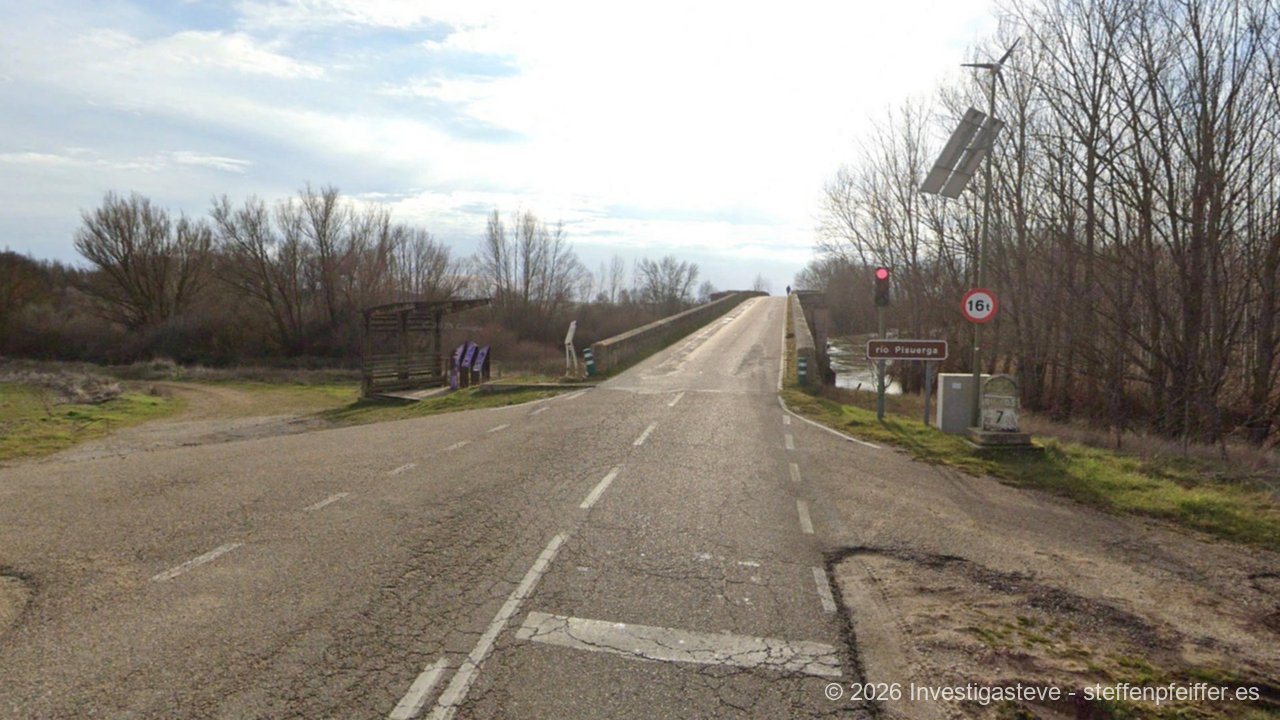
As you approach Puente Fitero, the acoustics of your journey change. The steady, almost meditative crunch of your boots on the dry marl soil of the Burgos province is suddenly overlaid by a new, vibrant sound: the deep, gurgling bass of the Río Pisuerga. It’s a sound that feels like a promise in the arid vastness of the Meseta. You feel the shift in humidity, a cool breath rising from the water that makes you forget the dust in your throat for a moment. Ahead of you, the bridge spans out, a stone backbone of eleven arches, arching majestically over the river. The stones are rough, smoothed by centuries of floodwater, yet possess an unshakeable solidity that feels almost warm under your hands, warmed all day by the Castilian sun.
It is a place of thresholds. Here, in the middle of the river, you are not only leaving the province of Burgos and entering Palencia, but you are also crossing an invisible border deeply rooted in the history of Spain. You feel the transition from the old kingdom of Castile to the kingdom of León. Psychologically, this moment is immense: the bridge is the material proof that you are gaining distance, that the path is transforming you. The smell here is unique – a mix of the tart aroma of riverside willows, the damp mud of the bank, and the distant scent of thyme growing on the hills behind you. When you stop in the middle of the bridge and look over the parapet, you see the play of the current, unchanged since the time of King Alfonso VI. It’s a visual hypnosis that reminds you that everything is in flux – including yourself on this journey.
The atmosphere at Puente Fitero is marked by an almost sacred silence, broken only by the murmur of the water and the distant chirping of riverside birds. There is no urban noise here, no distraction. Just you, the stone, and the river. As you cross the bridge, you feel a strange lightness, as if the Pisuerga is simply washing away all the heaviness you have carried from Burgos beneath its arches. It’s a tactile experience when your poles produce a hollow, resonant sound on the bridge’s cobblestones – a rhythm that tells you: you are still here, you are moving forward, you have unlocked another stage of your inner map.
What This Place Tells
The story of Puente Fitero is a story of power and mercy. This masterpiece of medieval engineering was built in the late 11th century at the behest of Alfonso VI, the king known in the annals as “the Brave.” He understood that the Camino de Santiago was not only a spiritual path but also a strategic lifeline for his realm. The bridge, mentioned in the Codex Calixtinus as “Pons Fiterie,” was intended to secure the dangerous crossing of the Pisuerga, which could become a raging torrent, especially in spring after the snowmelt. Eleven arches of solid limestone have withstood the elements ever since – a symbol of the constancy of faith and the vision of a unified northern Spain.
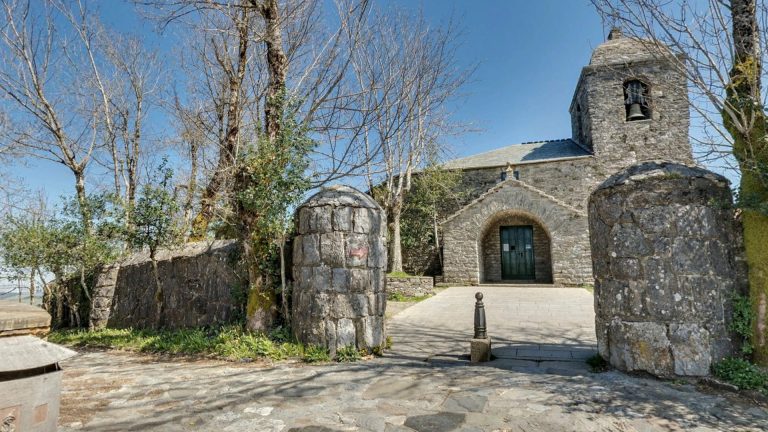
Yet the bridge tells not only of kings but also of care for the weakest. Immediately at the western end of the bridge, already on Palencian soil, stands the Ermita de San Nicolás de Puente Fitero. It is the last remaining building of a once powerful Hospital run by the Premonstratensians in the 12th century. Imagine exhausted, sick, and injured pilgrims arriving here after the long crossing of the barren plateau. The walls of the hermitage have absorbed the sighs of relief of millions. In the dark years of the Reconquista, this place was a bastion of humanity in a harsh world. Historical causality is tangible here: without this bridge and this Hospital, the Camino would have ended here for many in the Middle Ages.
A special legend surrounds the spiritual power of this place. It is said that the knights of the Templar Order, who had their bases nearby, guarded the bridge on foggy nights to protect pilgrims from bandits. The psychological effect of this story persists to this day: those who cross Puente Fitero feel protected. In modern times, the hermitage has been revived by the “Confraternita di San Giacomo” from Perugia. The Italian hospitaleros maintain a tradition of foot washing that directly intervenes in the pilgrim’s emotional metamorphosis. It is not just about hygiene; it is an act of humility and recognition of the shared journey. Thus, the medieval necessity of the bridge intertwines with the modern longing for community to form a dense narrative tapestry that makes every step over the Pisuerga meaningful.
Addresses & tips in Puente Fitero
Camino Distances
Puente Fitero marks one of the most iconic river crossings of the entire Camino Francés, separating the provinces of Burgos and Palencia.
| Previous Place | Distance (km) | Next Place | Distance (km) |
|---|---|---|---|
| Itero del Castillo | ca. 1.5 km | Itero de la Vega | ca. 1.0 km |
Sleeping & Arriving
Arriving at Puente Fitero is no ordinary process; it is an immersion into another time. If you decide to stay at the Ermita de San Nicolás, you forgo the usual comforts of modern hostels. There is no electricity, no Wi-Fi, and only cold water – but what you receive in return is invaluable for the soul. The tactile contact with the cold stone floors of the chapel, where the mattress camps are set up, immediately connects you with the ascetic tradition of pilgrimage. It smells of old stone, incense, and the fresh breeze from the river that enters through the narrow window openings.
The psychological effect of this simplicity is enormous. As the sun sets behind the hills of Palencia, bathing the bridge in a golden, then blue light, the actual ritual of arrival begins. The Italian hospitaleros welcome you not as a paying guest, but as a brother or sister on the way. The ceremony of foot washing, often practiced here, is a moment of profound emotional release. In the silence of the chapel, lit only by candles, you feel the tension of the past kilometers fall away from you. The water on your tired feet is not just physical cooling; it is an acknowledgment of your efforts that deeply moves you.
The night at Puente Fitero is marked by an absolute, almost tangible silence. The distant murmur of the Pisuerga under the bridge acts like white noise, lulling the mind into a deep, dreamless sleep. When you wake at night and see the moonlight on the old walls, you feel like part of a centuries-old chain. It is not a place for mass tourism, but a refuge for those seeking the Camino in its purest form. Waking up the next morning, as the first light grazes the eleven arches of the bridge, gives you a clarity and strength that will carry you effortlessly over the next kilometers to Itero de la Vega.
In the surrounding towns like Itero del Castillo or Itero de la Vega, more conventional accommodations can be found for those who prefer a bed and a shower after crossing the bridge. But whoever wants to truly “experience” Puente Fitero must cross the threshold of the hermitage. It is the feeling of sleeping in history, surrounded by the invisible presence of all those who sought shelter here before you. This place asks nothing of you except that you be present. That is the true luxury of Puente Fitero: time and silence in a noisy world.
Eating & Drinking
The cuisine at Puente Fitero is inseparable from the communal spirit of the Ermita San Nicolás. There is no menu here, but rather what the hospitaleros prepare with love and devotion for everyone. Dinner takes place at a long wooden table that seems to groan under the weight of simple but nourishing dishes. The scent of fresh pasta – a greeting from the Italian brotherhood – mingles with the aroma of hearty Castilian red wine. Bread is shared, which here in the Tierra de Campos region has a special quality: a thick, protective crust and a soft inside that tastes of grain and hard work.
Tasting here becomes a communal act. As you spoon up the warm soup while the wind whistles through the arches of the bridge outside, you experience a satiety that goes far beyond the physical. Conversations flow as naturally as the Pisuerga beneath your feet. People laugh, they fall silent, they share the day’s experiences. The wine, often a local drop from the nearby Ribera del Duero or the cellars of Palencia, tastes of earth and sun. It loosens the tongue and warms the heart. In this simple meal lies a dignity that you will not find in any Michelin-starred restaurant.
Those just passing through and resting at the bridge should bring a simple picnic. A piece of Queso de Valdeón or a bit of Chorizo, eaten on the stone steps by the riverbank, tastes different here. The sound of flowing water and the visual splendor of the medieval architecture act as flavor enhancers. It is the connection of nature and culture that turns every meal at Puente Fitero into a ritual celebration. The simplicity of the ingredients reflects the reduction of the Camino: you don’t need much to be happy – just good bread, pure water, and a place where you are welcome.
Supplies & Logistics
Puente Fitero itself offers no commercial infrastructure in the classic sense. Anyone coming here must know that they are at a place of reflection, not a supply center. Logistics here are reduced to the essentials, which only enhances the appeal of this place. There are no cafés, no pharmacies, and no supermarkets directly at the bridge. The next comprehensive supply can be found in Itero de la Vega, about a kilometer further west.
The supply situation is as follows:
Shopping: No direct shopping options at the bridge. In Itero de la Vega, there are small grocery stores (Tiendas) that stock everything necessary for pilgrims.
Gastronomy: At the Ermita San Nicolás, a communal dinner and breakfast are offered on a donation basis (Donativo) for overnight guests. There is no restaurant service for day visitors.
Accommodation: The Ermita de San Nicolás de Puente Fitero offers limited places in a very simple, traditional hostel (Donativo). Reservations are not possible here; one should arrive in good time.
Public Facilities: No sanitary facilities for day pilgrims except in the hostel for overnight guests. The nearest medical care and ATMs are in Castrojeriz (backwards) or Frómista (ahead).
In summary, Puente Fitero is a place for self-sufficiency or spiritual devotion. Pilgrims should ensure their water bottles are filled in Castrojeriz, as the path over the heights of the Mostelares can be strenuous. The bridge functions as a logistical turning point: behind you lies the harsh expanse of Burgos, ahead of you the structured irrigation landscape of Palencia. Those who want to enjoy the peace of the bridge should plan their supplies accordingly, so as not to be driven by hunger or thirst.
Don’t Miss
– The eleven arches of the bridge: Take the time to climb down under the bridge to the riverbank. Only from down here does the immense dimension of the medieval architecture and the elegance with which the stones interlock reveal themselves.
– Ermita de San Nicolás: Even if you don’t stay overnight, a short visit to the chapel is a must. The thick walls and the cool, devotional atmosphere offer an immediate deceleration from the walking rhythm.
– The boundary stone in the middle of the bridge: Search for the point on the bridge that marks the border between the provinces of Burgos and Palencia. It is a ritual moment to have one foot in the old province and one in the new.
– The banks of the Pisuerga: Use the shady spots under the willows for meditation. The play of light on the water and the rhythmic murmur are balm for the senses after the exposed heat of the Meseta.
– The ceremony of foot washing: If you stay overnight in the hermitage, participating in this rite is a profound emotional experience that brings the Christian tradition of hospitality to life.
Insider Tips & Hidden Places
A true insider tip is visiting the bridge in the hour before sunrise. When the mist still lies like a white cloth over the Pisuerga and the eleven arches only emerge vaguely from the gray, Puente Fitero looks like a bridge into another dimension. The world is absolutely still in that moment, only the breathing of the river is audible. It is a time of deepest psychological clarity, when the boundaries between past and present seem to blur. You don’t feel like a 21st-century hiker, but like a timeless seeker on an eternal path.
A hidden place of rest can be found about a hundred meters upstream on the north bank. There is a small cove there where the current is gentler and the pebbles lie flat in the water. It is the perfect place to dip your burning feet directly into the cool water of the Pisuerga. The tactile sensation of the cold, relieving the inflammation of the tendons, combined with the gentle pressure of the current, is a natural therapy that no gel from the pharmacy can replace. Here you can feel the connection to nature in its purest form, away from the main route.
Pay attention to the small stonemason marks carved into some of the massive limestone blocks of the parapet. These secret signatures of the medieval builders are silent witnesses of craftsmanship pride and hard physical labor. When you trace these indentations with your fingertips, you touch history directly. Each sign tells of a person who stood here almost a thousand years ago and contributed their part so that you could cross the river safely today. This discovery gives the structure a human dimension that goes beyond pure architecture.
Another experience is the view back from the heights near Itero de la Vega. Once you have crossed the bridge and climbed a bit up the slope, turn around. Puente Fitero then lies like a forgotten jewel in the landscape, embedded in the green of the riverside vegetation and the gold of the fields. This visual farewell is an important part of the emotional metamorphosis: you recognize the magnitude of the obstacle you have just overcome and the beauty of the solution that history has provided for it.
Moment of Reflection
Do you stand on Puente Fitero as a traveler crossing a border, or as a person building a bridge to your own inner self? This place confronts you with the duality of the path: the firm constancy of stone and the eternal flow of water. As you cross the bridge, ask yourself which old beliefs you are leaving behind in Burgos and which new possibilities await you in Palencia. The Pisuerga not only separates territories; it also marks the progress of your personal transformation.
Do you feel the weight of centuries in the stones, or does their solidity give you the certainty for your next steps? Puente Fitero teaches you that every transition takes time and that true strength lies in the ability to connect opposites. In the silence of the Ermita San Nicolás, you may realize that the most important bridge is not built of stone, but of trust in the path and in the people you meet. Which part of your journey are you ready to entrust to the river?
Camino of the Stars
This place lies on the Camino Francés, on the stage from Castrojeriz to Frómista. The sequence of places is:
Castrojeriz → Hospital de San Antón → Itero del Castillo → Puente Fitero → Itero de la Vega → Boadilla del Camino → Frómista
Have you experienced the magical moment in the middle of Puente Fitero when the wind blows over from Palencia, or has the silent humility of the foot washing in San Nicolás touched you? Share your thoughts and experiences at this historic crossing with us. Perhaps you have discovered a detail on the eleven arches that remained hidden from others? We look forward to your story about this special place of thresholds!
About the Author