A First Glance – Introduction & Atmosphere
As soon as you leave the gentle hills behind Burguete and the path leads you deeper into the greenery of the Valle de Erro, a landscape opens before you that resembles a carefully woven tapestry of ferns, moss, and ancient giant trees. Here lies Espinal, or Aurizberri, as the locals call it in the sonorous Basque language. It is a place that does not overwhelm you with monumental force, but welcomes you with a gentle, almost maternal security. The first thing you perceive is the air. Up here, at almost 870 meters altitude, it is of a purity that makes every breath a small celebration. It carries the heavy, resinous aroma of the nearby pine forests, mixed with the sweetish scent of freshly mown mountain hay and the cool moisture rising from the deep valleys.
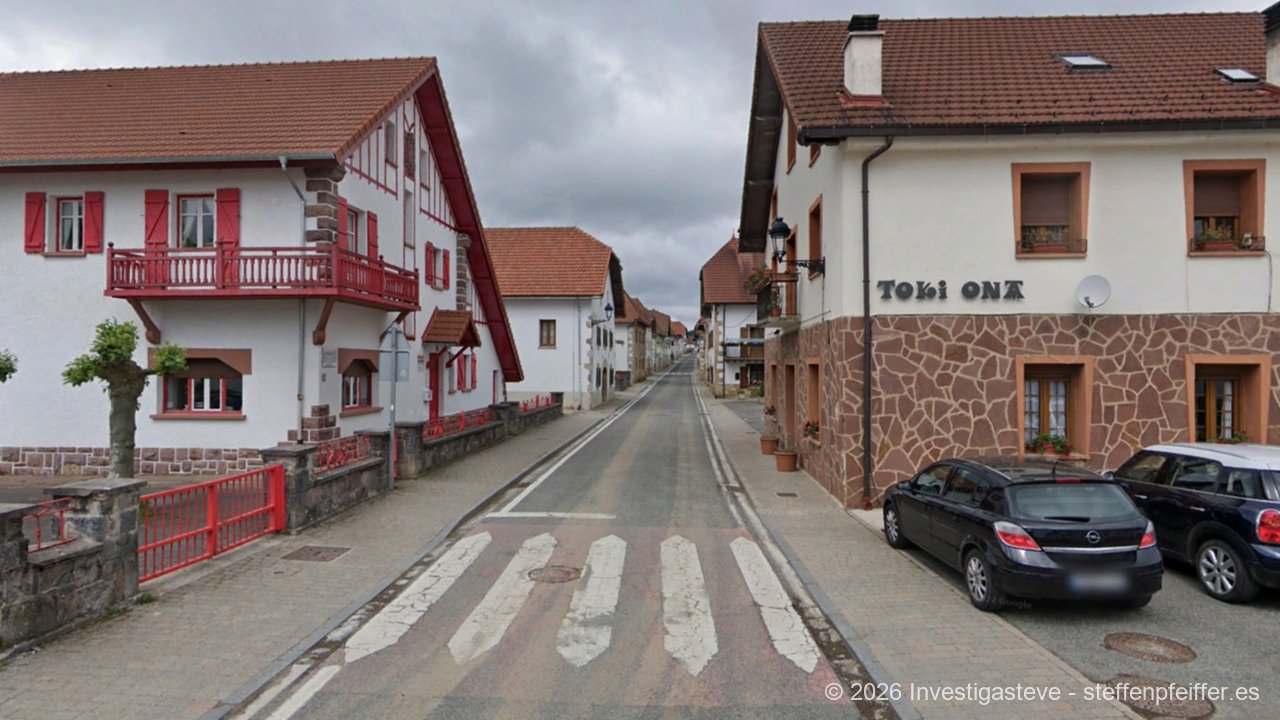
The architecture of the village is a visual promise of constancy. The white facades of the houses glow so intensely in the soft light of the Navarrese sun that they almost blind, while the deep red or dark grey slate and tile roofs form a sharp contrast to the infinite green of the surroundings. You feel the change of ground when the soft forest floor gives way to firm, clean asphalt or the worn-smooth stones of the village street. It is a moment of pause. The distant ringing of the bells of the Navarrese mountain cattle forms a constant, soothing background melody, reminding you that you are in a land that has lived in the rhythm of nature for millennia. Espinal is not a place to rush through; it is a place that invites you to put down the burden of your experiences from the Pyrenees for a moment and enjoy the simple beauty of being.
As you reach the first houses, a remarkable stillness settles over your senses. The village seems to exist in a timeless bubble, where the hustle and bustle of the modern world does not matter. You hear the soft rustling of the wind in the high crowns of the beeches, which sounds like a whispering conversation of the ancestors. In Espinal, the journey becomes an inner reflection. The exhaustion in your legs is not perceived here as pain, but as a pleasant heaviness that connects you with the ground beneath you. It is the arrival in a world where nature is the most important storyteller and every house, every wall, and every tree tells a story of resilience and deep-rootedness.
What This Place Tells
Espinal is not a product of chance, but the result of royal foresight. Founded in 1269 by Teobaldo II of Navarre, the place was planned from the start as a strategic anchor point on the Way of St. James. As a so-called “Pueblo de repoblación,” it was intended to secure the flow of pilgrims and provide the settlers in the Valle de Erro with protection and a livelihood. As you walk through the village today, you feel the historical weight of this decision. The arrangement of the houses along the main street still follows the medieval plan designed to offer protection to the traveler. Yet the history of Espinal is also one of destruction and reconstruction. During the Pyrenean War at the end of the 18th century, the village was almost completely burned down, only to rise from the ashes shortly after with even greater determination. This historical causality – the constant cycle of creation, loss, and renewal – is practically engraved in the solid construction of today’s houses.
A silent but overwhelming testimony to the past can be found in the cemetery of Espinal. The grave stelae there, the “Estelas Discoidales,” are far more than just gravestones. These round monuments, resting on short shafts, are deeply rooted in Basque folk belief. Their surfaces are decorated with geometric patterns, sun wheels, and religious symbols, forming a bridge between Christianity and much older, pagan traditions. When you run your fingertips over the rough, often lichen-covered stone, you touch the spiritual identity of a people who pay the same respect to their dead as to the living. Each stele tells the life of a craftsman, a shepherd, or a pilgrim who found their final rest here. It smells there of damp earth and old stone, an atmosphere that inevitably leads you to reflect on your own mortality and the meaning of your path.
Modern history has also left its mark on Espinal. The church of San Bartolomé, built in the 1960s, may at first glance seem like a foreign body in this traditional fabric. Yet its striking, pointed roof and bold architecture symbolize Navarre’s departure into a new era. Inside, a cool, almost ascetic stillness prevails, enlivened by the colorful light of the stained-glass windows. But Espinal is also inextricably linked with the name Ernest Hemingway. The writer found here, in the clear streams around the village and in the untouched nature of the Irati Forest, that peace and inspiration he needed for his works. The knowledge that Hemingway sat precisely here on the riverbank and watched the trout lends the place a literary depth that intertwines with the spiritual significance of the Way of St. James to form a unique cultural tapestry. Espinal is thus a place of metamorphosis, having evolved from a royal stronghold, through a war-torn village, to a refuge for thinkers and seekers.
Addresses & tips in Espinal
Camino Distances
The stage through the Valle de Erro is characterized by gentle transitions and a landscape that invites lingering. The distances are manageable but still demand the walker’s attention.
| Previous Place | Distance (km) | Next Place | Distance (km) |
|---|---|---|---|
| Burguete | approx. 3.5 km | Bizkarreta-Gerendiain | approx. 4.7 km |
Sleeping & Arriving
Arriving in Espinal after the short but intense walk from Burguete feels like being wrapped in a warm blanket. The physical tension of the Pyrenees stage finally begins to subside here. As soon as you put down your backpack in one of the hostels or guesthouses, your perception changes. The first feeling is the relief of your feet when they leave the firm hold of the boots and feel the cool floor of the accommodation. The hostels in Espinal, such as “Haizea,” are characterized by cleanliness and a functional coziness typical of northern Navarre. It smells of fresh laundry and the wood of the massive beams supporting the ceilings.
The welcome by the hospitaleros is often marked by a warm directness. You sense that here are people working who see the Camino not just as a business, but as a calling. In the communal areas, the languages of the world blend into a soft hum. It is the time for first blister care and collective breathing. The showers offer hot water that washes away the dust of the paths and loosens the muscles. As you stand there, you hear the rhythmic pattering of water on the tiles, a sound more valuable in that moment than any music.
In the private guesthouses and Casa Rurales, the atmosphere is even more intense. Here you often sleep in beds covered with heavy, soft blankets that protect you from the night-time coolness of the mountains. With the window open a crack, you hear the rustling of the trees outside and the distant splashing of a fountain. It is a deep, dreamless sleep, found only when the body is exhausted and the mind has come to rest. Staying overnight in Espinal means adapting to the rhythm of the village – retiring early and setting off again with the first light of morning, when the mist still hangs in the valleys.
Breakfast the next morning is often the first highlight of the day. The smell of strong, hot coffee fills the room, accompanied by toasted bread with local butter and jam. The morning chill nips at your cheeks as you assemble your gear. In this moment of preparation, you feel a new energy. Espinal has not only given you a bed, but a space for regeneration. The silence of the place has transferred to you, and you leave your lodging with the certainty that you are ready for the next kilometers towards Pamplona.
Eating & Drinking
The Navarrese cuisine in Espinal is an honest response to the demands of the mountains. It is powerful, unadulterated, and deeply connected to the earth. When you settle down in the evening in one of the bars or restaurants like “Baratze,” the first thing you need is sustenance that warms heart and soul. A classic of the region is the “Trucha a la Navarra” – the mountain trout, stuffed with a slice of spicy Serrano ham and then fried in olive oil. The scent of fried fish and salty ham fills the room and makes your mouth water. The taste is a revelation: the delicate flesh of the trout harmonizes perfectly with the smoky note of the ham.
Another must for the hungry pilgrim is the meat of the Navarrese lambs or cattle grazing on the lush mountain meadows. A stew with meat, peppers, and onions, slow-cooked for hours at low temperature, offers a depth of flavor rarely found in the fast-paced cuisine of the cities. It tastes of garlic, bay leaf, and the patience of the cooks. It is accompanied by the hearty country bread, with a crust that cracks under your fingers and a soft core ideal for soaking up the last remnants of the spicy sauce. The red wine from the Navarre region, deep dark with a fine note of dark berries, rounds off the meal and provides a pleasant warmth that slowly spreads through the whole body.
For dessert, you should definitely try a “Cuajada,” the traditional sheep’s milk pudding. It is often served with local honey and has a very fine, almost creamy texture. In some establishments, it is still prepared the old way, by dipping a heated stone into the milk, which gives the pudding an inimitable smoky note. Drinking a glass of “Pacharán” to finish is almost obligatory in this region. The sloe liqueur, sweet and fruity with a hint of anise, is not only good for digestion but also a symbol of Navarrese sociability. In the warmth of the dining room, surrounded by the laughter of the locals and the storytelling of fellow pilgrims, eating in Espinal becomes an act of community that goes far beyond mere food intake.
Supplies & Logistics
Although Espinal is small, it is functionally perfectly equipped for the needs of walkers. It is one of those places where everything essential is close together, which is an invaluable advantage after a day of hiking. The infrastructure reflects the village’s role as a reliable rest stop on the Camino.
Shopping: There is a small Tienda in the village where you can find everything you need for your picnic the next day. From local cheese to fresh fruit and the indispensable blister plasters, the selection is small but excellent. It smells there of the spices of the north and fresh pastries.
Gastronomy: The bars and restaurants in Espinal consistently offer hot meals and the classic pilgrim menu. The “Baratze” bar is a central meeting point where you can not only eat but also get important information about the condition of the path ahead.
Accommodation: The choice ranges from the municipal hostel to private hostels and comfortable guesthouses. It is advisable to arrive early in high season, as Espinal is a popular stop for those seeking peace before the larger Zubiri.
Public Facilities: In the village, you will find a well-maintained public fountain with crystal-clear mountain water. The water quality is excellent, and filling your bottles is a ritual act of preparation. There are also small parks and benches inviting you to linger.
Espinal’s logistical strength lies in its compactness. You don’t have to walk far to replenish your supplies or find a place to sleep. The locals are used to pilgrims and treat them with a mixture of professional routine and genuine Basque hospitality. Should you have a problem with your equipment, you will often be met with a calm helpfulness. It is a functional harmony that allows you to clear your mind for the scenic and spiritual aspects of your path. Espinal is a logistical island of reliability amidst the green hills of Navarre.
Don’t Miss
Although Espinal is small, there are some points you should consciously examine to understand the soul of the place.
1. The cemetery with the Estelas Discoidales: Take the time to wander among the ancient grave stelae. The symbolism of the stones is a deep window into Basque culture and history.
2. The church of San Bartolomé: Observe the modern architecture from outside and enjoy the simple stillness inside. The play of light from the stained-glass windows in the afternoon is particularly impressive.
3. The memorial plaque for Hemingway: Look for the traces of the famous writer. There is a memorial plaque commemorating his stays and underscoring Espinal’s literary significance.
4. A walk to the Irati River: If you still have energy, walk a bit towards the river. The rushing of the water and the coolness of the forest are the perfect regeneration.
5. The traditional houses with coats of arms: As you walk along the main street, pay attention to the stone coats of arms above the portals of some houses. They testify to the importance of families in the Valle de Erro.
Insider Tips and Hidden Places
Beyond the main street, Espinal hides corners that only reveal themselves to the attentive walker. One of these places is the small path leading from behind the municipal hostel into the adjacent oak forest. Here, far from the sounds of the village, you suddenly stand in a natural dome of branches and leaves. The ground here is so soft that every step is almost silent. It smells of damp leaves and the freedom of the wilderness. If you linger there for a moment, you might hear the tapping of a woodpecker or the rustling of a deer in the undergrowth. It is a place of absolute silence, ideal for a short meditation or simply to feel your own presence in this vast nature.
Another insider tip is the “Bosque de Sorginaritz” – the forest of the witch oaks. Local legends tell of nocturnal gatherings under the gnarled, ancient trees. Even if you don’t believe in magic, the atmosphere there is almost palpable. The trees have shapes so bizarre and expressive that you could almost believe they move when you look away. The bark of the old oaks is rough and deeply furrowed, a tactile experience that directly connects you with the power of nature. The light here often falls in single rays through the dense canopy, creating an almost sacred mood. It is a place that sparks the imagination and transports you for a moment from the reality of the Camino.
Also look for the small, private gardens behind the houses. You often discover carefully tended vegetable plants and seas of colorful flowers there, offering a glimpse into the peaceful daily life of the residents. Sometimes a bench stands in a spot offering an unobstructed view of the Montes Alduides. These small islands of peace are the true treasures of Espinal. When you sit there, stretch out your legs, and watch the shadows of the clouds drift over the distant mountains, you feel a deep gratitude. These undiscovered corners are what make Espinal a place you return to in spirit again and again. It is the discovery of the inconspicuous that makes the stay here so valuable.
Near the old washing places, which are hardly used today, you often find a coolness that is refreshing even on hot days. The water still flowing through the stone channels there is ice cold and clear. It is a tactile reminder of times when life in the village was more laborious, but perhaps also more communal. When you let the cold water run over your wrists, you feel an instant revitalization. Such small discoveries make up Espinal’s charm – a village that does not shout its secrets but quietly gives them to those willing to listen.
Moment of Reflection
Espinal is the place where the reality of the Camino finally catches up with you – and that is a good thing. The first euphoria of the start has faded, physical limits were tested in the Pyrenees, and now you find yourself in the gentle but demanding routine of the path. Here in Espinal, a spiritual metamorphosis takes place. You begin to understand that the path consists not of the great dramatic moments, but of the sum of the small steps and silent observations. The constancy of the houses and the stillness of the cemetery with its stelae give you a feeling of continuity. You are part of a long chain of people who all sought the same thing: clarity, forgiveness, or simply an encounter with themselves.
In the silence of the Valle de Erro, you realize how much noise you usually carry around in your head. Espinal acts like a filter. The pure air, the honest food, and the simple beauty of the landscape force you to focus on the essentials. Reflection in this village is often marked by a new humility. You recognize that you are not the conqueror of the mountains, but a guest in a landscape that existed long before you and will exist long after you. This realization is liberating. The pressure to achieve something gives way to the joy of pure existence. In Espinal, you learn that silence is not a lack of sounds, but an abundance of space for your own thoughts. It is the preparation for the coming weeks – a spiritual primer that strengthens you for everything yet to come.
Camino of the Stars
This place lies on the Camino Francés, on the stage from Roncesvalles to Zubiri. The sequence of places is:
Roncesvalles → Burguete → Espinal → Bizkarreta → Lintzoain → Zubiri
Did you also experience that moment of perfect silence in Espinal, perhaps in the cemetery of the stelae or on the banks of the Irati? Did the encounter with Basque culture change your view of the Camino? Share your experiences and your very personal discoveries from Espinal with us! Every story enriches the community of pilgrims and helps others find the magic of this place in the Valle de Erro. We look forward to your story!
About the Author