A First Glance – Introduction & Atmosphere
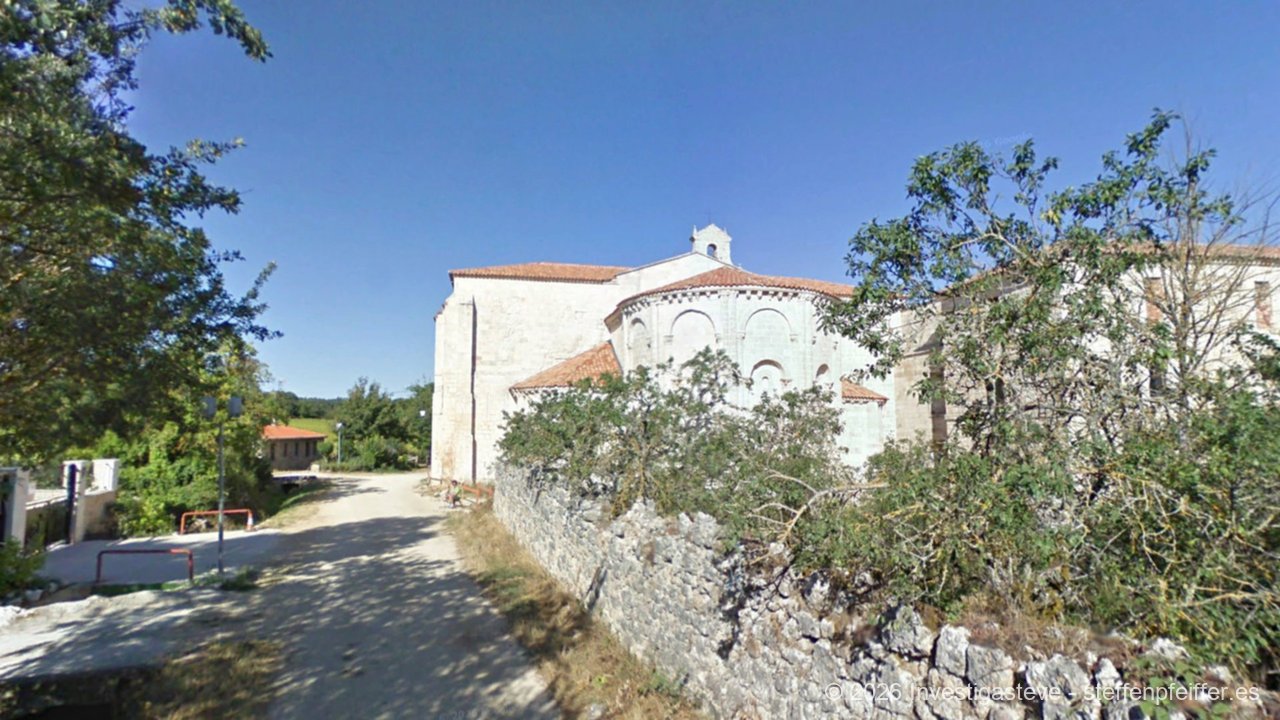
You step out of the dense, almost awe-inspiring shade of the Montes de Oca, and suddenly the world transforms. Behind you lie twelve kilometers of solitude, a march through a sea of pines and oaks, where the only sound was the rhythmic crunch of your boots on the gravelly ground. The transition is not abrupt, but resembles a gentle awakening. The deep green of the forest gives way to a clearing where the golden limestone of the monastery of San Juan de Ortega catches the last rays of the afternoon sun and reflects them in a warmth that seems almost tangible. Here, on this isolated plateau, you immediately feel that you have entered a sacred enclave, a place created not for the world of men, but for the peace of God and the protection of pilgrims.
The air smells different here than in the valley. It is thinner, clearer, and carries the resinous scent of the surrounding forests, mingled with a cool, almost metallic note rising from the ancient stone walls. As you approach the monastery complex, the distant sounds of civilization fall completely silent. What remains is the soft rustling of leaves in the wind, which blows steadily up here, and the distant, metallic sound of a bell, measuring time in a rhythm far removed from our modern haste. It is a tactile experience to touch the rough, centuries-old surface of the portal; the stone feels dry and alive, as if it stores the prayers of the millions of pilgrims who sought shelter here before you.
Psychologically, arriving in San Juan de Ortega is a turning point. After the physical and mental effort of the forest stage, which was feared in the Middle Ages for its bandits, this place feels like a saving anchor. The feeling of exposure fades and gives way to a deep, almost maternal security. You stand on ground that a saint personally fortified to show the way to those who had strayed. In this moment of silence, before you move into the hostel, you recognize that the Camino shows its true face here: it is not about covering kilometers, but about arriving in your own center, enveloped by the archaic power of a place that has defied decay and oblivion for 900 years.
What This Place Tells
The history of San Juan de Ortega is inseparable from the life and work of its founder, the “Saint of Building.” Juan de Quintanaortuño, a disciple of the equally legendary Santo Domingo de la Calzada, dedicated his entire life to improving pilgrim infrastructure. In the 12th century, this area was a dangerous wilderness, a no-man’s-land known as the “Valle de las Sombras” (Valley of Shadows). San Juan de Ortega brought light here – not only in the figurative, spiritual sense, but very practically through the construction of bridges, hospitals, and this impressive church. When you walk through the nave today, you walk on the foundations of a vision that outlived death and transformed an entire region.
The absolute centerpiece and perhaps the most fascinating mystery of the place is the “Milagro de la Luz” – the Miracle of Light. Twice a year, at the equinoxes in March and September, something happens that blurs the boundaries between astronomy, architecture, and divine inspiration. At precisely 5:00 PM (solar time), a ray of the setting sun passes through a narrow window and moves with mathematical precision over the Romanesque capital of the Annunciation. It illuminates successively the Virgin Mary, the Archangel Gabriel, and the Holy Spirit, as if the light itself were bringing the biblical scene to life. It is an audiovisually silent but emotionally overwhelming spectacle that shows with what incredible knowledge the medieval builders reconciled the universe and faith. Standing before this capital, you feel the historical causality of a time when stone and light were the language of God.
Yet San Juan de Ortega also tells a story of fertility and hope. For centuries, women have pilgrimaged here longing for children. Legend has it that Queen Isabella the Catholic herself gave birth to her son John after a visit here. This aura of the “life-giving” runs through the entire village. In the crypt, the saint rests in a magnificent, late Gothic baldachin tomb, crafted with such attention to detail that it takes the viewer’s breath away. The reliefs show scenes from the saint’s life, battles against demons, and the miraculous rescue of shipwrecked sailors. Here, history becomes tactile: the cold marble of the tomb contrasts with the spiritual warmth that pilgrims bring into this space. San Juan de Ortega is not just a place of stones; it is a monument to the human will to bring order to the chaos of the wilderness.
Addresses & tips in San Juan de Ortega
| Accommodation | 4 |
| Bars & Cafés | 1 |
| Sights | 2 |
Camino Distances
After the long, shaded march through the lonely forests of the Montes de Oca, you reach this place of power, which serves as a spiritual resting station before the stage to Burgos.
| Previous Place | Distance (km) | Next Place | Distance (km) |
|---|---|---|---|
| Villafranca Montes de Oca | ca. 12.0 km | Agés | ca. 3.7 km |
Sleeping & Arriving
Arriving in San Juan de Ortega is a ritual act of deceleration. Since the place consists almost exclusively of the monastery complex, there is no distraction from urban activity. The hostel, housed directly in the former monastery, offers an experience that comes as close to the original spirit of the Way of St. James as few others. When you put down your backpack and breathe in the cool air of the cloister, you feel the pulse of the stage slowly subsiding. The creaking of the floorboards, the echo of footsteps in the high corridors, and the subdued light create an atmosphere of contemplation. It is a place that invites you to close your eyes and listen to the silence of the walls.
The accommodation is simple, almost monastic, which however perfectly suits the energetic signature of the place. The tactility of the rough blankets and the simplicity of the dormitories remind you that the pilgrim on the way is a seeker who makes do with little. In the evening hours, when the pilgrims gather in the inner courtyard, a community emerges that transcends national borders. Here, they do not talk about politics or technology, but about blisters on feet, the beauty of the forest, and the silence found in the Montes de Oca. The psychological metamorphosis takes place here collectively: from loners who fought against the forest, a brotherhood of arrivals is formed.
A special moment is attending the evening pilgrims’ mass. Even for non-religious people, the acoustics of the Romanesque church and the sight of the candles casting dancing shadows on the walls are a deeply moving experience. When the priest gives the blessing, the air vibrates with an ancient hope. The feeling of sleeping within the same walls where kings and beggars found rest centuries ago gives the night a special depth. In San Juan de Ortega, you do not just sleep; you become part of a continuity that extends far beyond your own life.
Eating & Drinking
The culinary experience in San Juan de Ortega is shaped by the isolation of the place and the necessity of rebuilding the body after the arduous forest stage. There are no gourmet temples, but the honest, hearty fare of the Castilian plateau tastes like a feast here, far from any civilization. In the small bar next to the monastery or in the dining hall of the hostel, the legendary “Sopa de Ajo” (garlic soup) is often served. The smell of roasted garlic, paprika, and old bread softened in a robust broth fills the rooms and immediately signals to the body: here you will be cared for. The texture of the soup, velvety yet hearty, warms from within and dispels the damp chill that often descends from the mountains after sunset.
Another highlight is the pilgrim menu, which usually consists of simple but nutritious ingredients. A piece of roasted meat, potatoes from the Burgos region, and a robust red local wine – that is all it takes to revive the spirits. The wine tastes of the earth and sun of Castile, tart and honest. It is a gustatory experience of grounding. When you dip the fresh, crusty country bread into the olive oil, you connect with the millennia-old tradition of hospitality that San Juan de Ortega himself established.
For a small hunger in between or breakfast, the bar offers simple bocadillos and the indispensable Café con Leche. The smell of freshly brewed coffee in the early morning, when the mist still hangs over the fields, is the fuel for the next stage. The simplicity of the food in San Juan de Ortega is not a lack, but a gain. It sharpens the senses for the quality of staple foods and lets you forget the greed of the modern consumer world for a moment. Here you do not eat to be entertained, but to nourish yourself – physically and spiritually.
Supplies & Logistics
Logistically speaking, San Juan de Ortega is a challenge for anyone accustomed to finding a supermarket on every corner. The place is a pure enclave. There is no grocery store in the conventional sense and no pharmacy. This forces the pilgrim to be forward-looking. Those who arrive here must ensure that they are either catered for in the hostel or have brought enough supplies from Villafranca Montes de Oca. However, this logistical reduction has a valuable psychological component: it teaches you self-reliance and awareness of your resources. You learn to regard every apple and every bar in your backpack as a precious treasure.
The water supply, however, is excellent. The village fountain provides clear, cool water that comes directly from the mountains. It is a tactile pleasure to hold your burning hands under the ice-cold stream and fill your bottles for the next day. The logistics of the place are limited to the essentials: a roof over your head, water, and a warm meal. Those who need special equipment or medication must bridge the 20 kilometers to Burgos. This “gap” in the supply network makes San Juan de Ortega a place of trial – those who pass here are ready for the expanses of the Meseta.
Transport connections are sporadic. Occasionally a bus stops that connects the small villages with Burgos, but for the pilgrim, that is usually not an option. San Juan de Ortega wants to be reached on foot and left on foot. The logistics of the place are the logistics of walking. Those who end up stranded here usually do so consciously to enjoy the silence before the noise of the big city Burgos floods the consciousness again. It is a place where you learn that the best supply is often the one you carry within yourself.
Shopping: There are no shops; small hiking items or snacks are only very limitedly available in the monastery bar.
Gastronomy: The monastery bar and the hostel offer solid pilgrim fare and breakfast; the selection is reduced to a minimum but of good quality.
Accommodation: The monastery hostel is the heart; there is also a more modern hostel on the edge of the village and a private guesthouse for more comfort.
Public Facilities: No banks, no post office, no medical care; the monastery functions as the spiritual and administrative center.
San Juan de Ortega is the antithesis to consumer society – a place that gives you what you need, but not necessarily what you want.
Don’t Miss
– The Milagro de la Luz: Even if you are not here at the equinox, you should examine the capital of the Annunciation closely; the craftsmanship of Romanesque stonemasonry is at its absolute peak here.
– The Tomb of the Saint: The Gothic baldachin in the crypt is a masterpiece of stonemasonry; the filigree details tell the entire spiritual DNA of the place.
– The Cloister of the Monastery: A place of absolute silence; the geometric rigor of the arcades has a calming effect on the mind and offers perfect photo motifs in the interplay of light and shadow.
– The Evening Devotion: Even for non-churchgoers, the atmosphere in the dark, candlelit church is an unforgettable moment of inner contemplation.
– The Fountain on the Forecourt: Drink the clear mountain water and feel the coolness; it is the purest form of refreshment after the arduous forest stage.
Insider Tips & Hidden Places
Beyond the main church, there are corners in San Juan de Ortega that most pilgrims overlook in their exhaustion. One of these places is the small, overgrown garden behind the monastery walls. Here, time seems to stand completely still. When you sit in the tall grass and let your gaze wander over the weathered stones of the rear facade, you feel the melancholy of a place that was once a vibrant center of scholarship and healing. It is an ideal place to write in your journal or simply let your thoughts drift by like clouds, while insects hum in the rhythm of nature.
Another hidden treasure is the small reliefs on the outer walls of the apse. If you look closely, you discover grotesque grimaces and fabulous creatures, typical of folk Romanesque. They served to keep evil away from the sacred space. It is a tactile pleasure to trace the contours of these “guardians” with your fingers and imagine what fears plagued people 800 years ago when they chiseled these monsters into stone. These small details make history tangible and human.
Those who seek absolute solitude should walk a few hundred meters back into the forest of the Montes de Oca at dusk. When the sun disappears behind the hills and the oaks cast long shadows, the forest transforms into a mystical cathedral. The cracking of branches and the distant call of a little owl create an atmosphere that lets you sense why San Juan de Ortega chose this place for his hermitage. It is a place of power that reminds you that nature was the first and greatest church of humanity.
Finally, it is worth taking a look into the old sacristy, if it is accessible. There, liturgical objects and old writings are often stored, emitting the scent of centuries – an olfactory experience of parchment, old wax, and incense that transports you directly to the Middle Ages. These hidden facets make San Juan de Ortega far more than just a place to sleep; they make it a treasure chest of time.
Moment of Reflection
In San Juan de Ortega, you stand at the threshold between wilderness and civilization, between the solitude of the forest and the coming bustle of Burgos. Saint Juan created a bridge here – not only of stone, but also for the soul. The question this place asks you is a fundamental one: Are you also building bridges for others in your life, or are you merely a wanderer on the paths that others have paved for you? Here, in the shadow of the monastery, you recognize the immense power of a single vision that has endured for centuries.
Do you feel the relief of having left the forest behind, or do you already miss the absolute silence between the trees? San Juan de Ortega is a mirror of your inner state. If the simplicity of the place disturbs you, you may still be seeking too much outward validation. But if the silence fulfills you, you have learned an important lesson of the Camino: that the little is often the whole. Saint Juan created this place out of nothing because he knew that humans need a point of peace to avoid despairing on the way. Take this peace with you into your dreams, for it is the most valuable provision you can carry for the coming days across the vast Meseta.
Camino of the Stars
This place lies on the Camino Francés, on the stage from San Juan de Ortega to Burgos. The sequence of places is:
Villafranca Montes de Oca → San Juan de Ortega → Agés → Atapuerca → Villalval → Cardeñuela Riopico → Orbaneja Riopico → Villafría → Burgos
Did you experience the Miracle of Light in San Juan de Ortega yourself, or did the silent power of the monastery walls touch you in another way? Perhaps you found a special moment of clarity in the crypt at the saint’s tomb? Share your experiences and thoughts with us. Your story inspires other pilgrims to perceive this place of peace not just as a sleeping place in the hustle of the path, but as a spiritual milestone.
About the Author