A First Glance – Entry & Mood
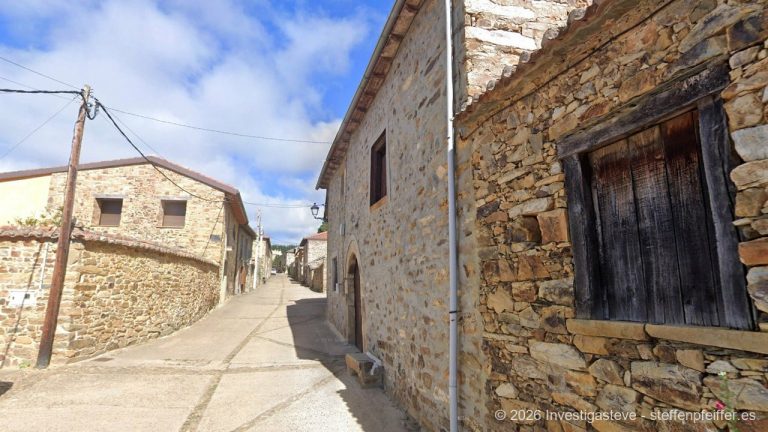
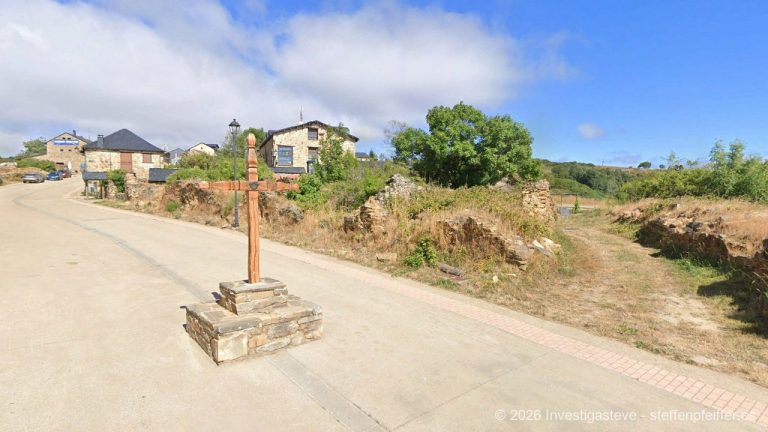
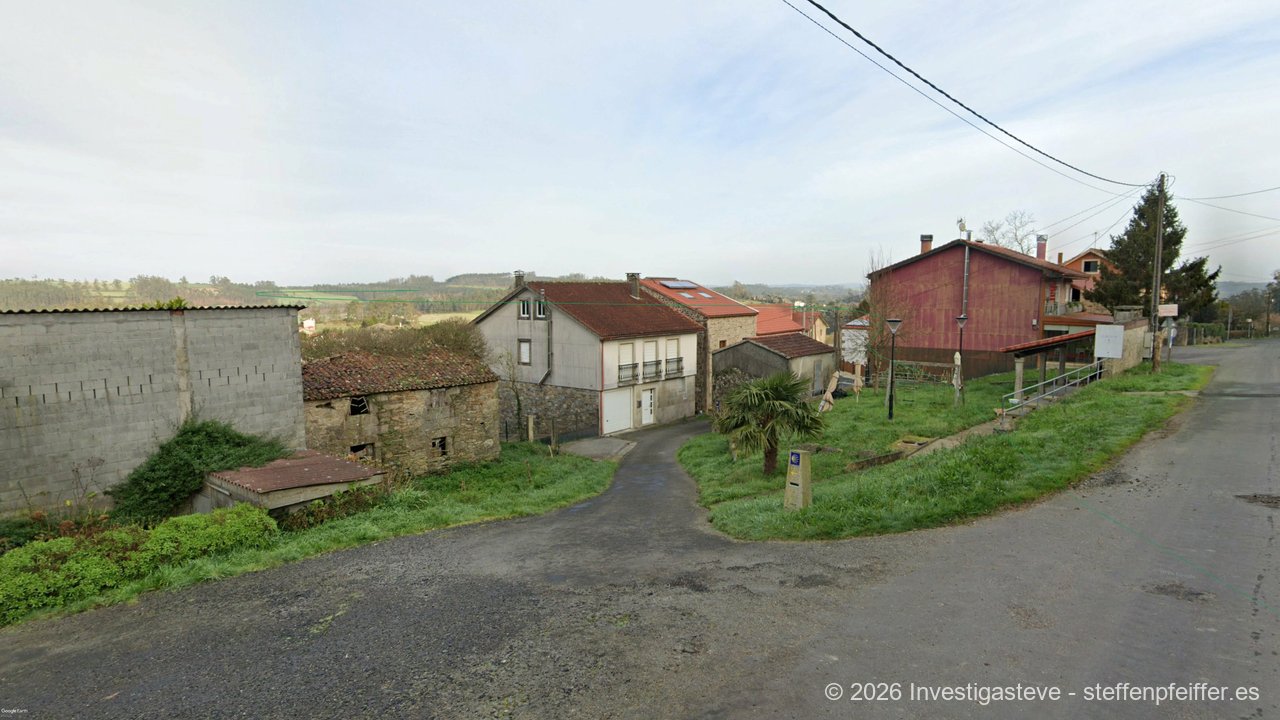
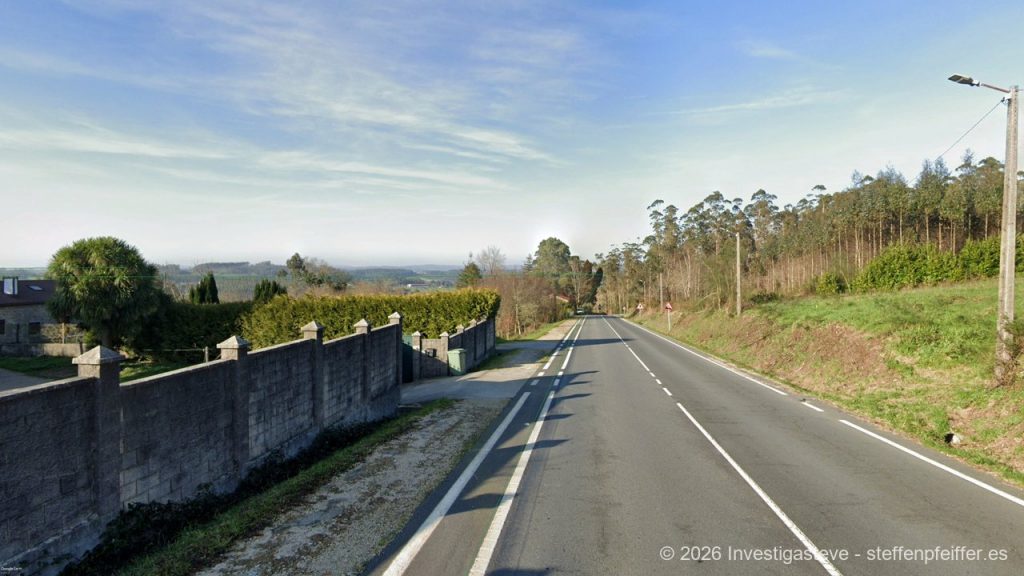
When you have left Negreira behind and the path has led you up through the dense, almost hypnotically fragrant eucalyptus forests of Galicia, your body reaches a state where the rhythm of walking becomes one with the heartbeat of the earth. You step out from the shadows of the trees, the air opens up, and suddenly it lies before you: Vilaserío. This tiny hamlet, deeply embedded in the gentle but unyielding hills of the Comarca Barcalesa, welcomes you with an archaic honesty that immediately captivates you. It is a place that does not stand out through pomp, but through its sheer, granite existence. Here, about halfway between Negreira and Santa Mariña, time seems to possess a completely different consistency – it does not flow, it lingers in the deep cracks of the ancient stone walls.
The auditory backdrop of Vilaserío is a masterpiece of rural silence. You hear the distant, metallic ringing of cowbells, swinging like a calming mantra over the green meadows. Interspersed is the quiet whisper of the wind, carrying the moisture of the nearby Atlantic and rustling in the crowns of the scattered oaks. When you enter the hamlet, the click-clack of your trekking poles on the rough asphalt or the slate ground becomes the only beat in a world that refuses to follow the pace of modernity. It is a silence that is not empty, but filled with the history of work and the constant coming and going of pilgrims.
The air in Vilaserío has a very unique olfactory quality. It smells of damp earth, the tangy aroma of ferns and broom, and – quite characteristic of this region – the sweet, spicy scent of burning oak wood rising from the crouching chimneys of the farmhouses. Sometimes, the smell of freshly mown grass mixes in, a note of unbridled vitality. The haptics of the place are shaped by the roughness of granite. When you lay your hand on one of the old walls, you feel the cool relentlessness of the stone, which has defied Atlantic storms for centuries. Vilaserío is a tactile prayer of stone, moss, and light, inviting you to set down your backpack for a moment and entrust the heaviness of your own being to the earth.
Psychologically, Vilaserío marks the point of final detachment. Santiago is now far enough away that the hustle and bustle of the cathedral is only a distant memory. Here, in the simplicity of this village, you are completely with yourself and with nature. There are no distractions, no glittering storefronts, just the vastness of the horizon and the certainty that every step brings you closer to the end of the world. When the midday sun bathes the gray facades in dazzling silver or the fine Galician misty rain – the mystical orballo – envelops everything in a diffuse, soft light, you understand the deep melancholy and at the same time the incredible strength of this stretch of land. Vilaserío is the stone oasis that shows you that the essential is often found in the inconspicuous.
What This Place Tells
The history of Vilaserío is a chronicle of permanence and adaptation. As part of the Parroquia San Pedro de Bugallido, this place has been a fixed anchor point for those who dared the arduous path to Fisterra since the Middle Ages. Originally emerging as a collection of farmsteads exploiting the fertile soil of the Barcala basin, Vilaserío developed into an indispensable resting point. The historical roots reach deep into a time when Galicia was a patchwork of small dominions and church lands. Up here, on the high plateau, life was tough and shaped by agriculture, but the location directly on the pilgrim route gave the place a significance far beyond its size.
A central element of Vilaserío’s story is its hórreos. These traditional grain stores, which sit like small cathedrals of daily survival atop their mushroom-shaped stone supports, are preserved in a particularly authentic form in Vilaserío. They tell of a time when wealth was not measured in gold, but in corn and grain, protected from the omnipresent moisture and rodents. Each of these stores is a testament to rural engineering and deep folk piety, often topped with stone crosses meant to call down God’s blessing on the harvest. In Vilaserío, these structures do not stand as museum pieces, but as active symbols of a way of life that, despite all changes, has preserved its core.
The historical causality of the place is inseparably linked to the topography. The ascent from Negreira always demanded everything from pilgrims, and Vilaserío was the place where the first great exhaustion of the second day after Santiago gave way to deep relief. In the archives of the municipality, the place is often described as a “refuge.” During the Napoleonic wars and Spain’s internal unrest in the 19th century, Vilaserío often remained spared thanks to its secluded location, which led to the building substance made of massive granite remaining almost unchanged through generations. If you wander through the only main street today, you touch stones that pilgrims already saw in the 15th century – a thought that places your own journey in a greater, timeless context.
But Vilaserío also tells of the modern transformation of Galicia. In recent decades, the hamlet experienced a rebirth through the renaissance of the Camino. Old stables were lovingly converted into hostels without betraying the architectural heritage. This symbiosis of medieval structure and modern hospitality shapes the present face of the place. It is the story of a community that has realized its identity is its most valuable asset. In Vilaserío, the farmer who drives his cows to pasture in the morning meets the hiker from a distant metropolis at eye level. The place teaches you that home is where you are welcomed – even if only for a short rest under a wide sky.
The spiritual dimension of Vilaserío is found in the small church of San Pedro, which keeps watch in the heart of the hamlet. It is a simple building reflecting the ascetic beauty of the Galician hinterland. Generations of residents and travelers have sought comfort and strength here. The legends of the region often speak of the “Meigas,” Galician witches said to dwell in the mists of the surrounding forests, and of the protective power of the saints. In Vilaserío, Christian faith blends organically with ancient pagan traditions, giving the place an almost mystical aura. When the wind whistles through the narrow alleys, you can almost hear the whisper of the past in the stones.

Camino Distances
After the exhausting ascent from the valley of the Río Tambre, Vilaserío offers the first real opportunity to put your feet up and replenish your supplies.
| Previous Place | Distance (km) | Next Place | Distance (km) |
|---|---|---|---|
| Negreira | approx. 12.7 km | Santa Mariña | approx. 8.1 km |
Addresses & tips in Vilaserío
Overnight Stay & Arrival
Arriving in Vilaserío means exchanging the world of big cities once and for all for the security of a tiny refuge. Arrival here is a deeply sensory process. When you push open the heavy door of the municipal albergue or one of the private accommodations, you are often greeted by the cool, protective atmosphere of thick granite walls. The metallic click of your backpack buckle is the signal for a well-deserved break. In the municipal hostel, housed in a functional but harmoniously integrated building, there is an atmosphere of purist pilgrim community. Here you share not only space, but also the experiences of the climb, while the steaming hiking boots at the door provide silent testimony to the exertion.
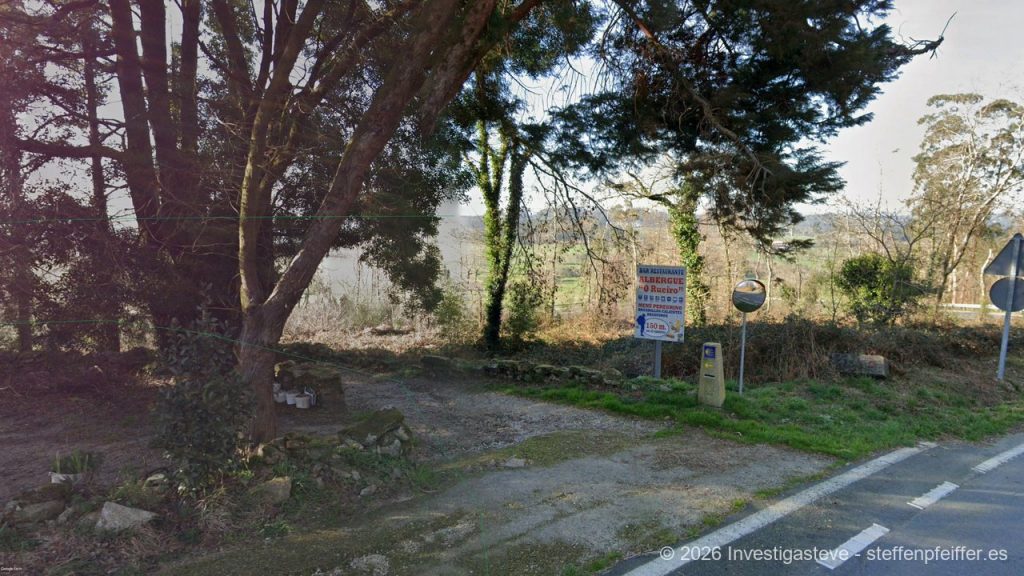
A special gem of accommodation in Vilaserío is the Albergue O Rueiro. This house is more than just a place to sleep; it is an emotional anchor point on the way. In the restored rooms, the smell of fresh wood mixes with the warmth of hospitality. If you sit on the terrace in the late afternoon, legs stretched out and a cool drink in your hand, you watch the sun slowly bathe the surrounding hills in soft, golden light. The feel of the clean sheets and the functional simplicity of the furnishings are exactly what your body needs after more than twelve kilometers of uphill hiking. Here, arrival becomes an act of self-care, far from any unnecessary luxury.
The psychological experience of the evening in Vilaserío is marked by a deep, earthy satisfaction. Since the place is so small, there is no “sightseeing obligation.” Your only task is to be there, to breathe, and to allow regeneration. The social fabric in the hostels is often more intense in Vilaserío than at the big junctions. In the small communal kitchen, conversations arise that go deeper, because the environment does not allow escape into consumption. You talk about blisters, about God, about the longing for the sea, and about the simple happiness of a soft pillow. At night, when only the distant sound of the wind can be heard, Vilaserío offers sleep of a quality only the absolute silence of the countryside can give.
For those seeking an even more personal atmosphere, the small pensions of the place offer a refuge of tranquility. Often they are family-run, where you are not perceived as a number but as a person. A brief nod from the hostel parents, an extra pillow or a hot tea at the right moment – it is these small gestures that refine your stay in Vilaserío. The architecture of the bedrooms, often with visible wooden beams and views of the gardens, conveys a feeling of timeless security. You feel like part of the centuries-old chain of wanderers who sought shelter from the night here. Vilaserío is the place where you learn that a roof over your head and a friendly face are all you really need to be happy.
When morning breaks in Vilaserío, a new chapter of arrival begins – arrival in the new day. When the mist still hangs deep in the valleys and the first pilgrims pack their backpacks, there is an almost solemn mood. The rhythmic tightening of straps and the quiet whispers at dawn are the first sounds of departure. You do not simply leave Vilaserío; you take a piece of its unwavering calm with you on the way. The hostel here acts as a kind of psychological sluice, releasing you strengthened and purified into the wide landscape of Terra de Xallas. Whoever stays here understands Vilaserío as a place of power that draws its energy from the simplicity and authenticity of its walls.
Food & Drink
The culinary world of Vilaserío is a love letter to the Galician hinterland. You will not find pretentious fusion cuisine here, but honest, powerful dishes that taste of earth, labor, and tradition. The gastronomic center of the hamlet is undoubtedly the restaurant O Rueiro. When you enter the dining room, you are immediately surrounded by the cozy aroma of freshly prepared empanada and the legendary Caldo Galego. A pintxo here is not a delicate snack, but a solid source of energy: a thick slice of homemade tortilla or a piece of crusty bread with local cheese. The haptics of the food are decisive here – you feel the density of the bread and the creaminess of the potatoes, which come directly from the surrounding fields.
An absolute highlight for every hungry hiker is the pilgrim menu in Vilaserío. In the large bowls, a stew often steams, gently simmered on the stove for hours. The taste of Caldo Galego, with its strong cabbage, creamy beans, and smoky note of Galician bacon, is like a hug for the stomach. Often, a simple but honest red wine from the region is served, tasting of dark berries and slate earth. You sit at the heavy wooden tables, the clatter of spoons and the many-voiced murmur of pilgrims provide the perfect acoustic background for this ritual of satiation. In Vilaserío, you taste the freedom and the harshness of Galicia in every bite.
The sweet ending is also taken care of. Often, homemade flan or a piece of Tarta de Santiago is served, whose almond flavor perfectly harmonizes with the strong, dark café solo. It is this combination of rustic main course and sweet comfort that rounds off the culinary stay. Whoever eats in Vilaserío does so with a gratitude often lost in tourist restaurants of big cities. The portions are generous, for people here know what a body needs that has just climbed up from Negreira. It is a gastronomy of empathy that regards the guest as a brother or sister on the way.
For those who self-cater, Vilaserío offers the possibility to prepare simple meals in the hostel kitchens. The local honey, often available directly from the farmers, is an energetic marvel. It tastes intensely of heather and eucalyptus blossoms, a golden essence of the Galician wilderness. When you spread this honey on a piece of fresh bread while the rain drums against the windows outside, you experience a moment of pure, unadulterated joy of life. In Vilaserío, food is not consumed; it is celebrated as the source of strength that will carry you over the next hills. It is the culinary art of the essential that nourishes and inspires you here.
Supply & Logistics
Logistically, Vilaserío is a place of clever reduction. Do not expect glittering supermarkets here, but count on the essentials being available. The hamlet acts as an important hub between Negreira and Olveiroa. In the Bar O Rueiro or in the hostel, you’ll often find a selection of basic products: water, energy bars, fruit, and maybe a few blister plasters for emergencies. It is a supply of short distances, where you often speak directly with the people providing the goods. This personal level of logistics gives the stay a human warmth often missing in large supply centers.
Medical care is limited to a well-stocked first-aid kit in the accommodations. If there are really serious problems, the solidarity in the village is great; people know the phone numbers of taxis and doctors in nearby Negreira. If you need specialized medications, you should definitely bring them from Negreira. Digital connectivity in Vilaserío is surprisingly good – the WiFi in the hostels allows you to check weather reports for the windy plateau of Mazaricos. But you should also use the logistical infrastructure to completely switch off your mind. Vilaserío is the place where you learn to get by with what you carry in your backpack.
Shopping: There is no independent supermarket. Small basic assortments for pilgrims (water, snacks, staple foods) are available in the bars and albergues.
Gastronomy: The restaurant/bar O Rueiro is the central point of contact for hot meals and breakfast. The cuisine is regional, hearty, and inexpensive.
Accommodation: Choice between the municipal albergue (Xunta de Galicia) and private hostels such as O Rueiro. In high season, a reservation for private beds is recommended.
Public Facilities: The small church of San Pedro and a public fountain with drinking water quality at the roadside. No banks or ATMs on site – bring cash from Negreira!
In summary, logistics in Vilaserío are like the place itself: simple, functional, and honest. Whoever comes here has exchanged the luxury of big cities for the freedom of the country road. The supply in Vilaserío is entirely sufficient to regenerate the body and prepare the mind for the coming kilometers. It is the logistics of minimalism that teaches you here to appreciate the value of every apple and every glass of water anew. You leave this place not only supplied, but also enriched by the realization of how little you actually need to move forward contentedly.
Don’t Miss
The Hórreo Structure of Vilaserío: Pay attention to the various construction styles of the grain stores in the hamlet. They are living monuments of Galician rural culture and provide great photo opportunities against the backdrop of green hills.
The Church of San Pedro de Bugallido: A quiet place of contemplation. Even though it is small, it reflects the spiritual depth and modesty of the region. A moment of pausing in its cool interior clears the mind.
The Terrace of O Rueiro in the Evening: When the shadows of the trees grow longer, this is the perfect place to feel the community of pilgrims and let the day end with a glass of local wine.
The View Back East: When you leave Vilaserío towards Santa Mariña, turn around on the hill one more time. The view over the Comarca Barcalesa shows you the immense distance you have already covered, and the beauty of the Galician vastness.
Insider Tips and Hidden Places
Away from the main street of Vilaserío, just a few steps behind the last houses towards the fields, a small, almost forgotten path leads to an old stone wall. Here, in the shade of a mighty oak, you find a place of absolute isolation. It is a point where nature rules. You can sit on the cool stones and watch as the mist dances in the distant valleys. Only the distant ringing of cowbells and the humming of bees in the broom bushes accompany you. Here you almost physically feel the “morriña” – that Galician longing. It is an ideal place to write a diary or simply stare into infinity.
Another almost undiscovered place is the small stream below the hamlet. If you leave the official path for a few hundred meters and follow the animal tracks, you reach a spot where the water flows crystal clear over smoothly polished granite slabs. Here the air is even cooler and purer, saturated with the scent of wild mint growing on the banks. It is a natural oasis that hardly any pilgrim sees who only follows the yellow arrows stubbornly. Feeling the ice-cold water at your feet is the best therapy against the heat of the day. In this hidden corner, Vilaserío shows itself at its wildest and most original.
An insider tip for the senses is observing the swallows in the late afternoon. They seem especially numerous in Vilaserío. If you lean quietly against one of the house walls, you can watch their breathtaking flight maneuvers as they hunt insects in the warm air. Their shrill, lively calls are the soundtrack of rural Galicia. It is a spectacle of fragile beauty reminding you how alive this seemingly so quiet place truly is. Sometimes it is these fleeting, almost invisible moments that leave the deepest impression on a wanderer’s memory.
Reflection Moment
Vilaserío asks you a question that touches your innermost being: How much baggage are you really carrying with you? When you sit here on a granite bench and look out over the barren hills, you become aware of the radical simplicity of life. This place does not need pomp to be significant – it is significant because it is here, because it offers protection, and because it remains true to the truth of the soil. In the silence of Vilaserío, you feel that the Camino is not a sporting event but a peeling process. Layer by layer, the demands of civilization fall away from you until only the core remains: your breath, your step, your hunger, and your goal.
Perhaps you realize here that silence is not emptiness, but a space for answers. When you set out again tomorrow, you take the stoic calm of the hórreos with you. You understand that you do not have to be fast to arrive, but persistent. Vilaserío teaches you that every ascent needs a moment of rest and that true greatness often lies in the ability to be content with little. When you look up into the wide starry sky over Terra de Xallas at night, you feel at once small and infinitely connected with everything. That is the gift of Vilaserío: the realization that you are exactly where you belong – right on the path to yourself.
Camino of the Stars
This place lies on the Camino a Fisterra y Muxía, on the stage from Negreira to Olveiroa (CFM 2). The sequence of places is:
Negreira → A Pena → Vilaserío → Santa Mariña → Maroñas → Ponte Olveira → Olveiroa
Have you felt that moment of deep regeneration in the archaic calm of Vilaserío that makes this place so special? Perhaps you heard a story in the O Rueiro hostel that changed your view of the journey, or you took a photo between the hórreos that captures the soul of Galicia? Share your personal impressions and insider tips with us – in any language your heart speaks. Your experiences make this small, stony stop even livelier for the next pilgrims!
About the Author