A First Glance – Entry & Atmosphere
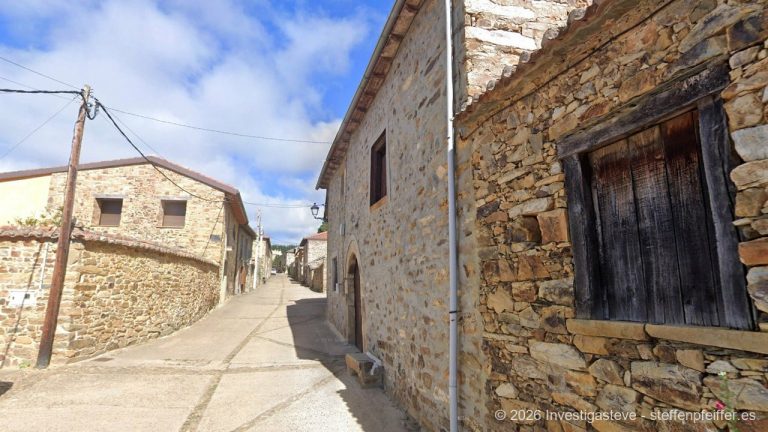
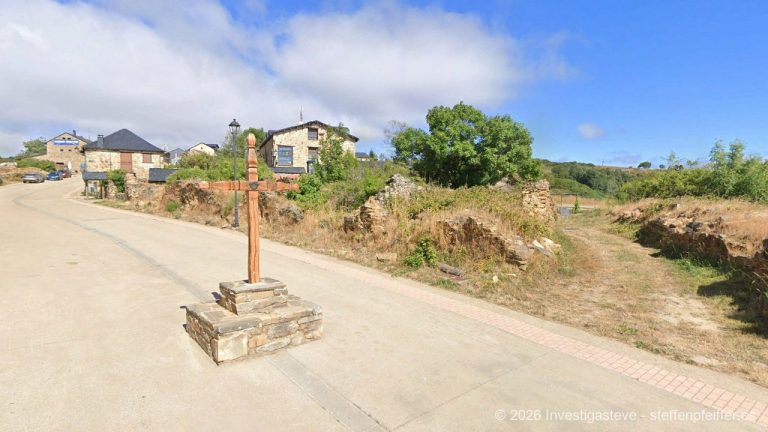
You leave behind the dense shadows of eucalyptus forests that have accompanied you from Negreira like a fragrant, silvery-green wall, and suddenly the world opens up. You step into Maroñas – and immediately feel that you’ve entered the heart of the “Terra de Xallas.” Here, on the gentle hills of the Mazaricos municipality, a different wind blows. This is a place that doesn’t impress with monumental palaces but with its archaic, almost defiant honesty. Maroñas welcomes you with a panorama that resembles an impressionist painting of Galicia’s rural soul: lush green meadows stretching to the horizon, interrupted only by the gray dots of ancient stone walls and the deep blue of a sky that seems endlessly vast up here.
The welcome is a special acoustic experience. Far from the noise of civilization, the sounds of nature and rural life dominate here. You hear the rhythmic tapping of your walking sticks on the asphalt, echoing strangely lonely across the fields. From afar, the wind brings the dull, metallic ringing of cowbells – a deep, calming bass that forms the foundation of this landscape. Intermingled is the high, almost futuristic whirring of wind turbines on distant hilltops, those modern giants of Galicia, silently rotating here like mute guardians of the coast. It’s a fascinating contrast between the ancient agricultural tradition and the modern energy transition, giving Maroñas its own unique identity.
The air in Maroñas is heavier than in the woods; it’s saturated with the scent of the land. It smells of freshly cut grass, the spicy note of wild thyme and broom, and – perhaps unfamiliar for city dwellers but essential for Galicia – the honest scent of livestock farming. It’s the scent of work, earth, and survival. When the fine Galician drizzle, the mystical orballo, sets in, the tactile quality of the place transforms. The rough granite of the houses becomes dark and shiny, the lichens on the old hórreos glow in an almost unnatural emerald green, and the ground beneath your boots feels soft and alive. In Maroñas, you’re no longer just a hiker on a trail; you become part of an ecosystem that has defied the rhythm of the seasons for generations.
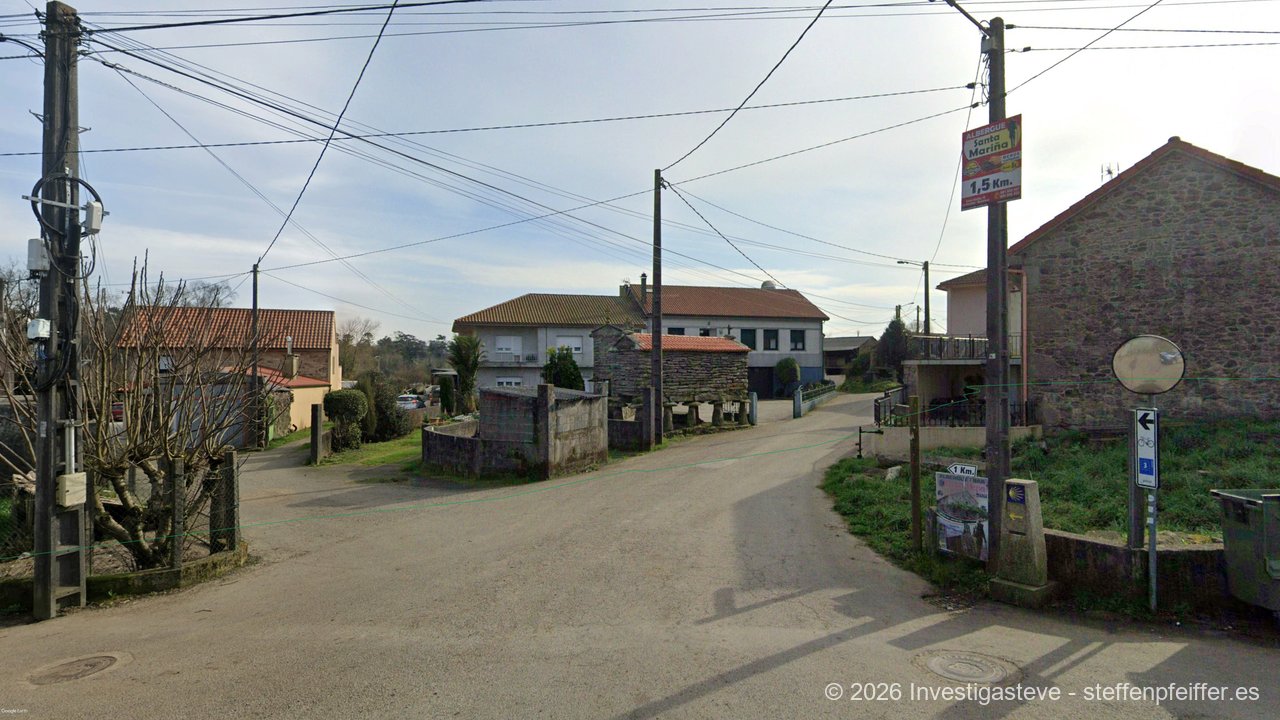
Entering Maroñas is a moment of inner expansion for the pilgrim. After the confinement of the forests, the openness of Terra de Xallas challenges your gaze. You see the first hórreos, those stone granaries on mushroom-shaped feet, standing by the wayside in Maroñas like small cathedrals of daily bread. They are silent witnesses of a time when wealth was measured in corn and grain. As you wander through the small hamlet, you feel a deep, almost melancholic calm. It’s a resting point for the senses, a place to prepare for the wilder stretches ahead. Here in Maroñas, the Camino teaches you to find beauty in simplicity and to soak up the power of the vastness.
What This Place Tells
Maroñas, or correctly Santa Mariña de Maroñas, is a place whose history is not written in lavish books but in stone and granite. The parish’s origins reach deep into the Middle Ages, a time when pilgrimages to Fisterra were still a dangerous expedition into the unknown. Its geographic location on the high plateau made Maroñas a natural stage point. Up here, where rivers gather before plunging as spectacular waterfalls into the sea, people sought the protection of the divine early on. The heart of the town, the Romanesque church of Santa Mariña, speaks of this deep-rootedness. Even though it took on Baroque elements over the centuries, its core still breathes the simple, powerful spirituality of the 12th century.
The place’s namesake, Saint Mariña, is one of Galicia’s most revered martyrs. Her legend, which tells of steadfastness and the triumph over evil, perfectly matches the rugged beauty of this landscape. In Maroñas, you’re reminded of the descriptions from the medieval Codex Calixtinus, which described Galicia as a land rich in good waters and fertile soils, yet also marked by the hardships of agriculture. The stone walls, dividing the fields into small parcels – the Galician minifundismo – are testimonies of a centuries-old social structure. Every field, every path here has its name and story, often only known by the oldest residents of the village.
The culture of hórreos in Maroñas is especially fascinating. These granaries are far more than just functional buildings; they are symbols of social identity. In Maroñas, you’ll find a specific mix of stone and wood constructions, showcasing the craftsmanship of local stonemasons. The “Muelas,” the round stone slabs that prevent rodents from entering, act as architectural exclamation points of rural ingenuity. When you walk among these granaries, you understand that Maroñas has always been a place of storage – a place that secured survival when the harsh Galician winters swept across the high plateau.
The story of Maroñas is also a story of silence. While other places on the Camino Francés became famous for trade and wars, Maroñas remained a place of contemplation and work. Here, pilgrims and farmers meet as equals, united by the common ground. In recent decades, the renaissance of the Camino de Fisterra has breathed new life into the town without selling its soul. The old stone houses are being gently restored, and the hostels offer a kind of hospitality reminiscent of the original medieval hospitaliers. Maroñas tells you that the Way isn’t just made up of miles, but of the roots you find in the earth, even if you stay only for one night.

Camino Distances
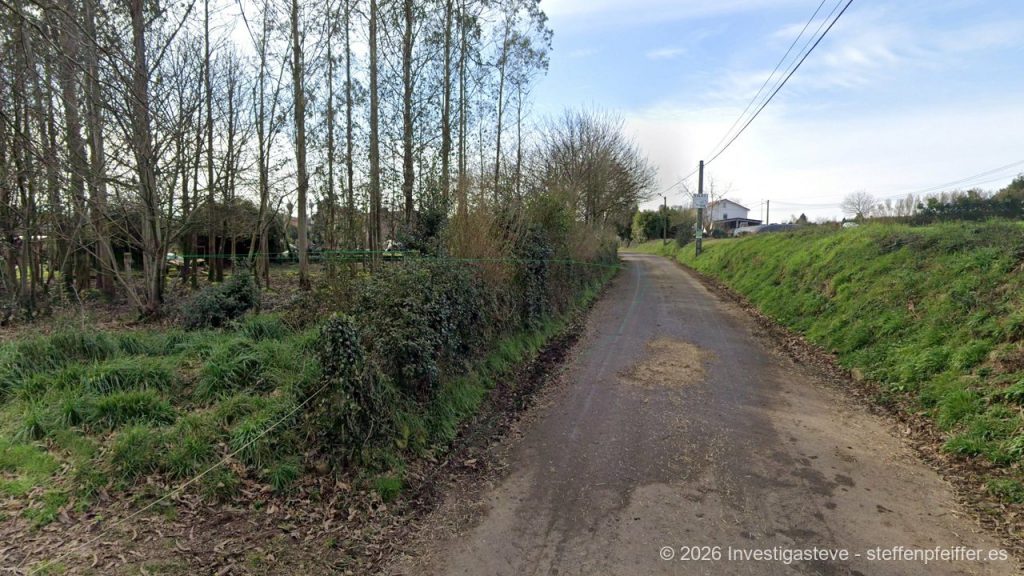
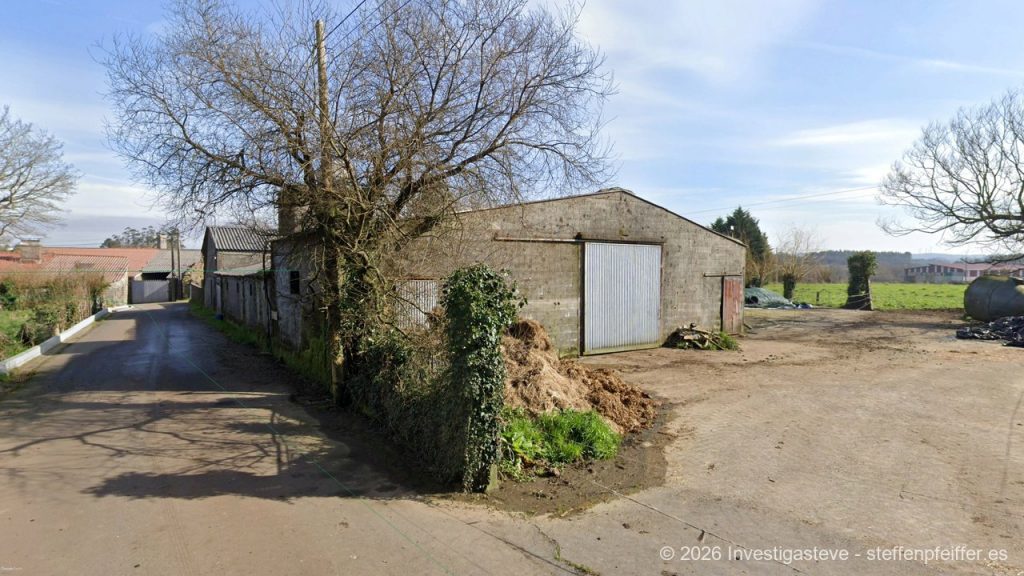
After about 4.5 kilometers of steady walking through open fields and small hamlets, the stone gate to Maroñas opens here.
Overnight Stay & Arrival
Arriving in Maroñas means leaving the hustle and bustle of the world behind for good. The town offers accommodations characterized by almost monastic simplicity and a deep connection to the surroundings. In the hostels of Maroñas, like the municipal albergue or the charming private guesthouses, there’s an atmosphere of genuine, unadulterated community. When you cross the threshold of one of these massive granite buildings, you immediately feel the cool security of the thick walls, which keep out the heat in summer and the damp cold of Galicia in winter. In the old monastery hostel, the walls whisper stories of thousands of wanderers, while outside, pilgrims place their heavy shoes at the door – a ritual act of liberation that has special meaning here.
Arriving in Maroñas is a sensory experience. The rustling of sleeping bags, the quiet murmurs in the communal kitchen, and the aroma of freshly brewed coffee blend with the distant sounds of nature. There’s no television and no distraction here; evening entertainment often consists of sitting on a stone bench in front of the house, watching the shadows of the hórreos grow longer. The hostel parents in Maroñas often greet you with a warmth that doesn’t feel forced. A firm handshake, a silent nod, and a glass of water are the currency of hospitality here. You feel that you’re not just a paying guest, but a part of an ancient chain of seekers.
If you’re seeking peace, you’ll love Maroñas. The beds are often simple but functional, and the silence of the night is absolute. When the lights go out, all you hear is the occasional creaking of wood in the ceiling beams and the distant rush of wind in the power lines. Spending the night in Maroñas offers the rare chance to strip life down to essentials. It’s a place where you learn that a clean sheet and a hot shower can be the greatest luxuries in the world. In these moments of tranquility, far from digital distractions, your soul often finds the space it needs to process the experiences of the past days. Maroñas is not a place for parties; it’s a place for peace.
Food & Drink
The culinary world of Maroñas is as honest and robust as the landscape of Terra de Xallas. Here you won’t find pretentious molecular cuisine, but dishes that taste of earth, fire, and tradition. A pintxo here replaces any energy bar – and stays in your memory because it’s often made from ingredients grown just behind the house. The local specialty is undoubtedly Galician cuisine in its purest form. When you step into one of the few bars or into the communal kitchen of the hostel, the air is often filled with the aroma of Caldo Galego, that legendary soup of cabbage, potatoes, and beans that warms the stomach and comforts the soul.
Especially noteworthy is the quality of the meat dishes in this region. The cattle you saw grazing in the meadows during the day provide meat of incomparable tenderness. A simple churrasco, grilled over oak wood, tastes better in the clear air of Maroñas than in any Michelin-starred restaurant. Alongside it, you’re often served rustic bread from Mazaricos, with a crust so thick you almost need a knife to break it, but inside it’s so soft and aromatic you could enjoy it plain. The mood in the local taverns is marked by rough cordiality; you squeeze together at the table, share strong local red wine, and listen to the conversations of farmers, whose dialect is especially deep and guttural here.
A secret tip for those with a sweet tooth is the local honey. In Terra de Xallas, broom and heather bloom in abundance, allowing the bees to produce honey of almost black color and intense, malty flavor. A spoonful in your morning yogurt or on a piece of cheese is an energetic rocket launch for the next stage. Eating in Maroñas means connecting with the power of the land. It’s an ascetic form of indulgence that needs no decoration because the quality of the products speaks for itself. Here, you taste the freedom, the rain, and the sun of Galicia in every bite.
Provisions & Supplies
In terms of infrastructure, Maroñas is a place of reduction and self-sufficiency. It’s essential for you as a pilgrim to understand that this hamlet isn’t a place for quick errands. There are no large supermarkets or pharmacies here. This “supply desert” is a conscious part of the experience on the stage from Negreira to Olveiroa. You must learn to see your backpack as your mobile fortress. Anyone arriving here should have already stocked up in Negreira or Vilaserío. But it’s precisely in this lack that the beauty lies: you learn to appreciate the value of small things – a forgotten banana in your backpack or a hard-boiled egg becomes the most valuable commodity.
Nevertheless, Maroñas offers what’s necessary for the weary traveler. The little bar by the roadside often serves as the unofficial communication center and sales point for the most important items: water, bread, maybe a few eggs or a can of tuna. The pharmacist in Mazaricos knows almost every pilgrim by name, but she’s several kilometers away. For medical emergencies or backpack transport, you’re dependent on the help of the hostel parents, who often have an impressive network and find solutions where there seem to be none. Maroñas teaches you self-sufficiency – a valuable lesson before you approach the big stage destination Olveiroa.
Shopping: There are no traditional stores in town. The next larger shopping opportunities and pharmacies are in A Picota (main town of Mazaricos), which means a detour of several kilometers. So plan your supplies ahead.
Gastronomy: The hostel bar or small local taverns offer simple pilgrim dishes and sandwiches. The quality is honest, but the selection is limited.
Accommodation: In Maroñas, you’ll find both a municipal albergue and private accommodations. These are often housed in beautifully restored stone houses and offer a very personal atmosphere.
Public Facilities: The church of Santa Mariña is the most prominent building, though usually only open during services. A public fountain at the edge of town provides crystal-clear drinking water – a blessing on hot days.
Maroñas remains a true insider tip for those pilgrims who seek and appreciate real silence. While the masses often rush past the historic stones inattentively, this small town offers the rare opportunity to take one last deep breath, to feel the archaic pulse of Galician earth beneath your feet, and to mentally prepare for the upcoming challenges at the Río Xallas. It’s the logistics of minimalism that clarify your mind here.
Don’t Miss
The Church of Santa Mariña de Maroñas: A Romanesque gem whose simple facade and surrounding graves tell of centuries of continuity of faith. Pay attention to the stone details at the main portal.
The Hórreo Alley: Maroñas has some of the best-preserved granaries in the region. Take a close look at these architectural masterpieces and notice the muelas, the round stone slabs that grow from the granite like mushrooms.
The View of Monte Aro: From the hills around Maroñas, you have a spectacular view of Monte Aro, a striking mountain that dominates Terra de Xallas and looks over the valley like a petrified guardian.
The Cruceiros: Look for the stone roadside crosses. Each one has its own story and often marks ancient boundaries or places for contemplation.
Insider Tips and Hidden Places
Beyond the marked path, Maroñas reveals small, almost invisible treasures that only the attentive pilgrim notices. One such place is the small, half-ruined fountain at the western exit of town, often overgrown with wild blackberry vines and ferns. If you push aside the thicket a little, you’ll discover an ancient stone structure from which ice-cold, pure water flows. The locals say the water has the power to heal tired limbs in seconds. Place your hand in the icy water and feel the cool strength of depth – it’s a tactile experience that immediately reconnects you with nature.
Another hidden spot is the old connecting road toward A Picota, which now only exists as a narrow cattle path. If you stray from the main path here, you’ll often find small, half-ruined walls completely covered in bright green moss. These ruins are silent witnesses of demographic change and offer a melancholic, almost poetic backdrop for a brief pause away from the pilgrim crowds. Up here, where the wind whistles undisturbed through the crowns of solitary oaks, you can feel the absolute solitude of Terra de Xallas.
When the afternoon light strikes the sparkling components in the granite of the hórreos at a shallow angle, the whole village begins to glitter for a few minutes, as if countless tiny diamonds were embedded in the stone. It’s a magical moment that only those experience who don’t hurry past the stones but take time to watch the light play of the Galician sun. In Maroñas, it’s the small wonders that enrich the journey – you just have to be willing to lift your gaze from your feet.
Moment of Reflection
In Maroñas, your pilgrimage reaches a critical point of inner maturity. You’re now far enough from Santiago to forget the hustle and bustle of the cathedral, and close enough to the coast to sense the salty promise of the sea. In this small, inconspicuous hamlet, exhaustion mixes with a deep, almost meditative clarity. You stand on the high plateau of Terra de Xallas, and the absolute vastness of the landscape puts your own worries into perspective. Maroñas asks you: What remains of you when you’re reduced to the essentials?
The psychological effect of the coastal landscape, even if you can’t see the sea yet, is immense here. As you wander the quiet streets of Maroñas, you can almost feel the burden of the past weeks falling from your shoulders. It’s a time of radical inner retreat. The view of the distant horizon, interrupted only by the silhouettes of wind turbines, reminds you that everything is in flux. In Galicia, they say that Terra de Xallas is a place where you learn to listen to your inner voice again. For you as a pilgrim, Maroñas is the gateway to a new, purified version of yourself. The rhythm of your breath adjusts to the rhythm of the pastures, and you realize: The Way is not a line, but a state of being.
Camino of the Stars
This place is on the Camino Fisterra y Muxía, on the stage from Negreira to Olveiroa (CFM 2). The sequence of towns is:
Negreira → A Pena → Vilaserío → Santa Mariña → Maroñas → Ponte Olveira → Olveiroa
Did you feel the moment of absolute, almost uncanny silence between the hórreos of Maroñas, or did the vastness of Terra de Xallas almost overwhelm you? Share your personal impressions of this hidden gem of the highlands with us. Maybe you even have a photo of the church of Santa Mariña or one of the ancient, lichen-covered stone crosses? We look forward to your very own story from the heart of Mazaricos!
About the Author