A First Glimpse – Arrival & Atmosphere
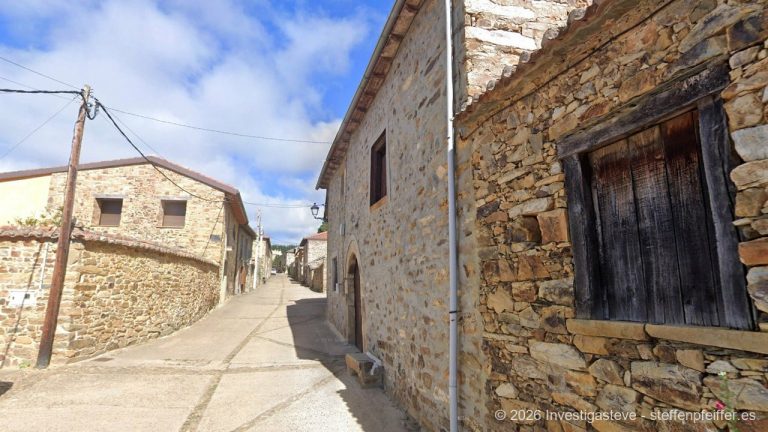
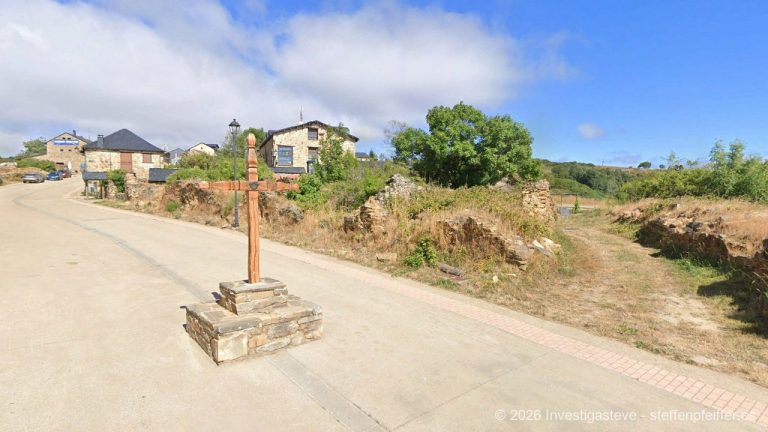
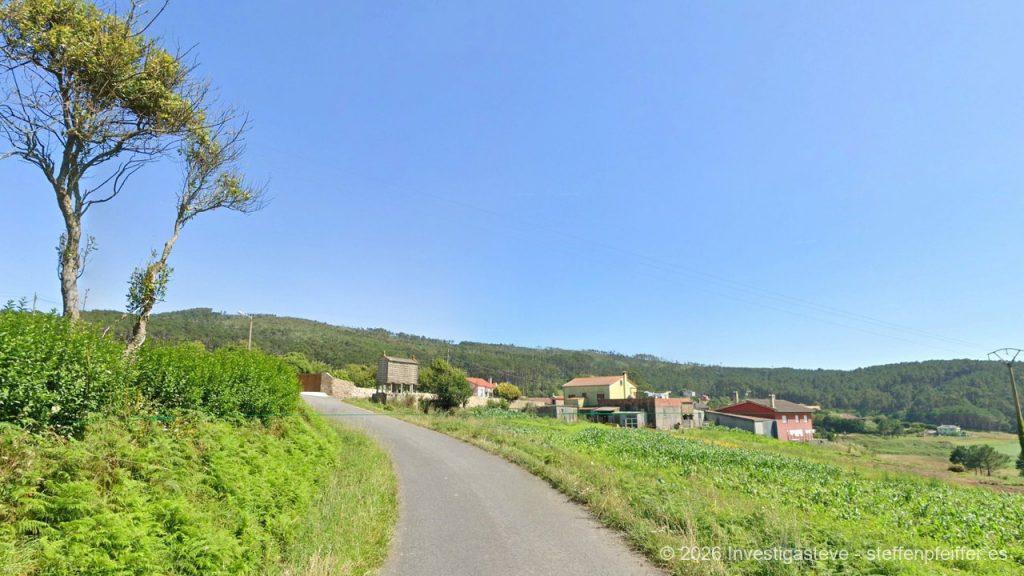
You set foot in Buxán – and immediately feel that you have not only left the “End of the World” in Fisterra behind geographically, but have crossed an invisible, almost sacred threshold. While most pilgrims believe they have reached their goal at the lighthouse of Fisterra and surrender to the solemn standstill, here, only about seven kilometers further north, the true “beyond” begins. Buxán does not impose itself on you; it is a quiet, almost shy hamlet, clawing to the flank of the Galician coastal landscape at about 84 meters above sea level. At first glance, the place looks like a small fortress of gray granite and deep, centuries-old silence. The world of conventional tourism finally steps back here to make room for the raw, unfiltered primal power of Galicia.
The air up here is a headstrong, almost magical mixture. You still breathe in the salty sharpness of the Atlantic, carried over by the tireless wind from the wild Costa da Morte, but this smell already mingles with the heavy, earthy aroma of damp ferns, old stones, and the resinous scent of the nearby pine forests rising like dark sentinels behind the village. It is not the artificial fragrance of a holiday resort, but the aroma of honest, hard work and a deep connection to the soil. In Buxán, the clocks tick noticeably slower – you almost feel they are running backward in the rhythm of the tides. The hustle of the masses has given way to a dense, rural silence, broken only by the distant, metallic ringing of a lonely cowbell, the rustling of the wind in the cornfields, or the occasional rhythmic click of your own hiking poles on the slaty ground. It is a place of gentle melancholy and unadulterated beauty that forces you to slow your pace and immerse yourself fully in the harsh reality of Galician rural life.
What This Place Tells
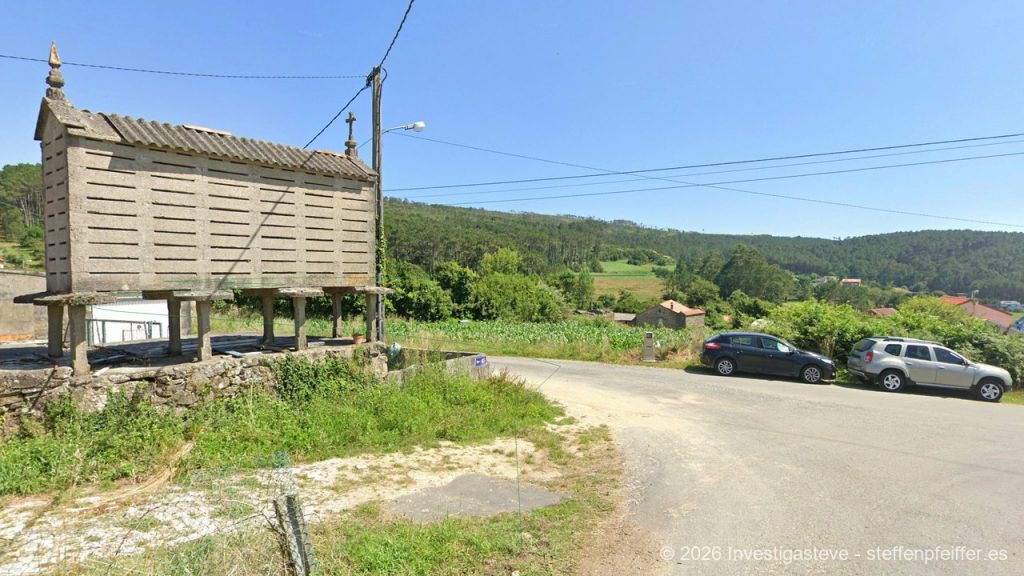
Above all, Buxán tells the story of patient perseverance and quiet resistance against the relentless march of time. While the population figures have steadily declined over the last decades – from over 40 inhabitants at the turn of the millennium to about 26 souls today – the massive stones remain as silent witnesses to an eventful past. The place is an integral part of the Parroquia Sardiñeiro, a community that has lived off the barren soil and the capricious sea for countless generations. The architectural heart of this narrative is undoubtedly the Pazo do Sardiñeiro, a historic manor house built from mighty rubble and ashlar masonry, rising proudly and somewhat aloofly in the center of the hamlet. Even though it is now privately owned and guards its secrets behind high walls, its massive columns and the magnificent granite Hórreo tell of an era when the local nobility watched over the harvest and the fate of the village from here.
But the history of this place reaches far deeper into the mythology of the Costa da Morte. The entire region is saturated with Celtic and pre-Roman legends that say the souls of the deceased ascend into the western sky from here. In the immediate neighborhood, in the valley of Duio, the legendary Roman city of Dugium is said to have once been located. According to legend, it was destroyed by a massive flood disaster – a divine sign and a symbolic victory over ancient paganism, when the disciples of the Apostle James asked here for permission for his burial. Buxán thus lies on a spiritual border zone, the ancient Finis Terrae, where the barrier between this world and the hereafter becomes perceptibly thin for receptive pilgrims.
Here you encounter authentic Galicia in its purest form, shaped by the system of “Minifundios,” that extreme fragmentation of the land into tiny plots. Every stone wall, every narrow path, and every terraced slope was shaped by hands that knew exactly what it means to wrest survival from the rocky subsoil. In this solitude, the Galician language also comes alive again – a soundscape of wind, earth, and salt that penetrates the bays like the “Brétema” and carries the deep longing, the proverbial “Morriña,” in every word. Whoever walks through Buxán enters a space that has barely changed its shape over the centuries, reminding us that constancy is the most valuable asset in a constantly changing world.

Camino Distances
After the ascent from the coastal lowlands of San Salvador de Duio, Buxán marks the moment when you finally immerse yourself in rural isolation. The path now leads you away from the inhabited centers towards the silent forest zones of stage CFM 4.
| Previous Place | Distance (km) | Next Place | Distance (km) |
|---|---|---|---|
| San Salvador de Duio | approx. 2.5 km | Castrexe | approx. 1.5 km |
Addresses & tips in Buxán
Accommodation & Arrival
Arriving in Buxán means definitively shedding the tourist world of Fisterra like an old coat. For a long time, this hamlet was a blank spot on the map of pilgrims, a place you merely noticed in passing or hurried through. But today, the small “Buxán Pilgrims’ Hostel and Café” offers an intimate, almost family-like retreat for those seeking radical silence. Here you are not an anonymous number in a mass hostel, but a guest in a village that is actually not designed for modern mass tourism. Arriving, however, requires a certain inner humility and forward-looking planning. Since this is the only documented accommodation in the village and capacities are naturally limited, a bed here is a rare and precious commodity.
Those lucky enough to spend the night in Buxán are rewarded with a night of absolute, almost tangible darkness. Far from artificial light pollution, the starry sky of Galicia – the true “Camino de Estrellas” – stretches out above you in a clarity that almost hurts. It is a silence you can hardly find in the modern world anymore; a silence in which you can hear your own blood rushing in your ears. It is a place for pilgrims who no longer want to evade themselves and who understand the solitude of the path not as a deficiency, but as a profound gift. The feel of the place is determined by the rough granite of the walls and the cool wood of the simple rooms. When you sit in front of the door in the evening, you feel the stored warmth of the stones and hear the distant, soothing rumble of the Atlantic as a constant companion.
The psychological arrival in Buxán is often accompanied by a deep relief. After the emotional release at Cape Fisterra, this is the first point where the reality of moving on truly seeps in. The simple hospitality of the operators, who themselves often have a deep connection to the Camino, grounds you and prepares you mentally for the coming kilometers to Muxía. In Buxán, you learn that home is where you find rest – even if only for a single night in a tiny hamlet at the end of the world. It is a preparation for the transformation from “tourist” back to a genuine “pilgrim” who understands the path as an inner process.
Food & Drink
The culinary supply in Buxán resembles a small game of chance and demands a certain degree of self-sufficiency from the hiker. The only reliable lifeline is the café in the local pilgrims’ hostel. Here you can get a fortifying coffee, a cool drink, or a simple meal prepared with love. But be warned: The clocks, and with them the opening hours, in the Galician countryside often follow loose recommendations and the position of the sun rather than fixed laws. It is a world where you learn to be grateful for what is available at the moment.
Apart from this one option, there are no other restaurants, bars, or supermarkets in the village. For you, this means: self-sufficiency is the top pilgrim’s duty. However, Buxán is the perfect place to sit on one of the ancient stone walls by the wayside, let your gaze wander over the green hills and the distant forests, and enjoy the picnic you brought along in peace. A simple piece of bread, some tangy local cheese, and fresh fruit from your backpack taste like freedom and the radical simplicity of being up here. Those who are stranded without provisions quickly learn here the involuntary but salutary lesson of fasting while walking and the appreciation for the next open shop in Lires.
The scent that reaches your nose in Buxán is often characterized by the smoke from old chimneys, where a fire sometimes crackles even in summer to drive the moisture out of the thick walls. It is an olfactory signal of security in an otherwise rather brittle landscape. In Buxán, you learn that hunger is often the best spice and that the joy of a simple glass of water from one of the wells can be greater than enjoying a three-course meal in the city. This ascetic experience not only cleanses the body but also sharpens the senses for the subtle aromas of the surroundings – the scent of wild thyme on the wayside or the salty breeze that sweeps through between the houses again and again.
Supplies & Logistics
It must be stated clearly: In purely practical terms, Buxán is an infrastructural supply desert. There are no supermarkets, no pharmacies, no ATMs, and no medical facilities. The few residents take care of their daily needs in the larger centers like Cee or Fisterra. As a pilgrim, you are completely on your own here and should urgently make sure that your water bottles are filled and your energy reserves (nuts, bars, fruit) are replenished before you leave Fisterra or San Salvador de Duio.
However, this absence of modern comfort is not a failure of regional planning, but an essential, almost indispensable part of the experience on the way to Muxía. Buxán reminds you that convenience is not a fundamental right of the pilgrim, but a luxury that must be earned. If you do happen to run out of water, do not hesitate to knock politely on one of the heavy wooden doors of the houses. Often the most beautiful, most honest, and most human encounters with the people of Galicia, who are known for their quiet helpfulness, arise from a simple request for water.
Shopping: No shops in the village; the last chance to replenish supplies was in Fisterra (approx. 7 km back).
Gastronomy: Sole café in the pilgrims’ hostel; otherwise, absolute self-catering is required.
Accommodation: “Buxán Pilgrims’ Hostel” as the only point of contact; timely reservation in high season strongly recommended.
Public Facilities: No notable buildings except the private Pazo; strategically important point for entering the forest zone.
Until the next larger stage destination in Lires, which is still about 8 kilometers away, there will hardly be any further reliable shopping opportunities. Therefore, use Buxán as a logistical checkpoint for your own equipment. The challenge of logistics in this region sharpens your sense of responsibility and lets you physically grasp the importance of preparation and foresight on the Way of St. James.
Don’t Miss
Pazo do Sardiñeiro: Even if the interior remains hidden from the public, the external architecture of this manor house is a must. The massive, perfectly joined granite blocks and the stately aura testify to an almost forgotten art of stonemasonry.
The Monumental Hórreo: Pay special attention to the large granary on the grounds of the Pazo. It is a prime example of the functional beauty of Galician stone architecture and a symbol of the rural prosperity of bygone days.
The Visual Border: Buxán lies at a dramatic interface of nature. Take time for a panoramic view: look back to the sea shimmering in the distance, and then forward to the dense, dark pine forests that will swallow you next.
Authentic Daily Life: The small cornfields and vegetable gardens between the houses are not a backdrop for tourist photos, but the vital foundation of the people living here. It is a privilege to be able to observe this unvarnished daily life while walking by.
Typical Stone Houses: The architecture of Buxán is a textbook of Galician rural life. Pay attention to the small details in the masonry and the way the houses are built into the slope to defy the elements.
Insider Tips and Hidden Places
Beyond the marked path that most hikers hurry through, Buxán reveals small, almost invisible treasures for the attentive soul. One such place is the absolute silence in the afternoon. When most transit pilgrims have already moved on, an almost tangible, sacred quiet settles over the hamlet. Find an undisturbed spot, sit down silently for ten minutes, and just listen to how the village breathes. You will perceive sounds that you have long since stopped hearing in the noise of everyday life: the rustling of lizards in the dry grass, the soft creaking of the Hórreo doors, or the distant whispering of the treetops.
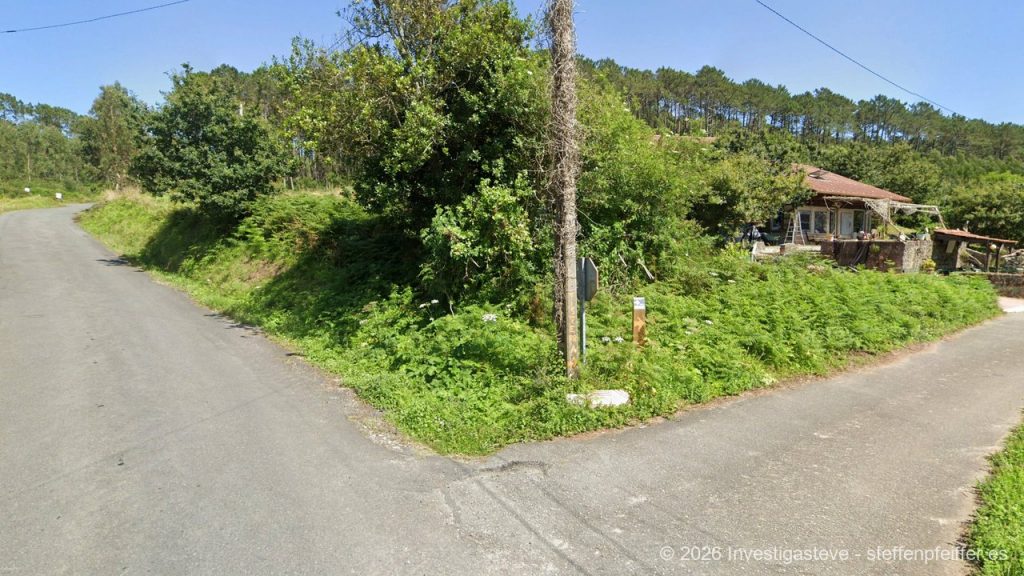
Another insider tip is the view from the upper end of the village near the Pazo. Find a position from which you can capture the manor house and the wide, rural landscape behind it together – this is Galicia “in a nutshell.” It is a motif that captures all the melancholy and strength of this region. Also pay attention to the crossing point of worlds: In Buxán, the markings of the Camino de Fisterra y Muxía often meet those of the “Camino dos Faros.” Here you encounter hikers moving in the opposite direction or exploring the coast in a completely different way – a brief exchange about “where from” and “where to” wonderfully connects the different paths of the seekers.
For nature lovers, a small detour (approx. 1-2 kilometers) to Praia do Rostro is worthwhile. This wild, unspoiled dune beach is an absolute insider tip for all those seeking the unfiltered face of the Atlantic. But be warned: The rip currents there are life-threatening – keep your feet in the sand and merely enjoy the visual force of the surf. In Buxán itself, there are also small, nameless springs by the wayside, whose water is often ice-cold and offers a welcome refreshment for face and hands. It is these small, unexciting discoveries that make Buxán a place that remains in the memory for a long time.
Moment of Reflection
You are in the middle of the area at the end of which you will reach the symbolic “End of the World” at Cape Fisterra and touch the stone with the inscription 0.00 km. But for now, you are still putting one foot in front of the other. Why are you still on the move? What are you searching for in these silent, almost forgotten villages like Buxán, which lie in the deep shadow of the great cathedrals? Buxán asks you this radical question about your motivation. Perhaps you recognize exactly here, amidst the gray stones and the wide fields, that the goal of your journey was never a specific number, a certificate, or a monumental landmark.
For here you suddenly become aware of the historical significance of the region. The spiritual beginning, which reached a climax with the Translatio of James through his disciples, when they were captured, imprisoned, and isolated here at Vilar de Duio, once inhabited by the Celtic tribe of the Nerios, by the Roman prefect Filotrus. Only through the divine intervention of an angel (or a divine miracle), to which they owed their liberation from prison. During their flight from Filotrus’s soldiers, a bridge over the Tambre River collapsed when the pursuers tried to cross it, allowing the disciples to escape.
Perhaps the true goal has always been the courage to repeatedly engage with the unknown and with yourself. In the isolation of Buxán, the hardships of the past days are put into perspective. You realize that the path does not end just because the map stops. The stability of the Hórreos and the constancy of the stone walls are mirrors for your own inner fortitude, which you have built up over the last weeks. Buxán is the place where you learn to no longer fill the silence, but simply to endure it and accept it as part of your own story. It is the moment of deep integration before the destination in Muxía finally receives you.
Camino of the Stars
This place lies on the Camino de Fisterra y Muxía (CFM), on the history-laden stage from Fisterra to Muxía (CFM 4). The sequence of places leads you through the heart of the Costa da Morte and offers a constant alternation between coastal proximity and hinterland:
Fisterra → San Martiño de Arriba → Hermedesuxo → San Salvador de Duio → Buxán → Castrexe → Lires → Frixe → Guisamonde → A Canosa → Morquintián → Xurarantes → Muxía
Has the absolute silence in the alleys of Buxán touched you as deeply, or have you discovered a detail at the monumental Hórreo of the Pazo that we are still missing here? Share your personal impressions and perhaps even a photo of this hidden jewel of the Costa da Morte with us via the contact form. Your very individual story makes this guide a living and valuable companion for all subsequent pilgrims!
About the Author