A First Glance – Introduction & Atmosphere
There is this one moment, deep inside every person who has shaken the dust of eight hundred kilometers from their clothes, when the world holds its breath for the beat of a heart. You stand on Monte do Gozo, the “Mountain of Joy,” and below you, wrapped in the often silvery, almost opaline mist of Galicia, the towers of the Cathedral of Santiago de Compostela rise into the sky. It is not an ordinary sight; it is an optical redemption. The wind, which up here almost constantly sweeps over the exposed summit, carries the tart, ethereal scent of eucalyptus forests with it, mixed with the humid weight of the nearby Atlantic coast. You feel the coolness on your sweaty skin, while the distant, barely perceptible ringing of the bells penetrates your ear canal like a deep, cosmic echo. Your fingers grip the wooden pilgrim’s staff, its surface smooth and greasy from countless hours of grasping, a tactile testament to your endurance.
Up here, at 380 meters above sea level, physical exhaustion transforms into a psychological lightness that is almost painfully intense. The panorama spreads out before you like a crumpled parchment of history. From here, the city of Santiago looks compact, almost protective, embedded in the lush, pulsating green of the Galician hills. It is the place where the collective energy of millions of pilgrims, who have come here since the 9th century, seems to vibrate palpably in the air. You hear the rhythmic clicking of other arrivals’ sticks on the hard, stony ground – a sound that acts like a metronome of hope. Monte do Gozo is not simply a geographical elevation; it is the threshold between the “Way” and the “Goal,” a sacred vestibule where time takes on a different consistency, thick as honey and yet fleeting as the rising morning fog.
What This Place Tells
The name “Mons Gaudii,” as it was called in the Latin chronicles of the Middle Ages, is both a program and a promise. Since the 12th century, this place has been anchored in the travelogues of the Way of St. James. Legend has it that the pilgrim in a group who first reached the summit and saw the towers of the cathedral was proclaimed “King of the Pilgrims” – a tradition that is said to be reflected to this day in some family names like “King” or “Leroy.” Historically, Monte do Gozo was a place of ritual cleansing. Here, pilgrims washed themselves in the streams of the surrounding area, often thoroughly for the first time in weeks, to appear before Saint James with not only a pure heart but also a pure body. It was a psychological metamorphosis: shedding the dirt of the highway symbolized shedding sins and the old identity.
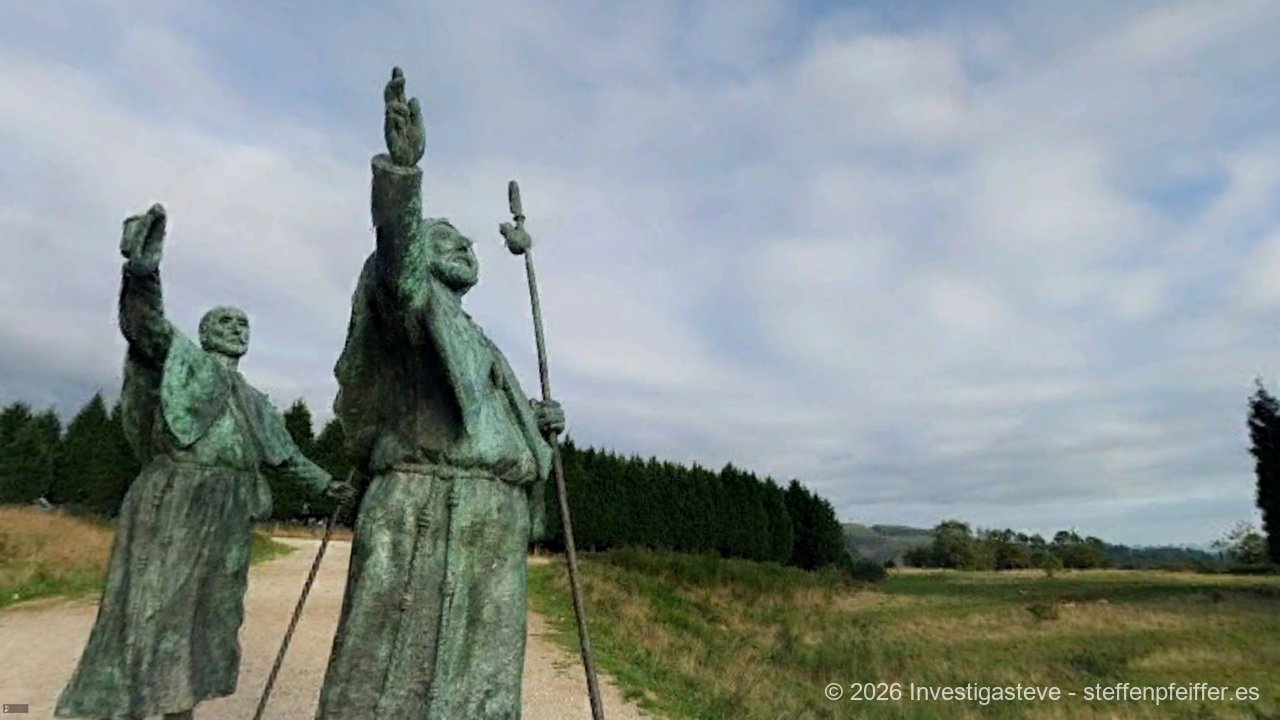
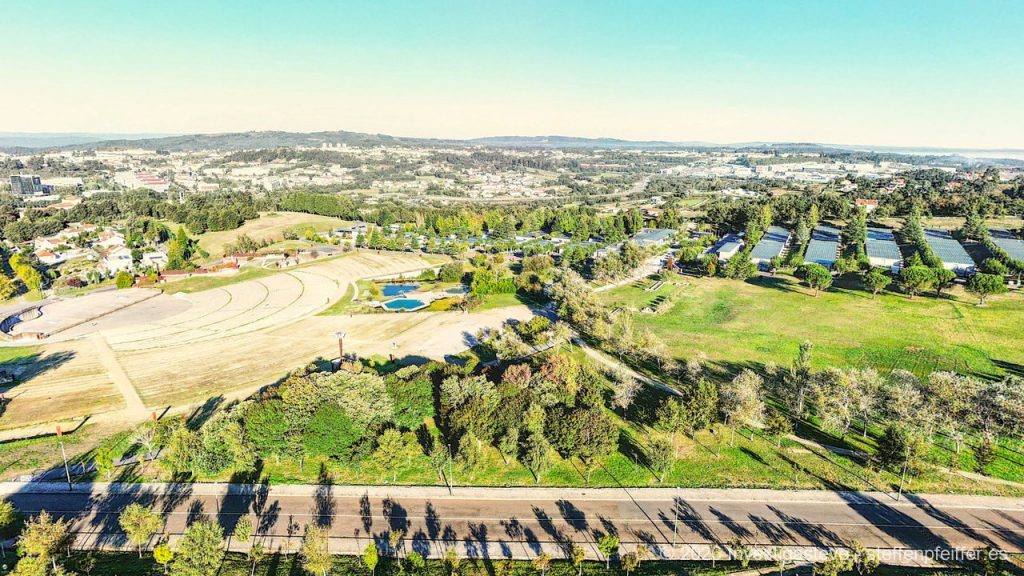
In modern times, the mountain underwent a gigantic structural change. For World Youth Day in 1989 and the Holy Year of 1993, the area was expanded into a pilgrim center of monumental proportions. Where once only a small chapel and ruins stood, today there is an infrastructure that resembles a small town. Yet despite the modern architecture, the core of the narrative remains archaic. The huge statues of two pilgrims, pointing ecstatically towards the cathedral, perfectly capture the emotional core of this place. Their bronze-cast figures appear almost alive in the evening light, as if they would start running any moment to cover the last five kilometers at a sprint. It is a tale of longing and fulfillment, deeply inscribed in the collective memory of Europe.
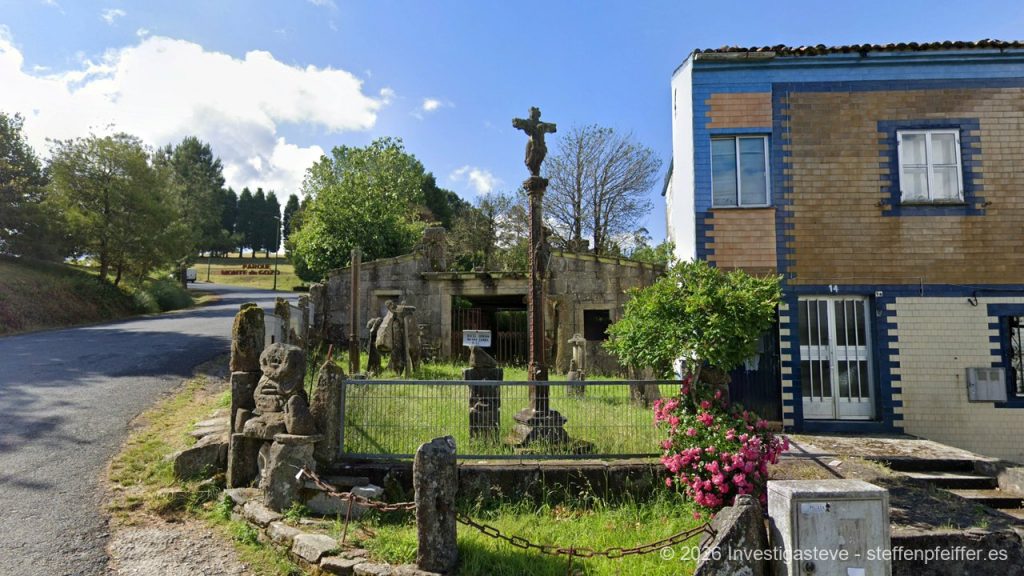
When you wander across the expansive grounds today, you feel the historical causality in every fiber. The Chapel of San Marcos, a simple yet powerful testament of religious architecture, stands there as a stone guardian of tradition. It reminds us that despite all modern comforts, the Way has a spiritual root that runs deeper than the foundations of the surrounding hostels. The air up here smells of history – not of the musty smell of archives, but of the living aroma of freedom and the certainty that the impossible has just become possible. Monte do Gozo tells us that every step, every blister on the feet, and every moment of doubt was leading up to this one view, which now justifies everything.
Addresses & tips in Monte do Gozo
Camino Distances
The path now leads you inexorably into the heart of Galicia, with distances that are short, but emotions that are immense.
| Previous Location | Distance (km) | Next Location | Distance (km) |
|---|---|---|---|
| San Marcos | approx. 0.5 km | Santiago de Compostela | approx. 4.5 km |
Sleeping & Arriving
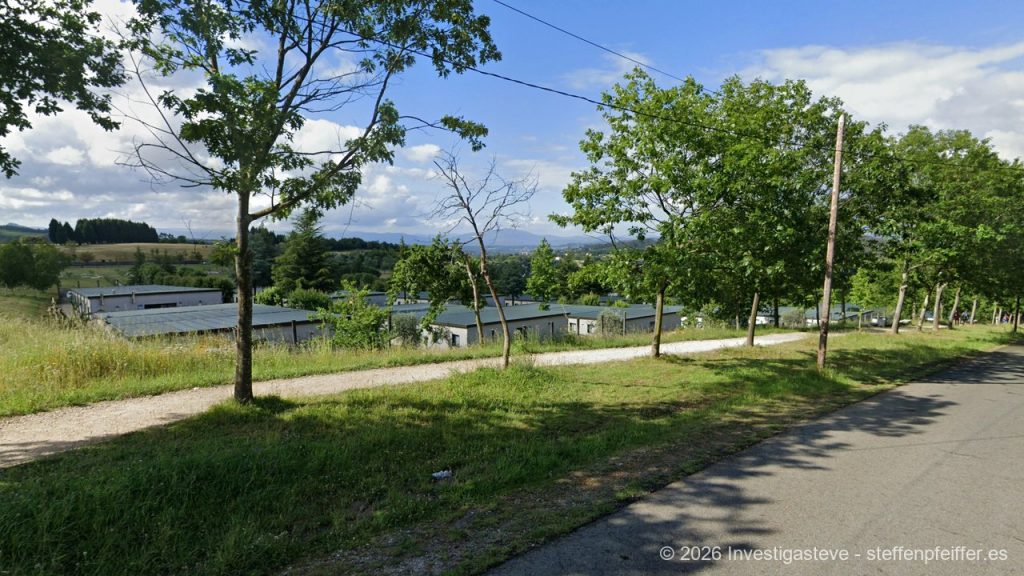
Arriving at Monte do Gozo is an experience of superlatives that initially overwhelms many pilgrims. The Albergue de Peregrinos is not an ordinary overnight stop, but a complex that, at peak times, offers shelter to thousands of people. When you enter the facility, you are enveloped by an acoustic tapestry of dozens of languages – a babble of voices united, however, by a common goal. In the dormitories, it smells of a mixture of freshly washed laundry, disinfectants, and the inevitable aroma of worn hiking boots. The tactile impression of the metal bunk beds is cool and functional, a sharp contrast to the emotional warmth that prevails in the common areas. Here, in the anonymity of the crowd, you often find the deepest conversations, because everyone knows the journey is almost over.
Psychologically, spending the night on the mountain is a conscious decision for postponement. Many choose this place to enter Santiago early the next morning, when the city is still asleep and the first ray of light kisses the cathedral. It is an act of self-control. You lie in your sleeping bag, your heart pounding in your throat, and the certainty that the cathedral is only an hour’s walk away often leaves sleep only superficial. The rustling of sleeping bags, the soft snoring of a fellow pilgrim, and the distant hum of traffic in the city form the nocturnal backdrop for your last night “on the Way.” It is a phase of inner reflection, a final gathering of strength before the grand finale.
The sanitary facilities are designed for mass operation, which creates its own dynamic. The sound of running water in the showers, the steaming of hot water, and the functional hardness of the tiles convey a feeling of cleansing that is almost ritualistic. You prepare yourself. It is like donning armor for the final triumphal procession. In the spacious outdoor areas, pilgrims sit on the walls, legs elevated, eyes fixed on the horizon. There is an almost solemn silence despite the many people. Everyone is in their own movie, reviewing the past weeks, as the sun slowly sinks behind the towers of the cathedral, dipping the sky in a dramatic purple.
Eating & Drinking
The gastronomy on Monte do Gozo is functional, but often a true blessing for the hungry pilgrim. In the large canteens and cafeterias, it smells of strong, dark coffee and freshly toasted bread – the typical “Desayuno” that awakens the spirits. The meals are down-to-earth: a hot “Sopa de Ajo” (garlic soup) that warms you from the inside, or the classic pilgrim’s meal with meat, fries, and salad. It is not a place for culinary experiments, but for replenishing necessary calories. Yet in the company of like-minded people, even the simplest bread tastes like a feast. The clatter of cheap cutlery on plastic trays forms the rhythm for conversations about the past stage and expectations for the next day.
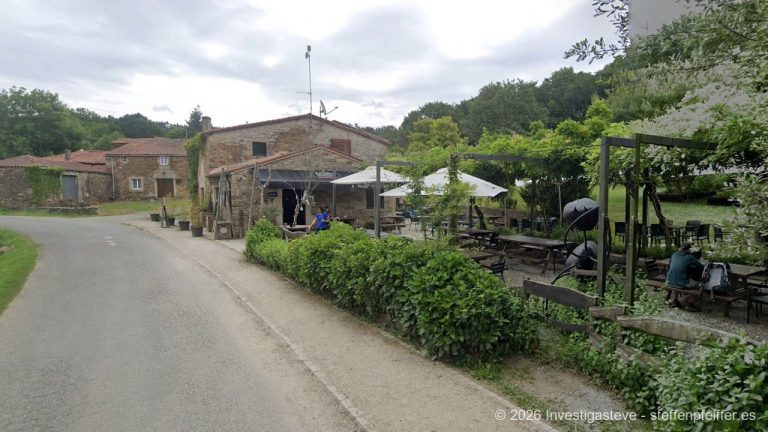
Particularly atmospheric are the small bars in nearby San Marcos or right on the edge of the complex. Here, you drink a last glass of “Vino Tinto” or a cool “Estrella Galicia” in the evening, watching the shadows of the eucalyptus trees grow longer. The coolness of the glass in your hand, the tart taste of the wine on your tongue, and the shared joy of what has been achieved create an atmosphere of comradeship. It’s the moment when you clink glasses with strangers whose names you don’t know, but with whom you share the most important experience of your life. The supply situation here is self-sufficient; you don’t have to leave the mountain to fall asleep satiated and satisfied.
Services & Logistics
Logistically speaking, Monte do Gozo is a well-oiled machine. The information office offers everything the modern pilgrim needs: from confirming the last stamps in the Credencial to information about transport options back to the airport or train station. The paths within the facility are extensive and well-signposted, which, after a long day of walking, challenges the muscles once more but also provides a certain sense of security through its clear structure.
Shopping: In small kiosks or shops within the complex, you can get the essentials: blister plasters, sunscreen, postcards, and simple snacks. It’s a supply tailored to the quick need before the goal.
Gastronomy: Several cafeterias and restaurants offer everything the pilgrim’s stomach desires from breakfast to dinner, often in the form of buffets or set menus at fair prices.
Overnight Stay: The capacities are enormous, ranging from large dormitories to smaller rooms in connected hotel complexes, ensuring something for every budget.
Public Facilities: There are generous washrooms, clotheslines often adorned like modern art installations with colorful pilgrim clothing, and even small chapels for prayer.
The connection to the city of Santiago is excellent. Those who want or need to spare their knees can find taxis or bus connections that run at regular intervals. But most pilgrims categorically refuse this; the last kilometers are a matter of honor, a physical duty they wish to complete with dignity. The logistical perfection of the place takes away your worries, so you can fully concentrate on the emotional weight of the moment.
Don’t Miss
- The Monumento aos Peregrinos: The two bronze statues pointing ecstatically toward the cathedral. A tactile must – touching the cool legs of the statues while adopting the same perspective.
- The Chapel of San Marcos: A place of absolute silence amidst the hustle and bustle. The smell of old stone and candle wax invites inner contemplation.
- The first view of the Cathedral: Go to the highest point when the sun is low. The visual experience of the gleaming towers is the ultimate reward of the Way.
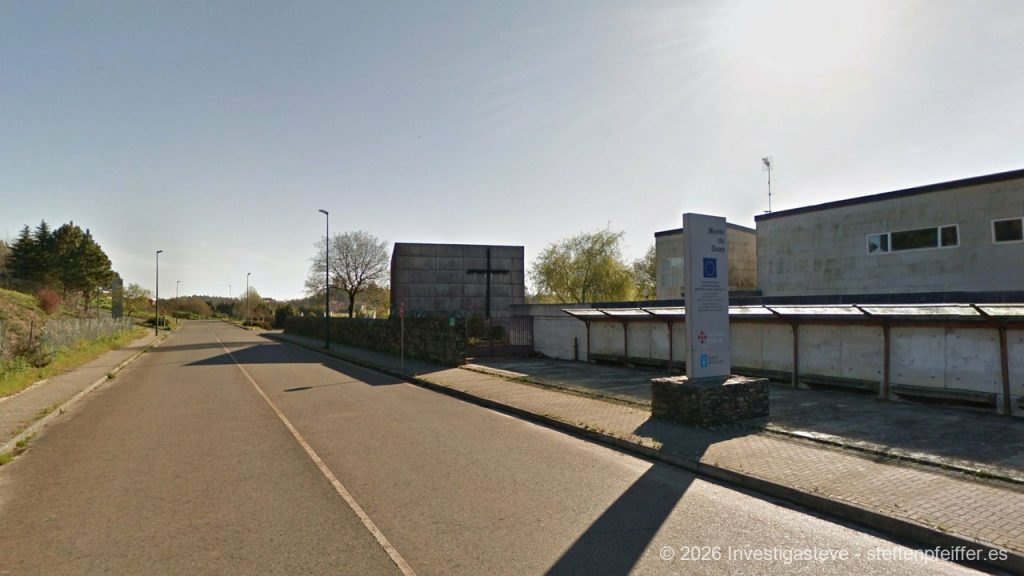
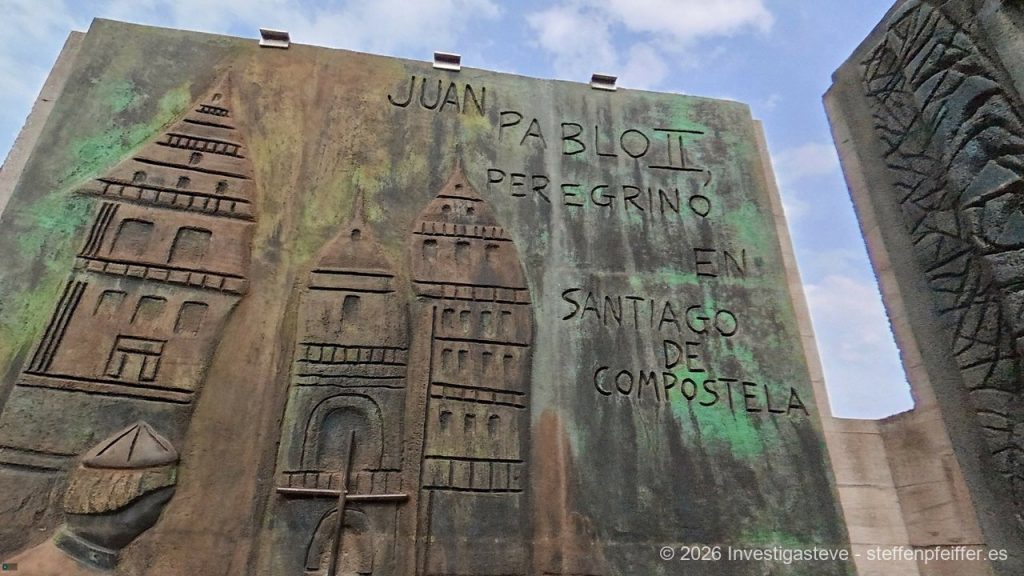
- The Monument to Pope John Paul II: A monumental work from 1989, commemorating World Youth Day and underscoring the modern significance of the Way.
- The Sunsets: Nowhere else on the Camino Francés is the play of light over a city as dramatic and momentous as it is up here.
- The Evening Community: Sit on the steps of the hostel and just listen. The polyglot whispering of the global community is an auditory miracle.
Insider Tips and Hidden Places
Beyond the large streams of pilgrims and the monumental concrete buildings, Monte do Gozo conceals small, almost forgotten niches that belong only to the attentive observer. One of these places is a small hollow, somewhat off the main path towards San Marcos, where old eucalyptus trees form themselves like natural pillars into a kind of forest cathedral. When the wind sweeps through the silvery-green leaves, a sound is created that resembles gentle sea surf. The ground here is soft, covered in a thick layer of bark and leaves, which feels like a natural carpet underfoot. Here, the scent of the trees’ essential oils is so intense that every breath seems to cleanse the lungs. It’s a place to escape the crowd and conclude your own journey in solitude, before becoming part of the triumphant crowd the next day.
Another hidden spot is the back side of the San Marcos Chapel. While most visitors focus on the front square and the interior, the small, lichen-covered wall at the back offers a sheltered seat with a view to the east. If you settle here in the early morning, you can see the sun rise over the Galician mountains that you laboriously crossed in the days before. It’s a psychologically valuable moment of looking back. You’re not looking at the goal, but at the path you have already left behind. The stones of the wall are often still damp with dew in the morning, yet their solidity gives you a sense of grounding at a time when emotions threaten to carry you away.
Not far from the large statues, there is also a small, almost inconspicuous path leading to an old water reservoir. Here, the sky reflects with almost unnatural clarity. It is a quiet spot where you can watch dragonflies dancing above the water’s surface. The gentle lapping and the absence of any sounds of civilization make this place an oasis of reflection. Here, you can mentally pre-sign the “Compostela” while touching the smooth surface of the water with your fingers and feeling the coolness that arms you for the final descent into the city center. These hidden corners are the true treasures of Monte do Gozo, far away from the monumentalism of the Xacobeo.
Moment of Reflection
When you stand up here, you suddenly become aware of the duality of your being. You are a pilgrim, a wanderer between worlds, and yet you are already a different person than the one who set off weeks ago in Saint-Jean-Pied-de-Port or somewhere else. Monte do Gozo forces a psychological inventory. What have you left behind on the Way? Which fears got stuck in the mud of Navarra, which worries evaporated in the heat of the Meseta? You feel a strange melancholy that mixes with euphoria – a phenomenon many call “arrival pain.” The freedom of the Way, this radical reduction to the essentials, is about to end. The towers of Santiago are both a promise and a boundary.
In the silence of the mountain, as you let your gaze wander over the sea of houses, you realize that the goal is not the end, but only a turning point. The psychological weight of the backpack seems to become heavier up here, as if it wants to hold you a little longer in this intermediate world. You reflect on the encounters, the brief moments of grace, and the long hours of monotony. Monte do Gozo is the place of inner reconciliation. Here, you forgive yourself your weaknesses and celebrate your strengths. You breathe in the cool Galician air deeply, and with each exhale, you let go of a piece of your old burden so that tomorrow you can stride with light steps and an open visor through the Portico de la Gloria. It is a moment of absolute presence, where past and future merge in the beauty of the instant.
Camino of the Stars
This place is on the Camino Francés, on the stage from Lavacolla to Santiago de Compostela. The sequence of locations is:
Lavacolla → Vilamaior → San Marcos → Monte do Gozo → Santiago de Compostela
Have you experienced that one, indescribable moment on the summit of Monte do Gozo, when the Cathedral of Santiago first emerged from the mist? Was it a moment of tears, of jubilation, or of deep, reverent silence for you? Share your personal story from the threshold to the goal with us. Perhaps you have a photo of the bronze pilgrim statues in the golden evening light or an anecdote about your last night before arrival? We look forward to sharing your emotions and experiences that make this mountain such a sacred place!
About the Author