First Glance – Introduction & Atmosphere
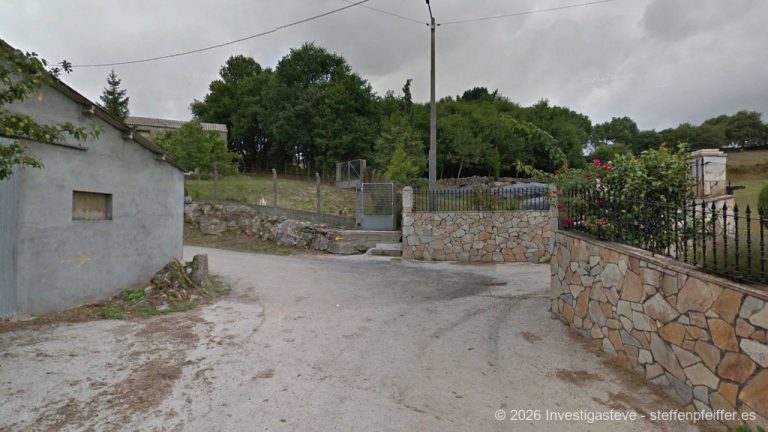
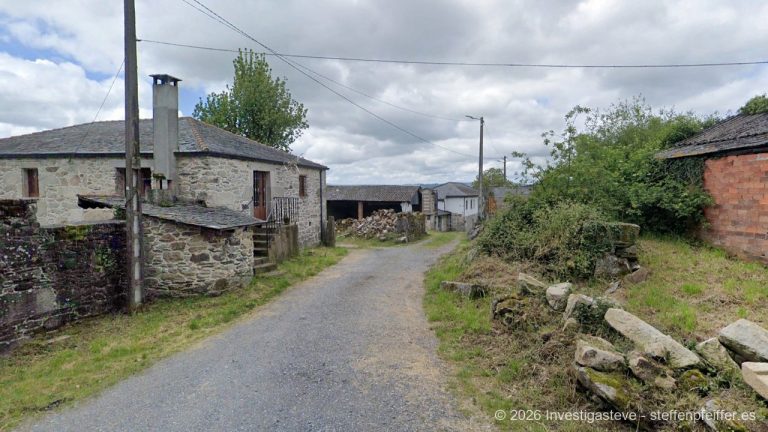
When you have left the mighty bridge over the dammed Miño in Portomarín behind you and the path relentlessly leads you up the first steep inclines, the world changes with every metre. You leave the bustling activity of the pilgrim town, the clatter of coffee cups on the squares and the echo of the medieval church walls below you. The path narrows, hugs the flanks of the hills and leads you into a corridor of deep green eucalyptus and pine forests. Here, about five kilometres after setting off, when your breath is still heavy and your calves are registering the first exertion of the day for the first time, you reach Toxibó. It is not a place that draws attention with fanfares. Toxibó is more of a premonition, a quiet pause in the green sea of Galicia. A tiny hamlet, consisting of barely a handful of stone houses that seem so closely grown together with the earth as if they had grown themselves from the surrounding rocks.
The air up here has a completely different quality than down in the valley. It is cooler, purer and carries the heavy, almost intoxicating scent of fresh eucalyptus resin and damp fern. Often the orballo, that legendary Galician drizzle, lays itself like a fine, silver veil over the scene and softens the contours of the world. You hear the rhythmic, almost meditative click of your pilgrim staff on the uneven ground – a sound that finds a deep echo in the silence of Toxibó. It mingles with the distant, melancholic rustle of the wind in the treetops and the occasional, almost shy chirping of forest birds. In Toxibó, you feel the first true seclusion of the Way after the urban hub of Portomarín. It is a place of psychological caesura: here you realise that civilisation is now finally yielding to the rhythm of nature. The visual panorama is dominated by the grey weight of Galician granite and the almost unnaturally bright green of the mosses that cover every roof and every wall like a living fur. In Toxibó, you are not simply at a waypoint; you enter a space of transition where silence becomes language.
What This Place Tells
Toxibó is a silent chronicler of the Galician rural soul. Its name, which sounds almost like a secret, is closely connected to the sparse but resilient vegetation of the region. Toxos – gorse – has lined the paths here for centuries, and the hamlet tells of a life completely subject to the rhythm of the seasons and the fertility of the soil. The historical causality of this place lies in its function as an outpost for the coming high plains. While Portomarín was an administrative and religious centre, Toxibó represents the hard facts of rural survival. The heart of the narrative is undoubtedly the striking hórreo, which stands directly by the wayside. This traditional granary, built of massive granite and crowned by a simple slate roof, is far more than just an agricultural utility building. It is a monument of foresight and a symbol of humanity’s victory over hunger and dampness.
When you stand before this hórreo, you feel historical immersion in its purest form. The tornarratos – those round stone slabs between the supporting pillars and the corpus – which were meant to prevent the entry of rodents, tell of a time when every grain was vital. The architecture of Toxibó is a manifestation of frugality. There is no Baroque splendour here, no Gothic towers. Only the rough, honest structure of rural Galicia. The few houses, whose stone walls are often metres thick to withstand the winter cold of the mountains, act like shields against time. One can imagine how, over centuries, the farmers sat here on the thresholds of their houses while the streams of pilgrims passed by – a constant flow of people from all over the world that touched Toxibó but never changed it in its core.
The history of this place is also a history of silence. While the great centres of the Camino experienced wars, reformations, and modern tourism, Toxibó remained a place of constancy. The psychological effect of this setting on the pilgrim is immense. In a world that spins ever faster, this hamlet offers an anchor point of stillness. World history was not written here, but daily bread was earned. This grounding is the true gift of Toxibó. Those who walk through the narrow passageways between the farmsteads touch stone that has stored the warmth of a thousand summers and the cold of a thousand winters. It is the story of a place that refuses to be more than a refuge for the essential. Toxibó teaches us that constancy does not lie in size, but in loyalty to one’s own soil.
Camino Distances
Toxibó marks an important orientation point on the 30th stage of the Camino Francés, ideally located after the first major ascent of the day.
| Previous Town | Distance (km) | Next Town | Distance (km) |
|---|---|---|---|
| Portomarín | ca. 4.8 km | Gonzar | ca. 3.4 km |
Sleeping & Arriving
Arriving in Toxibó is an experience of radical reduction. There are no hostels here, no bunkhouses, no reception desks. “Arriving” here takes place on a purely mental level. When you cross the boundary of the hamlet, a peace settles over you that is far more valuable than any pillow. Since Toxibó has no tourist infrastructure whatsoever, arriving becomes a ritual act of self-encounter. You do not look for a place in a dormitory, but a spot on one of the ancient stone walls in the shade of the great hórreo. The experience of the cool stone under your hands and the slow lowering of your pulse after the climb form the framework for this form of rest. It is an arrival in silence, far from the logistical noise of the great pilgrim centres.
Lingering in Toxibó means shedding the protective shell of civilisation for a moment. The absence of any services leads you to reflect on what you carry in your backpack – and in your heart. The acoustic backdrop is of a purity that is almost painfully beautiful. Since there is no urban traffic and no commercial activity, you perceive sounds you had long forgotten: the distant buzzing of insects in the gorse bushes, the rhythmic beating of your own blood in your temples, and the soft rustle of the silver eucalyptus leaves. This auditory isolation is an essential part of regeneration. Those who pause here for a while feel how the tension of the first kilometres from Portomarín slowly eases from their limbs. It is a blessing to loosen your hiking boots for a moment and place your feet on the soft, green moss of the old garden walls.
For pilgrims seeking a more spiritual experience, the absence of crowds offers the ideal space for a short meditation. There is no distraction from coffee machines or mobile phone calls. The tactile reality of the place – the rough stone, the hard wood of the barn doors, the clear light breaking through the canopy – leads you back to your roots. Those who pause in Toxibó consciously choose the quality of the moment. When you later arrive in neighbouring Gonzar later in the day, you will realise that the strength you gathered in the silence of Toxibó carried you further than any meal. This place gives you the time you need to sort out the experiences of your journey so far. It is an anchor point of constancy in a sea of change, a threshold point that prepares you physically and mentally for the wide plains of the coming days.
Arriving in Toxibó is thus far more than just a geographical point on the map; it is arriving at a state of mind that teaches you that less can often be infinitely more. The few buildings of the hamlet appear as stone guardians of time, urging you to adapt your own pace to the rhythm of the earth. Those who rush past here carelessly miss one of the most authentic moments of the Galician Camino de Santiago. Here in Toxibó, you are a guest of the landscape, and its hospitality is of a simple, unparalleled dignity. You feel the historical continuity of this place most strongly when you sit down on the ground and realise that this ground has already carried millions before you without ever getting tired.
Eating & Drinking
In Toxibó, there are no cafés, no bars, no restaurants. The gastronomic experience here is one of absolute self-sufficiency, which gives every small snack you bring along an almost sacred significance. The taste of a simple apple or a piece of dark bread becomes a culinary revelation in the pure forest air of Toxibó. You perceive the texture of the food much more intensely when no urban noise distracts you. It is the “food of the Way” in its purest, most honest form. Olfactorily, the scent of your brought provisions mixes with the tart aroma of Galician gorse and the smell of old, sun-warmed stone – a sensory interplay that satisfies hunger in a very primal way.
Many pilgrims use the shady spots under the old oaks or the proximity to the hórreo for a short picnic before continuing the path to Gonzar. The water from your canteen, perhaps still cool from the fountain in Portomarín, tastes up here like a life-giving elixir. The coolness of the bottle in your sun-warmed hands and the liberating feeling of taking off your backpack for a quarter of an hour become symbols of freedom here. The psychological component of sharing often comes into play here: you offer another walker a bar or a handful of nuts, and in this simple act, the entire philosophy of the Camino de Santiago is reflected – a community of frugality amidst a backdrop of rural constancy.
Those who “eat” in Toxibó consume above all the atmosphere of this historic place. The visual experience of the deep green surroundings fills the mind, while the body is content with meagre supplies. It is a lesson in gratitude that teaches you that true enjoyment does not lie in the variety of a menu, but in the quality of the moment and the purity of the surroundings. The scent of damp earth and the aroma of history are the real ingredients of your meal in Toxibó. When you later sit in a hostería in Gonzar and enjoy Galician cuisine, you may recall with a quiet melancholy the simple taste of your provisions in the shadow of the stone granary of Toxibó – a culinary experience that reminds you how little a person really needs to be in harmony with themselves.
Supplies & Logistics
Logistically, Toxibó is a zone of absolute self-reliance and a challenge for those accustomed to finding a supply station every few kilometres. Those who come here must have already taken care of their basic needs. The strategic causality of this place lies in its function as a pure transit point and orientation marker, not as a logistical centre. This requires forward planning from the pilgrim, which is easily manageable due to the proximity to Portomarín and Gonzar. Nevertheless, one should not underestimate Toxibó: in the heat of summer or under lashing Galician rain, the lack of a solid shelter or a shop quickly becomes a trial.
Shopping: There are no shops whatsoever in Toxibó. Any provisions and water reserves must have been replenished in Portomarín. The next shopping opportunity for food is only in Gonzar, about 3.4 km away, or in full scope at the later stage destination Palas de Rei.
Gastronomy: There is no formal gastronomic offering. Pilgrims should plan a small emergency ration for this section. The bar-restaurants in neighbouring Gonzar cover the need for hot meals after about another hour’s walk.
Sleeping: Accommodation options are practically non-existent in this tiny hamlet. The day’s logistics should be planned so that Toxibó serves as a place of short rest and the night is spent in Gonzar or Castromaior.
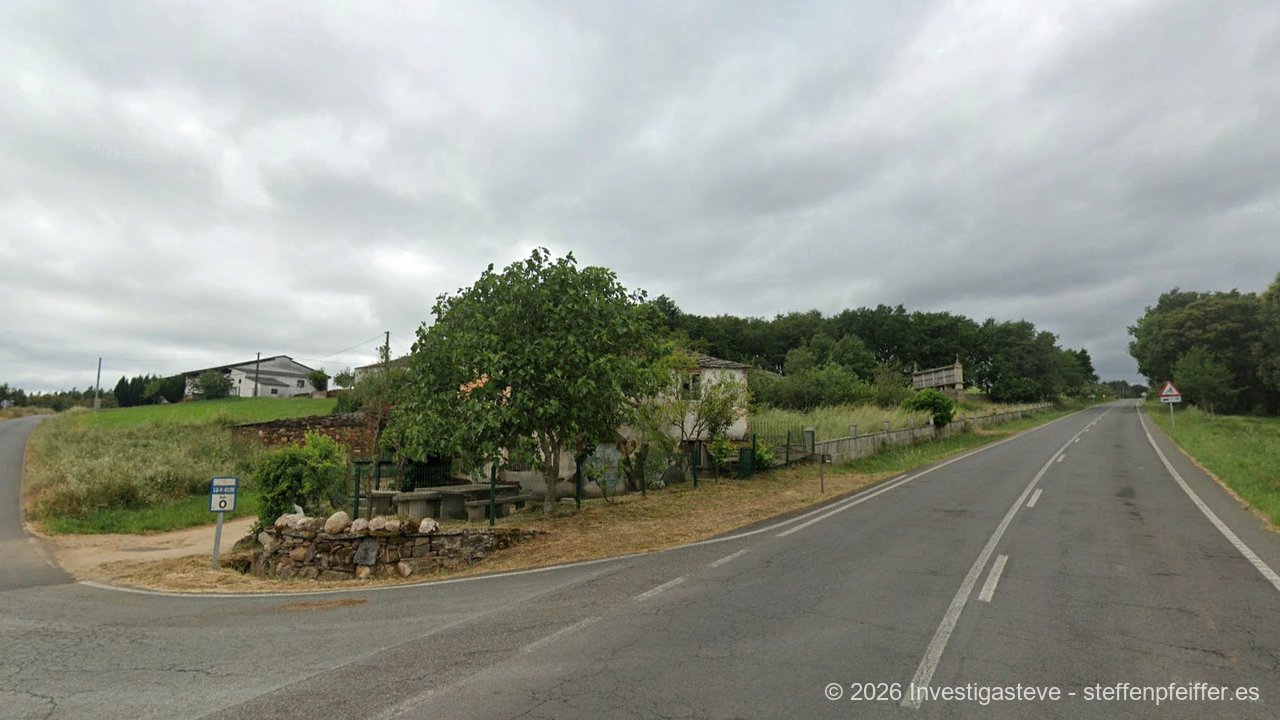
Public Facilities: There are no medical facilities, banks, or post offices. In an emergency, the connection via the nearby provincial road LUP-4909 exists, but caution is advised when crossing this road. The emergency services are reachable via 112, but medical care is concentrated in Portomarín or Palas de Rei.
Safety in Toxibó is very high due to the clarity of the terrain, however, the barrier-free route analysis points to an increased risk at the crossing with the provincial road LUP-4909. Full concentration is required here. Acoustically, the place remains an oasis as long as you stay away from the immediate road crossing. Logistically, Toxibó acts as a “check-in of attention” – here you do not check your luggage weight, but your concentration for the further course of the path. Those who pass through this place should be aware of the logistical reduction and accept it as part of the spiritual experience. Toxibó proves that the best pilgrim logistics sometimes consist of needing nothing but what you carry in your own heart. The place teaches you the art of foresight and the beauty of independence.
Don’t Miss
- The Galician hórreo: Examine this masterpiece of rural architecture up close – pay attention to the precise granite pillars and the tornarratos against rodents.
- The view back into the Miño Valley: Stop at the edge of the village and enjoy the panorama over the forests you have just crossed – a visual proof of your physical achievement.
- The granite walls: Run your hand over the old, lichen-covered stones of the farmsteads and feel the constancy of Galician architecture.
- The eucalyptus cathedrals: Breathe deeply when you walk through the forest passages around Toxibó – the scent is particularly intense and cleansing here.
- The silence of the hamlet: Take ten minutes, sit on a stone wall and simply listen to the sounds of nature – an auditory meditation of the highest order.
Insider Tips & Hidden Places
Away from the marked pilgrim path, Toxibó hides corners that are not in any standard guidebook and are revealed only to those willing to leave the beaten path for a moment. One such place is the small path remnant behind the last farmstead of the hamlet, almost completely overgrown with wild hops and bramble vines. If you carefully make your way through the greenery, you will find a small, ancient dry stone wall that borders a forgotten meadow. From here, you have a perspective on the hórreo that no tourist photo ever captures: it stands isolated against the wide sky of Galicia, framed by the dark silhouettes of the distant pines. It is a place of extreme acoustic isolation, where even the distant traffic of the provincial road falls silent. The ground here is covered with a thick layer of soft moss, making every step silent – a blessing for your strained feet.
Another hidden treasure in Toxibó are the tiny, almost faded symbols carved into the lower stones of a decayed barn. They are not official inscriptions, but rather personal signs of hope from pilgrims of past decades who perhaps sought shelter here from a sudden thunderstorm. When you run your fingertips over these cool, rough notches, you touch the individual history of a person who stood at this very spot long ago. This form of silent communication across time makes the psychological depth of the Camino tangible. In the air here often lies an intense scent of wild thyme and damp earth, making this hidden corner a place of deep humility.
Did you know that there is a spot near Toxibó where the light at sunset falls through the eucalyptus trees at a very specific angle, bathing the path in an almost unnatural gold? The locals often call this moment of transformation simply the “light of the forest”. When you stand there at the right time, you feel a psychological spaciousness that opens the heart. The visual spectacle, in contrast to the cool breeze of the height, creates a state of euphoria that you can never find in the crowded bars of Portomarín. Those who take the time to explore these nuances in Toxibó discover a hamlet that is far more than just a transit point – it is a place of fine vibrations that only reveal themselves when you adapt your pace to the speed of your soul.
Finally, it is worth directing your gaze directly at the ground under the old stone walls. Between the granite crevices grow rare ferns and tiny succulents that sparkle like small jewels in the morning dew. This visual experience offers a fascinating contrast to the monumental history of the region. It teaches you the psychological acuity of observation of detail: even in the small and inconspicuous lies the greatness of creation. Toxibó is a place of contrasts – between the infinity of the sky and the rough reality of a single granite block. Those who recognise this have understood the true essence of this silent hamlet. Here, in the silence of the stones, you often find a part of yourself that you had forgotten in the hustle of everyday life.
Moment of Reflection
In Toxibó, you stand at an invisible threshold. Here, where the hórreo has been the metronome of rural constancy for centuries, the question inevitably arises: “What provisions do I carry in my heart for the remaining kilometres to Santiago?” The psychological metamorphosis that takes place in this hamlet is the transition from physical exertion to inner stillness. Toxibó challenges you to pause before the path leads you further over the high plains. It is a filter for your thoughts. In the seclusion of this tiny place, your everyday worries become small, and your true goals emerge more clearly.
The historical causality of your being here connects you with the millions of seekers for whom this ground has been a witness to their progress for 1200 years. Do you feel the responsibility to carry forward this heritage of respect for simplicity? In Toxibó, you become aware that the Camino is not a race against time, but a sequence of moments of presence. The coolness of the rough granite under your hands reminds you of your own resilience. Use this moment of reflection to recalibrate your inner compass. When you leave Toxibó behind tomorrow and tackle the next ascents, take a piece of the silence and dignity of this place with you. It will be your anchor when the hustle of Santiago finally reaches you. Here, in the silence of the stones, you have found the strength to continue your journey with a new, clear sovereignty.
Camino of the Stars
This place lies on the Camino Francés, on the stage from Portomarín to Palas de Rei. The sequence of places is:
Portomarín → Toxibó → Gonzar → Castromaior → Hospital da Cruz → Ventas de Narón → Os Lameiros → Ligonde → Airexe → Portos → Lestedo → A Calzada → Palas de Rei
Did you also feel that deep moment of grounding in the absolute silence of Toxibó, or admire the mastery of Galician stonemasonry at the magnificent hórreo? Perhaps you have found your own secret place of power in the eucalyptus forest or by the old stone walls? Share your personal impressions, your photos of this archaic hamlet, or your thoughts on the historical significance of rural constancy with us. Every story makes this special point on the Camino come alive for the community – we look forward to your contribution!
About the Author