First Glance – Introduction & Atmosphere
When you have left the arduous, often sweat-inducing climb from the deeply incised Miño Valley at Portomarín behind you and the path slowly pushes onto the high plateau of the Serra de Ligonde, Gonzar welcomes you with an almost solemn simplicity. It is not a place of grand gestures, but a hamlet of pause, nestled like a stone nest in the gentle but relentless waves of the Galician rolling hills. From afar, Gonzar announces itself through the grey silhouette of its Romanesque church, which stands defiantly against the often strong wind that sweeps unhindered over the wide plains up here. The air here has a completely different quality than in the sheltered valleys – it is clear, cooler, and carries the tart, spicy scent of wild broom and damp earth, mingled with the smoky aroma of distant fireplaces.
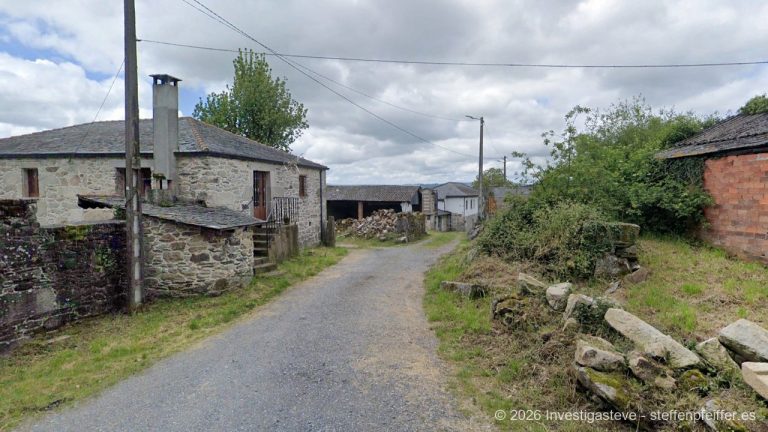
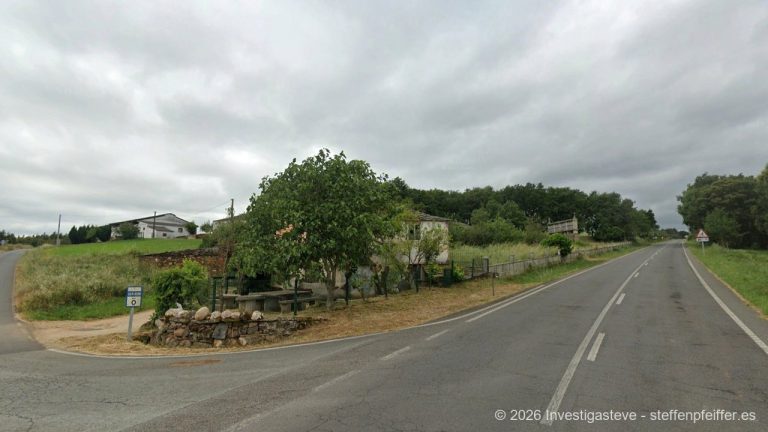
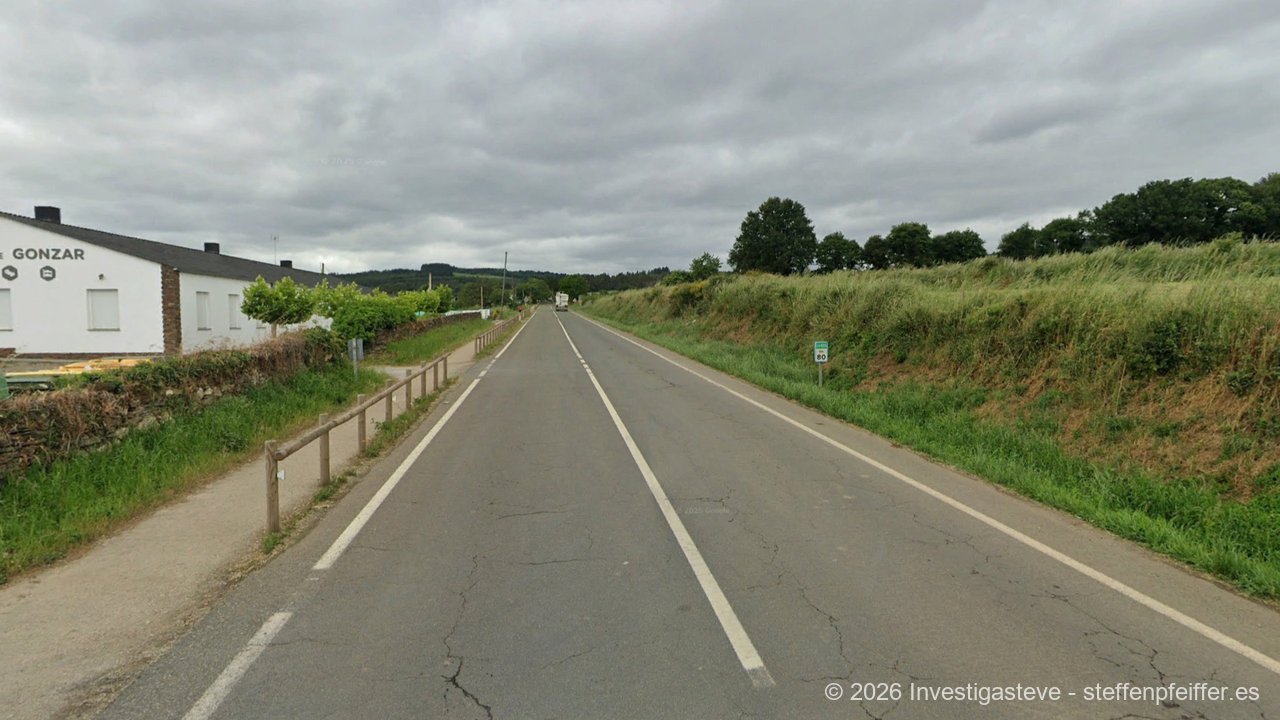
Gonzar is the first real sigh of relief after the first great exertion of the day. You feel the change in the atmosphere beneath your feet: the path changes from earthy forest trails to the solid stone slabs of the hamlet, which store the warmth of the midday sun and release it gently to the passing walkers in the afternoon. The rhythmic click of pilgrim staffs on the asphalt of the nearby country road forms an almost meditative contrast to the deep silence of the surrounding pastures, where you hear the distant, melancholic ringing of cowbells. Psychologically, Gonzar marks for many pilgrims the moment of the first great relief. Up here, at almost 550 metres above sea level, not only the view over the green waves of the province of Lugo expands, but also the mind. The visual panorama is characterised by an archaic sense of security, in which grey granite and an almost unnaturally bright green unite into a timeless still life. In Gonzar, you are no longer just a walker; you become part of a centuries-old rhythm of rest and departure.
What This Place Tells
The narrative of Gonzar is inseparable from the name of the “Knights of the Order of St. John of Jerusalem”, those legendary warrior monks who in the Middle Ages set the course for a network of charity here. The historical causality of this place lies in its strategic position as the first safe station after the demanding climb from Portomarín. Since the 12th century, Gonzar has functioned as a refuge where the knights of the order not only guaranteed the safety of pilgrims but also healed wounds and strengthened souls. The former pilgrim Hospital, whose original structures are now integrated into the fabric of the village, was the functional heart of a logistics of faith. One can imagine the historical immersion: in the shadow of the mighty stone walls, knights in dark robes once sat while tired walkers by the fire reported the miracles of the Way.
The heart of the local history is the Iglesia de Santa María de Gonzar, a Romanesque gem from the 12th century that, despite later alterations, has preserved its original power. When you stand before its simple portal, you feel the historical constancy in every joint of the masonry. Inside, the church preserves a silence that is almost physically tangible and smells of old incense and cool stone. It is the story of generations of inhabitants of the Ulloa region who sought shelter here from rain and wind. This historical causality is also reflected in the settlement structure – Gonzar is a parroquia that once served a wide hinterland. The place tells of survival; of how a small hamlet, despite the depopulation of rural areas, has preserved its identity as a threshold point between the Miño and the Serra de Ligonde.
Particularly fascinating is the connection between the sacred and the profane in Gonzar. The modern accommodations, such as the Hostería de Gonzar, often stand on historic ground and continue the tradition of hospitalitas with contemporary means. Historical immersion here becomes a living dialogue: while you enjoy local specialities in the restaurant, you look at walls that already hosted pilgrims hundreds of years ago. Gonzar teaches us that constancy does not mean stagnation, but the ability to preserve the essential across the centuries. Every stonemason mark on the church and every hórreo – those typical Galician granaries on stilts – is a silent witness to an era when faith and hard work on Galician granite formed an inseparable unity. Those who walk through Gonzar hear the echo of history in every gust of wind that whistles through the old chestnut trees.
Addresses & tips in Gonzar
Camino Distances
Gonzar lies at the beginning of the ascent to the Serra de Ligonde on the 30th stage of the Camino Francés.
| Previous Town | Distance (km) | Next Town | Distance (km) |
|---|---|---|---|
| Portomarín | ca. 8.2 km | Castromaior | ca. 1.2 km |
Sleeping & Arriving
Arriving in Gonzar feels like reaching a safe plateau after a stormy sea. When you cover the last metres of the ascending country road and the first grey stone houses of the hamlet appear, the tension of the first eight kilometres falls away from you. There is no hustle and no urban noise here; arriving is shaped by the warm calm of the Hostería de Gonzar. This house is far more than just an accommodation – it is an institution of comfort amidst rural solitude. The architecture combines the robust charm of Galician stone with a brightness that opens the heart. The acoustic panorama at check-in consists of the muffled clinking of glasses on the terrace and the soft murmuring of pilgrims who take their first big break of the day here.
The rooms in Gonzar offer that form of rest that you urgently need after the exertion of the previous days in Portomarín. The coolness of the stone walls inside the Pensión Albergue Gonzar forms a pleasant contrast to the often blazing Galician sun. It is a sensory experience to lie down on the fresh sheets after a shower and feel how the coolness of the room soothes the heated muscles. The communal areas are places of social metamorphosis; in Gonzar you often meet walkers who have consciously decided against the mass processing in the larger stage destinations. Here, arriving is associated with a welcome ritual that does without many words – a nod, a glass of cool water, and the certainty of lingering in a place of rest steeped in history.
Particularly noteworthy is the terrace of the hostería, which acts as a logistical and emotional anchor point of the village. Sitting here, while the wind gently brushes through the pines and your gaze sweeps over the gentle hills of the Ulloa region, is a form of mental regeneration that no hotel room can offer. The psychological effect of this setting is immense: you feel up here, on the “roof” of the stage, a little closer to the sky. Arriving in Gonzar means reconciling with slowness. In the dormitories, an atmosphere of respect prevails, carried by the centuries-old tradition of the Knights Hospitaller, who once watched over the well-being of those seeking shelter here. Those who stay overnight here choose silence over the pace of the kilometre-eaters.
The sanitary facilities in the accommodations of Gonzar are modern and of a cleanliness that underscores the high standard of the region. The feeling of hot water on tense shoulders after the climb from the Miño Valley becomes the highest form of luxury here. Arriving here becomes a ritual shedding of the load; you wash your clothes in the provided troughs, smell the scent of fresh soap, and let them dry in the Galician wind. Sleeping in Gonzar means diving deep into the rural soul of Galicia. The next morning you wake with the first light that cuts through the mist over the meadows and hear the familiar sound of the first walking sticks on the pavement – an acoustic signal for the beginning of a new chapter on your way to Santiago.
Eating & Drinking
The culinary world of Gonzar concentrates entirely on the honest, powerful cuisine essential for survival on the windy heights of Galicia. The restaurant of the Hostería de Gonzar is considered a real insider tip among pilgrims for authentic food. As soon as you enter the dining room, the scent of freshly brewed coffee mixes with the irresistible aroma of homemade tortilla and simmering Caldo Gallego. It is an olfactory promise that immediately revives the spirits. The experience of taking a seat at a solid wooden table and feeling the pleasant warmth of the room on your often-chilled skin is the perfect start to physical regeneration.
The Menú del Peregrino in Gonzar is a homage to the products of the Ulloa region. The Caldo Gallego, that hearty soup of cabbage, potatoes, and white beans, is often served here in heavy ceramic bowls that retain the warmth for a long time. You taste the minerality of the soil and the care of the preparation in every spoonful. As a main course, the meat richness of Galicia is present: tender pork or the famous Galician beef is served with cachelos – the incomparable local potatoes – which unfold their full flavour with the addition of coarse sea salt and sweet paprika. To accompany this, the heavy, crusty country bread is served, whose crust cracks loudly when broken – an auditory sign of freshness and traditional baking craft.
To drink, there is often the local country wine, served in the typical white ceramic bowls, the cuncas. The cool weight of the bowl in your hand and the earthy taste of the wine form the perfect end to a strenuous day of walking. Eating in Gonzar means literally absorbing the power of the region. It is “food for the soul” that teaches you that true enjoyment lies in simplicity and closeness to the source. The acoustic panorama while eating is shaped by the polyglot murmuring of fellow pilgrims and the clatter of cutlery – a soundtrack of community that feels particularly intense up here on the plateau. Those who dine here take a piece of Galician joy of life with them on the onward path towards Castromaior.
Supplies & Logistics
Logistically, Gonzar is a place of concentration on the essentials. As a pilgrim, you must be aware that this hamlet is not a shopping centre; it rather functions as a highly efficient rest stop at a strategically important point. The administrative simplicity of the place is more than compensated for by the high quality of the existing services.
Shopping: There are no supermarkets or independent shops on site. Pilgrims should have already replenished their main supplies of hiking gear or special foods in Portomarín. Smaller snacks, water, and drinks can be obtained at any time from the bar of the hostería. The next comprehensive shopping opportunity is only in Palas de Rei, about 17 km away.
Gastronomy: Catering is excellently covered by the restaurant of the Hostería de Gonzar and the offerings of the albergue. Here you get hot meals, breakfast, and provisions tailored specifically to the rhythm and needs of long-distance walkers. Opening hours are reliably linked to the flow of pilgrims.
Sleeping: With two well-run accommodations (hostería and pensión albergue), considerable capacity is available for the size of the place. Nevertheless, advance reservation is strongly recommended in high season for psychological planning security, as Gonzar is a popular “outlier overnight stop” for those who avoid the crowded stage destinations.
Public Facilities: There are no medical facilities, banks, or post offices in Gonzar. All formal infrastructure must be used in nearby Portomarín or in the more distant Palas de Rei. In an emergency, the connection via the nearby country road is excellent, and the emergency services are quickly reachable via 112.
Safety in Gonzar is exceptionally high due to the clarity of the site and the social control of the small community. You immediately feel part of a small, protected world. Logistically, the hamlet acts as a “check-in of the soul” – here you do not check your luggage weight, but your mental state for the coming kilometres over the Serra de Ligonde. Gonzar proves that good pilgrim logistics do not consist of the number of shops, but of the reliability of basic services at a historically significant point. Logistical processes, from stamping the credential to arranging luggage transport, function here with a professionalism that grows from decades of experience.
Don’t Miss
- The Iglesia de Santa María de Gonzar: Visit this Romanesque gem from the 12th century and feel the silence between the ancient granite walls – a place of deep spiritual immersion.
- The chancel of the church: Admire the sacred art that acts like an architectural echo of centuries of pilgrim veneration.
- The terrace of the Hostería: Treat yourself to an extended break with a view over the green waves of the Ulloa region – a visual panorama of freedom.
- The Caldo Gallego: Try this traditional soup right here; it is considered one of the best fortifications for the further ascent to the Serra de Ligonde.
- The old stone walls: Touch the rough stones of the ancient dry stone walls that line the fields around the village – a testimony to centuries of agricultural labour.
Insider Tips & Hidden Places
Away from the marked pilgrim path, just a few steps behind the church of Santa María, a narrow path leads to a small, almost hidden garden plot bordered by old stone walls. Here time seems to come to a complete standstill. In this corner, it smells intensely of wild thyme and damp earth. It is the perfect place for a private reflection or a small meditation, far from the cameras and conversations of other walkers. Here you feel the original power of the Ulloa region, just as the knights of the Knights Hospitaller saw it eight hundred years ago. The ground is soft and covered with moss, making every step silent and promoting deep psychological calm.
Another hidden treasure is a small stone carving on one of the corner pillars of a decayed stable on the edge of the village towards Castromaior. It is not an official monument, but a decades-old engraving by an unknown pilgrim showing a simple cross and a date. When you run your fingertips over these cool, rough notches, you touch the individual history of a person who stood at this very spot long ago. This form of silent communication across the centuries makes the psychological depth of the Camino truly tangible. Such small, unofficial traces often tell more about the essence of the pilgrimage than the great monuments.
Did you know that there is a spot in Gonzar where the echo of your own voice is reflected back from the opposite hills in a very specific way? When you stand at the right point and speak softly, the wind seems to catch the words and bring them back as a gentle whisper. This auditory phenomenon intensifies the feeling of mystical presence that surrounds this place. It is as if the landscape itself is communicating with you. Those who take the time to explore these acoustic nuances discover a Gonzar that is far more than just a hamlet by the road – it is a place of fine vibrations.
Finally, it is worth directing your gaze at dusk to the silhouettes of the old hórreos, which stand like stone guardians on the periphery of the village. When the last daylight disappears behind the hills, these structures on their stilts appear almost alive, like relics of a forgotten civilisation. The smell of damp stone and the cool breeze whistling through the ventilation slots of the granaries create an atmosphere of timeless constancy. It is a space without distraction where the history of Galicia whispers in every crack of the granite. Those who lose themselves here often find a part of themselves that they had forgotten in the hustle of everyday life. Gonzar offers the rare opportunity to reflect on your own journey once more in absolute silence just before the summit of the stage.
Moment of Reflection
In Gonzar, you stand at a point of maximum spiritual constancy. Here, where the Knights Hospitaller have been the metronome of hospitalitas for centuries, the question inevitably arises: “What burdens do I still carry in my heart that I would like to symbolically leave behind at this historical threshold?” The psychological metamorphosis that takes place in this hamlet is the transition from physical exertion to inner stillness. Gonzar challenges you to pause before the path leads you further over the Serra de Ligonde. It is a filter for your thoughts. In the vastness of the plateau, your worries become small, and your true goals emerge more clearly.
The historical causality of your being here connects you with the millions of seekers for whom this place was a spiritual anchor. Do you feel the responsibility to carry forward this heritage of pausing? In Gonzar, you become aware that the Camino is not a race, but a sequence of moments of clarity. The coolness of the rough granite under your hands reminds you of your own resilience. Use this moment of reflection to recalibrate your inner compass. When you leave Gonzar tomorrow and tackle the next kilometres, take a piece of the peace and knightly dignity of this place with you. It will be your anchor when the hustle of Santiago finally reaches you. Here, in the silence of the stones, you have found the strength to continue your journey with a new, clear sovereignty.
Camino of the Stars
This place lies on the Camino Francés, on the stage from Portomarín to Palas de Rei. The sequence of places is:
Portomarín → Gonzar → Castromaior → Hospital da Cruz → Ventas de Narón → Os Lameiros → Ligonde → Airexe → Portos → Lestedo → A Calzada → Palas de Rei
Did you also feel that deep moment of security in the Romanesque silence of Gonzar, or gather new strength on the terrace of the Hostería? Perhaps you have found your own personal place of power by the old stone walls or in prayer in the church of Santa María? Share your personal impressions, your photos of the hórreos, or your thoughts on the historical significance of the Knights Hospitaller with us. Every story makes this special threshold point on the Camino come alive for the community – we look forward to your contribution!
About the Author