A First Glance – Introduction & Atmosphere
When the pilgrim, after the barren, dusty paths of Navarre, approaches the horizon, Viana rises like a stone crown on a gentle hill above the Ebro Valley. It is the moment of atmospheric border-crossing: Viana is the last Navarrese bastion before the path descends into the fertile plains of the Rioja. Entering the town, you immediately feel the tactile weight of history. The ground beneath your boots changes from the springy dirt paths to the firm, uneven cobblestones of the Rúa Mayor, polished smooth by centuries of trampling. You feel the vibration of the ground as the wind whistles through the narrow alleys – a constant companion in this exposed location at 458 metres altitude.
The air in Viana carries its own distinct signature. It is an olfactory mosaic of the cool dampness of old stone houses, the pungent, sweetish scent of fermenting grapes from the deep cellars of the Rioja DO, and the enticing aroma of grilled lamb wafting from the chimneys of the traditional Asadores. Acoustically, the rhythmic clicking of walking sticks dominates, echoing off the tall Renaissance façades, underscored by the warm, bright sound of the church bells of Santa María, imposing a sacred rhythm on the day. Psychologically, Viana marks a moment of dignified calm. You are no longer in the wilderness, but not yet in the bustle of the nearby provincial capital, Logroño. It is a place of five-dimensional immersion: you see the golden patina of the sandstone, hear the songs of the wind in the alleys, feel the coolness of the massive town walls, smell the tradition of Navarrese cuisine, and experience a psychological grounding that only a town with an 800-year fortress tradition can bestow.
What This Place Tells
Viana is not a coincidence of history, but a precisely planned bulwark. King Sancho VII the Strong founded the town on 1 February 1219 as a fortified border fortress against hostile Castile. He endowed the place with the “Fuero del Águila”, the Eagle Law – a progressive town charter that attracted settlers from the surrounding hamlets and helped Viana achieve rapid prosperity. Strolling through the old town today, whose rectangular layout follows a military logic, you are literally walking on the drawing board of a medieval strategist. The four original town gates – Santa María, Estella, La Solana, and San Felices – still seem like portals to an era when walls decided matters of life and death.
Yet the darkest and most fascinating narrative of Viana is inextricably linked to the name Cesare Borgia. The notorious Renaissance general, son of Pope Alexander VI and inspiration for Machiavelli’s “The Prince”, met his bloody end here on 11 March 1507. In an ambush near the town, in the Barranca Salada gorge, the general, only 31 years old, was killed by the troops of the Conde de Lerín. The historical causality of his burial reads like a Gothic novel: initially laid to rest in the church of Santa María, a later bishop ordered his body exhumed and thrown onto the street so that “men and beasts might trample on him” – a tactile atonement for his sins. Only in 1953 did he find his final rest beneath a simple white marble slab before the church portal. Standing before it today, you psychologically touch the abysses of power and transience, as the shadow of the mighty church tower wanders over the grave.
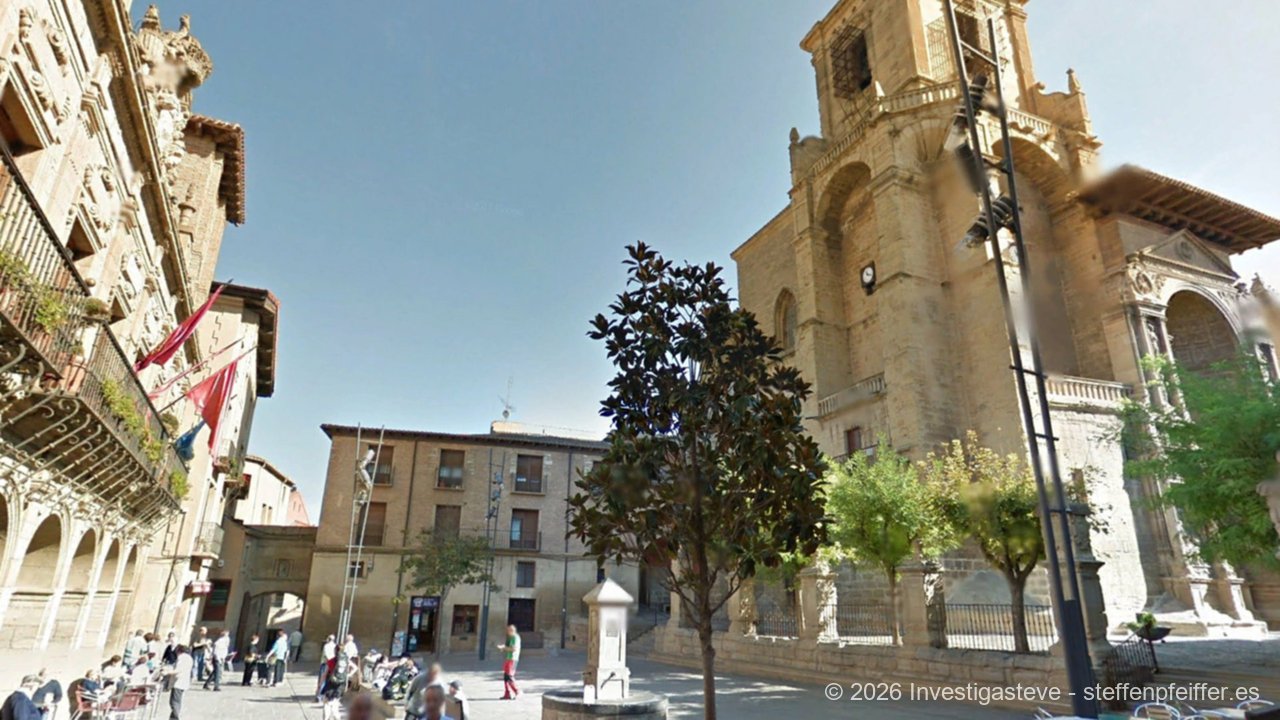
Architecturally, Viana is a “museum” of styles. The Iglesia de Santa María de la Asunción, built between 1250 and 1329, possesses cathedral-like dimensions unusual for a simple parish church. Its southern Renaissance façade from the 16th century is considered one of the most significant stone-carving works in Navarre – a stone wall full of niches and sculptures that seems to breathe almost organically in the evening light. In contrast, the ruin of San Pedro stands in the west. Severely damaged during the Carlist Wars in the 19th century and later finally brought to collapse by a lightning strike, the Gothic pointed arches now present themselves as a romantic skeleton in a quiet park. Here, Viana tells of the harsh reality of the wars that repeatedly ravaged this border town. It is a story of resilience: from the ruins of the fortress grew a Conjunto Histórico-Artístico that today welcomes pilgrims from all over the world with a proud “Príncipe de Viana” feeling.
Addresses & tips in Viana
Camino Distances
Viana lies strategically between the gentle hills of Navarre and the flat Ebro plain. The path leads through vineyards and grain fields that mark the transition to the Rioja.
| Previous Place | Distance (km) | Next Place | Distance (km) |
|---|---|---|---|
| Torres del Río | ca. 11.6 km | Logroño | ca. 10.8 km |
Sleeping & Arriving
Arriving in Viana is associated with a deep physical relief for many pilgrims. You leave the solitude of the fields behind and immerse yourself in the protective stone lattice of the old town. The first choice for many is the Albergue Municipal “Andrés Muñoz”. Its location is phenomenal: right next to the ruins of the church of San Pedro, it offers an unparalleled panoramic view over the Ebro Valley. The tactile pleasure of letting the backpack slip from your shoulders after 12 kilometres and feeling the cool tiled floors under your bare feet is complemented here by the warm care of the staff. You hear the distant clatter of dishes in the communal kitchen and smell the freshness of the clean sheets as the afternoon sun falls through the dormitory windows.
For pilgrims seeking a touch of aristocratic luxury after the asceticism of the Way, the Hotel Palacio de Pujadas is a place of emotional metamorphosis. In this restored town palace (Pazo-style), the smell of old wood and floor polish mingles with modern comfort. Tactilely, it is the heavy curtains and soft beds that allow the body to regenerate. A special moment of arrival here is the dinner in the hotel’s own restaurant, specialising in grilled meat – an olfactory feast for any walker. Those seeking intimacy, on the other hand, will find a modern, family-friendly atmosphere with smaller groups and a high standard of cleanliness at the Albergue Izar.
The night’s rest in Viana is of a particular quality. When the day-trippers have left the town and the restaurants close their doors around 10 pm, the place wraps itself in a heavy, almost medieval silence. Only the distant whistling of the wind in the alleys and the occasional striking of the tower clock can be heard. Psychologically, this environment offers a protected space for reflection. You feel the throbbing in your calves, the sign of work accomplished, and the anticipation of the next day, when you will definitively pass through the “Gate to the Rioja”. The tactile pleasure of slipping into a freshly made bed while the moon stands over the ruins of San Pedro outside is the true reward for every blister and every aching muscle.
Eating & Drinking
Eating in Viana means tasting the soul of Navarrese cuisine at the crossroads with the Rioja. Local gastronomy is shaped by the honesty of products from the Ribera plain. An absolute must for the palate are the “Cogollos de Tudela” – small, crisp lettuce hearts, often served with garlic and the finest olive oil. The tactile contrast between the cool, juicy greens and the spicy oil is a revelation after the heat of the way. Equally legendary are the “Pimientos del Piquillo”, red, sweet pointed peppers, often stuffed with fish or meat and roasted over beechwood here. Their smoky aroma mingles in the alleys with the scent of “Cordero asado” (roast lamb), another speciality of the region.
Acoustically, the meal is often accompanied by “El Jaleo” – the cheerful babble of voices in places like the Sidrería Casa Armendáriz. Here you hear the typical hiss as the sidra (cider) shoots from the large wooden barrels (Kupelas) into the glass – a ritual act especially celebrated in autumn. Alongside, you break the crusty country bread, whose crust cracks so wonderfully and whose soft crumb is ideal for soaking up the delicious sauces. The wine of the region, a robust Rioja DO with aromas of cherries and vanilla, is more than just a drink; it is the liquid essence of the landscape you have just walked through.
An important logistical note: on Mondays, many restaurants in Viana are closed in the evening. Pilgrims should therefore have their main meal at midday or stock up in one of the traditional bakeries with “Bocadillos” (filled sandwiches) and local cheese. The tactile experience of sitting on a bench on the Plaza de los Fueros in the late afternoon, breaking a fresh piece of bread and drinking a sip of Rioja from a beaker while gazing at the Baroque town hall, is a moment of pure pilgrim bliss. In Viana, you do not just eat to become full; you eat to become part of a centuries-old culture of enjoyment that rewards physical exertion with culinary excellence.
Supplies & Logistics
Logistically, Viana is perfectly adapted to the needs of walkers, yet retains its village character. Since the large Carrefour hypermarket closed in 2019, supplies have now re-concentrated on the historic centre. The smell in the small “Tiendas de Ultramarinos” is a mix of fresh pastries, cured ham, and the metallic aroma of household goods – a scent that immediately inspires confidence. Everything is within walking distance, which supports the regeneration of tired joints.
Shopping: Small grocery shops in the centre offer basic products, fruit, and pilgrim snacks. For larger purchases, planning for Logroño is recommended.
– Pharmacies: The main pharmacy María Soledad García Mesa on Calle Santo Nicasio is well-stocked for pilgrim needs like blister plasters and ointments.
– Health: The Centro de Salud on Plaza Oroz offers basic medical care. Particularly valuable for pilgrims is the Clínica Podológica Charcot, specialising in foot problems.
– Information: The tourist office under the arcades of the town hall (Plaza de los Fueros) is an excellent point of contact for stamps, maps, and USB charging stations for mobile devices.
– Transport: There are regular bus connections to Logroño (approx. 15 min.) and Pamplona (approx. 2 hrs.). For emergencies or luggage transport, the VianaTaxi service is available.
Viana’s logistical strength lies in its compactness. You do not have to travel far to replenish supplies or seek medical help. Psychologically, this infrastructure conveys a feeling of security: here you are not alone; here all needs are catered for. Tactilely, logistics are supported by the well-marked yellow arrows that safely guide you through the labyrinth of alleys. Those who leave the town usually do so with a refilled water bottle from the public fountains and the reassuring knowledge that the last 10 kilometres to Logroño run on well-developed paths.
Don’t Miss
– Iglesia de Santa María: Admire the magnificent Baroque altarpiece and the paintings by Luis Paret in the cathedral-like interior.
– Tomb of Cesare Borgia: A simple marble slab before the church portal marks the end of one of the most dazzling lives of the Renaissance.
– San Pedro Ruins: Enjoy the melancholic beauty of the Gothic ruin and the spectacular view over the Ebro Valley at sunset.
– Town Hall (Ayuntamiento): A Baroque jewel from 1688 with an elegant façade and classical severity.
– Balcón de Toros: The luxurious “bullfighting balcony” on the Plaza del Coso recalls the town’s rich aristocratic history.
– Casa de la Cultura: Visit the former pilgrim Hospital from the 15th century, which now houses exhibitions.
– City Wall Walk: A stroll along the medieval fortifications conveys the feeling of an impregnable border town.
Insider Tips & Hidden Places
Beyond the splendid churches and the bustling Rúa Mayor, Viana conceals corners of quiet melancholy and archaic power. One such place is the small park immediately behind the ruins of San Pedro. While most pilgrims only briefly visit Borgia’s grave, this park is a place of absolute psychological deceleration. Here you hear only the soft rustling of the leaves and the distant hum of the town. Sitting on one of the benches, you can let your gaze wander for kilometres over the vines to the Sierra de la Demanda. Tactilely, you feel the cool air of the valley rising here, and in the golden light of late afternoon, you see the Gothic arches casting long shadows on the grass – a perfect place for meditation or writing in a journal.
Another, almost forgotten place is the memorial site in the Barranca Salada. For Renaissance enthusiasts and Borgia fans, the exact site of Cesare’s death is a kind of “place of pilgrimage” off the tourist routes. A hike there (approx. 1–1.5 hours from Viana) leads through a quiet field landscape where the historical intensity becomes almost physically tangible. A simple cross of wood and stone marks the spot where one of the most powerful men of his time bled to death in the mud. Up here, far from the souvenir shops, you feel the historical causality of power and the indifference of nature. It is an olfactory experience of dry thyme and hot earth that opens the mind to the philosophical questions of the journey.
Those who like it authentic and local should seek a place under the arcades of the town hall in the early morning. Here, the retired winegrowers and harvest workers of the place often sit, their faces as tanned as the stones of the town wall. You hear their conversations about the weather and the quality of the grapes – an acoustic testimony to Viana’s deep roots in viticulture. The smell of strong coffee mingles with the coolness of the shade. It is a private refuge in the midst of the public square, where for a moment you are not a pilgrim, but part of the local rhythm. These fleeting glimpses into the real life of Viana are the true gifts for the walker willing to look more closely.
A final tip: during your walk, pay attention to the numerous “Casas Blasonadas” – manor houses with impressive family coats of arms carved in stone on their façades. Each of these coats of arms tells of a noble lineage that once made Viana great. Running your fingers over the rough texture of the sandstone, you touch the permanence of the aristocracy in an ever-changing world. Viana does not give up its secrets to the hurried walker; you must approach it with curiosity and slowness to grasp the true depth of its hidden places.
Moment of Reflection
Viana forces the pilgrim to confront the contradictions of life: power and impotence, permanence and decay, boundary and openness. Psychologically, the town functions as a “border station of the soul”. The massive presence of the town walls and the fate of Cesare Borgia remind us of the finitude of all striving. In the coolness of the church of Santa María, you recognise that monumental buildings often arise from the search for eternity, while the ruins of San Pedro show that even the hardest stone must yield to time. The historical causality – that you walk in the footsteps of a man who shaped the political philosophy of Machiavelli – gives your own path an unexpected depth.
In the evening, you might sit on a stone wall and watch the shadows of the vines in the valley grow longer. The emotional metamorphosis from the hurried kilometre-devourer to the quiet observer unfolds here almost of its own accord. You recognise that wealth lies not in possession, but in the ability to enjoy the silence of the wind and the beauty of a sunset over the ruins. Viana teaches us that every path has a boundary, but also that every boundary is an invitation to rediscovery. You leave the town not only with equipped feet, but with a sharpened awareness of your own role in the great theatre of history. It is the recognition of continuity: we are part of an infinite procession that has been passing through this “Gate of the Eagle” for 800 years.
Camino of the Stars
Viana is a proud fixed star on the Camino Francés, marking the end of the Navarrese stage. The sequence of places is:
Los Arcos → Sansol → Torres del Río → Ermita del Poyo → Viana → Logroño
Did you also feel that peculiar mixture of awe and melancholy at the grave of Cesare Borgia? Perhaps you found a moment of perfect stillness in the Gothic ruins of San Pedro, or experienced the hospitality of Navarre in its purest form in one of the bars? Share your experiences, your photos of the Renaissance façade, or your thoughts on the transition to the Rioja with us. Your story is a valuable stone in the mosaic of the Camino!
About the Author