First Glance – Introduction & Atmosphere
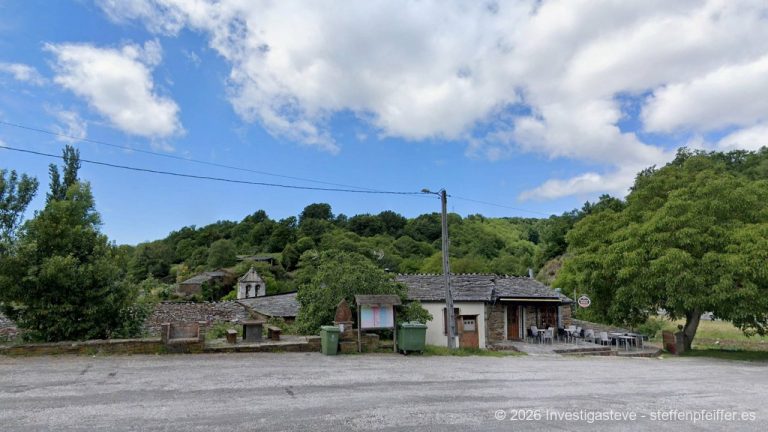
When you have left the arduous, almost meditative climb from Castromaior behind you and the gentle but relentless winds of the Galician high plateau cool your skin, a place opens up before you that rests in the landscape like an archaic promise. Hospital da Cruz is not a place of loud gestures or magnificent façades; it is a hamlet of pause, a testimony of constancy deeply carved into the granite of Galicia. The air here at almost 500 metres above sea level has a completely unique quality – it is clear, often sharp, and carries the tart, spicy scent of broom and damp fern, mingled with the note of old stone and the distant smoke of a fireplace. You hear the rhythmic click of your pilgrim staff on the rough asphalt, which finds a soft echo in the expanse of the plain, interrupted only by the distant, monotonous rumble of the national road that cuts through the millennia-old silence of the path like a modern ribbon.
In Hospital da Cruz, you feel the tactile weight of history in every fibre of your body. The coolness of the grey granite from which the few houses are made seems to absorb the exhaustion of the preceding kilometres. When you place your hand on the rough walls of the old buildings, you touch stone that has defied the lashing winter storms and scorching summer sun for eight hundred years. The visual setting is characterised by an almost ascetic simplicity: a few squat houses, the simple chapel, and the wide, green campiña stretching to the horizon. Psychologically, arriving in this hamlet marks for many pilgrims a moment of total deceleration. It is the place where you realise that you have entered the heart of Galicia – a region where time does not flow but lingers in the deep joints of the masonry. Here, you are no longer just a walker; you become part of a timeless ensemble of wind, stone, and the unshakeable spirit of hospitalitas.
What This Place Tells
The narrative of Hospital da Cruz is inseparable from the name of the “Knights of the Order of St. John of Jerusalem”, those legendary warrior monks who in the 12th century set the course for a network of charity here. The historical causality of its foundation lies in the existential necessity of protection on this exposed section of the Way. Originally known as “Sala Crucis” – the chamber of the cross – this place functioned as a spiritual and physical anchor point for those who were seeking. One must imagine the historical immersion: in the Middle Ages, this hamlet was a refuge amidst a often hostile wilderness, where the knights of the order not only guaranteed the safety of pilgrims but also healed wounds and strengthened souls. The former pilgrim Hospital, whose original structures today lie hidden beneath modern layers, was the functional heart of a logistics of faith that made Hospital da Cruz one of the most significant lifelines in the region.
The architecture of the small parish church tells a story of continuous veneration. Even though the building appears modest today, inside it houses a 16th-century altarpiece that acts like an architectural echo of the place’s former greatness. The smell of old incense and the cool, heavy silence in the nave connect you directly with the millions of pilgrims who have sought blessings here since the Golden Age of the Camino de Santiago. Historically, Hospital da Cruz was also a strategic control point; those who rested here had overcome the challenging gradients from the Miño Valley and mentally prepared for the descent towards Palas de Rei. This historical causality is also reflected in the ethnographic structure of the village – everything is designed for survival and supply.
The deepest mystery of Hospital da Cruz, however, lies in the psychological metamorphosis that the place triggers. The Knights of St. John did not choose this spot by chance; the vastness of the high plateau compels an inner spaciousness of the mind. In the silence of the hamlet, the 1200-year history of the Camino becomes almost physically tangible. You can feel how the burden of worldly worries becomes small in the face of the constancy of the Hospitaller legacy. Hospital da Cruz teaches us that constancy does not lie in the size of the buildings, but in the loyalty to one’s own mission. It is the story of a place that refused to give up its identity as a protective gateway to western Galicia, despite its current population of barely 20 souls. Every unevenness in the ground and every stone at the site of the old Hospital is a silent witness to an era when faith and action formed an inseparable unity.
Addresses & tips in Hospital da Cruz
Camino Distances
The hamlet of Hospital da Cruz lies at a striking transition point on the 30th stage, where the path reaches the high plateau.
| Previous Town | Distance (km) | Next Town | Distance (km) |
|---|---|---|---|
| Castromaior | ca. 2.3 km | Ventas de Narón | ca. 1.3 km |
Sleeping & Arriving
Arriving in Hospital da Cruz is like entering a protective cocoon of simplicity. When you cover the last metres of the stage and see the silhouette of the hamlet against the often dramatic Galician sky, the tension of the climb falls away from you. There are no pretentious hotels here; arriving here is defined by the honest, almost monastic calm of the Albergue municipal de peregrinos de Hospital da Cruz. The public hostel is a place of reduction to the essentials. The tactile experience of the cool stone walls inside, combined with the functional warmth of the communal areas, creates an atmosphere of security deeply rooted in the tradition of the Knights Hospitaller. The acoustic panorama at check-in is characterised by an almost sacred silence, in which only the soft rustle of maps and the muffled whispers of pilgrims who respect the peace of the place can be heard.
The hostel offers about 20 beds and thus preserves an intimacy often lost in larger centres like Portomarín. The tactile feeling of freshly washed sheets and the coolness of the room after a hot day of walking on the plateau act like a balm for the senses. Arriving here becomes a ritual act of self-care: you wash your clothes in the old troughs, feel the ice-cold water on your hands, and let your gaze wander over the wide campiña. Psychologically, this place offers a refuge for those who want to escape the masses. Mostly only those seeking silence find their way here, which favours a social metamorphosis within the hostel – strangers become fellow travellers for a night, sharing their experiences under the protection of the Hospitaller legacy.
The night in Hospital da Cruz is of an acoustic density rarely found in the modern world. Since there is no urban noise, at night you perceive sounds you had long forgotten: the distant howling of the wind, the rhythmic chirping of crickets, and your own calm breathing. This acoustic isolation is an essential part of regeneration. Those who stay here consciously choose the quality of being over the quantity of comfort. The tactile reality of the place – the hard stone, the clear light falling through the small windows – leads you back to your roots. It is an arrival at one’s own centre, made possible by the simplicity and constancy of a hamlet that has existed for precisely this purpose for centuries.
Particularly noteworthy is the personal touch of the care you often find in these small, public hostels. It is the feeling of being perceived not as a number, but as part of an infinite chain of walkers. Those who arrive in Hospital da Cruz often feel a sudden clarity; the ballast of civilisation seems to have no power here, in the shadow of the old Hospital. It is a place of preparation for the finale of the Way, a moment of concentration before you plunge back into the stream of thousands the next morning. Sleeping in Hospital da Cruz means diving deep into the spiritual DNA of Galicia and drawing strength from the historical constancy of the “Sala Crucis”.
Eating & Drinking
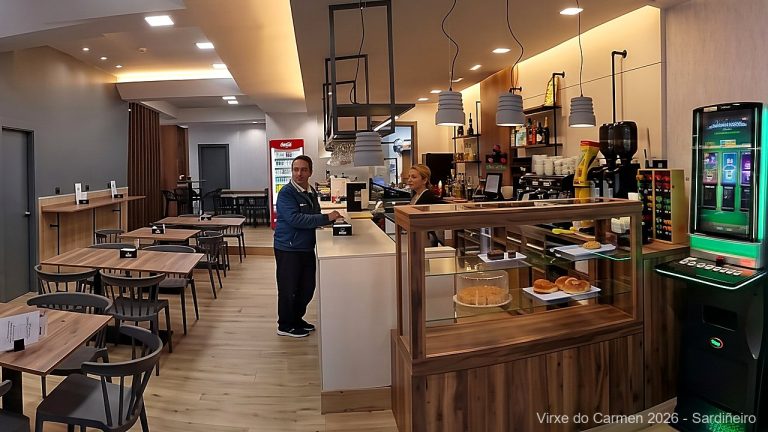
In Hospital da Cruz, gastronomy becomes an act of existential strengthening. As the place is small, the culinary experience concentrates on the Bar Taberna do Camino, which for many pilgrims appears like a saving oasis amidst the windy high plateau. As you approach the taberna, the scent of burning oak wood mixes with the irresistible aroma of simmering Caldo Gallego. It is an olfactory promise that immediately revives the spirits. The tactile experience of taking a seat at a solid wooden table in the rustic dining room and feeling the pleasant warmth of the room on your often-chilled skin is the perfect start to regeneration.
The Menú del Peregrino in Hospital da Cruz is a homage to the honest country cooking of Galicia. The Caldo Gallego, that hearty soup of cabbage, potatoes, and beans, is served here in heavy ceramic bowls that retain the warmth for a long time. You taste the minerality of the soil and the care of the preparation. As a main course, the traditional pork dishes, often accompanied by cachelos (Galician potatoes), are an absolute must. The tactile texture of the tender meat, combined with the spicy aroma of paprika and olive oil, is a sensory feast that fills every fibre of your body with new energy. To accompany this, the heavy, crusty Galician country bread is served, whose smell of yeast and fire completes the meal.
Drinking a cool Estrella Galicia or a local country wine from the traditional white ceramic bowls, the cuncas, is a tactile and taste experience that underscores the down-to-earth nature of the place. The cool weight of the bowl in your hand and the earthy taste of the wine form the perfect contrast to the preceding physical exertion. The acoustic panorama while eating is shaped by the polyglot murmuring of fellow pilgrims and the clatter of cutlery – a soundtrack of community. Eating in Hospital da Cruz means literally absorbing the power of the region. It is “food for the soul” that teaches you that true enjoyment lies in simplicity and closeness to the source.
Supplies & Logistics
Logistically, Hospital da Cruz acts as a zone of radical reduction and as a strategic safety valve on the way to Palas de Rei. Those who come here must be aware that this hamlet is not a shopping centre in the modern sense. The strategic causality lies in its function as a spiritual and historical resting point, not as a market place. Nevertheless, the place offers everything necessary for a short, efficient stay, provided you plan your needs in advance.
Shopping: There are no supermarkets or shops on site. The supply of snacks or small travel items is exclusively through the very limited offerings of the taberna or the hostel. Pilgrims should have already replenished their main supplies in Portomarín; the next comprehensive shopping opportunity is only in Palas de Rei, about 11 km away.
Gastronomy: Catering is excellently covered by the Bar Taberna do Camino. Here you get hot meals, breakfast, and drinks, tailored specifically to the rhythm of the walkers. Opening hours are reliably aligned with the flow of pilgrims.
Sleeping: With the public hostel of the Xunta, a solid overnight accommodation is available. As capacity is limited, arriving early in the absolute high season is recommended, as reservations in public hostels are often not possible.
Public Facilities: There are no medical facilities, banks, or post offices in Hospital da Cruz. All formal administrative and health care must be used in nearby Palas de Rei or in Portomarín behind you. In an emergency, however, the connection via the nearby national road is excellent, and the emergency services are quickly reachable via 112.
Safety in Hospital da Cruz is exceptionally high due to the clarity of the site and the social control of the small community. You immediately feel part of a small, protected world. Logistically, the hamlet acts as a “check-in of the soul” – here you do not check your luggage weight, but your mental state for the coming kilometres. The acoustic seclusion ensures that you can concentrate fully on your inner orientation. Hospital da Cruz proves that good pilgrim logistics sometimes consist of needing nothing but what you carry in your own heart.
Don’t Miss
- The parish church: Admire the 16th-century Baroque altarpiece – a small art treasure in the solitude of the plateau.
- The stone wayside cross: An iconic photo point at the entrance to the village, symbolising the historical significance of the “Sala Crucis”.
- The Bar Taberna do Camino: Enjoy the authentic atmosphere and the Caldo Gallego – a culinary memento of the Galician winter.
- The view over the high plateau: Stop at the western edge of the village and let your gaze wander over the infinite expanse of the Serra de Ligonde.
- The silence of the night: Step outside the hostel after 9 p.m. and listen only to the wind – an auditory meditation of the highest order.
- The ruins of the old Hospital: Look near the church for the foundations of the medieval hospitalitas – a tactile journey back to the time of the Knights Hospitaller.
Insider Tips & Hidden Places
Away from the marked pilgrim path, Hospital da Cruz hides corners that reveal their depth only to the seeker. One such place is the small path leading behind the hostel towards the southern fields. If you walk just a few hundred metres, the noise of the national road almost completely disappears, and you stand in a landscape as the Knights Hospitaller saw it in the 12th century. Here you find ancient dry stone walls almost completely covered with silvery lichen. It is a place of absolute acoustic isolation, where you only hear the distant ringing of cowbells. The ground is soft and cushions your steps – a tactile blessing after the hard asphalt. In the air lies an intense scent of wild thyme, often lost at the official rest stops. This is the perfect place for a private meditation, far from the cameras of other walkers.
Another hidden treasure is a small stone carving on one of the corner pillars of a decayed stable near the church. It is not an official monument, but a decades-old engraving by an unknown pilgrim showing a simple cross and a date. When you run your fingertips over these cool, rough notches, you touch the individual history of a person who stood at this threshold just like you. It is a tactile communication across time that makes the psychological depth of the Camino tangible. Such small, unofficial traces often tell more about the essence of the pilgrimage than the great monuments.
Did you know that there is a spot near Hospital da Cruz where the light at sunset falls at a very specific angle over the plateau, bathing the granite stones in an almost unnatural orange? The locals call this moment “O Ouro da Sala Crucis” (The Gold of the Cross Chamber). When you stand there at the right time, you feel a psychological spaciousness that opens the heart. The visual spectacle, in contrast to the cool evening breeze, creates a state of euphoria that you can never find in crowded bars. Those who take the time to explore these nuances in Hospital da Cruz discover a hamlet that is far more than just a transit point – it is a place of fine vibrations that only reveal themselves when you adapt your pace to the speed of your soul.
Finally, it is worth directing your gaze directly at the ground under the old oaks. Between the stone crevices grow tiny ferns that sparkle like jewels in the morning dew. This visual experience offers a fascinating contrast to the monumental history of the Knights Hospitaller. It teaches you the psychological acuity of observation of detail: even in the small and inconspicuous lies the greatness of creation. Hospital da Cruz is a place of contrasts – between the infinity of the sky and the tactile reality of a single cushion of moss. Those who recognise this have understood the true legacy of the “Sala Crucis”.
Moment of Reflection
In Hospital da Cruz, you stand at a point of maximum spiritual constancy. Here, where the Order of St. John has been the metronome of hospitalitas for centuries, the question inevitably arises: “What burdens do I still carry in my backpack that I would like to symbolically leave behind at this historical threshold?” The psychological metamorphosis that takes place here is the transition from physical achievement to inner stillness. Hospital da Cruz challenges you to pause before you set out on the last great section to Santiago. It is a filter for your thoughts. In the vastness of the high plateau, your everyday worries become small, and your true goals emerge more clearly.
The historical causality of your being here connects you with the millions of seekers for whom this place has been a safe haven for 1200 years. Do you feel the responsibility to carry forward this heritage of gratitude and protection? In Hospital da Cruz, you become aware that the Camino is not a race against the kilometres, but a sequence of moments of presence. The tactile reality of the rough stone under your hands reminds you of your own resilience. Use this moment of reflection to recalibrate your inner compass. When you leave Hospital da Cruz tomorrow, take a piece of the peace and historical dignity of the Knights Hospitaller with you. It will be your anchor when the jubilation of arriving in Santiago finally overwhelms you. Here, in the silence of the high plateau, you have found the strength to continue your journey with a new, clear sovereignty.
Camino of the Stars
This place lies on the Camino Francés, on the stage from Portomarín to Palas de Rei. The sequence of places is:
Portomarín → Gonzar → Castromaior → Hospital da Cruz → Ventas de Narón → Os Lameiros → Ligonde → Airexe → Portos → Lestedo → A Calzada → Palas de Rei
Did you also feel that deep moment of security amidst the windy high plateau in Hospital da Cruz, or gather new strength with a Caldo Gallego at the Taberna do Camino? Perhaps you have found your own secret corner by the old stone walls of the Knights Hospitaller? Share your personal impressions, your photos of the stone wayside cross, or your thoughts on the historical significance of the “Sala Crucis” with us. Every story makes this special threshold point on the Camino come alive for the community – we look forward to your contribution!
About the Author