First Glance – Introduction & Atmosphere
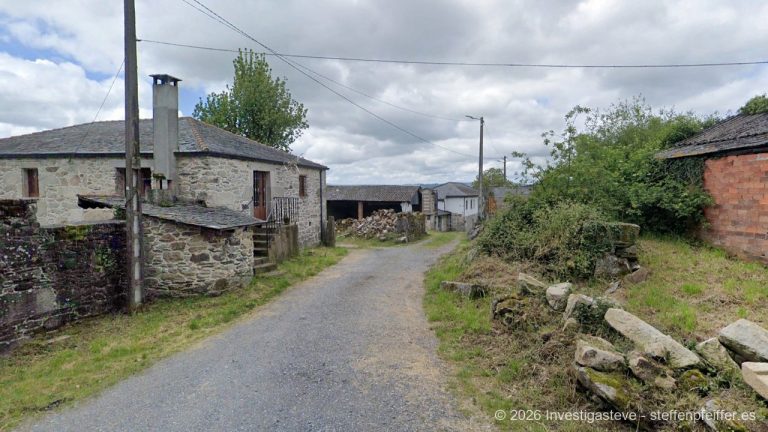
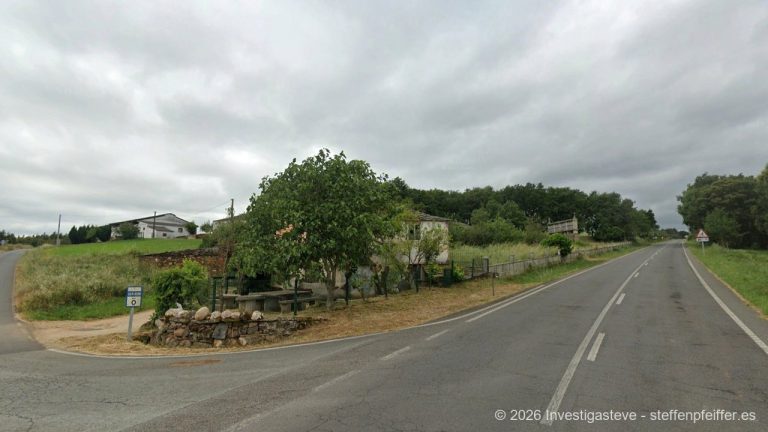
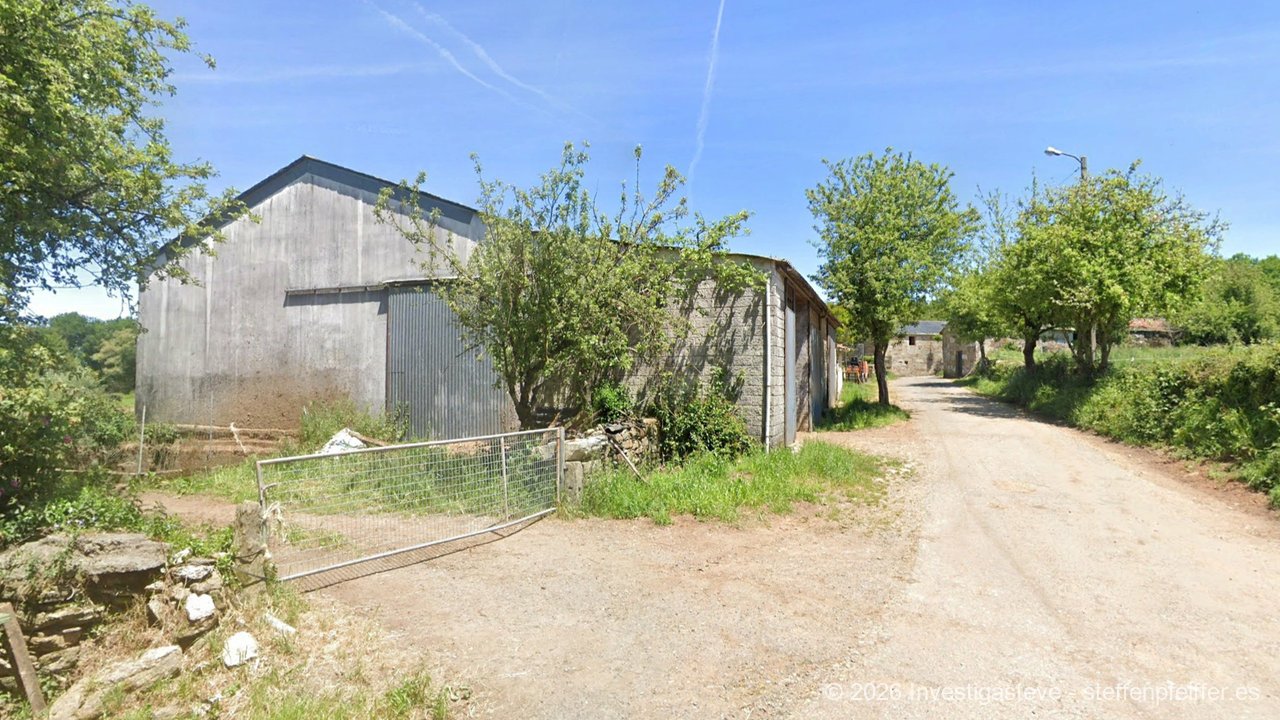
When you have crossed the heights of the Serra de Ligonde and the path slowly leads you back into the gentler hollows of the Comarca Ulloa, you reach Os Lameiros, a place that unfolds a tremendous atmospheric force in its almost painful abandonment. It is not a place that welcomes you with the clatter of dishes or the babble of voices from a hostel; Os Lameiros is a pause of time itself. The small hamlet, now considered almost uninhabited, nestles like a stone skeleton against the Camino Francés. The air here has a completely different consistency than in the bustling stage towns – it feels denser, saturated with the heavy, earthy aroma of damp fern, old moss, and the cool, almost metallic smell of weathered granite. When you enter the area, the noise of the world falls silent. What remains is the orchestral rustle of the leaves in the ancient oaks and the distant, melancholic echo of a cuckoo drifting through the ruins of the farmsteads.
In Os Lameiros, you feel the tactile reality of transience in every fibre. You set your foot on the uneven cobblestones, polished smooth by generations of pilgrims, and feel the cool aura emanating from the windowless walls of the old stone buildings. The visual scene is characterised by a fascinating contrast: the lush, almost unnaturally bright green of the Galician nature constantly tries to reclaim the grey weight of the granite. Ivy creeps like a slow green flood over the lintels of the portals, and between the stone crevices bloom tiny, hardy succulents. Psychologically, this place marks for many pilgrims a moment of total deceleration and introspection. Here, where human activity has come to a standstill, your own presence on the path suddenly becomes acutely aware. You smell the scent of freedom and decay equally, while the rhythmic click of your staff on the ground becomes the only timekeeper in this world of silence. In Os Lameiros, you are not just a walker; you are a witness to history, carved here in stone and now patiently waiting for the next seeker.
What This Place Tells
Os Lameiros is a stone chronicler whose narratives reach deep into the bowels of the Galician Middle Ages and the Baroque period. The historical causality of its significance lies in its strategic role as a supply and protection point just before the administrative hub of Palas de Rei. The heart of this narrative is undoubtedly the Cruceiro de Lameiros, erected in 1670 and considered one of the most iconic and artistically valuable stone crosses of the entire Camino de Santiago. It is not a mere signpost, but a theological manifesto in granite. Historical immersion becomes tangible when you stand before its two sides: on one side the suffering, crucified Christ, on the other the sorrowful Mother of God, whose heart is pierced by swords. The causality of this monument leads us back to an era when epidemics like the plague ravaged the region and the cross served as a place of penance, protection, and hope.
The history of the hamlet is also inseparable from the Pazo de Lameiros, a stately manor that once reflected the power and influence of the local noble families of the Ulloa region. This pazo, together with the simple chapel of San Marcos, tells of a time when faith and worldly power formed an inseparable symbiosis. But Os Lameiros hides an even darker, deeper chapter: immediately next to the cruceiro lies a historic pilgrim burial ground. Here, on this patch of earth, for centuries those walkers who did not survive the hardships of the Way found their final rest. The historical causality of this place as a burial site for the poor and forgotten gives the ground a spiritual weight that you cannot see but can clearly feel. It is the story of the anonymous millions whose hope lay in Santiago, but whose journey found its physical end here, in the shadow of the cross.
Architecturally, Os Lameiros offers insights into the functional beauty of rural Galician Gothic and Baroque. The base of the cruceiro is a tactile textbook of the Memento Mori: when you run your fingers over the crudely carved depictions of skulls, hammer, nails, and the crown of thorns, you touch the naked fear and unshakeable faith of the 17th century. The place tells of the rise and the slow, almost peaceful decline of the rural settlement structure of Galicia. That Os Lameiros is almost deserted today adds a psychological dimension of transience to the narrative – everything human is in flux, only faith and stone remain. Those who walk through the narrow lanes hear the echo of the knights of the order and the poor wretches alike. It is a place that whispers to you that you are part of a vast human stream whose end is certain, but whose meaning lies in the here and now of walking.
Addresses & tips in Os Lameiros
Camino Distances
Located in the gentle rolling hills between Ventas de Narón and Ligonde, Os Lameiros serves as a striking resting point on the 30th stage.
| Previous Town | Distance (km) | Next Town | Distance (km) |
|---|---|---|---|
| Ventas de Narón | ca. 2.1 km | Ligonde | ca. 0.4 km |
Sleeping & Arriving
Arriving in Os Lameiros is an experience of radical reduction and emotional release. There is no modern check-in here, no key cards, no Wi-Fi passwords. “Arriving” here takes place on a purely mental level. When you cross the boundary of the hamlet, a psychological peace settles over you that is far more valuable than any bedsheet. Since the place is largely uninhabited, arriving becomes a ritual act of self-encounter. You do not look for a place in a dormitory, but a spot on one of the ancient stone walls in the shade of the pazo. The tactile experience of the cool stone under your hands and the slow lowering of your pulse form the framework for this form of rest. It is an arrival in silence, far from the logistical noise of the rest of the Camino.
Although Casa Lameiro is listed as a potential accommodation in some registers, the actual logistical reality for overnight stays in Os Lameiros is characterised by the proximity to Ligonde, only a few hundred metres away. Most pilgrims use Os Lameiros as a place of deep, spiritual pause before heading to the hostels of Ligonde or Airexe for the night. This spatial separation between the place of deathly rest and history (Os Lameiros) and the place of living hospitality (Ligonde) creates a tense psychological dynamic. You spend your time in the ruin, feel the historical immersion of the graves and the cross, and then, with that experience in your luggage, seek the protective home of the hostel. It is a tactile contrast between the hard granite of the past and the soft mattress of the present.
The acoustic backdrop while lingering in Os Lameiros is of a purity that is almost painfully beautiful. Since there is no traffic and no commercial activity, you perceive sounds you had long forgotten: the distant buzzing of bees in the broom bushes, the rhythmic beating of your own heart, and the sound of your breath. This auditory isolation is an essential part of psychological regeneration. Those who pause here for a while feel how the tension of the 16 kilometres from Portomarín slowly eases from their limbs. It is a tactile blessing to take off your hiking boots and place your feet on the cool moss of the old garden walls. Arriving in Os Lameiros is thus far more than just a geographical point; it is arriving at a state of mind that teaches you that less can often be infinitely more.
For pilgrims seeking a more spiritual experience, the absence of crowds offers the ideal space for meditation or prayer at the foot of the cruceiro. There is no distraction from coffee machines or phone calls. The tactile reality of the place – the rough stone, the hard wood of the decayed gates, the clear light – leads you back to your roots. Those who pause in Os Lameiros consciously choose the quality of silence. When you later sit at the communal table in neighbouring Ligonde in the evening, you will realise that part of your attention still lingers in the ruins of Os Lameiros. This place gives you the time you need to sort out the experiences of your journey so far. It is an anchor point of constancy in a sea of change, a threshold point that prepares you physically and mentally for the finale in Santiago.
Eating & Drinking
In Os Lameiros, there are no cafés, no bars, and no supermarkets. The gastronomic experience here is one of absolute self-sufficiency, which gives every small snack you bring along an almost sacred significance. The taste of a simple apple or a piece of dry bread becomes a culinary revelation in the pure air and deep silence of this hamlet. You feel the tactile texture of the food much more intensely when no urban noise distracts you. It is the “food of the Way” in its purest, most honest form. Olfactorily, the scent of your brought provisions mixes with the tart aroma of Galician broom and the smell of old, sun-warmed stone – a sensory interplay that satisfies hunger in a very primal way.
Many pilgrims use the shady spots under the old trees or the steps of the cruceiro for a final picnic before the destination Palas de Rei. The water from your canteen, perhaps still cool from the spring in Ventas de Narón, tastes here like a life-giving elixir. The tactile coolness of the bottle in your often sun-warmed hands and the liberating feeling of taking off your backpack for an hour become symbols of freedom here. It is the psychological component of sharing that often comes into play here: you offer another lonely walker a bar or a handful of nuts, and in this simple act, the entire philosophy of the Camino de Santiago is reflected – a community of frugality amidst a backdrop of decay.
Those who “eat” in Os Lameiros consume above all the atmosphere of this historic place. The visual expanse of the Galician campiña fills the mind, while the body is content with meagre supplies. It is a lesson in gratitude that teaches you that true enjoyment does not lie in the variety of a menu, but in the quality of the moment and the purity of the surroundings. The scent of damp earth and the aroma of history are the real ingredients of the meal in Os Lameiros. When you later sit in a busy restaurant in Palas de Rei and enjoy the octopus, you may recall with a quiet melancholy the simple taste of your bread in the shade of the ruins of Os Lameiros – a culinary memento mori that reminds you how little a person really needs to be in harmony with themselves and the world.
Supplies & Logistics
Logistically, Os Lameiros is a zone of absolute self-reliance and a challenge for those accustomed to finding a shop every few kilometres. Those who come here must have already taken care of their basic needs. The strategic causality of this place lies in its function as a spiritual and historical resting post, not as a supply centre. This requires forward planning from the pilgrim, which is easily manageable due to the extreme proximity to Ligonde (about 400 metres). Nevertheless, one should not underestimate Os Lameiros: in the heat of summer or under lashing Galician rain, the lack of a solid shelter or a shop quickly becomes a trial.
Shopping: There are no shops whatsoever in Os Lameiros. Any provisions and water reserves must have been replenished in Ventas de Narón or already in Portomarín. The next shopping opportunity for basic foodstuffs is only in Ligonde or, in full scope, in Palas de Rei about 9 km away.
Gastronomy: There is no formal gastronomic offering. Pilgrims should plan a small emergency ration for this section. However, the bar-restaurants in neighbouring Ligonde cover the need for hot meals and coffee after just a few minutes’ walk.
Sleeping: Accommodation options are practically non-existent in this tiny hamlet, even if individual private accommodations exist nearby. The day’s logistics should be planned so that Os Lameiros serves as a place of contemplation and the night is spent in Ligonde or Palas de Rei.
Public Facilities: There are no medical facilities, banks, or post offices. In an emergency, the connection via the nearby country road is excellent, and the medical centre in Palas de Rei is quickly reachable by taxi or emergency services.
Safety in Os Lameiros is very high due to the absolute clarity of the area and the constant presence of other pilgrims. It is a place of mutual mindfulness. Logistically, Os Lameiros acts as a “check-in of the soul” – here you do not check your luggage weight, but your mental state for the coming kilometres. The acoustic seclusion ensures that you can concentrate fully on your inner orientation. Those who pass through this place should be aware of the logistical reduction and accept it as part of the spiritual experience. Os Lameiros proves that the best pilgrim logistics sometimes consist of needing nothing but what you carry in your own heart. The place teaches you the art of foresight and the beauty of independence.
Don’t Miss
- The Cruceiro de Lameiros: Look at both sides of the 1670 cross – the tactile details of the symbols of suffering on the base are masterful testimonies of Baroque folk art.
- The pilgrim burial ground: Take a moment of devotion at the site of the medieval cemetery – it is one of the most emotional places of the entire stage.
- The Pazo de Lameiros: Admire the architecture of the former manor house, even if only visible from the outside; it breathes the spirit of the Galician nobility.
- The chapel of San Marcos: A small, simple jewel of sacred architecture that fits harmoniously into the ensemble of ruins.
- The stonemason marks: Look for the secret signs of the medieval builders on the ashlars of the old buildings – tactile detective work for history enthusiasts.
- The sunset at the cross: Experience how the golden light makes the granite texture of the cruceiro glow and the shadows of the ruins grow longer – a moment of pure magic.
Insider Tips & Hidden Places
Away from the marked main path, Os Lameiros hides corners that are not in any standard guidebook and are revealed only to those willing to leave the beaten path for a moment. One such place is the old wall remnant behind the Pazo de Lameiros, almost completely overgrown with wild hops and bramble vines. If you carefully make your way through the thicket, you will find a small stone bench integrated directly into the perimeter wall. From here, you have a perspective on the cruceiro that no tourist photo ever captures: the cross stands isolated against the wide sky of the Ulloa, framed by the skeletal silhouettes of the ruins. It is a place of extreme acoustic isolation, where even the wind is only heard muffled. The ground here is covered with a thick layer of soft moss, making every step silent – a tactile blessing for your strained tendons.
Another hidden treasure in Os Lameiros are the tiny, almost faded symbols carved into the lower stones of the San Marcos portal. They are not official coats of arms, but rather personal signs of hope and despair from pilgrims of past centuries. When you run your fingertips over these cool, rough notches, you touch the individual history of a person who stood at this very spot three hundred years ago and perhaps felt the same blisters on their feet as you. It is a tactile communication across time that makes the psychological depth of the Camino tangible. In the air here often lies an intense scent of wild thyme and damp earth, making this hidden corner a place of deep humility.
Did you know that there is a narrow path near Os Lameiros that leads down to the Rio Ulla? While the official Camino keeps to the heights, this short descent to the water offers an acoustic oasis. The steady splashing of the river over the round granite stones acts like a natural sedative for the nervous system. Here the air is noticeably cooler than on the high plain, and the smell of water mint and damp alder creates an atmosphere of purification. This is the perfect place for a private meditation, far from the cameras and conversations of fellow pilgrims. Such places of isolation are what give Os Lameiros its deeper meaning – as a place of small wonders that only reveal themselves when you adapt the speed of your mind to the speed of your soul.
Finally, it is worth looking at the silhouettes of the old hórreos at dusk, which stand like stone guardians on the periphery of the hamlet. When the last daylight disappears behind the hills, these structures on their stilts appear almost alive, like relics of a forgotten civilisation. The smell of damp stone and the cool breeze whistling through the ventilation slots of the granaries create an atmosphere of timeless constancy. It is a space without distraction where the history of Galicia whispers in every crack of the granite. Those who lose themselves here often find a part of themselves that they had forgotten in the haste of preparing for the Camino de Santiago. Os Lameiros offers the rare opportunity to reflect on your own journey once more in absolute silence just before Santiago, before the final sprint begins.
Moment of Reflection
In Os Lameiros, you stand before the Cruceiro de Lameiros and are confronted with the Memento Mori – the remembrance of mortality. This moment challenges you to pause: What on this path have you already allowed to “die”, what old habits or worries have you left behind in the dust of the kilometres? The psychological metamorphosis that takes place here is the realisation that life, just like the Camino, is a gift of limited duration. The skulls at the base of the cross are not a threat, but an invitation to experience the present step with maximum presence. Os Lameiros teaches you the art of gratitude for the simple “being here”.
The historical causality of your being here connects you with the monks and knights for whom this place was a spiritual anchor. Do you feel the responsibility to carry forward this heritage of pausing? In the absolute silence of the ruins, you become aware that the Camino is not a race against time, but a search for your own centre. The tactile reality of the rough granite under your hands reminds you of your own resilience. Use this moment of reflection to clear your mind for the coming stages. When you leave Os Lameiros tomorrow, take the silence of the threshold point within you. It will be your anchor when the jubilation of arriving in Santiago finally reaches you. Here, in the silence of the stones, you have found the strength to continue your journey with a new, clear dignity.
Camino of the Stars
This place lies on the Camino Francés, on the stage from Portomarín to Palas de Rei. The sequence of places is:
Portomarín → Gonzar → Castromaior → Hospital da Cruz → Ventas de Narón → Os Lameiros → Ligonde → Airexe → Portos → Lestedo → A Calzada → Palas de Rei
Did you also feel that moment of absolute, almost eerie silence in Os Lameiros, or were you deeply moved by the tactile power of the cruceiro? Perhaps you have found your own secret place of power among the ruins or on the banks of the Rio Ulla? Share your personal impressions, your photos of the historic skulls at the base of the cross, or your thoughts on the Memento Mori with us. Every story makes this special threshold point on the Camino come alive for the community – we look forward to your contribution!
About the Author