First Glance – Introduction & Atmosphere
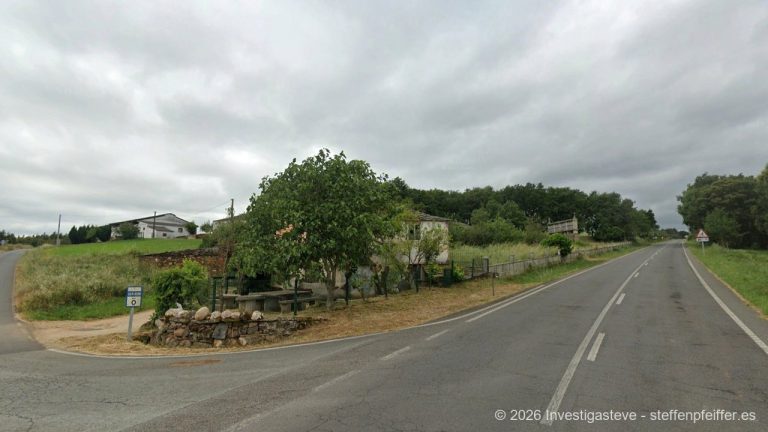
When you have left the dense, often mist-shrouded chestnut forests near Ferreiros behind you and the path steadily leads you uphill, you reach A Pena, a place that seems carved like an archaic sculpture from Galician granite. It is a hamlet of transitions, a pause of the world on an exposed plateau that has defied the storms of the Atlantic and the relentless sun of the interior for millennia. As soon as you enter the settlement, you feel a radical change in the atmosphere. The air up here, at almost 650 metres above sea level, is clearer, often sharper, and carries the tart, spicy scent of wild broom, gorse blossoms, and the heavy, earthy aroma of damp fern. You hear the rhythmic, almost meditative click of your pilgrim staff on the uneven ground, a sound that finds a deep echo in the wide, open landscape and is interrupted only by the distant, melancholic ringing of cowbells drifting through the valley like a relic from another time.
In A Pena, you feel the power of the earth in its most unadulterated form. The ground beneath your feet changes from soft forest paths to rough stone slabs and compacted earth that stores the coolness of the night and releases it only hesitantly to the passing walkers in the morning. When you place your hand on the lichen-covered granite walls of the old farmsteads, you touch material that has seen generations of pilgrims come and go. Psychologically, this place marks a decisive threshold: it is the moment when the physical exertion of the first kilometres from Sarria gives way to a sudden, euphoric vastness. The visual panorama is of an almost painful beauty – a sea of deep green hills of the Ribeira Sacra, softened by the milky Galician mist, the orballo, which dips the contours of the world in a timeless silver. Here, you are no longer just a walker on a stage; you become part of a timeless continuum, a spiritual viewpoint that urges you to shed your inner ballast before you undertake the final descent to the Miño.
What This Place Tells
A Pena is a silent chronicler whose narratives reach deep into the bowels of Galician early history and the Middle Ages. The name itself – derived from the Celtic pena, meaning rock or prominent stone – is a promise. Long before the first Christian pilgrims trod this path, this high plateau was a sacred space, shaped by the massive presence of granite that bursts from the earth everywhere here. The historical causality of its significance lies in the strategic superiority of the terrain: whoever controlled A Pena controlled the view over the Miño Valley and the access routes to the fertile Ribeira Sacra. In the Middle Ages, the place consolidated as an important hamlet of the parish of Paradela, a point of supply and spiritual gathering for those who came up from the deep valleys of Samos.
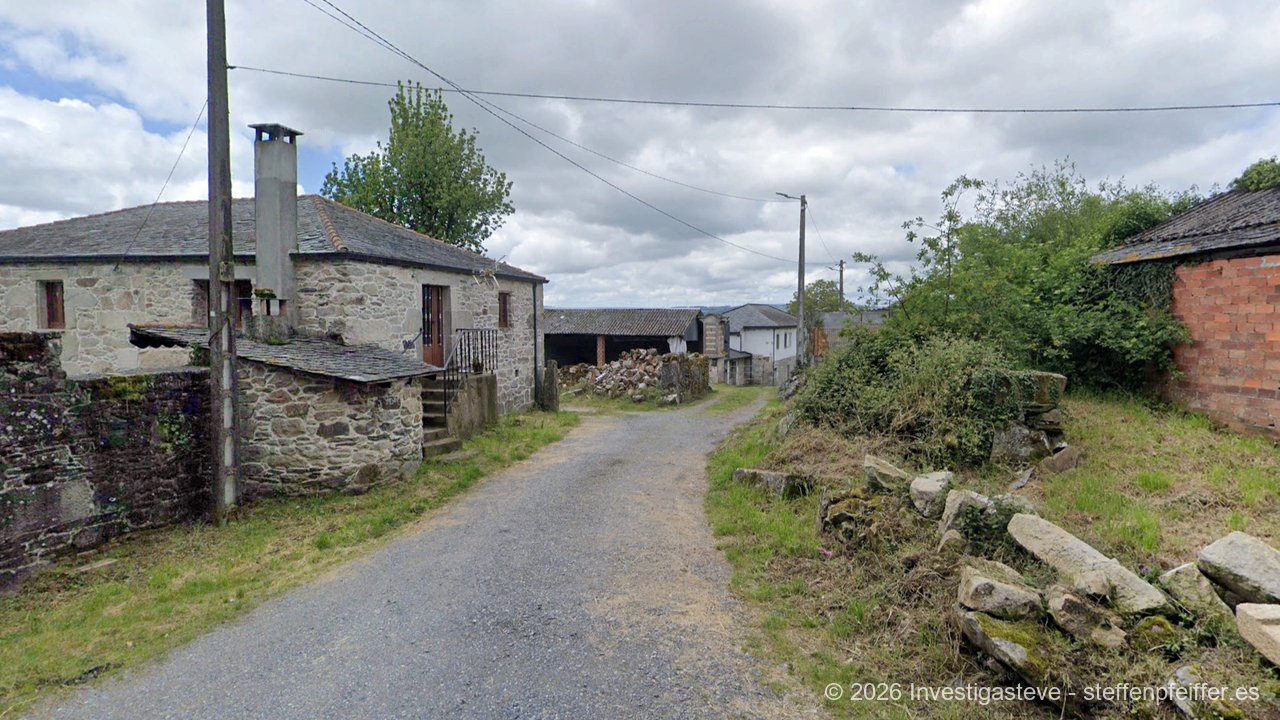
The history of A Pena is closely linked to the harsh reality of Galician agriculture. Every building, every barn tells of an architecture of necessity. The massive walls of dark stone and the low-hanging slate roofs were not an aesthetic choice, but a response to the lashing rain fronts that often sweep horizontally over the plateau. Historical immersion becomes tangible when you walk through the narrow passageways between the farmsteads. You smell the scent of dry hay and the heavy smell of livestock, mingled with the smoky aroma of the chimneys – an olfactory painting that has hardly changed since the 12th century. Here you feel the constancy of a rhythm of life that submits to the beat of nature, not the clock of the modern world. A Pena tells of the frugality of the ancestors who found a home in the barrenness of the high plateau and stood by the pilgrims as silent guardians for generations.
Particularly fascinating is the connection to nearby Ferreiros. While iron was forged there for the mules, A Pena offered the physical space for the first real rest after the ascent. The causality of the place lies in its tranquillity. In A Pena, the history of the Camino de Santiago is not told through magnificent cathedrals, but through the arrangement of stones by the wayside, through the ancient dry stone walls that span the fields like a stone net. Each of these stones carries the psychological weight of millions of destinies that paused here to gather strength for the path to Santiago. It is a place of transition where the soul gets time to keep pace with the speed of the body. In A Pena, you become aware that the Camino is not a path of great monuments, but a journey through the soul of the landscape, in which every village is a line in an ancient prayer.
Addresses & tips in A Pena
Camino Distances
A Pena lies on the 29th stage of the Camino Francés, about halfway between Sarria and Portomarín, amidst the highlands of the province of Lugo.
| Previous Town | Distance (km) | Next Town | Distance (km) |
|---|---|---|---|
| Ferreiros | ca. 1.2 km | Mercadoiro | ca. 2.5 km |
Sleeping & Arriving
Arriving in A Pena is like entering a protected space of silence. When you climb the gentle hill and stand before the Albergue “Alto da Pena”, you feel an immediate emotional relief. There is no urban hustle here, no honking cars, no noisy souvenir sellers. The accommodation in this small hamlet is characterised by an authenticity often lost in the larger centres. The private hostel is a place of reduction to the essentials, preserving precisely that monastic calm that many miss on the modern path. The experience begins when you set down your backpack on the cool wooden benches and take the first deep breath of the clear, spicy mountain air. Arriving here is defined by silence – you hear no engine roar, only the soft rustle of bed linen and the muffled whispers of those who, like you, seek the special energy of this place of power.
In the hostel, the tradition of hospitalitas is lived in its purest form. The rooms offer a mixture of rustic stone and functional comfort, creating a microclimate of security. The psychological effect of this setting is immense: you do not feel like a traveller passing through, but like a guest of a house that has outlasted time. The communal areas invite quiet conversations, where you share the experiences of the climb amidst the smell of fresh coffee. It is the quality of isolation that makes A Pena so valuable as an overnight stop. When night falls over the plateau, you only hear the distant rustling of the wind in the pines – an acoustic panorama that guarantees deep, regenerative sleep. Those who stay here consciously choose spiritual closeness to the landscape and reject the busyness of the larger stage destinations.
Arriving in A Pena also means reconciling with your own exhaustion. The feeling of hot water on tense shoulders after a day in the Galician hills becomes the highest form of luxury here. You wash your clothes in the provided troughs, smell the scent of fresh soap, and let them dry in the steady wind of the high plateau. It is a ritual shedding of the load, a process of psychological purification. Those who come to rest in A Pena wake up the next morning with a clarity that will carry them light-footedly through the coming day. The accommodations are often housed in restored stone buildings that preserve the character of the region: the coolness of the walls in summer and the pleasant warmth of the heating in autumn offer that contrast that regenerates the body. Arriving in A Pena means taking a step back to a simpler time, when the basic needs – a safe camp, a warm meal, and a kind word – were the most important milestones of the day.
Eating & Drinking
The culinary world of A Pena is deeply rooted in the Galician soil and offers an honest, powerful cuisine essential for survival on the windy heights of the Ribeira Sacra. The culinary heart of the hamlet beats in the kitchen of the hostel, where eating is celebrated as an act of care. The smell that wafts through the settlement in the late afternoon is an olfactory promise: it smells intensely of freshly fried tortilla española, of the spicy aroma of chorizo, and the earthy scent of slowly cooked Caldo Gallego. The warmth of the soup bowl in your often cool hands is the first step towards physical regeneration. Each spoonful of this nourishing food brings the power of the soil directly into your system and immediately revives the spirits.
The pilgrim’s menu in A Pena is a homage to the products of the region. You taste the artisan-baked country bread, whose crust is so crispy that it gives a loud, auditory signal of freshness when broken, while the inside remains soft and airy. The texture of the firm dough, combined with the mild, buttery taste of the regional cheese, Arzúa-Ulloa, is a sensory feast of rare purity. You taste the herbs of the meadows and the purity of the water. To drink, a simple but characterful wine of the region is often served, offered in traditional white ceramic bowls, the cuncas. The cool weight of the bowl in your hand and the tart, honest taste of the wine form the perfect end to a strenuous day of walking on the plateau.
Eating in A Pena also means perceiving silence as an ingredient. Since there is no urban hustle, you enjoy every bite more consciously. The psychological component of eating is closely linked here to reward: you have made the climb, you have arrived, and this meal seals the day’s success. The taste of homemade desserts, such as a piece of Tarta de Santiago, rounds off the experience and gives the necessary sweetness for the soul. Those who dine in A Pena absorb a piece of Galician joy of life that will carry them over the next kilometres to Portomarín. It is “food for the soul” that teaches you that true enjoyment lies in simplicity and closeness to the source.
Supplies & Logistics
Logistically, A Pena is a place of concentration on the essentials. As a pilgrim, you must be aware that this hamlet is not a shopping centre; it rather functions as a highly efficient rest stop at a strategically important point. The administrative simplicity of the place is more than compensated for by the high quality of personal care in the hostel.
Shopping: There are no supermarkets or independent shops on site. Pilgrims should have already replenished their main supplies of hiking gear or special medications in Sarria. Smaller snacks, water, and refreshments can be obtained at any time from the hostel’s offerings. The next comprehensive shopping opportunity is only in Portomarín, about 8-9 km away.
Gastronomy: Catering is secured by the excellent restaurant of the Albergue Alto da Pena. Here you get hot meals, breakfast, and provisions tailored specifically to the rhythm and needs of long-distance walkers. Opening hours are reliably linked to the flow of pilgrims.
Sleeping: With a specialised pilgrim hostel, A Pena offers a capacity that is considerable for the small size of the place. Nevertheless, advance reservation is strongly recommended in high season for psychological planning security, as the place is a popular anchor point for those wishing to avoid the often overcrowded mass quarters in Sarria or Portomarín.
Public Facilities: There are no medical facilities, banks, or post offices in A Pena. All formal infrastructure must be used in nearby Sarria or later in Portomarín. In an emergency, the connection via nearby roads is assured, and the emergency services are reachable via 112.
Safety in A Pena is exceptionally high due to the manageability and social control of the small community. You immediately feel part of a protected world. Acoustically, the place remains an oasis as it is located away from major traffic arteries. Logistically, the hamlet acts as a “check-in of the soul” – here you do not check your luggage weight, but your mental state for the coming descent to the Miño. A Pena proves that good pilgrim logistics sometimes consist of needing nothing but what you carry in your own heart. Logistical processes, from stamping the credential to arranging luggage transport, function here with a professionalism that grows from years of experience with the Way.
Don’t Miss
- The plateau of A Pena: Linger at the highest point and enjoy the visual panorama over the green infinity of the Ribeira Sacra – a moment of total freedom.
- The granite architecture: Look at the old farmsteads and pay attention to the massive stone blocks that endure for an eternity without modern mortar – a testimony to Galician building craft.
- The sunset over the hills: Experience how the golden light bathes the lichen-covered walls in a mystical orange – a must for every camera and every heart.
- The Caldo Gallego in the hostel: Try this traditional soup right here; it is considered the best fortification for the onward path through the serra.
- The silence of the night: Step outside the accommodation after 10 p.m. and simply listen to the silence of the plateau – an auditory meditation of the highest order.
- The old hórreos: Look for the traditional granaries on the edge of the village, which sit like stone guardians of the harvest over the fields.
Insider Tips & Hidden Places
Away from the marked pilgrim path, just a few steps behind the last farmstead of the hamlet, a narrow path leads to a small, almost hidden garden plot bordered by old stone walls. Here time seems to have come to a complete standstill. In this corner, it smells intensely of wild thyme, mint, and damp earth. It is the perfect place for a private reflection or a small meditation, far from the cameras and conversations of other walkers. Here you feel the primordial power of the landscape, just as the Celtic ancestors saw it two thousand years ago. The ground is soft and covered with moss, making every step silent and promoting deep psychological calm.
Another hidden treasure is a small stone carving on one of the corner pillars of a decayed barn on the edge of the village towards Mercadoiro. It is not an official monument, but a decades-old engraving by an unknown pilgrim showing a simple cross and a date. When you run your fingertips over these cool, rough notches, you touch the individual history of a person who stood at this very spot long ago. This form of silent communication across time makes the psychological depth of the Camino truly tangible. Such small, unofficial traces often tell more about the essence of the pilgrimage than the great monuments.
Did you know that there is a spot in A Pena where the echo of your own voice is reflected back from the opposite hills in a very specific way? When you stand at the right point and speak softly, the wind seems to catch the words and bring them back as a gentle whisper. This auditory phenomenon intensifies the feeling of mystical presence that surrounds this place. It is as if the landscape itself is communicating with you. Those who take the time to explore these acoustic nuances discover an A Pena that is far more than just a hamlet by the road – it is a place of fine vibrations that only reveal themselves when you adapt your pace to the speed of your soul.
Finally, it is worth directing your gaze at dusk to the silhouettes of the old stone ovens that can still be discovered in some of the backyards. When the last daylight disappears behind the hills of Paradela, these soot-blackened structures appear as archaic guardians of domestic community. The smell of damp stone and the cool breeze whistling through the lanes create an atmosphere of timeless constancy. Those who lose themselves in these moments in A Pena often find a part of themselves that they had forgotten in the hustle of everyday life. The hamlet offers the rare opportunity to integrate your own journey once more in absolute silence just before reaching the milestone of 100 kilometres.
Moment of Reflection
In A Pena, you stand at a point of maximum spiritual clarity. The sublimity of the high plateau challenges you to question your own position on this path. Are you just a walker collecting kilometres, or are you a pilgrim seeking inner spaciousness? The psychological metamorphosis that takes place in this hamlet is the change from “doing” to pure “being”. The silence of the plateau acts as a filter for your thoughts. In the cool purity of the air, you become aware that wealth on the Camino does not lie in the amount of luggage, but in the ability to perceive the moment in all its depth.
In the silence of this place, ask yourself: “What stones do I carry within me that I would like to symbolically lay down here on this plateau?” A Pena offers you the space for this psychological inventory. The rough reality of the granite under your hands reminds you of your own resilience, while the wide horizon opens your soul to new perspectives. Use this moment of calm to recalibrate your inner compass. When you leave A Pena tomorrow and begin the descent towards Portomarín, take the silence and humility of this place with you. It will be your anchor when the hustle of the world catches up with you again. Here, in the silence of the stones, you have found the strength to continue your journey with a new, indestructible dignity.
Camino of the Stars
This place lies on the Camino Francés, on the stage from Sarria to Portomarín. The sequence of places is:
Sarria → Barbadelo → Rente → Mercado da Serra → A Brea → Morgade → Ferreiros → Mirallos → A Pena → Mercadoiro → Vilachá → Portomarín
Did you also feel that deep moment of grounding in the archaic silence of A Pena, or gain a new perspective on your journey from the wide horizon of the Ribeira Sacra? Perhaps you have found your own secret corner by the old granite walls or experienced a special encounter at the Alto da Pena hostel? Share your personal impressions, your photos of the slate roofs, or your thoughts on the spiritual power of this plateau with us. Every story makes this special threshold point on the Camino come alive for the community – we look forward to your contribution!
About the Author