A First Glance – Introduction & Atmosphere
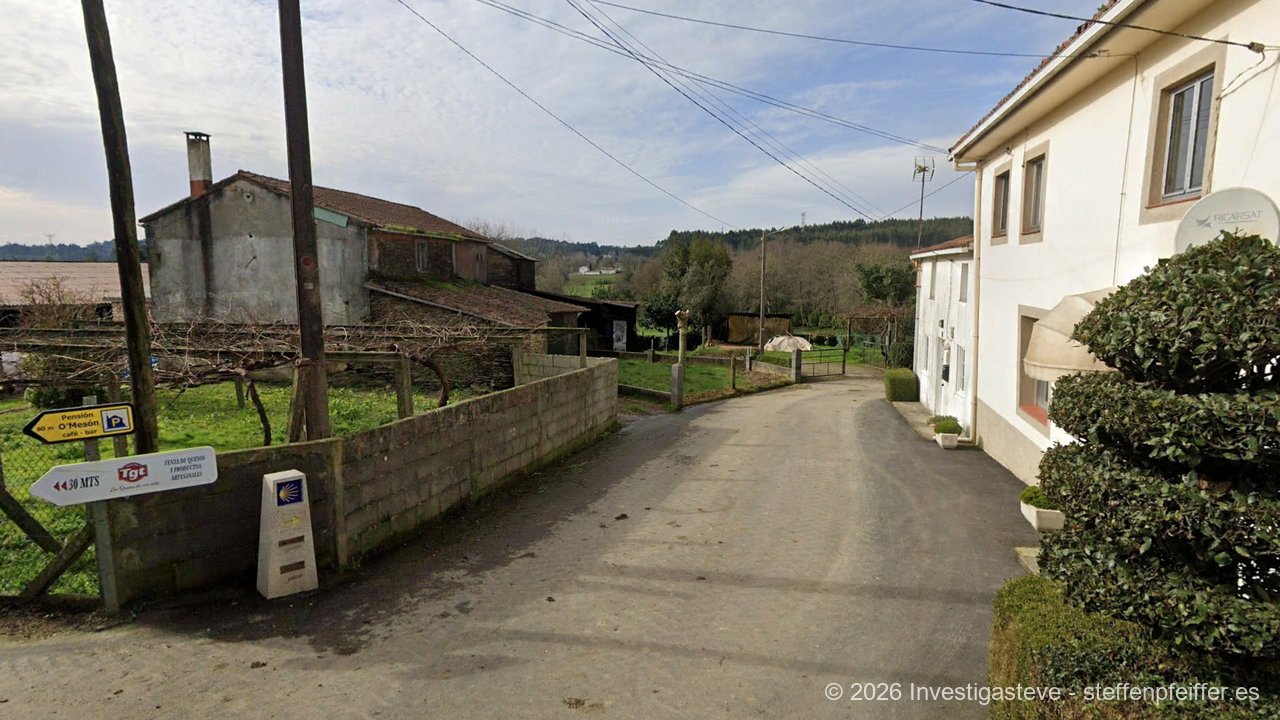
When the dense, silver-gray fog of Galicia lays itself like a protective veil over the rolling hilltops of the Concello de O Pino, the pilgrim reaches the hamlet of A Brea. It is a moment of absolute geographical and emotional compression. Here, on the high plateau at about 360 meters above the distant sea level, the landscape exudes a deep, almost sacred calm. The path beneath your soles is of a particular nature here; the typical Galician granite grit crunches rhythmically with each step, mixed with the soft, yielding ground of the forest paths lined with fallen leaves of eucalyptus trees. It is a haptic experience of grounding that reminds the pilgrim that, despite the approaching civilization, he is still deeply rooted in the heart of rural tradition.
The olfactory impression of A Brea is unmistakable. In the air lies the ethereal sharpness of eucalyptus, which after one of the frequent, fine rain showers – the mystical Orballo – combines with the tart, heavy scent of damp fern and rotting wood. It smells of purity, of wild Galicia, which rises up here once more in all its glory before the suburbs of Santiago take over. Auditory-wise, the scene is determined by the steady, soothing rustle of the wind in the high treetops, which sounds like the distant murmur of a prayer. Only occasionally is this silence broken by the distant, dull roar of the national road N-547, which runs parallel to the path like a warning messenger of modernity. Psychologically, A Brea is a place of threshold experience; the anticipation of the destination mixes with a quiet melancholy about the imminent end of the journey, placing the pilgrim in a state of heightened mindfulness.
What This Place Tells
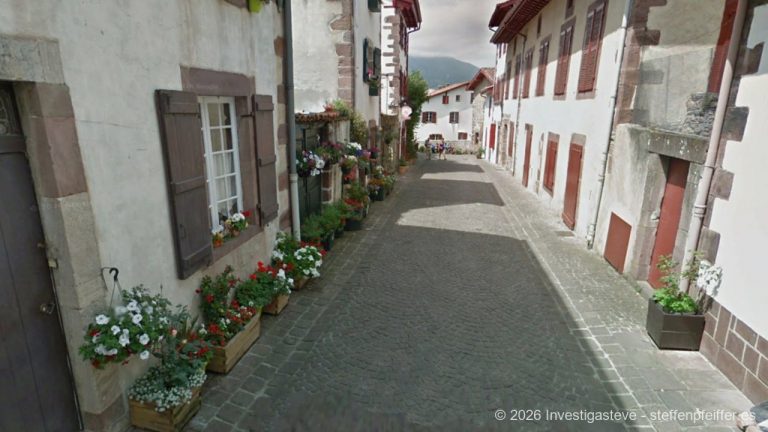
The name “A Brea” carries a deep historical causality that dates back to the time of Roman settlement. Etymologically, the term often derives from “Verea” or “Vereda,” which simply means “path” or “road.” This suggests that A Brea has been a strategic passage point for millennia, long before Saint James began his journey. The settlement itself, a classic Galician Aldea, consists of a few, robust stone houses whose walls of roughly hewn granite testify to the resilience of the local population. These stones have seen generations of pilgrims pass by, have stored their prayers, their curses, and their hopes in their pores. Historically, A Brea was a place of rural self-sufficiency, characterized by the small-scale “Minifundios,” those tiny fields that still shape the landscape like a green patchwork quilt.
The most striking and emotionally profound feature of A Brea, however, is the memorial stone for a deceased pilgrim that stands by the wayside. It is a silent guardian of mortality in the midst of movement. This place tells not of triumphal battles or opulent kings, but of fragile human existence. The stone, often adorned with small pebbles, dried flowers, or handwritten notes, functions as a psychological anchor point. It forces the walker to pause and reflect on the meaning of their own pilgrimage. In the 1,200-year history of the Camino de Santiago, countless people have died at or just before their destination; A Brea makes this historical continuity of sacrifice and devotion tangible. The haptic coldness of the stone contrasts with the emotional warmth of compassion that every pilgrim subconsciously feels here.
Administratively, A Brea belongs to the Parroquia Arca within the Municipio O Pino. This affiliation gives the place a formal structure, but for the pilgrim, it remains a spiritual no-man’s-land, an in-between space between yesterday and tomorrow. The architecture of the few hórreos – the traditional granaries – that can still be discovered here tells of Galicia’s agricultural past, in which every harvest had to be painfully wrested from the stony ground. Whoever walks through A Brea reads in the walls and at the memorial stone a story of humility. It is the realization that the Way consists not only of miles but of the souls of those who walked it before us. This historical stratification makes the hamlet an indispensable mosaic piece in the grand picture of the Camino Francés.
Addresses & tips in A Brea
| Accommodation | 1 |
| Restaurants | 1 |
| Shopping | 1 |
Camino Distances
In A Brea, the geographical final phase of the journey becomes tangible. You feel that each kilometer now weighs heavier, while at the same time the destination is longed for with every fiber of your body.
| Previous Location | Distance (km) | Next Location | Distance (km) |
|---|---|---|---|
| Salceda / O Empalme | ca. 1.6 km | Santa Irene | ca. 1.5 km |
Sleeping & Arriving
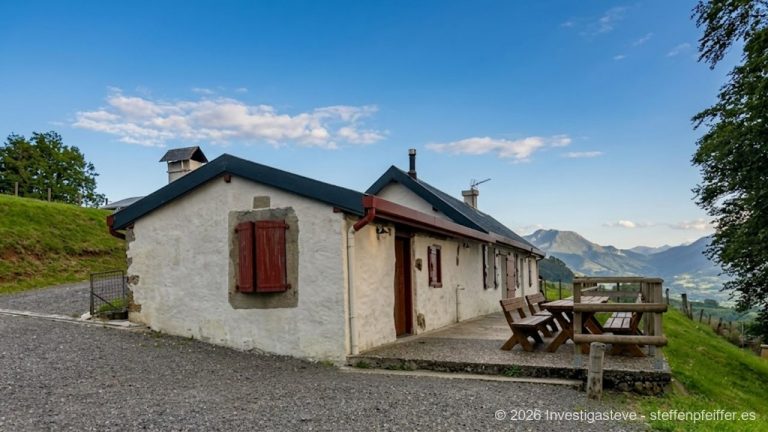
Arriving in A Brea is an experience of deceleration and conscious decision against mass tourism. While most pilgrims continue marching in the wake of nearby centers like O Pedrouzo, A Brea offers those who pause an almost exclusive tranquility. When you stand in front of the “Small Albergue A Brea,” you immediately feel the haptic simplicity and honest hospitality of a small house. Setting down your backpack here is a ritual act of liberation. The cool granite steps of the accommodation under your battered feet offer immediate relief to your burning soles. You are not an anonymous traveler here, but part of a small, temporary community that appreciates the value of silence.
The psychological effect of arriving in a micro-hamlet like A Brea is immense. After the often overcrowded hostels of larger towns, the intimacy of the albergue with its few places feels like a balm for overstimulated senses. The auditory panorama of the evening is determined not by the noise of a city, but by the gentle creaking of the roof beams and the distant calling of owls in the eucalyptus groves. Those seeking a bit more comfort find a haptic experience of soft sheets and private retreat in the “Pensión Mar de Frisia.” The feeling of coming to rest in a small, family-run house grounds the pilgrim and mentally prepares them for the emotional rollercoaster of arrival in Santiago.
The process of arrival in A Brea is framed by the physical environment. You feel the cool evening air rising from the valleys, bringing with it the scent of damp grass and pine resin. It is the last night in relative wilderness, and this knowledge gives every action – unrolling the sleeping bag, washing socks – an almost ceremonial significance. You are safe here, protected by the thick stone walls of the Galician houses, while outside the wind tells the stories of centuries. This arrival is not an end, but a deep breath, a gathering of inner strength for the final sprint. In the simplicity of A Brea, the pilgrim finds the necessary resonance to seal their own transformation of the past weeks within themselves.
Eating & Drinking
Culinarily, A Brea is a place of honest, down-to-earth fortification that does without unnecessary frills. The bar-restaurant of the Pensión Mar de Frisia is the social and gastronomic anchor point of the hamlet. When you enter the taproom, you are immediately met by the pleasant, warm scent of homemade Caldo Gallego – that nourishing soup of cabbage, potatoes, and beans that has awakened the spirits of hikers for centuries. The olfactory experience is complemented by the fine note of roasting meat and the aroma of freshly prepared Tortilla Española, placed golden-yellow and steaming on the counter.
Haptically, you experience the sustenance in A Brea through the weight of rustic cutlery and the rough texture of typical Galician country bread, whose crusty rind you break with your hands. A glass of cool regional wine alongside, served in the traditional white ceramic bowls, cools heated spirits and makes the hardships of the day fade into the background. It is an auditory backdrop of clattering dishes, the hiss of the coffee machine, and the quiet conversations of pilgrims exchanging their experiences here. Eating here is not seen merely as calorie intake but as an act of community. You often share large portions that provide exactly the energy needed for the upcoming ascent to Santa Irene and on to O Pedrouzo.
Psychologically, the meal in A Brea fulfills an important function: it is the reward for physical exertion and a moment of normality in an otherwise extraordinary life on the Way. The taste of Pimientos de Padrón, whose spiciness occasionally zaps across your tongue like a small electric shock, provides cheerfulness and breaks the ice between strangers. Those who dine in A Brea taste the essence of Galicia – simple, strong, and honest. It is a preparation of the body for the final march, a feast of the senses that solidifies the pilgrim community once more before paths diverge again in Santiago. You return to your accommodation satisfied and with a feeling of inner warmth, ready for the dreams of the last night.
Supplies & Logistics
The logistical infrastructure in A Brea is small but highly functional and tailored to the core needs of the pilgrim. The place serves as a strategic supply point for those who want to avoid the large crowds without missing out on necessary services. The connection to the national road N-547 enables uncomplicated accessibility for emergency services and backpack transport services.
Shopping: There are no large supermarkets in A Brea. If you need specific supplies, you should have gotten them in Arzúa, although the hostels often keep small emergency supplies of water and snacks.
Gastronomy: The bar-restaurants in the hamlet offer excellent, affordable food (approx. 12–18 euros for a menu) specifically tailored to the energy needs of long-distance hikers.
Accommodation: With 18 beds in two accommodations (Albergue €12, Pensión €30), the capacity is limited, which underscores the family character of the place and makes advance reservation advisable.
Public Facilities: There are no post offices, banks, or pharmacies directly in the hamlet. The nearest medical care is in O Pedrouzo or Santiago; in an emergency, dial the general emergency number 112.
Logistically, A Brea is the point where the forest path briefly meets the reality of the country road. Haptically, logistics here means: short distances between bed, restaurant, and the memorial stone. You don’t have to cover long distances within the place, which massively supports the regeneration of joints and muscles. The presence of electrical outlets and Wi-Fi in the accommodations enables necessary digital communication with the outside world, while the physical environment invites digital detox. A Brea is a logistical calm point that proves you don’t need much to be perfectly supplied. It is a functional simplicity that relieves the mind and refocuses on the essential: the next step.
Don’t Miss
- The memorial stone for the deceased pilgrim: Pause for a minute, touch the cold stone, and feel the deep psychological connection to the history of the Way.
- The eucalyptus groves around A Brea: Breathe deeply and enjoy the ethereal freshness of the forests that enclose the place like a green protective wall.
- The sunset on the high plateau: Experience how the light bathes the granite walls of the houses in a warm gold, creating an almost magical atmosphere.
- The traditional hórreos: Look for the old granaries that stand by the wayside as silent witnesses of Galician rural architecture.
Insider Tips and Hidden Places
Away from the marked path that traverses A Brea in a gentle curve, there are small, almost forgotten corners that escape the hurried walker. If you follow a narrow, almost overgrown path behind the albergue towards the forest, you reach a small hollow where the ground is particularly mossy and soft. Here, far from the noise of other pilgrims, you can experience a silence that is almost physically tangible. The scent of old wood and damp stone is especially intense here, and you can hear the soft cracking of branches, which in the wind-protected valley sounds like a whisper of nature. It is an ideal spot for a short, meditative break, far away from the route.
Another hidden place is a small, hand-laid stone wall on one of the fields, covered with rare species of lichen and tiny ferns. If you take the time to observe this micro-world, you discover a fascinating variety of colors and forms – a haptic pleasure for the eyes. In the early morning hours, when the fog still hangs in the fields, this place looks like a scene from another time. You will find no souvenir shops here, but you will find moments of absolute authenticity that are in no guidebook. Discovering these small natural wonders requires a patient eye and a willingness to slow down. A Brea rewards those who not only keep their eyes on the destination of Santiago but who appreciate the subtle details of the Galician landscape.
Moment of Reflection
A Brea invites you to become aware of your own finitude and at the same time your indomitable life force. At the memorial stone, in the silence of the hamlet, the existential question arises: What remains of me when I one day lay down my backpack forever? The place is a psychological filter. Commemorating the deceased fellow pilgrim washes away the superficiality of daily life and reveals the true core of pilgrimage. Here, you feel the haptic reality of your own transformation. Your hands have become rougher, your legs stronger, but your spirit in A Brea is as humble as rarely before on the journey.
You reflect on the historical causality of your own steps: Why am I here? What led me to this point? The 1,200-year history of the Camino de Santiago becomes a deeply personal experience here. You are part of a chain, a link in an infinite series of seekers. In A Brea, you become aware that although Santiago is physically close, the actual place of realization can lie right here – in the silence of a small Galician Aldea. The smell of the forest, the cold memorial stone, the rough bread: all these are haptic anchors that remind you that life consists of moments, not destinations. You breathe deeply, feel the cool air in your lungs, and realize that you have already become a part of the Way, which remains eternal.
Camino of the Stars
This place lies on the Camino Francés, on the stage from Arzúa to O Pedrouzo (or Santiago). The sequence of locations is:
Arzúa → Pregontoño → A Peroxa → Tabernavella → Calle → Boavista → Salceda → O Empalme → A Brea → Santa Irene → A Rúa → O Pedrouzo
Did you find a moment of pause at the memorial stone in A Brea, or did the anticipation of Santiago already drive you irresistibly onward? Which scents of the eucalyptus forest particularly stand out in your memory in this quiet hamlet, and did you draw new strength from the family atmosphere of the albergue? Share your personal experiences and thoughts from this emotional waypoint with us – every story keeps the Camino alive for everyone!
About the Author