First Glance – Introduction & Atmosphere
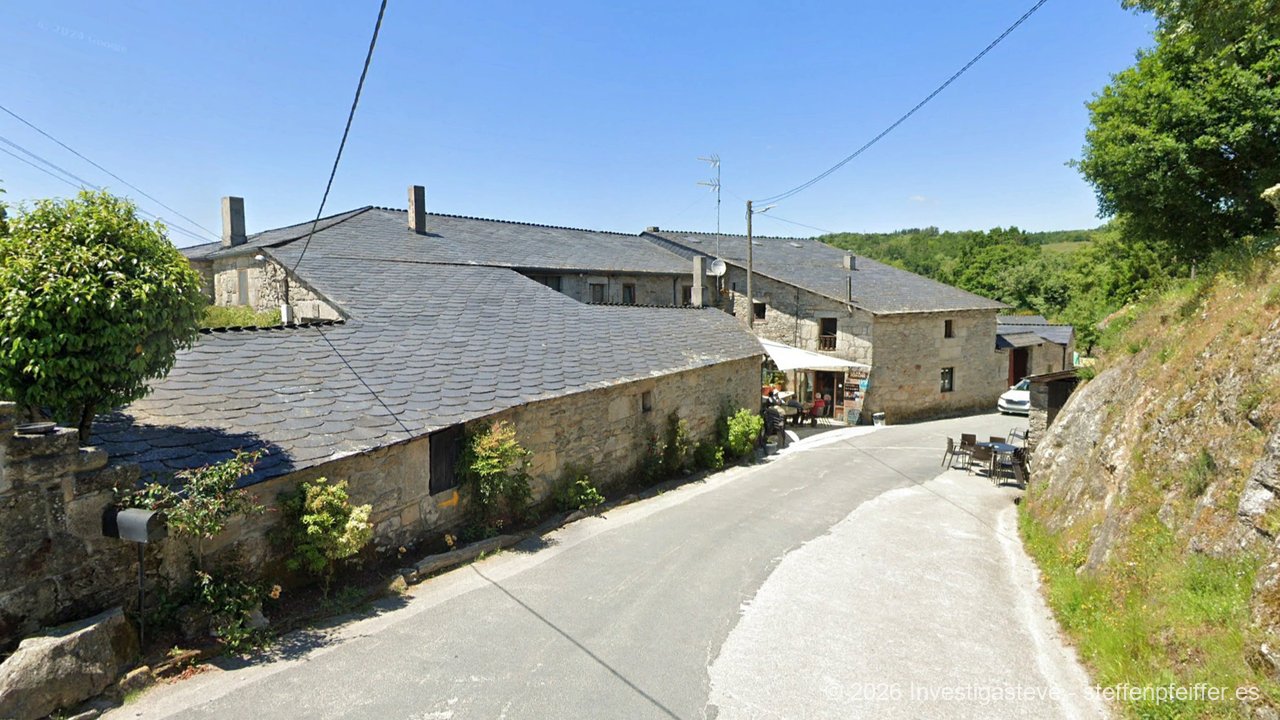
When you have left the busy streets of Sarria behind you, that place which marks the energetic, often almost noisy start of the last hundred kilometres for so many pilgrims, the texture of the path changes noticeably after about two hours of walking. The asphalt gives way to the uneven, tree-root-crossed ground of the Galician oak forests, the carballeiras. Here, deeply embedded in the rolling hills of the province of Lugo, you reach Morgade, a place that acts like a stone exclamation mark of peace. It is not a village that welcomes you with monumental architecture, but a tiny hamlet, a cluster of sturdy granite houses that nestle so closely to the path as if they wanted to take the passing walkers protectively into their midst. The air up here at almost 600 metres above sea level is pure, often saturated with the fine, almost invisible Galician drizzle, the orballo, which settles like a cool veil on your heated skin and intensifies the tart, earthy scent of damp fern and fresh moss.
In Morgade, you feel the archaic power of Galicia in its most unadulterated form. You hear the rhythmic, almost meditative click of your pilgrim staff on the uneven stone slabs – a sound that finds a deep echo in the silence of the hamlet, interrupted only occasionally by the distant, melancholic ringing of cowbells on the surrounding pastures. It is a place of psychological caesura: after the first twelve kilometres from Sarria, the first euphoria of departure begins to give way to a pleasant heaviness, and Morgade offers you a refuge at exactly this moment that feels like a well-deserved embrace. You smell the distant smoke of a wood fire and the aroma of freshly mown grass, while the visual panorama of countless nuances of green calms your senses. Here, you are no longer just a walker counting kilometres; you become part of a timeless ensemble of stone and silence that urges you to finally shed the ballast of your everyday life.
What This Place Tells
The narrative of Morgade is inseparable from the historical causality of rural Galicia and the protecting hand of the church. The hamlet marks an administrative and spiritual turning point, for here you leave the area of Sarria and enter the municipality of Paradela. The heart of the local history is the chapel of Santa Mariña, a simple but dignified building from the 18th century. When you stand before its portal, you feel the constancy of faith, deeply carved here into the granite. Santa Mariña, the patron saint against the hardships of harvest and weather, watches over this place like a silent witness of the centuries. One can imagine the historical immersion: generations of farmers and pilgrims have paused at this point to gather strength for the onward path through the often merciless weather of the Ribeira Sacra.
A particularly fascinating chapter of local history connects Morgade with the tradition of hospitalitas. Casa Morgade, today a cherished hostel, is a masterfully restored stone house whose walls whisper stories of hard work and family cohesion. Once a functional agricultural centre, the building tells of the symbiosis between man, animal, and soil. In the spacious courtyards where pilgrims now loosen their boots, oxcarts once stood, and the smell of fresh hay mingled with the aroma of smoked ham. This historical constancy is preserved in the deep furrows of the wood and the weight of the stones. Morgade tells us that true progress often consists of preserving the essential – a safe shelter, an honest word, and a warm meal.
The psychological depth of Morgade reveals itself in its role as a threshold point of the “hundred-kilometre zone”. Although the official marker is still some distance away, you already feel here the spiritual gravity of the approaching destination, Santiago. In Morgade, history is not exhibited in museums; it seeps like rainwater through the joints of the masonry. It is the narrative of a place that refused to disappear, despite the depopulation of rural areas in the 20th century, carried by the constant stream of seekers. Those who walk through the narrow passageways between the farmsteads hear the echo of the millions of pilgrim feet that stood here before them. It is a place of spiritual reorientation, where the past is perceived not as a burden, but as a solid foundation for your own journey. Here, you become aware that every journey has a goal, but the path there is shaped by the silence and authenticity of small places like Morgade.
Addresses & tips in Morgade
| Restaurants | 1 |
| Bars & Cafés | 1 |
| Shopping | 1 |
| Sights | 2 |
| Services | 1 |
Camino Distances
Morgade lies as an idyllic resting point on the 29th stage of the Camino Francés, strategically located for the first big break after setting off from Sarria.
| Previous Town | Distance (km) | Next Town | Distance (km) |
|---|---|---|---|
| Brea | ca. 0.6 km | Ferreiros | ca. 1.6 km |
Sleeping & Arriving
Arriving in Morgade is like entering an oasis of peace after the often bustling atmosphere of the first stage from Sarria. When you climb the gentle hill and stand before Casa Morgade, you feel an immediate emotional relief. There is no urban stress here; arriving is defined by the personal warmth of the hosts. The architecture of the hostel combines the cool weight of granite with the warm radiance of light wood and fresh linen. You feel the firmness of the floor beneath your feet and hear the soft clatter of dishes coming from the kitchen – an acoustic signal of security. Arriving here is marked by silence, only underscored by the gentle rustle of the wind in the pines and the muffled whispers of those who, like you, seek recuperation.
The rooms and dormitories in Morgade are places of acoustic purity. Since the hamlet is far away from major traffic routes, at night you perceive sounds you have long forgotten in everyday life: the distant buzzing of insects, the rhythmic chirping of crickets, and your own calm breathing. This auditory isolation is an essential part of psychological regeneration. Those who stay here consciously choose the quality of being over the quantity of comfort. It is a feast for the senses to snuggle into the clean sheets while outside the moon rises over the fields of the Ribeira Sacra and bathes the granite walls in a silvery light. Sleeping in Morgade means drawing strength from the soil of Galicia and using the vastness of the landscape as a mirror for your own soul.
Particularly noteworthy is the courtyard of the hostel, which acts as a psychological anchor point of the entire settlement. Sitting here while the sun slowly sinks behind the western hills, dipping the sky in a deep orange, is a form of mental readjustment. The communal areas foster a social metamorphosis – exhausted walkers become fellow travellers for a night, sharing their stories under the protection of Galician granite. The sanitary facilities are modern and offer that warmth that is indispensable after a day in the changeable Atlantic climate. The feeling of hot water on tense shoulders feels like a blessing here. Those who arrive in Morgade often feel a sudden clarity; the ballast of the kilometres seems to have no power up here.
For pilgrims seeking a more spiritual hostel experience, Morgade offers the ideal framework. Arriving here means taking a step back to a simpler time. Logistical processes function smoothly, leaving the walker’s mind free for the essential. Those who come to rest here wake up the next morning with a clarity that will carry them light-footedly through the coming day. Morgade gives you the time you need to find your inner balance again before civilisation catches up with you. It is a place of preparation for the finale of the Way, a moment of concentration before you plunge back into the stream of thousands the next morning.
Eating & Drinking
The culinary world of Morgade concentrates on the honest, powerful cuisine of Galicia, essential for survival on the windy heights. The restaurant of Casa Morgade is considered a real insider tip among pilgrims for authentic food. As soon as you enter the dining room, the scent of freshly brewed coffee mixes with the irresistible aroma of simmering Caldo Gallego. It is an olfactory promise that immediately revives the spirits. The experience of taking a seat at a solid wooden table and feeling the pleasant warmth of the room on your often-chilled skin is the perfect start to physical regeneration.
The Caldo Gallego, that hearty soup of cabbage, potatoes, and white beans, is often served here in heavy ceramic bowls that retain the warmth for a long time. You taste the minerality of the soil and the care of the preparation in every spoonful. As a main course, the meat richness of the region is present: tender pork or the famous Galician beef is served with regional side dishes that unfold their full flavour with the addition of coarse sea salt. To accompany this, the heavy, crusty country bread is served, whose crust cracks loudly when broken – an auditory sign of freshness and traditional baking craft. The texture of the firm dough, combined with the mild, buttery taste of the regional cheese, is a sensory feast.
To drink, there is often the local country wine, served in the typical white ceramic bowls, the cuncas. The cool weight of the bowl in your hand and the earthy taste of the wine form the perfect end to a strenuous day of walking. Eating in Morgade means literally absorbing the power of the region. It is “food for the soul” that teaches you that true enjoyment lies in simplicity and closeness to the source. The acoustic panorama while eating is shaped by the polyglot murmuring of fellow pilgrims and the clatter of cutlery – a soundtrack of community that feels particularly intense up here on the plateau. Those who dine here take a piece of Galician joy of life with them on their onward path towards Portomarín.
Supplies & Logistics
Logistically, Morgade acts as an oasis of reduction and as a strategic safety valve shortly after setting off from Sarria. Those who come here must be aware that this hamlet is not a shopping centre in the modern sense; rather, it offers concentration on the essentials at a geographically important point. The administrative simplicity of the place is more than compensated for by the high quality of the services available in the hostel.
Shopping: There are no supermarkets or independent shops on site. Pilgrims should have already replenished their main supplies of hiking gear or special medications in Sarria. Smaller snacks, water, and refreshments can be obtained at any time from the offerings of Casa Morgade. The next comprehensive shopping opportunity is only in Portomarín, about 10 km away.
Gastronomy: Catering is secured by the excellent restaurant of Casa Morgade. Here you get hot meals, breakfast, and provisions tailored specifically to the rhythm and needs of long-distance walkers. Opening hours are reliably linked to the flow of pilgrims.
Sleeping: With a well-run private hostel and guesthouse, considerable capacity is available for the size of the place. Nevertheless, advance reservation is strongly recommended in high season for psychological planning security, as Morgade is a popular peaceful stop for those wishing to avoid the often overcrowded mass quarters.
Public Facilities: There are no medical facilities, banks, or post offices in Morgade. All formal infrastructure must be used in nearby Sarria or later in Portomarín. In an emergency, however, the connection via nearby roads is assured, and the emergency services are quickly reachable via 112.
Safety in Morgade is exceptionally high due to the clarity of the site and the social control of the small community. You immediately feel part of a small, protected world. Acoustically, the place remains an oasis as it is located away from major traffic arteries. Logistically, the hamlet acts as a “check-in of the soul” – here you do not check your luggage weight, but your mental state for the coming kilometres. Morgade proves that good pilgrim logistics sometimes consist of needing nothing but what you carry in your own heart. Logistical processes, from stamping the credential to arranging luggage transport, function here with a professionalism that grows from years of experience with the Way.
Don’t Miss
- The chapel of Santa Mariña: Visit this small sacred gem from the 18th century and feel the silence between the ancient granite walls – a place of deep spiritual immersion.
- The fountain “Fonte da Nora”: Refresh yourself at this historic spring; the water is considered particularly pure and has been a blessing for walkers for generations.
- The view over Paradela: Linger at the edge of the village and enjoy the visual panorama over the green infinity of the Ribeira Sacra – a moment of total freedom.
- The Caldo Gallego at Casa Morgade: Try this traditional soup right here; it is considered one of the best fortifications on this section of the Way.
- The stone walls of the hamlet: Touch the rough stones of the ancient dry stone walls that line the fields around the village – a testimony to centuries of labour.
Insider Tips & Hidden Places
Away from the marked pilgrim path, just a few steps behind the chapel of Santa Mariña, a narrow path leads to a small, almost hidden garden plot bordered by old stone walls. Here time seems to have come to a complete standstill. In this corner, it smells intensely of wild thyme, mint, and damp earth. It is the perfect place for a private reflection or a small meditation, far from the cameras and conversations of other walkers. Here you feel the primordial power of the landscape, just as the ancestors saw it centuries ago. The ground is soft and covered with moss, making every step silent and promoting deep psychological calm.
Another hidden treasure is a small stone carving on one of the corner pillars of a decayed barn on the edge of the village towards Ferreiros. It is not an official monument, but a decades-old engraving by an unknown pilgrim showing a simple cross and a date. When you run your fingertips over these cool, rough notches, you touch the individual history of a person who stood at this very spot long ago. This form of silent communication across time makes the psychological depth of the Camino truly tangible. Such small, unofficial traces often tell more about the essence of the pilgrimage than the great monuments.
Did you know that there is a spot in Morgade where the echo of your own voice is reflected back from the opposite hills in a very specific way? When you stand at the right point and speak softly, the wind seems to catch the words and bring them back as a gentle whisper. This auditory phenomenon intensifies the feeling of mystical presence that surrounds this place. It is as if the landscape itself is communicating with you. Those who take the time to explore these acoustic nuances discover a Morgade that is far more than just a hamlet by the road – it is a place of fine vibrations that only reveal themselves when you adapt your pace to the speed of your soul.
Finally, it is worth directing your gaze at dusk to the silhouettes of the old hórreos, which stand like stone guardians on the periphery of the village. When the last daylight disappears behind the hills of Paradela, these soot-blackened structures appear as archaic guardians of domestic community. The smell of damp stone and the cool breeze whistling through the lanes create an atmosphere of timeless constancy. Those who lose themselves in these moments in Morgade often find a part of themselves that they had forgotten in the hustle of everyday life. The hamlet offers the rare opportunity to integrate your own journey once more in absolute silence just before reaching the milestone of 100 kilometres.
Moment of Reflection
In Morgade, you stand at a point of maximum spiritual density. The sublimity of the high plateau challenges you to question your own position on this path. Are you just a walker collecting kilometres, or are you a pilgrim seeking inner spaciousness? The psychological metamorphosis that takes place in this hamlet is the change from “doing” to pure “being”. The silence of the granite walls acts as a filter for your thoughts. In the cool purity of the air, you become aware that wealth on the Camino does not lie in the amount of luggage, but in the ability to perceive the moment in all its depth.
In the silence of this place, ask yourself: “What stones do I carry within me that I would like to symbolically lay down here?” Morgade offers you the space for this psychological inventory. The constancy of the stones under your hands reminds you of your own resilience, while the wide horizon opens your soul to new perspectives. Use this moment of calm to recalibrate your inner compass. When you leave Morgade tomorrow and tackle the next kilometres, take the silence and humility of this place with you. It will be your anchor when the hustle of the world catches up with you again. Here, in the silence of the stones, you have found the strength to continue your journey with a new, indestructible dignity.
Camino of the Stars
This place lies on the Camino Francés, on the stage from Sarria to Portomarín. The sequence of places is:
Sarria → Barbadelo → Rente → Mercado da Serra → A Brea → Morgade → Ferreiros → Mirallos → A Pena → Mercadoiro → Vilachá → Portomarín
Did you also feel that deep moment of grounding in the archaic silence of Morgade, or experience the warm hospitality of Galicia at Casa Morgade? Perhaps you have found your own secret corner by the old stone carvings or at the Fonte da Nora fountain? Share your personal impressions, your photos of the chapel of Santa Mariña, or your thoughts on the spiritual power of this hamlet with us. Every story makes this special point on the Camino come alive for the community – we look forward to your contribution!
About the Author