A First Glance – Introduction & Atmosphere
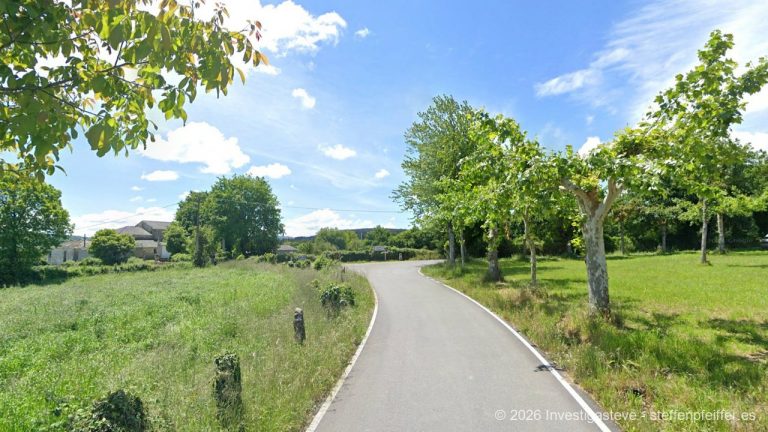
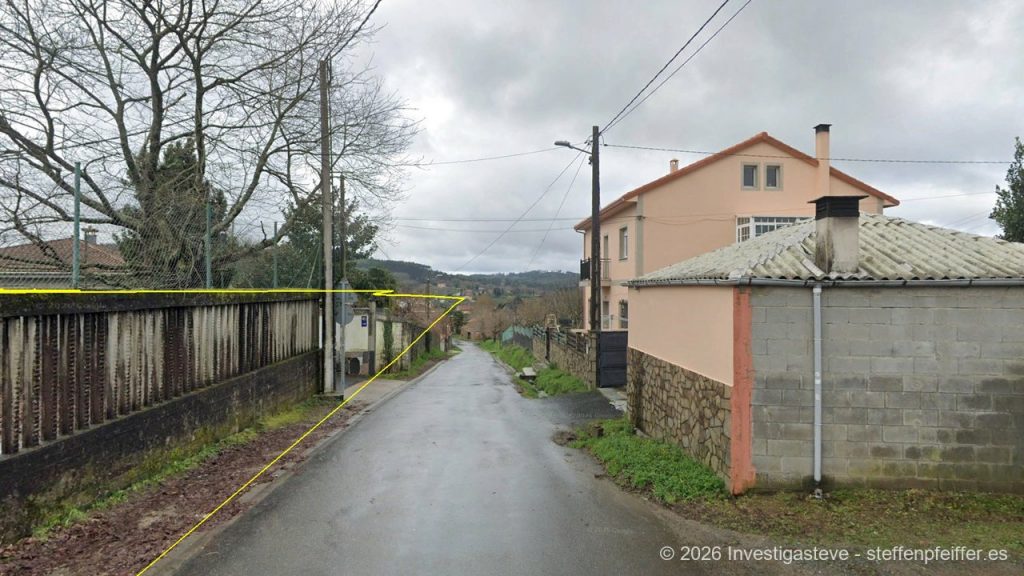
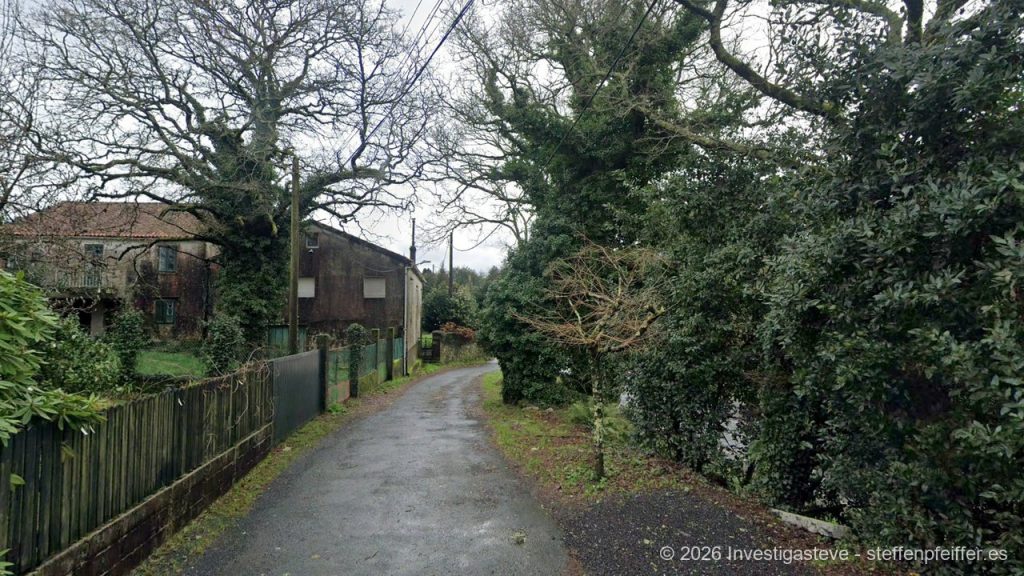
When you leave the dense eucalyptus forests, often permeated by the Galician coastal mist, behind O Pedrouzo, Lavacolla does not announce itself through monumental sightlines, but through a complex, almost contradictory sensory tapestry. It is the moment where the archaic silence of the Way meets the relentless rhythm of modernity. You hear the distant, low-frequency rumble of engines from the nearby Santiago de Compostela airport, a sound that acts like a thundering echo of the distant world from which you set out weeks ago. Yet at the same time, the bright, silvery splashing of the Rio Sionlla reaches your ears – that historic stream which for almost a millennium has formed the emotional center of this place. The wind carries a strange mixture to your nose: the sharp, ethereal aroma of eucalyptus bark, mixed with the humid heaviness of Galician soil and a metallic hint of kerosene.
Haptically, Lavacolla is a place of contrasts. Your feet feel the hard, unyielding asphalt of the access roads, while your fingers perhaps already impatiently grip the wooden pilgrim’s staff, ready for the ritual that awaits you here. It is cool up here, at about 320 meters altitude, and the air feels like a wet linen cloth on your sweaty skin. Psychologically, pilgrims are in a phase of “liminal tension” here. You are almost at your destination, the towers of the cathedral are only a vigorous march away, yet Lavacolla forces one final pause. It is the threshold at which you decide how you will enter the holy city: as a dusty wanderer or as a ritually cleansed arrival. Here, time condenses; the past eight hundred kilometers seem to merge into a single, powerful breath in this small hamlet.
What This Place Tells
The history of Lavacolla is inextricably linked to the “Codex Calixtinus” and medieval pilgrimage. The name itself is an etymological bridge to the past, a direct instruction to the body. Derived from the Latin “lava” (to wash) and “colla” (necks or rear parts), it tells the story of millions of wanderers who ritually cleansed themselves here, at the last flowing water before Santiago. Aymeric Picaud already described this place in the 12th century as the point where pilgrims, out of love for the Apostle, washed off not only their sweat but also the sins of the highway. It was an act of psychological transformation: shedding the dirt symbolized shedding the old identity. Those who left the village were internally and externally prepared for the “Portico de la Gloria.” The historical causality is tangible here; every pebble in the riverbed of the Sionlla could tell of this endless procession of humility.
But Lavacolla also possesses darker, more earthy layers of its narrative. The Church of San Paio, a Neoclassical building from the 19th century, stands on the foundations of a much older religious tradition. It is dedicated to Saint Pelagius, a martyr whose story speaks of steadfastness and sacrifice. When you stand before the simple facade, you feel the stone heaviness of the Galician granite, which appears almost black here when it rains. A far darker chapter lies hidden within the walls of the old tannery, today’s Albergue A Fabrica. During the Spanish Civil War and the years thereafter, this place served as a concentration camp. This historical depth gives Lavacolla a seriousness that extends far beyond the tourist surface. It is a place where the light and shadow of human history coexist in the damp walls, which only intensifies the psychological effect on the pilgrim.
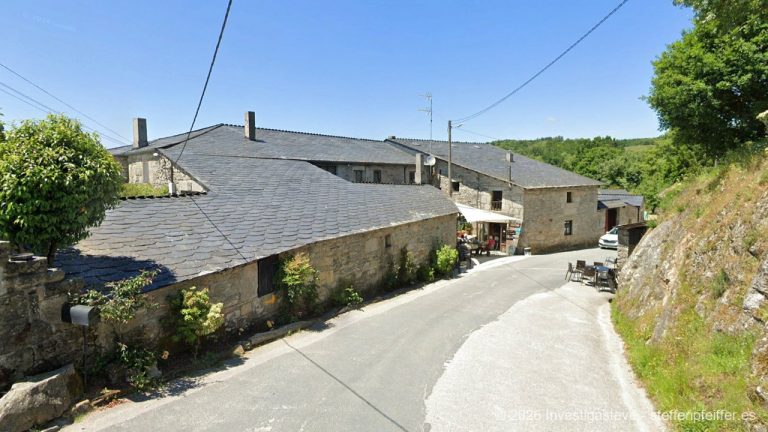
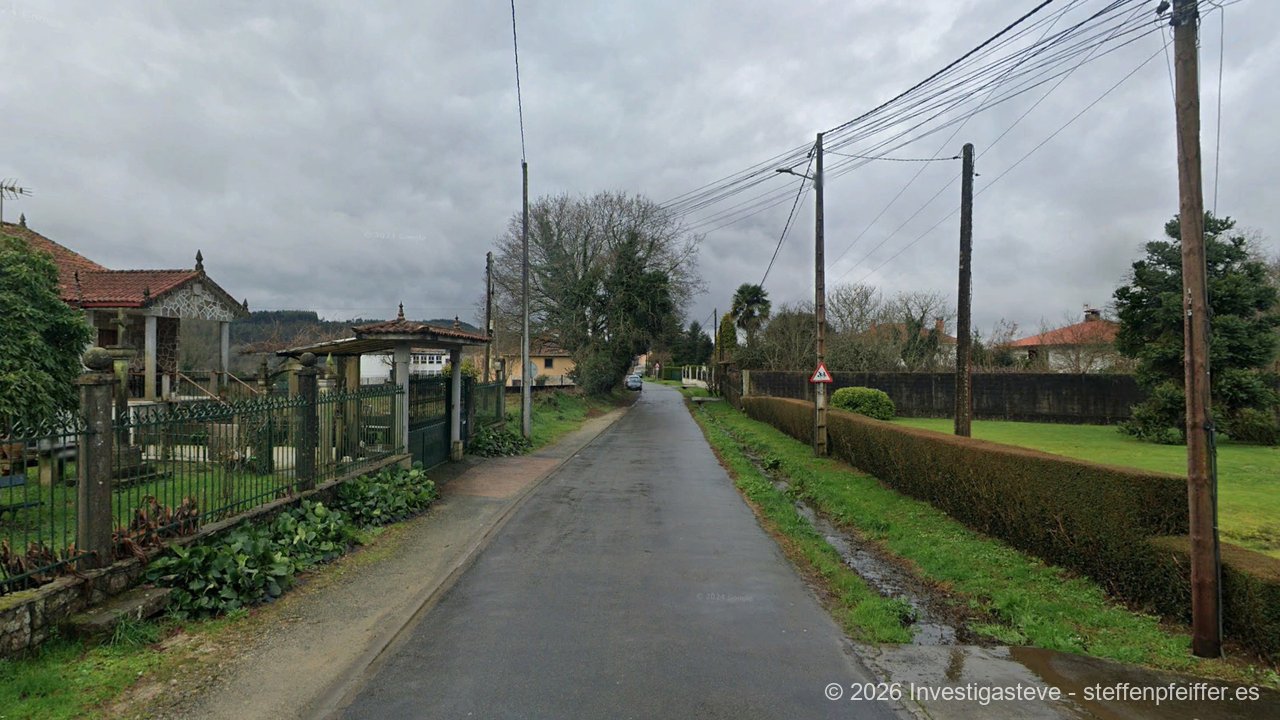
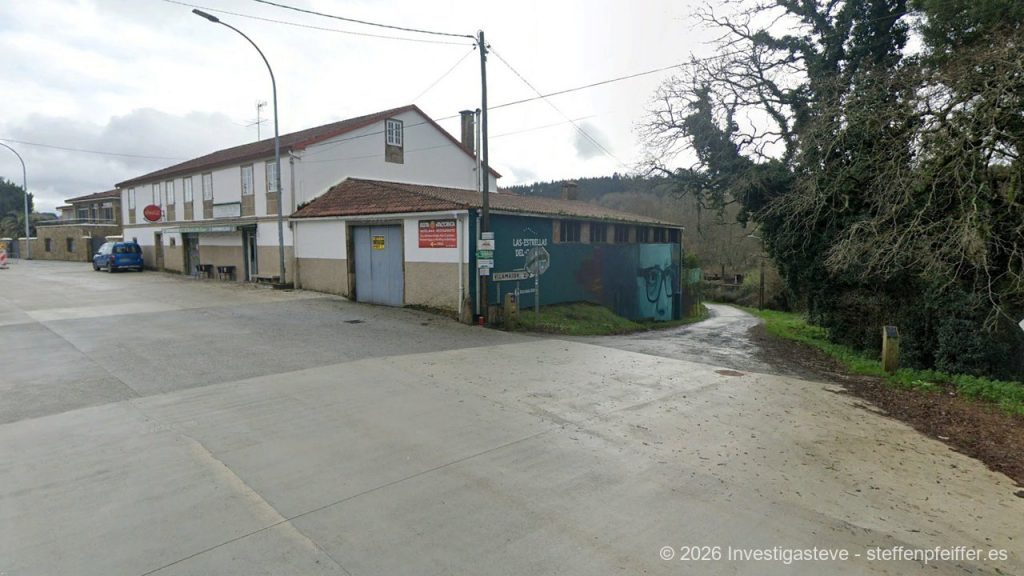
In modern times, the airport dominates the panorama. It was built on the grounds of the Parroquia de Sabugueira and radically changed the morphology of the place. Where once only small paths and fields existed, today the runways stretch across the landscape. But instead of destroying the spiritual significance, the modern infrastructure has turned Lavacolla into a hybrid space. It is the place where the escape routes of the world meet the path of insight. The residents, the “Lavacollenses,” have learned to live with this dualism. They are the guardians of the final mile. In their gardens, cabbage and potatoes grow in the shadow of the tower radars, a symbol of the unshakeable constancy of Galician rural life in the face of the fleeting bustle of global travel. Lavacolla tells us that holiness and profanity are often separated only by a thin layer of asphalt and water.
Addresses & tips in Lavacolla
Camino Distances
The path now leads you through the heart of the Parroquia Sabugueira, with short distances designed to stretch the anticipation.
| Previous Location | Distance (km) | Next Location | Distance (km) |
|---|---|---|---|
| O Pedrouzo (Arca) | approx. 9.5 km | Vilamaior | approx. 1.3 km |
Sleeping & Arriving
Arriving in Lavacolla has its own, almost intimate quality. Those who stay here overnight often do so to set out for Santiago in the first dawn, when the world is still bathed in deep blue. It is a conscious decision against the hustle and bustle of the nearby big city. The Albergue A Fabrica offers a haptic experience of a special kind. The thick granite walls of the former tannery radiate a cool calm that immediately grounds the spirit. It does not smell here of the usual mustiness of old hostels, but of a mixture of stone, history, and fresh laundry. When you slide into your bed, you feel the solidity of the architecture, which has housed various destinies over the centuries. The acoustic panorama at night is complemented by the distant, rhythmic roar of the airplanes, which lies over the hamlet like a modern lullaby.
Alternatively, the Albergue Lavacolla, located directly on the historic stream, offers an almost sacred atmosphere. Here, the ritual of washing is omnipresent. You hear the constant murmuring of the water, a sound that acts psychologically like a constant promise of purification. It is a place where the community of pilgrims is particularly intensely palpable. In the communal areas, not only is food shared, but the entire burden of the past weeks. The haptic experience of the cool stream water on your feet, just before you settle into your quarters, is for many the actual highlight. It is a cleansing that goes deeper than any shower; it is touching history with your own skin.
Arriving here is often marked by a feeling of relief, mixed with a quiet melancholy. You know that this is your last real night’s lodging before the cathedral. The facilities of the accommodations are functional but characterized by a Galician warmth often missing in larger cities. You feel welcome here, not as a tourist, but as part of an endless chain of wanderers. The air in the dormitories is often cool, which makes you snuggle deeper into your sleeping bag while outside the Galician “Orballo,” the fine drizzle, wraps the world in cotton wool. It is a sleep in the certainty that the goal is within reach, which often makes dreams more intense and recovery deeper.
Eating & Drinking
The gastronomy in Lavacolla is honest, down-to-earth, and deeply rooted in the produce of the Galician hinterland. Here you will not find overly fancy menus, but energy food for the final stage. The smell of “Pulpo á Feira,” prepared in copper kettles, often wafts through the streets – an aroma of sea, olive oil, and smoky paprika that immediately stimulates the appetite. In the local bars like “A Concha” or in the “San Paio” restaurant, eating becomes a ritual of convalescence. A cool “Estrella Galicia” in hand, its glass beading on the outside and cooling the warm hand while waiting for the pilgrim’s menu, is for many the epitome of enjoyment. The taste of “Pimientos de Padrón,” some sweet, some spicy, is like the Way itself: unpredictable and full of character.
Particularly atmospheric is breakfast in Lavacolla. When the mist still hangs over the Rio Sionlla, the eateries smell of strong, dark coffee and freshly baked “Pan Gallego” – that famous bread with the hard crust and the soft, almost moist crumb. You feel the resistance of the crust under your teeth, followed by the softness of the interior, often spread with honey-yellow butter or regional cheese like “Arzúa-Ulloa.” It is a haptic pleasure that awakens the spirits. A busy but muted murmur prevails in the cafeterias; the pilgrims prepare mentally for the final march while spooning up the last Galician soup, a “Sopa de Ajo,” which warms from within and sharpens the senses.
The supply situation is excellent, as the place, despite its small size, is well connected by the airport and the national highway. A small supermarket offers everything needed for a picnic on Monte do Gozo: air-dried ham, spicy cheese, and perhaps a bottle of Albariño for the evening in Santiago. It is this feeling of abundance after the deprivations of the Meseta that makes the stay in Lavacolla a culinary celebration. You feel that you have arrived in the “garden of Spain,” where the earth is generous and the kitchen has no secrets other than the quality of its ingredients. The clatter of dishes, the hiss of the espresso machine, and the hearty laughter of the innkeepers form the acoustic backdrop for this final culinary rest.
Services & Logistics
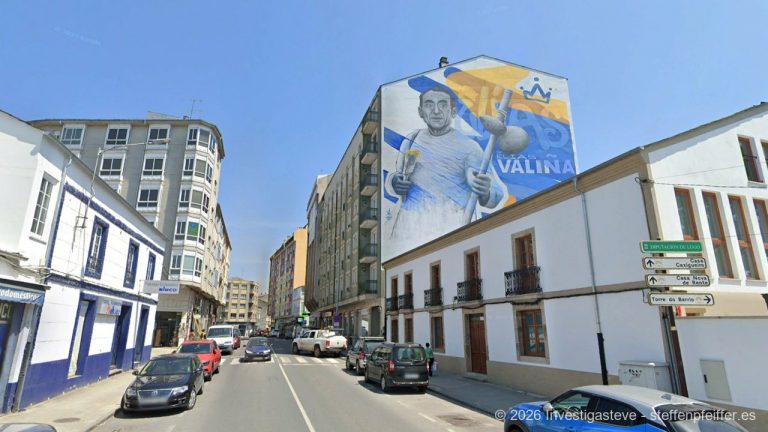
Lavacolla is a logistical paradox. On one hand, it is a quiet, ritual place; on the other, it is the gateway to global air travel. This duality makes the supply extremely efficient. Santiago de Compostela Airport is only about 1.4 kilometers away, making Lavacolla the ideal starting or ending point for pilgrims with tight schedules. Those who begin their journey here essentially jump straight from the plane into the medieval ritual. Those who end here find a perfect connection to the world. Bus connections (Line 6 or special airport transfers) operate frequently between Lavacolla, the airport, and the center of Santiago, guaranteeing maximum flexibility.
Shopping: A well-stocked supermarket right by the wayside offers everything from blister plasters to regional delicacies. It’s the last chance to stock up at fair prices.
Gastronomy: Several restaurants and bars cover the entire spectrum from quick refreshment to extensive dinners, with a focus on regional quality.
Overnight Stay: Capacity ranges from simple hostels to comfortable guesthouses, with Albergue Lavacolla and A Fabrica being the most historically interesting options.
Public Facilities: There are regular bus services, taxi stands at the airport, and basic sanitary facilities for travelers.
The logistical causality is unmistakable here: everything is designed to make the transition from pilgrim to traveler (or vice versa) as smooth as possible. The paths are wide, well-marked, and accessible even for less mobile people. Despite the nearby airport, the place does not feel like a faceless transit zone but has preserved its village character. Those needing medical help will find it only in nearby Santiago, but for minor emergencies, the local pharmacies and kiosks are well equipped. Lavacolla is proof that modern efficiency and ancient tradition can coexist without suffocating each other.


Don’t Miss
- The Washing Ritual in the Rio Sionlla: Find the spot where the small streams meet at “As Pontes.” Dip your hands or feet in the ice-cold water – it is the haptic connection to the 12th century.
- The Church of San Paio: A moment of silence in this Neoclassical building. The smell of old incense and cool granite works wonders for the soul.
- Albergue A Fabrica: Visit the building of the former tannery. Feel the weight of history and remember those who suffered here in dark times.
- The Airport Viewpoint: A fascinating contrast. Watch the modern “birds” land while you walk in the footsteps of the apostles.
- The Eucalyptus Forests: Breathe deeply before you leave the place. Nowhere is the aroma as intense as in the damp morning light of Lavacolla.
- A visit to Bar A Concha: Drink a last coffee before the mountain. The atmosphere here is pure pilgrim life – loud, hearty, and full of anticipation.
Insider Tips and Hidden Places
Beyond the beaten track and the noise corridor of the airport, Lavacolla conceals small enclaves of absolute peace. One of these is the confluence of the small streams a little below the main road. While most pilgrims only linger briefly at the official washing place, a small, often overgrown path leads deeper into the thicket. There, where the alders and willows bend their branches far over the water, a kind of natural vault is formed. The ground here is soft, covered in deep green moss that cushions every step. It smells of damp fern and flowing water. Here, you can experience the original Lavacolla, far from the smell of kerosene. It is a place for a secret prayer or a final meditation, where only the gurgling of the stream and the rustling of leaves can be heard. The haptic experience of the damp moss under your hands connects you directly to the fertile power of Galicia.
Another hidden spot is a small, weathered quarry on the edge of the Parroquia, now almost completely reclaimed by nature. Here, the granite blocks for the local houses were once hewn. When you retreat into this stone niche, you feel the psychological power of the rock. The acoustics here are phenomenal – every sound is reflected and amplified, making this place ideal for taking a deep breath or even letting out a scream of relief. It is a place of grounding. Wild herbs often bloom in the crevices of the granite, their subtle scent only fully unfolding when you crush the leaves between your fingers. These small, unmarked spots are the true treasures of Lavacolla, showing that even near the goal, the Way still holds secrets if you are willing to lift your gaze from the asphalt.
Moment of Reflection
Lavacolla challenges you to accept the duality of your life. When you stand on the banks of the Sionlla, you are a part of almost a thousand years of history. You reflect on the millions of pilgrims who stood here before you, left their worries in the water, and looked forward with renewed courage. The psychological metamorphosis that this place forces is immense. You feel the tension between the “not yet” and the “almost there.” Monte do Gozo lies before you like a final promise, yet Lavacolla is the place where you must decide: Will you take the ballast of your journey into the city, or will you leave it here, ritually washed away in the cold stream? The coolness of the water on your wrists is like an electric impulse that sharpens your consciousness for the moment.
In the silence of your last night in Lavacolla, while the airplanes above you overcome the boundaries of space and time in minutes, you grasp the preciousness of your slow way. Every step of the past weeks has prepared you for this one moment. You feel a deep gratitude for the resilience of your body and the openness of your spirit. Lavacolla is the place of reconciliation – with your mistakes, your pains, and your hopes. When you lace up your boots the next morning, you no longer do so merely as a hiker, but as someone who has understood that the true cleansing lies not in the water, but in the insight. You breathe in the cool Galician morning air, feel the solid ground under your feet, and know: The water of Lavacolla has served its purpose. You are ready for Santiago.
Camino of the Stars
This place is located on the Camino Francés, on the stage from O Pedrouzo (Arca) to Santiago de Compostela. The sequence of locations is:
O Pedrouzo (Arca) → San Antón → Amenal → Lavacolla → Vilamaior → San Marcos → Monte do Gozo → Santiago de Compostela
Did you perform the ancient ritual of cleansing in the Rio Sionlla yourself, or did you feel the eventful history of Galicia in the historic Albergue A Fabrica? Was Lavacolla a place of spiritual preparation for you or a logistical anchor point before the great arrival? Share your experiences, your photos of the holy stream, or your thoughts on the contrast between airport and pilgrim trail with us. We look forward to hearing your very personal story from the threshold to the goal!
About the Author